Lady palm
Rhapis excelsa. Family Arecaceae. Shrub.
Also called Broadleaf lady palm, Bamboo palm.
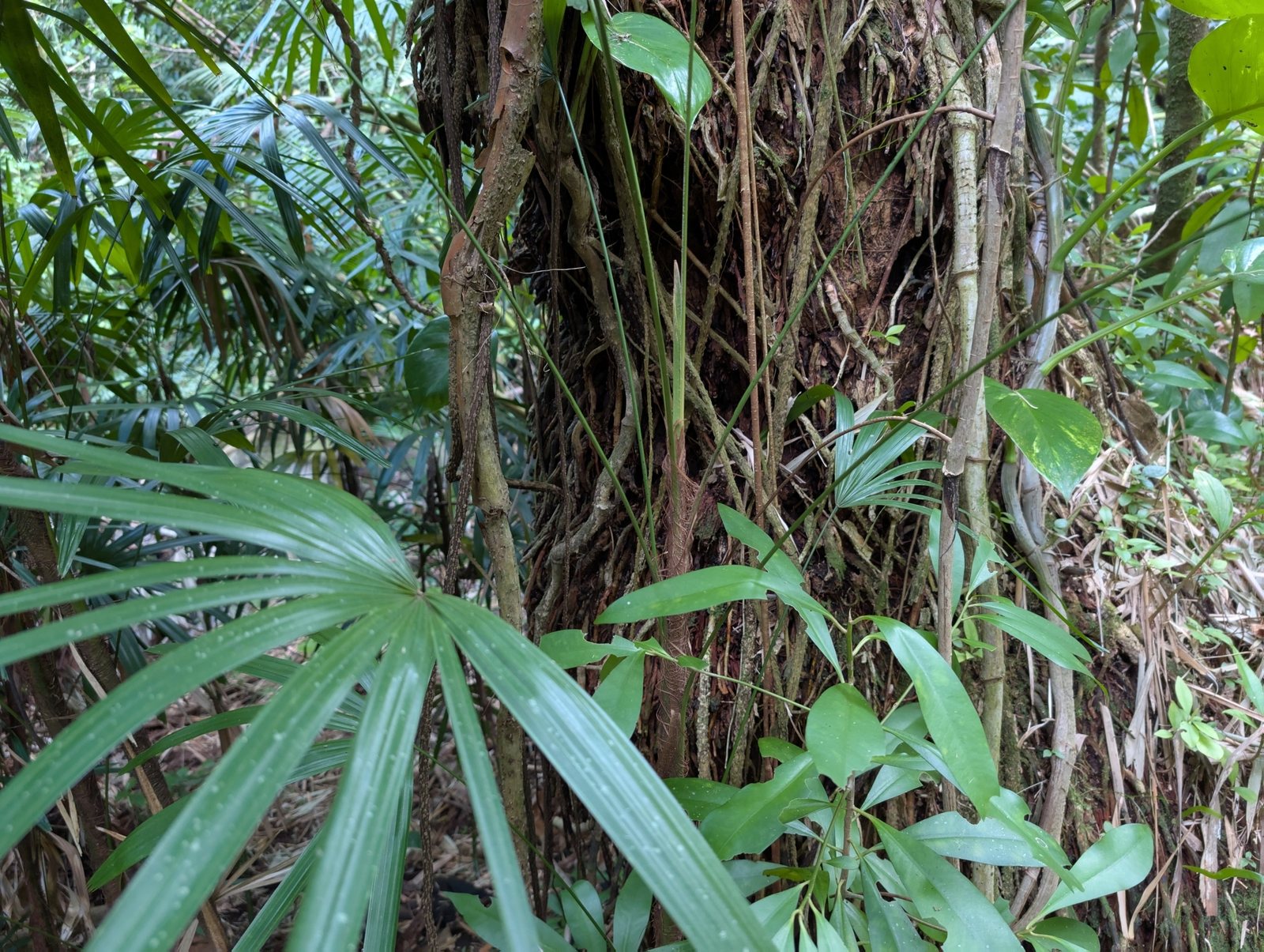
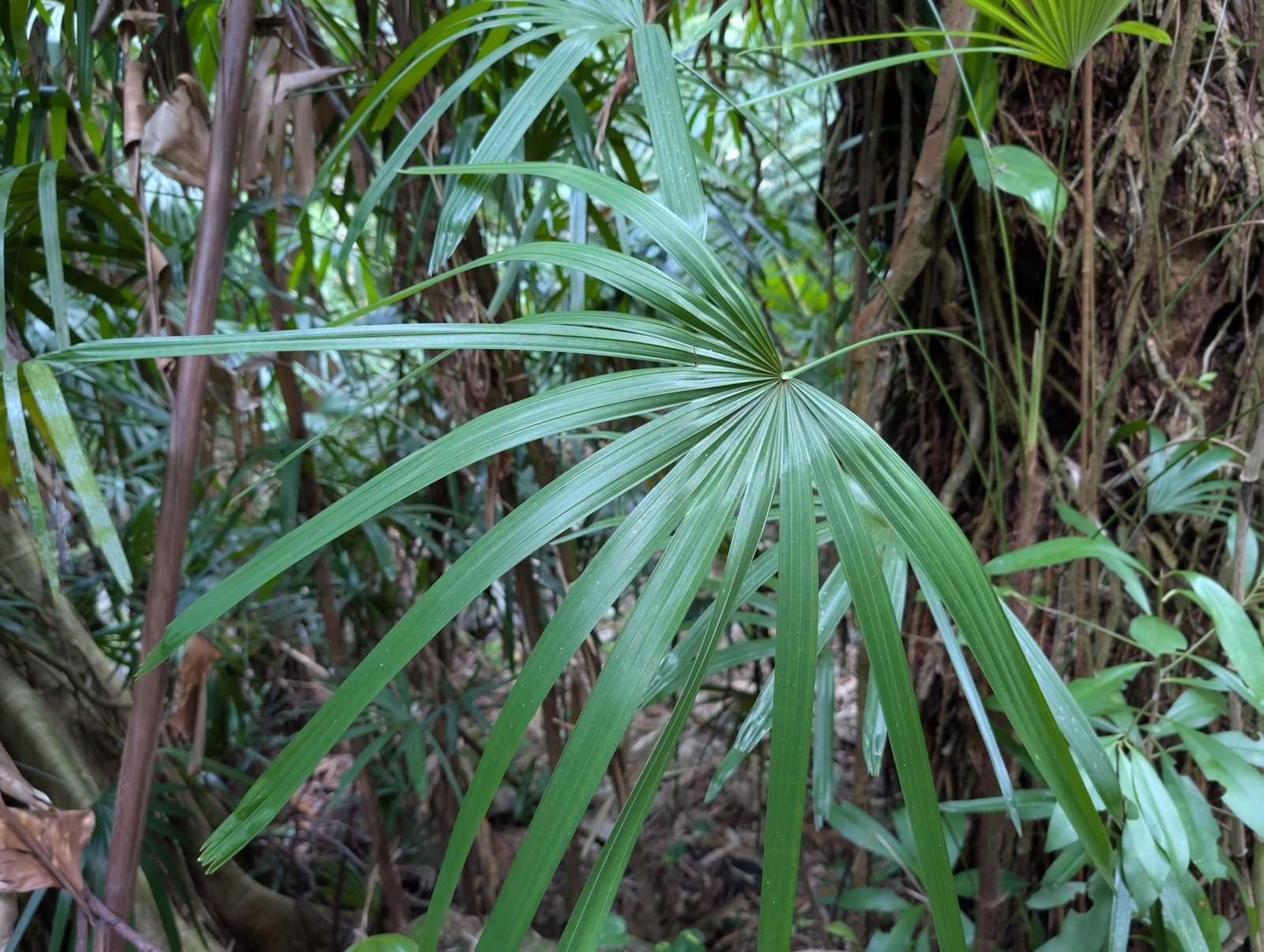
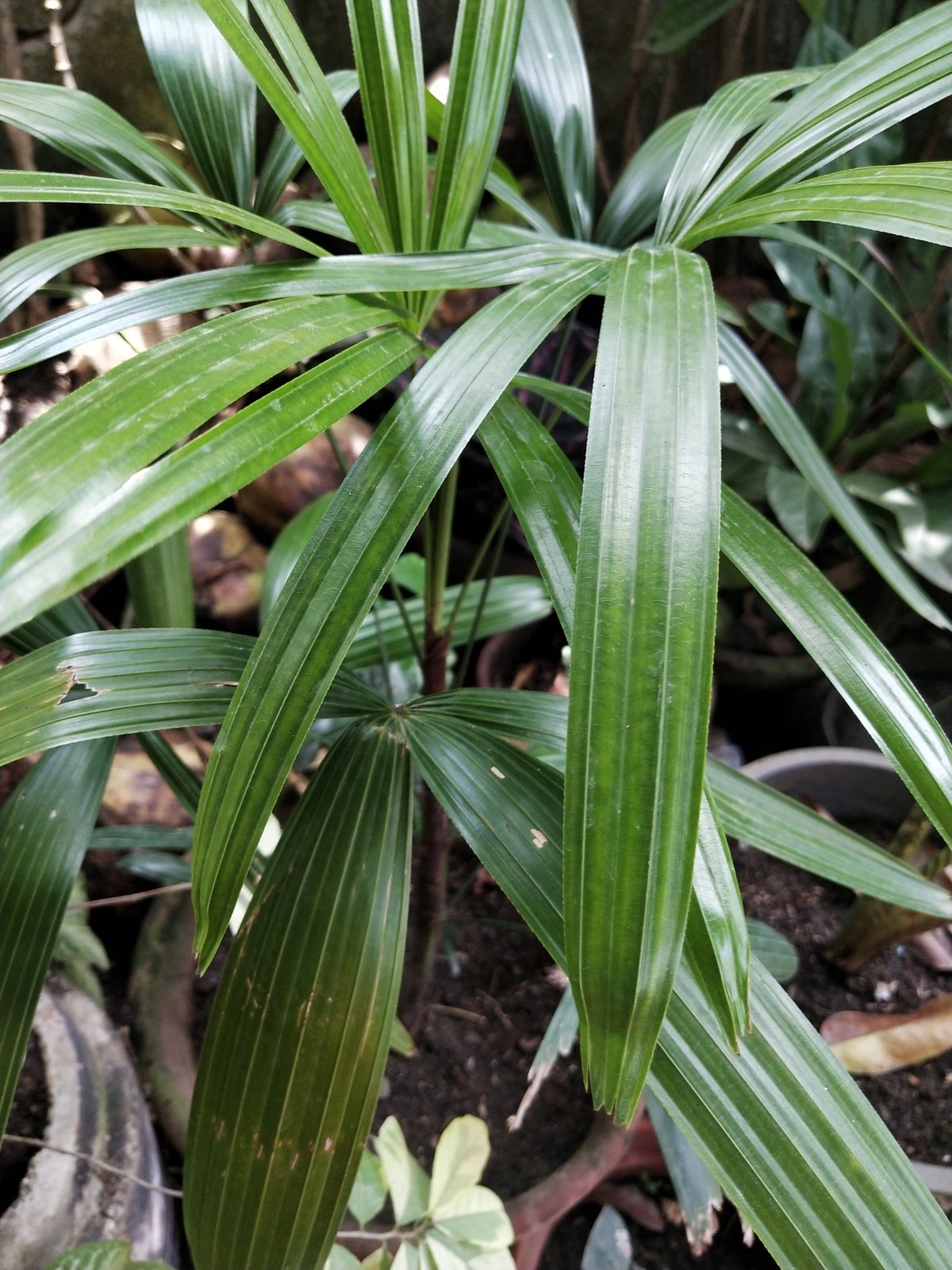
Lady palm is a slow-growing, clumping evergreen palm with slender, fibre-covered canes and glossy fan-shaped leaves. It brings year-round structure to shaded gardens in warm climates and grows well in containers indoors or outdoors. In colder regions, keep it indoors over winter.
At a glance
- Sun
- Partial to full shade outdoors; bright, indirect light indoors. Avoid hot afternoon sun, which can scorch the leaves.
- Water
- Keep evenly moist but not waterlogged during active growth. Let the surface of container compost dry slightly before watering again; water less in winter.
- Soil
- Humus-rich, well-drained soil. For containers, use a free-draining potting mix in a pot with drainage holes.
- Height
- 6-12 ft (1.8-3.7 m) outdoors; usually smaller indoors
- Spread
- 3-6 ft (0.9-1.8 m), gradually wider through suckering
- Foliage
- Evergreen. Dark green, glossy fans divided into broad segments with blunt, irregularly toothed tips; brown fibres wrap the slender canes.
- Growth
- Slow
- Care needed
- Low
The year at a glance
- Heat tolerant
| J | F | M | A | M | J | J | A | S | O | N | D | |
|---|---|---|---|---|---|---|---|---|---|---|---|---|
| Plant |
Northern hemisphere months. In Australia, shift them by six.
- Difficulty
- Moderate
- Toughness
- Fairly tough
Will it suit your garden?
Pick your zone, country, light and whether you have pets.
Full sun is 6 or more hours of direct sun a day, part shade 3 to 6 hours, shade under 3.
How it grows
Planting day
1.6 ft (0.5 m)
After 1 year
2.6 ft (0.78 m)
After 2 years
3 ft (1.1 m)
After 3 years
4 ft (1.3 m)
After 5 years
6 ft (1.9 m)
About 8 years to full size.
From a typical nursery size, at an average rate for this kind of plant. A rule of thumb, not a forecast.
Good to know
- Cats and dogs
- Safe
- In the garden
- Spreads vigorously: plan to contain it.
- Growth rate
- Slow
Care
Jobs through the year
- WaterApr–May, Sep–Oct, every 7 days
- Water when the surface begins to dry; containers need closer checks than established ground plants.
- WaterJun–Aug, every 7 days
- Keep roots evenly moist, allowing for rainfall; check young and container plants more often.
- WaterJan–Mar, Nov–Dec, every 14 days
- Check sheltered pots and water after the surface dries slightly; empty saucers.
- FeedApr–Aug, every 30 days
- Feed containers lightly with balanced fertiliser, following the label.
- PruneApr–May
- Remove brown leaves and cut unwanted canes at soil level; do not top living canes.
- DivideApr–May
- Divide only crowded clumps, retaining healthy roots and canes in each section.
- MulchMay
- Refresh a light organic mulch, keeping it away from the canes.
- ProtectJan–May, Sep–Dec
- Use containers in this climate; bring indoors before frost and return to shade after nights become mild.
- Water thoroughly, then let excess water drain; never leave the pot standing in water.
- Feed container plants lightly with a balanced fertiliser during spring and summer, following the label rate.
- Mulch outdoor plants to conserve moisture, keeping mulch clear of the canes.
- Move outdoor containers under cover before frost; freezing weather can damage the foliage even where established roots survive.
- Repot in spring only when roots crowd the container, moving up one pot size.
- Wipe indoor leaves occasionally and inspect leaf undersides and cane bases for pests.
Pruning. Remove fully brown leaves at their bases whenever needed, leaving healthy green leaves intact. In spring, cut unwanted or dead canes at soil level; do not shorten living canes by cutting off their tops.
Through the year
- Spring
- Repot crowded container plants or divide established clumps as active growth begins.
- Spring
- Begin light feeding and remove dead leaves or unwanted canes.
- Late spring
- Move indoor plants outside only once nights are consistently mild, acclimatising them gradually in shade.
- Summer
- Check container moisture regularly and inspect for scale insects and mites.
- Autumn
- Bring containers indoors before frost and reduce feeding as growth slows.
- Winter
- Water sparingly enough to avoid soggy roots, and keep indoor plants away from heaters and cold draughts.
In the garden
- Plant in a shaded courtyard for upright structure and a dense backdrop of green foliage.
- Use in large containers beside sheltered entrances or on shaded patios.
- Combine with ferns, cast-iron plants and other shade-tolerant foliage plants beneath a high tree canopy.
- Grow as a low, informal screen in frost-free gardens, allowing room for the clump to widen.
Garden styles it suits: Modern tropical, Architectural minimal, Modern courtyard, Japanese, Tropical and Small-space.
Plant it with: Cast-iron plant, Bird's nest fern, Mondo grass, Clivia and Bromeliads.
Wildlife: Dense clumps offer shelter for small animals in warm gardens, but this palm is not a major nectar or food plant for garden wildlife.
Problems to watch for
- Scale insects and mealybugs: inspect canes and leaf undersides; wipe off small infestations and use a labelled horticultural oil or insecticidal soap if needed.
- Spider mites in dry indoor conditions: rinse the foliage, improve humidity and treat persistent infestations with a labelled insecticidal soap.
- Root rot from poor drainage: empty saucers, reduce watering and repot affected plants into fresh, free-draining mix after removing rotten roots.
- Brown tips or scorched patches: check for drying roots, fertiliser salt buildup, strong sun or cold exposure; correct the cause rather than removing whole healthy leaves.
Safety
Not known to be toxic to cats, dogs, horses or people. No part is recognised as poisonous, although chewing foliage can still cause minor digestive upset.
Easily confused with
Slender lady palm (Rhapis humilis)
Usually taller, with more numerous, narrower leaf segments and more pointed tips; lady palm has broader segments with blunt, toothed ends.
Bamboo palm (Chamaedorea seifrizii)
Has feather-shaped leaves with leaflets arranged along a central stalk, rather than fan-shaped leaves.
Chinese fan palm (Livistona chinensis)
Develops a single substantial trunk and much larger fans with long, drooping segment tips, rather than a clump of slender canes.
The name
Rhapis comes from the Greek word for a needle, referring to the slender leaf segments, while excelsa means tall or lofty.
Propagation. Divide established clumps in spring, keeping several canes and a healthy root system on each division. Seed is possible but slow and often unavailable; single cane cuttings do not root.
Checked against open data
- Accepted botanical name
- Rhapis excelsa
- Native range
- China Southeast, Hainan and Vietnam.
- Measured
- Average height 350 cm.
Sources: GBIF (CC BY 4.0) and Trefle (CC BY 4.0). The care and design notes are LandscapeGPT's own.
See it in your own yard.
Upload a photo of your yard and see it redesigned with plants that suit your climate, each checked against your zone.