Black bamboo
Phyllostachys nigra. Family Poaceae. Ornamental grass.
Also called Purple bamboo.
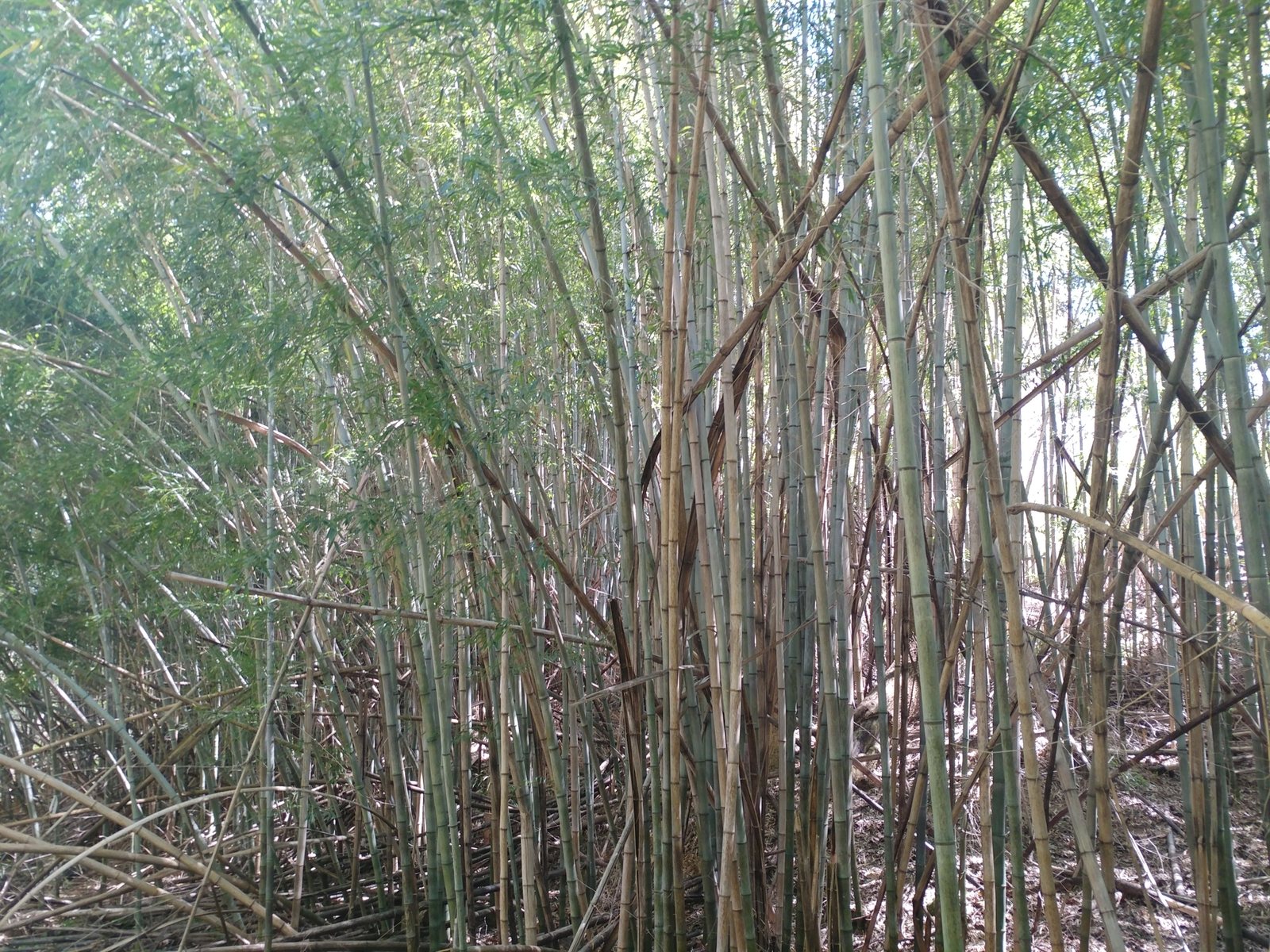
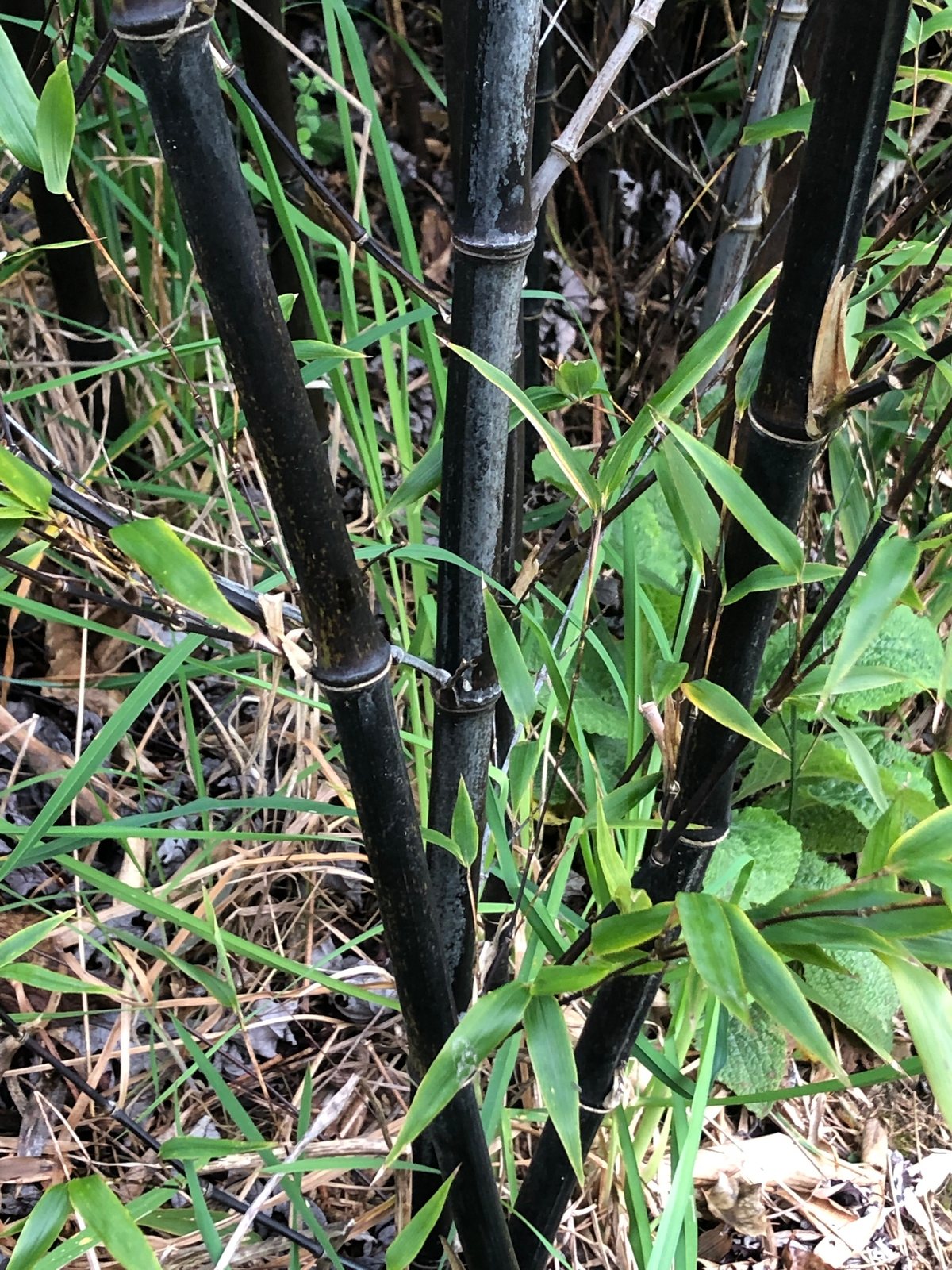
Black bamboo is a tall, evergreen running bamboo grown for slender canes that emerge green and darken to glossy purple-black over two to three years. Its fine foliage makes a useful screen, but spreading underground stems need permanent containment and regular inspection.
At a glance
- Sun
- Full sun to partial shade; provide afternoon shade in hot, dry climates and shelter from strong, drying winds.
- Water
- Keep evenly moist, particularly during establishment and shoot growth. Water deeply during dry spells; containers need more frequent watering.
- Soil
- Fertile, moisture-retentive but well-drained soil. Avoid waterlogged ground and very dry, shallow soils.
- Height
- 15-30 ft (4.5-9 m)
- Spread
- 10-15 ft (3-4.5 m) initially; an uncontained colony can spread much farther.
- Foliage
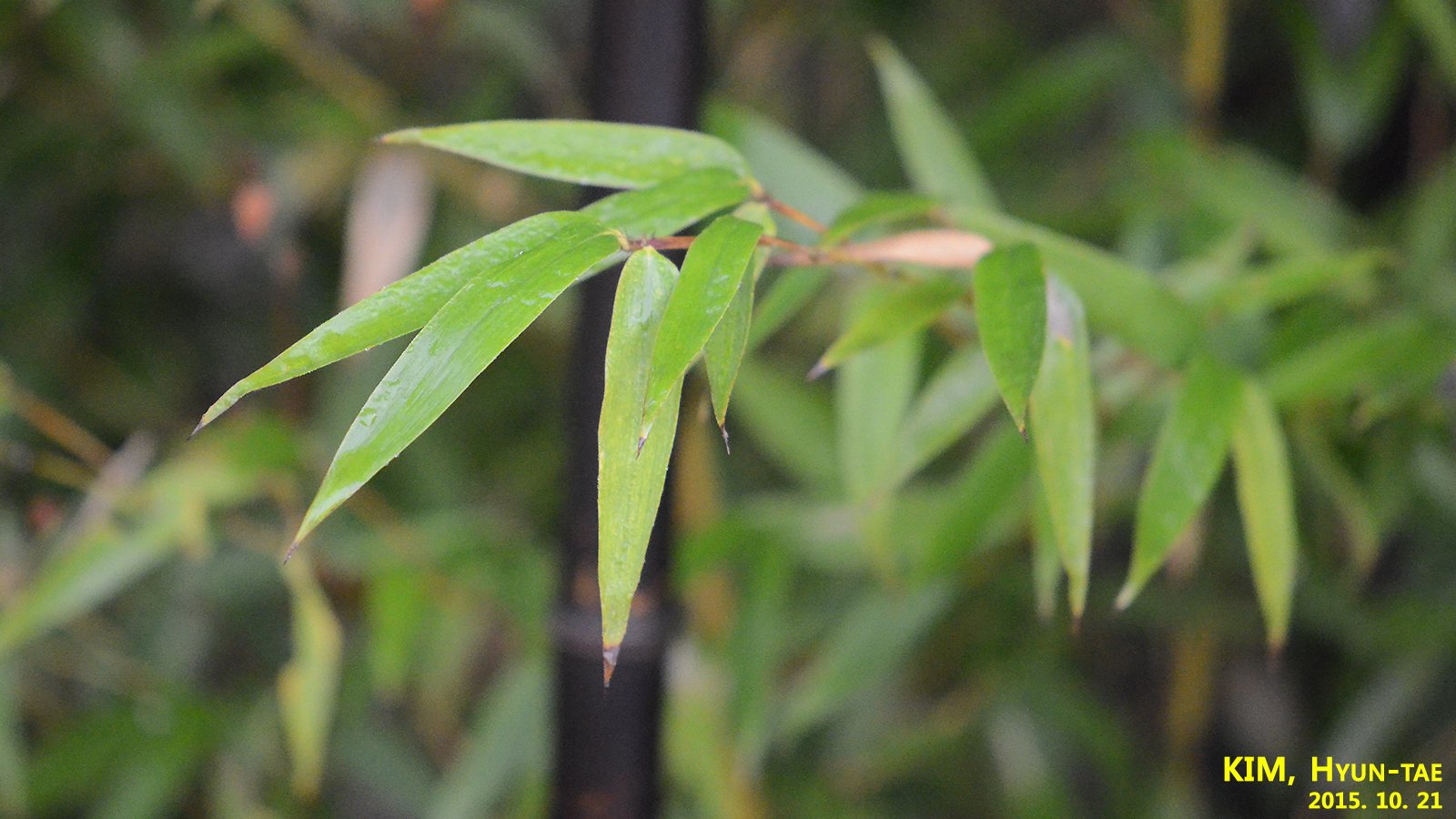
- Evergreen. Narrow, pointed green leaves on fine branches above upright, jointed canes. Leaves may scorch or drop in severe cold or drought.
- Growth
- Fast once established; new canes reach their full height in one growing season.
- Care needed
- High
The year at a glance
- Heat tolerant
- Wildlife
| J | F | M | A | M | J | J | A | S | O | N | D | |
|---|---|---|---|---|---|---|---|---|---|---|---|---|
| Plant |
Northern hemisphere months. In Australia, shift them by six.
- Difficulty
- Hard
- Toughness
- Fairly tough
Will it suit your garden?
Pick your zone, country, light and whether you have pets.
Full sun is 6 or more hours of direct sun a day, part shade 3 to 6 hours, shade under 3.
How it grows
Planting day
2.7 ft (0.81 m)
After 1 year
15 ft (4.5 m)
After 2 years
22 ft (6.8 m)
full size
About 2 years to full size.
From a typical nursery size, at an average rate for this kind of plant. A rule of thumb, not a forecast.
Good to know
- Cats and dogs
- Safe
- Invasive in
- the US, the UK and Australia
- In the garden
- Spreads vigorously: plan to contain it.
- Growth rate
- Fast
Care
Jobs through the year
- ProtectApr–Jun, Sep
- Before planting, install a purpose-made rhizome barrier with its upper edge exposed.
- WaterJan–Mar, Nov–Dec, every 21 days
- Water established plants only during frost-free dry spells if the root zone is drying.
- WaterApr–May, Sep–Oct, every 7 days
- Water established plants deeply if rain is insufficient; young plants need closer moisture checks.
- WaterJun–Aug, every 4 days
- In dry weather, water established stands deeply to keep roots moist; skip when rainfall suffices.
- FeedApr
- Apply balanced fertilizer at the recommended rate; avoid heavy late-season feeding.
- MulchApr
- Apply compost or leaf mould while leaving cane bases and the barrier edge visible.
- PruneFeb–Mar
- Cut dead, damaged and selected old canes at ground level before new shoots appear.
- PruneMay, Oct
- Inspect the entire barrier, excavate escaping rhizomes and remove shoots outside the contained area.
- Install a purpose-made bamboo rhizome barrier before planting, following its depth and jointing instructions and leaving the upper edge exposed.
- Inspect the entire barrier perimeter at least twice a year and cut out escaping rhizomes promptly.
- Water deeply during dry weather, especially while new shoots are extending.
- Apply a balanced fertiliser in spring; avoid heavy feeding late in the growing season.
- Mulch with compost or leaf mould, keeping the barrier edge visible.
- Use a large, frost-resistant container with drainage if planting above ground; divide or repot before it becomes tightly root-bound.
Pruning. In late winter or early spring, cut dead, damaged and selected older canes at ground level to thin the stand. Remove lower side branches sparingly to reveal the black canes; a shortened cane will not regain its original height.
Through the year
- Late winter
- Remove dead or damaged canes and thin crowded growth before new shoots appear.
- Spring
- Apply balanced fertiliser and refresh the organic mulch.
- Spring
- Inspect containment and remove unwanted shoots outside the planting area.
- Summer
- Water during dry spells and check container plants frequently.
- Autumn
- Inspect the barrier again and sever any rhizomes crossing its upper edge.
- Winter
- Check container drainage and water during frost-free dry periods.
In the garden
- A contained screen along a boundary where its full height and maintenance access can be accommodated.
- An architectural specimen against a pale wall that shows off the dark canes.
- A large container in a sheltered courtyard, with space for regular watering and repotting.
- A backdrop to Japanese maples, ferns and broad-leaved shade plants for contrasting textures.
Garden styles it suits: Japanese, Zen dry garden, Architectural minimal, Modern courtyard, Japandi and Winter interest.
Plant it with: Japanese maple, Hosta, Japanese painted fern, Soft shield fern, Lilyturf and Japanese forest grass.
Wildlife: Dense foliage provides shelter for small birds and invertebrates. It offers little nectar or pollen in ordinary garden use and should not replace locally native habitat planting.
Problems to watch for
- Escaping rhizomes: cut and excavate runners beyond the barrier; repeatedly remove regrowth and repair containment.
- Brown leaf tips or curled leaves from drought and wind: check soil moisture, water deeply and improve shelter.
- Bamboo mites causing pale stippling or blotches: inspect leaf undersides, remove heavily affected foliage and use a locally approved mite treatment if necessary.
- Flowering followed by weakening or death: some plants have flowered in recent years; maintain normal watering, watch for recovery and replace plants that die.
Safety
True black bamboo is not known to be toxic to cats, dogs or horses. Mature leaves and canes are not known to be poisonous to people, but raw young shoots can contain cyanogenic compounds and should not be eaten raw; do not treat garden shoots as ready-to-eat food.
Where it spreads. A running bamboo that can spread aggressively in the southeastern and mid-Atlantic United States, the UK and temperate parts of Australia. It can escape gardens and form dense stands; check local planting restrictions and contain it even where it is not officially listed as invasive.
Easily confused with
Golden bamboo (Phyllostachys aurea)
Canes remain green to yellow rather than turning black; mature canes often have crowded, shortened joints near the base.
Black-stemmed clumping bamboo (Bambusa lako)
Forms a tight clump rather than sending out long running rhizomes and needs a much warmer, largely frost-free climate.
Fountain bamboo (Fargesia nitida)
Forms a compact clump with finer, more arching canes that may be purple but do not develop the same thick, glossy black appearance.
The name
Phyllostachys refers to the leafy appearance of the flower clusters, while nigra means black, describing the mature canes.
Propagation. Divide an established clump in spring, taking a substantial section of rooted rhizome with several canes. Replant promptly, water thoroughly and protect the division from drying winds.
Checked against open data
- Accepted botanical name
- Phyllostachys nigra
- Native range
- China South-Central and China Southeast.
- Measured
- Average height 600 cm.
Sources: GBIF (CC BY 4.0) and Trefle (CC BY 4.0). The care and design notes are LandscapeGPT's own.
See it in your own yard.
Upload a photo of your yard and see it redesigned with plants that suit your climate, each checked against your zone.