Black raspberry
Rubus occidentalis. Family Rosaceae. Shrub.
Also called Blackcap, Blackcap raspberry.
Black raspberry is a deciduous fruiting shrub native to eastern North America, with arching, prickly canes and small, richly flavoured black berries. Gardeners grow it for fresh eating, preserves and wildlife, but it needs regular pruning and room away from paths.
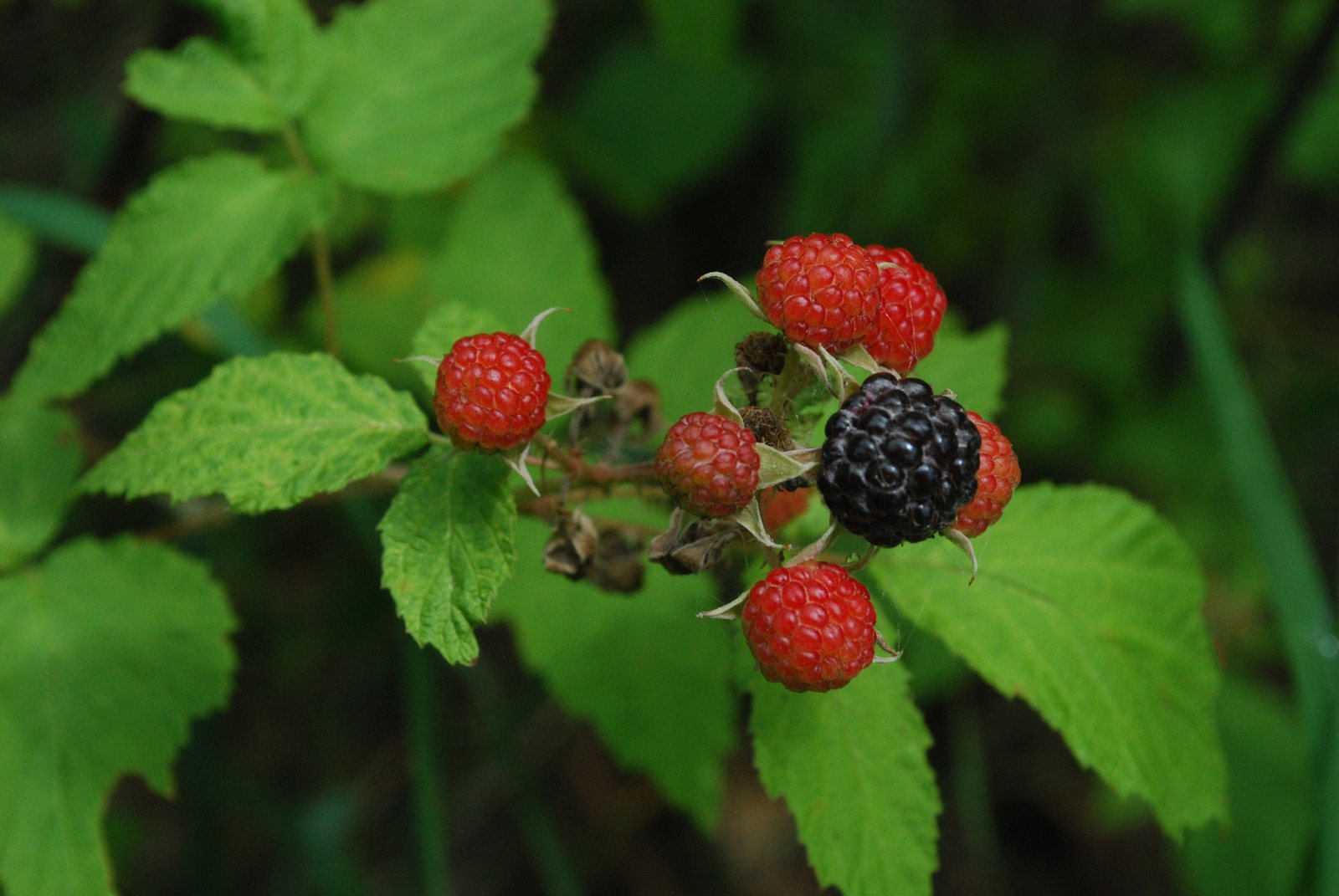
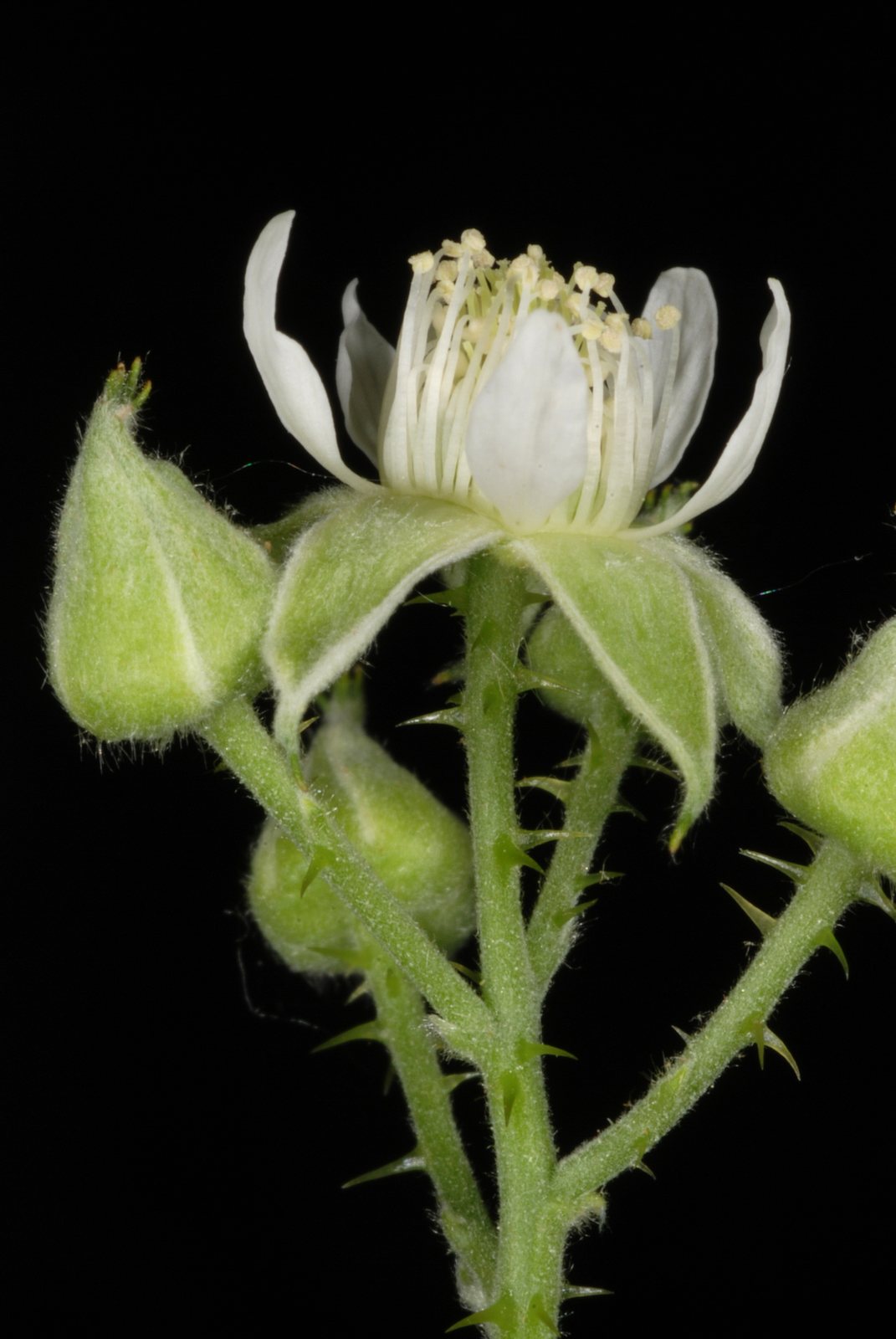
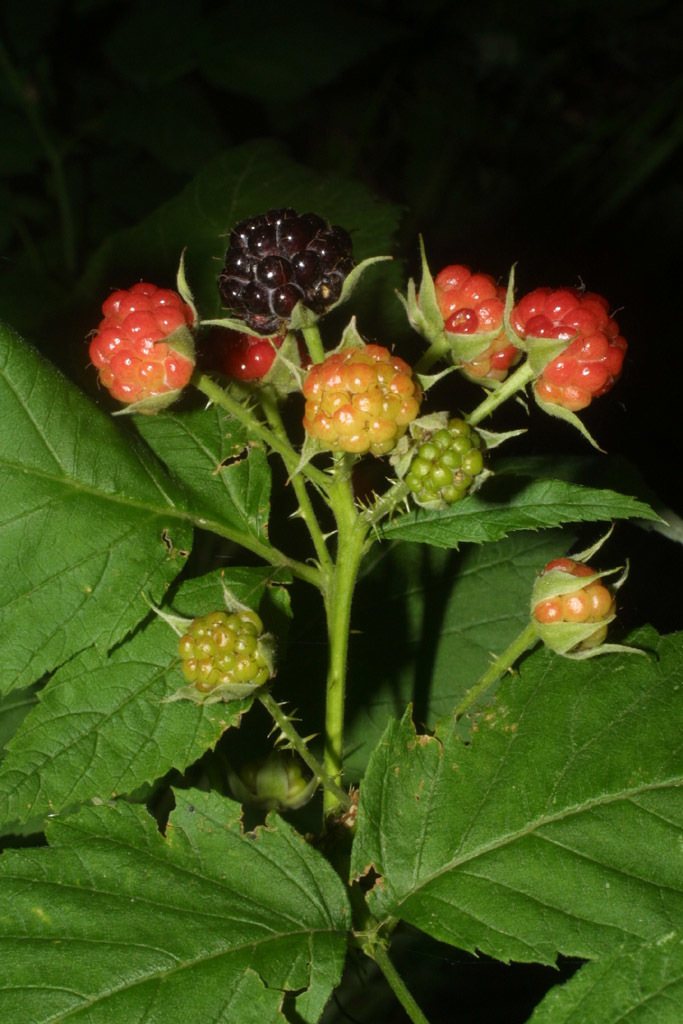
At a glance
- Sun
- Full sun for the best crop; tolerates partial shade with fewer berries.
- Water
- Keep evenly moist, especially during flowering and fruit development; avoid waterlogged ground.
- Soil
- Fertile, well-drained loam with plenty of organic matter; slightly acidic soil, around pH 5.5-6.5, is ideal.
- Height
- 3-6 ft (0.9-1.8 m)
- Spread
- 3-6 ft (0.9-1.8 m), widening if cane tips root
- Flowers
- Small white flowers in late spring to early summer.
- Foliage
- Compound green leaves, usually with three leaflets and conspicuously pale, silvery-white undersides; young canes often have a whitish waxy coating.
- Growth
- Fast; produces new canes each growing season.
- Care needed
- Medium
The year at a glance
- Pollinators
- Cold hardy
- Wildlife
- Low allergen
- Edible
| J | F | M | A | M | J | J | A | S | O | N | D | |
|---|---|---|---|---|---|---|---|---|---|---|---|---|
| Flowers | ||||||||||||
| Fruit | ||||||||||||
| Plant |
Northern hemisphere months. In Australia, shift them by six.
- Difficulty
- Moderate
- Toughness
- Fairly tough
Will it suit your garden?
Pick your zone, country, light and whether you have pets.
Full sun is 6 or more hours of direct sun a day, part shade 3 to 6 hours, shade under 3.
How it grows
Planting day
1.6 ft (0.5 m)
After 1 year
2.5 ft (0.76 m)
After 2 years
3 ft (1 m)
After 3 years
4 ft (1.3 m)
After 5 years
4 ft (1.4 m)
full size
About 3 years to full size.
From a typical nursery size, at an average rate for this kind of plant. A rule of thumb, not a forecast.
Good to know
- Cats and dogs
- Safe
- Native to
- the US and Canada
- In the garden
- Spreads vigorously: plan to contain it.
- Growth rate
- Fast
Care
Jobs through the year
- WaterApr–May, Sep–Oct, every 14 days
- Water established plants deeply during dry spells; young plants need more frequent watering.
- WaterJun–Aug, every 7 days
- Supply about 2.5 cm weekly including rain, keeping the root zone moist but not saturated.
- FeedMar
- Apply a light balanced fertilizer feed; avoid excessive nitrogen.
- MulchMar
- Spread 5–8 cm of composted bark or leaf mould, clear of cane bases.
- PruneFeb–Mar
- Remove weak canes, shorten retained side branches to 20–30 cm and secure canes to wires.
- PruneJun–Jul
- Tip new canes at about 90 cm to encourage branching.
- PruneJul–Aug
- Cut harvested canes to ground level, retaining healthy new canes.
- PruneSep–Oct
- Lift or remove unwanted rooting cane tips.
- ProtectJun–Jul
- Enclose ripening fruit in taut wildlife-safe mesh; fit insect mesh only after flowering.
- HarvestJun–Jul
- Pick fully black berries that slip free with a hollow centre and refrigerate promptly.
- Plant dormant, disease-free stock about 3-4 ft (0.9-1.2 m) apart, with access for picking and pruning.
- Provide about 1 in (2.5 cm) of water weekly during dry weather, watering the soil rather than the leaves.
- Mulch with 2-3 in (5-8 cm) of composted bark or leaf mould, keeping it clear of the cane bases.
- Feed lightly in early spring with a balanced fertiliser; avoid heavy nitrogen feeding.
- Support arching canes on wires and lift or remove tips before they root into nearby beds.
Pruning. After harvest, cut the canes that fruited to ground level, retaining healthy new canes for next year's crop; tip new canes in summer at about 3 ft (0.9 m) to encourage branching. In late winter, remove weak or damaged canes and shorten the retained side branches to about 8-12 in (20-30 cm).
Harvest
Pick in early to midsummer when the berries are fully black and slip easily from the plant, leaving a hollow centre. Harvest every few days and refrigerate promptly because the berries soften quickly. Expect the first worthwhile crop in the second growing season, with fuller production usually by the third.
Through the year
- Late winter
- Thin weak canes, shorten side branches and secure retained canes to their supports.
- Early spring
- Plant dormant stock, apply a light feed and renew the mulch.
- Late spring
- Check new growth for disease and maintain even soil moisture as flowers open.
- Early summer
- Tip vigorous new canes at about 3 ft (0.9 m) and keep them separate from fruiting growth.
- Summer
- Pick ripe berries frequently and remove spent fruiting canes after harvest.
- Autumn
- Remove unwanted rooted tips and clear fallen or shrivelled fruit.
In the garden
- Train in a dedicated row along the edge of a kitchen garden for easy picking.
- Use on a sunny food-forest edge, where its roots receive moisture without deep shade.
- Include in a managed native hedgerow in eastern North America for fruit, flowers and cover.
- Grow against a wire fence behind lower herbs and flowers, keeping prickly growth away from seating and paths.
Garden styles it suits: Potager (kitchen garden), Cottage garden, Wildlife garden, Food forest, Edible landscape and Homestead.
Plant it with: Chives, Thyme, Calendula, Yarrow and Wild bergamot.
Wildlife: Flowers provide nectar and pollen for bees. Birds and mammals eat the berries, and dense canes offer shelter; birds may take much of an unprotected crop.
Problems to watch for
- Anthracnose causes sunken grey lesions on canes: use clean planting stock, remove affected canes and improve spacing and airflow.
- Orange rust produces bright orange pustules beneath leaves and weak, distorted growth: dig out the whole infected plant, including its roots, because pruning alone will not cure it.
- Spotted wing drosophila can leave larvae in ripening fruit: pick frequently, remove waste fruit and use fine insect mesh after flowering where practical.
- Root rot and declining canes occur in poorly drained soil: improve drainage before planting or use a raised bed; replace severely affected plants in a better-drained site.
Safety
Not known to be toxic to people, cats, dogs or horses. Ripe berries are edible; the main physical hazard is the prickly canes, which can scratch skin and injure eyes.
Easily confused with
Blackberry (Rubus fruticosus aggregate)
A ripe blackberry keeps its central core when picked; a black raspberry slips off the receptacle and is hollow inside.
Red raspberry (Rubus idaeus)
Typical red raspberries ripen red rather than black and commonly spread by suckers. Black raspberry usually has strongly arching, whitish-coated canes that spread by rooting at their tips.
The name
Rubus is the Latin name for a bramble, and occidentalis means western, referring to its North American origin relative to Europe.
Propagation. Root a healthy cane tip in a pot or patch of soil in late summer, keeping it moist; detach and transplant once well rooted, usually the following spring. Use only healthy parent plants, since vegetative propagation can carry diseases into the new planting.
Checked against open data
- Accepted botanical name
- Rubus occidentalis
- In the US and Canada
- Native in Canada and the lower 48 states.
- Native range
- Alabama, Arkansas, Connecticut, Delaware, District of Columbia, Georgia, Illinois, Indiana, Iowa, Kansas, Kentucky and Maine.
- Measured
- Soil pH 5.2 to 7.5. Average height 67 cm.
Sources: GBIF (CC BY 4.0), USDA PLANTS and Trefle (CC BY 4.0). The care and design notes are LandscapeGPT's own.
See it in your own yard.
Upload a photo of your yard and see it redesigned with plants that suit your climate, each checked against your zone.