Blackberry
Rubus fruticosus. Family Rosaceae. Shrub.
Also called Bramble, European blackberry.
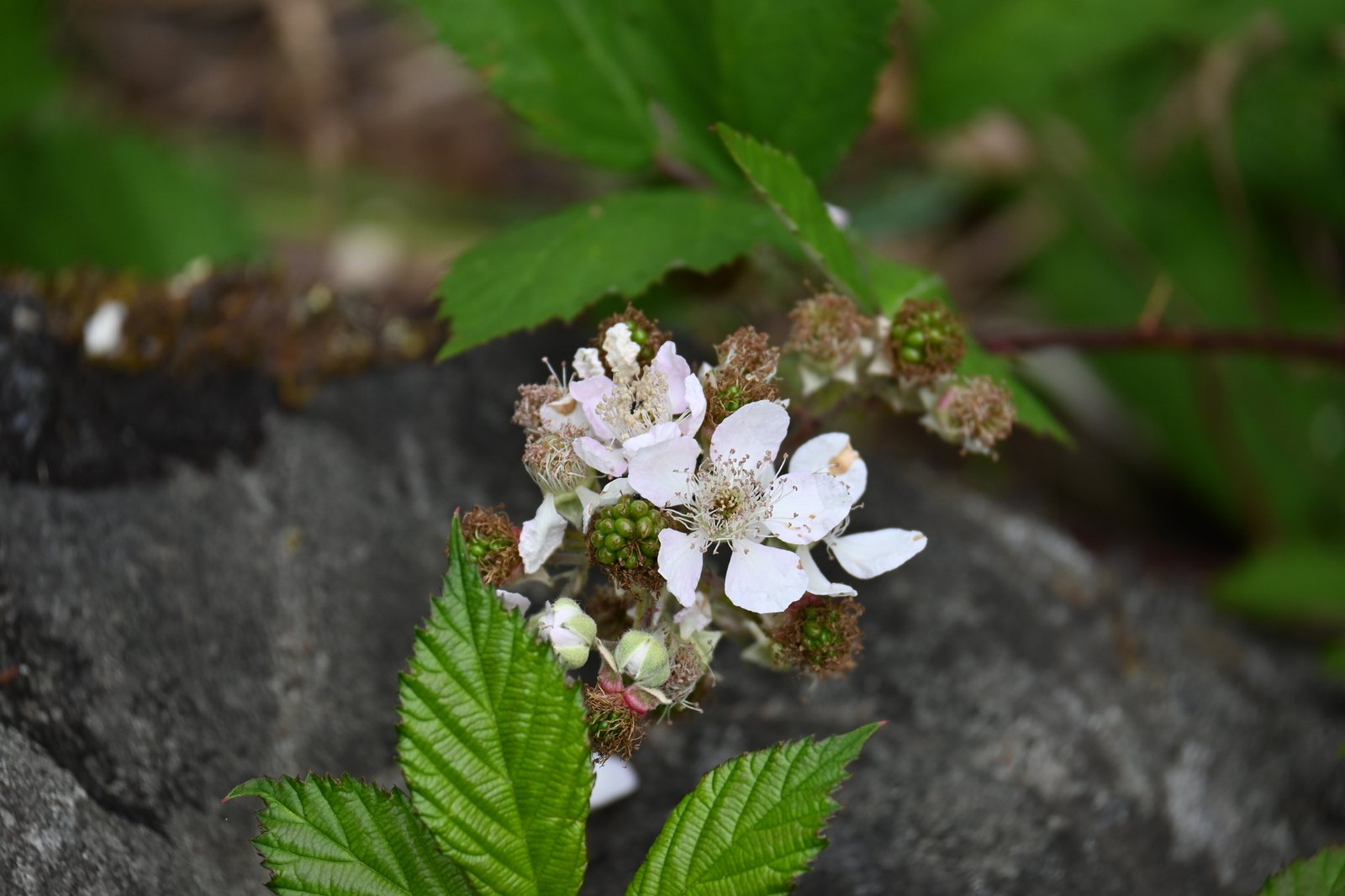
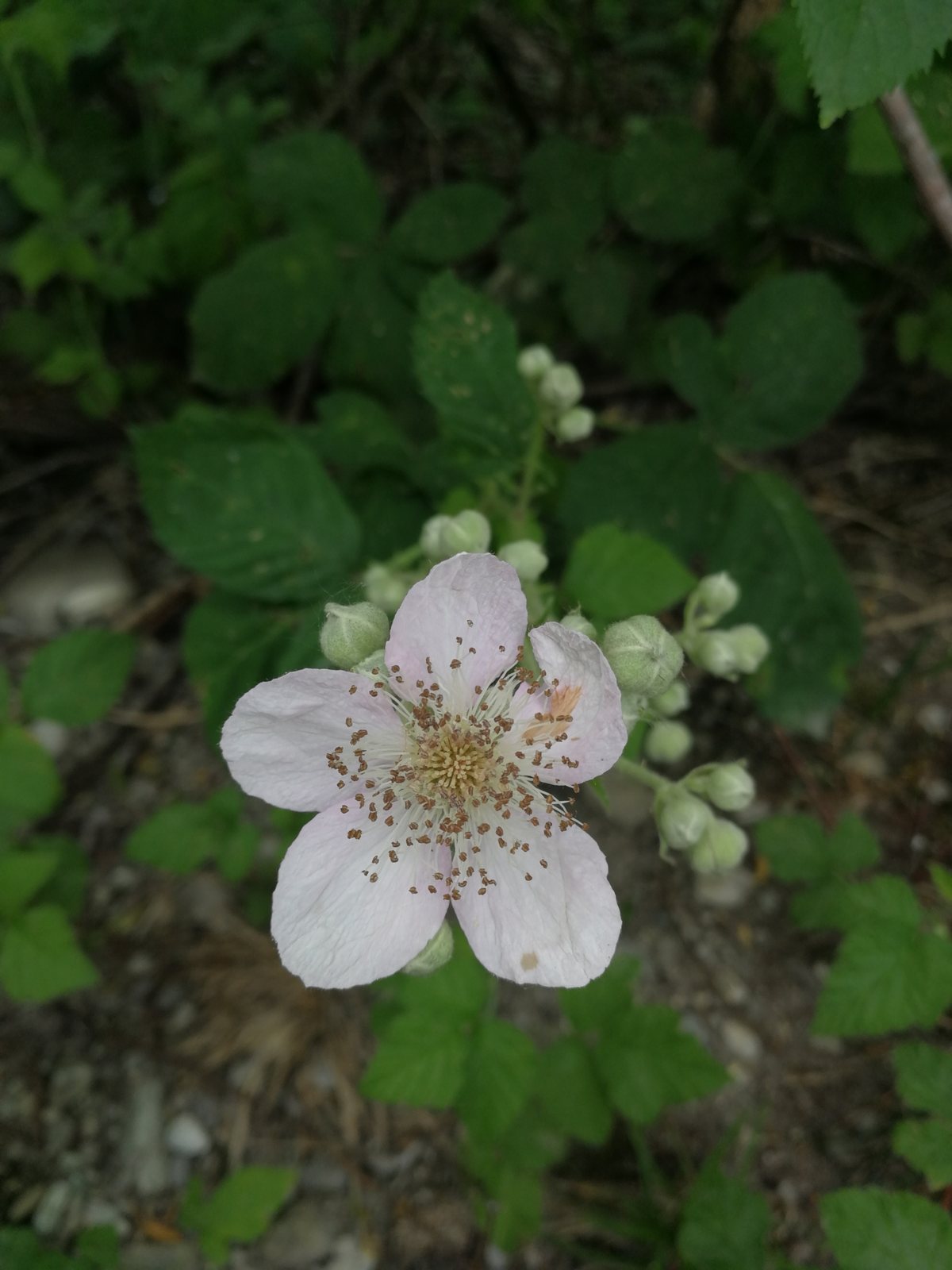
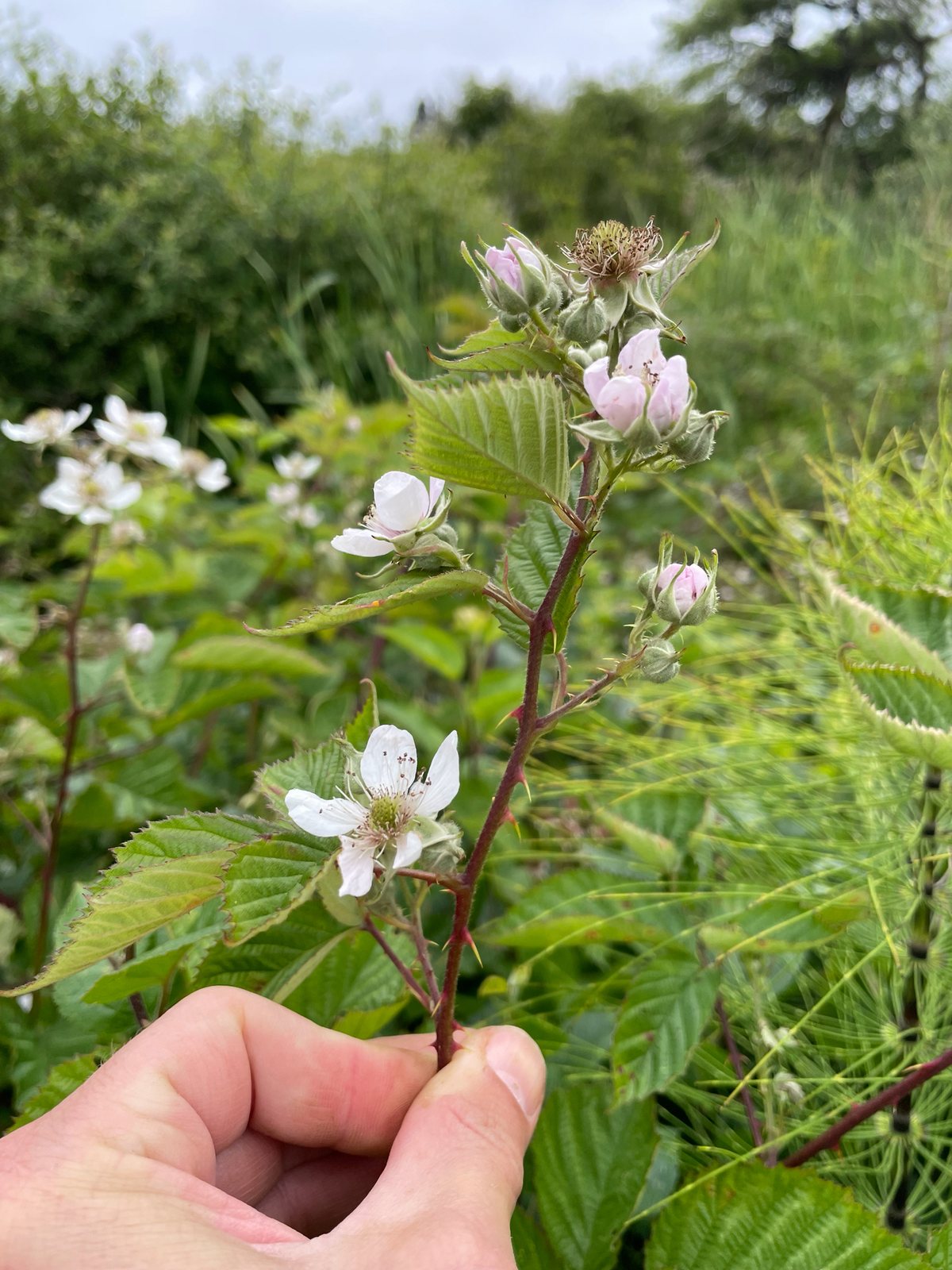
Blackberry is a vigorous, cane-forming shrub grown for its juicy black fruit and flowers that attract pollinating insects. Rubus fruticosus is usually used as an aggregate name for many closely related brambles; garden varieties differ in thorniness, hardiness and fruiting season. Choose a named variety suited to your climate, and check local weed restrictions before planting.
At a glance
- Sun
- Full sun gives the best crops; tolerates partial shade but produces less fruit.
- Water
- Keep soil evenly moist, especially during flowering and fruit development. Water deeply during dry spells without leaving roots waterlogged.
- Soil
- Fertile, moisture-retentive, well-drained soil, preferably slightly acidic to neutral.
- Height
- 5-10 ft (1.5-3 m) with support
- Spread
- 6-12 ft (1.8-3.7 m), potentially much wider if unmanaged
- Flowers
- White or pale pink flowers in late spring and summer, followed by fruit in summer and early autumn; timing varies by variety and climate.
- Foliage
- Toothed, usually compound green leaves on long, arching canes, commonly armed with prickles. Usually deciduous, but some forms retain leaves through mild winters.
- Growth
- Fast
- Care needed
- High
The year at a glance
- Pollinators
- Heat tolerant
- Wildlife
- Low allergen
- Edible
| J | F | M | A | M | J | J | A | S | O | N | D | |
|---|---|---|---|---|---|---|---|---|---|---|---|---|
| Flowers | ||||||||||||
| Fruit | ||||||||||||
| Plant |
Northern hemisphere months. In Australia, shift them by six.
- Difficulty
- Moderate
- Toughness
- Very tough
Will it suit your garden?
Pick your zone, country, light and whether you have pets.
Full sun is 6 or more hours of direct sun a day, part shade 3 to 6 hours, shade under 3.
How it grows
Planting day
1.6 ft (0.5 m)
After 1 year
3 ft (1 m)
After 2 years
5 ft (1.6 m)
After 3 years
7 ft (2.1 m)
After 5 years
7 ft (2.3 m)
full size
About 3 years to full size.
From a typical nursery size, at an average rate for this kind of plant. A rule of thumb, not a forecast.
Good to know
- Cats and dogs
- Safe
- Native to
- the UK
- Invasive in
- Australia
- In the garden
- Spreads vigorously: plan to contain it.
- Growth rate
- Fast
Care
Jobs through the year
- WaterApr–May, Oct, every 14 days
- Water deeply if soil is drying; newly planted bushes need more frequent checks.
- WaterJun–Sep, every 7 days
- Keep soil evenly moist as berries swell; skip watering after substantial rain.
- FeedMar
- Apply compost and a balanced fruit fertiliser without excessive nitrogen.
- MulchMar–Apr
- Mulch the root area annually, leaving the cane bases clear.
- PruneMay–Jun
- Remove weak or unwanted suckers and tie new canes separately onto sturdy supports.
- PruneAug–Oct
- After harvest, cut spent summer-fruiting canes to ground level and tie in replacements.
- PruneNov
- Remove rooted cane tips outside the bed; follow cultivar-specific pruning for autumn-fruiting types.
- ProtectJun–Oct
- If needed, fit taut wildlife-safe fruit netting and inspect it daily.
- HarvestJun–Oct
- Pick fully black berries that release easily; remove mouldy and overripe fruit.
- Train canes along sturdy wires or a trellis, keeping new growth separate from fruiting canes.
- Water at soil level during dry weather, particularly while berries swell.
- Apply compost and a balanced fruit fertiliser in spring; avoid excessive nitrogen, which encourages leafy growth.
- Mulch annually, keeping mulch clear of the cane bases.
- Remove unwanted suckers and stop cane tips touching the ground, where they can root.
- Wear thick gloves and keep thorny growth away from paths.
Pruning. For the usual summer-fruiting types, cut canes that have finished fruiting to ground level after harvest, then tie in healthy new canes for next year's crop. Autumn-fruiting varieties need a different pruning plan; follow the instructions for your named variety.
Harvest
Pick blackberries from summer into early autumn, typically June–October in the US, July–September in the UK and Canada, and December–March in Australia, depending on climate and variety. Choose fully black, plump berries that feel slightly soft and detach with a gentle pull; they will not ripen further after picking.
Through the year
- Winter
- Plant dormant bare-root plants where soil is workable and not waterlogged; install supports before growth starts.
- Early spring
- Apply compost, feed if needed, and mulch the root area.
- Late spring
- Tie in new shoots and remove weak, crowded or unwanted suckers.
- Summer
- Water during dry spells and fit taut wildlife-safe netting if birds take much of the crop.
- Summer to early autumn
- Pick fully black berries when they detach easily; harvest frequently to reduce rotting fruit.
- After harvest
- Remove spent summer-fruiting canes at ground level and secure replacement canes to the wires.
- Late autumn
- Remove rooted cane tips outside the allotted bed and check supports before winter winds.
In the garden
- Train along a sunny boundary fence to provide fruit without taking over the centre of the garden.
- Grow in a dedicated fruit row with currants or gooseberries nearby, leaving access for pruning and picking.
- Use a thornless garden variety on wires beside a kitchen garden for easier harvesting.
- Where locally appropriate, manage native brambles in a wildlife hedge for flowers, fruit and dense shelter.
Garden styles it suits: Cottage garden, Potager (kitchen garden), Wildlife garden, Native hedgerow, Edible landscape and Homestead.
Plant it with: Chives, Borage, Calendula, Yarrow, Currants and Gooseberries.
Wildlife: Flowers supply nectar and pollen for bees and other insects. Birds and mammals eat the fruit, while dense canes provide shelter and nesting cover; birds can also spread seeds beyond the garden.
Problems to watch for
- Cane blight and cane spots: remove affected canes in dry weather, disinfect pruning tools and thin crowded growth to improve airflow.
- Grey mould on fruit: pick frequently, remove mouldy berries and avoid overhead watering.
- Spotted wing drosophila: harvest promptly, remove overripe fruit and use suitable fine-mesh exclusion netting where this pest occurs.
- Poor fruiting: provide more sun, water during fruit development and avoid cutting out the young canes that should fruit next year on summer-fruiting types.
Safety
Not known to be toxic to cats, dogs, horses or people. Ripe fruit is edible; eating large amounts may cause digestive upset. Prickles can puncture skin and injure eyes or mouths, so thorny growth is a physical hazard rather than a poisoning risk.
Where it spreads. European blackberry complexes are major invasive weeds in temperate southern Australia, including New South Wales, Victoria, Tasmania, South Australia, southwestern Western Australia and the Australian Capital Territory; many are regulated, and planting or propagation may be prohibited.
Easily confused with
Red raspberry (Rubus idaeus)
Ripe raspberries pull away leaving the central core on the plant, so the picked fruit is hollow. Blackberries retain the core inside the picked fruit.
European dewberry (Rubus caesius)
Usually has low, trailing stems and fruit with fewer, larger segments covered by a conspicuous blue-grey waxy bloom.
Black mulberry (Morus nigra)
Produces similar dark, clustered fruit but grows as a tree with simple leaves and no prickly bramble canes.
The name
Rubus is the Latin name for bramble, and fruticosus means shrubby or bushy.
Propagation. Where legally permitted, tip-layer a healthy cane in late summer and separate it once well rooted. Use certified healthy nursery plants when starting a fruit bed; seedlings vary and may not retain a named variety's thornlessness or fruit quality.
Checked against open data
- Accepted botanical name
- Rubus fruticosus
- Native range
- Austria, Baltic States, Belarus, Belgium, Czechoslovakia, Denmark, France, Germany, Great Britain, Hungary, Ireland and Italy.
- Measured
- Average height 91 cm.
Sources: GBIF (CC BY 4.0) and Trefle (CC BY 4.0). The care and design notes are LandscapeGPT's own.
See it in your own yard.
Upload a photo of your yard and see it redesigned with plants that suit your climate, each checked against your zone.