Blackhaw viburnum
Viburnum prunifolium. Family Viburnaceae. Shrub.
Also called Black haw, Smooth blackhaw, Stag bush.
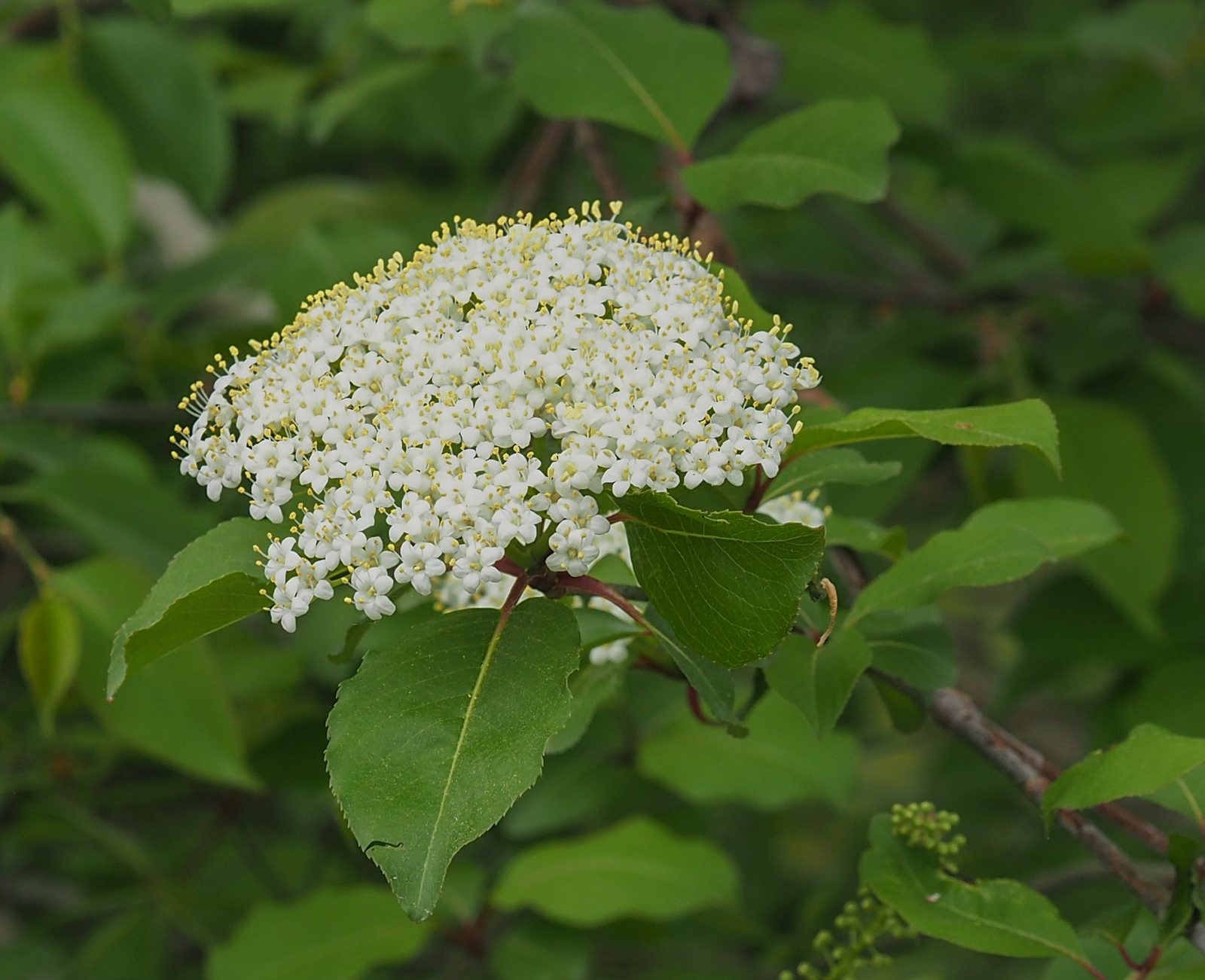
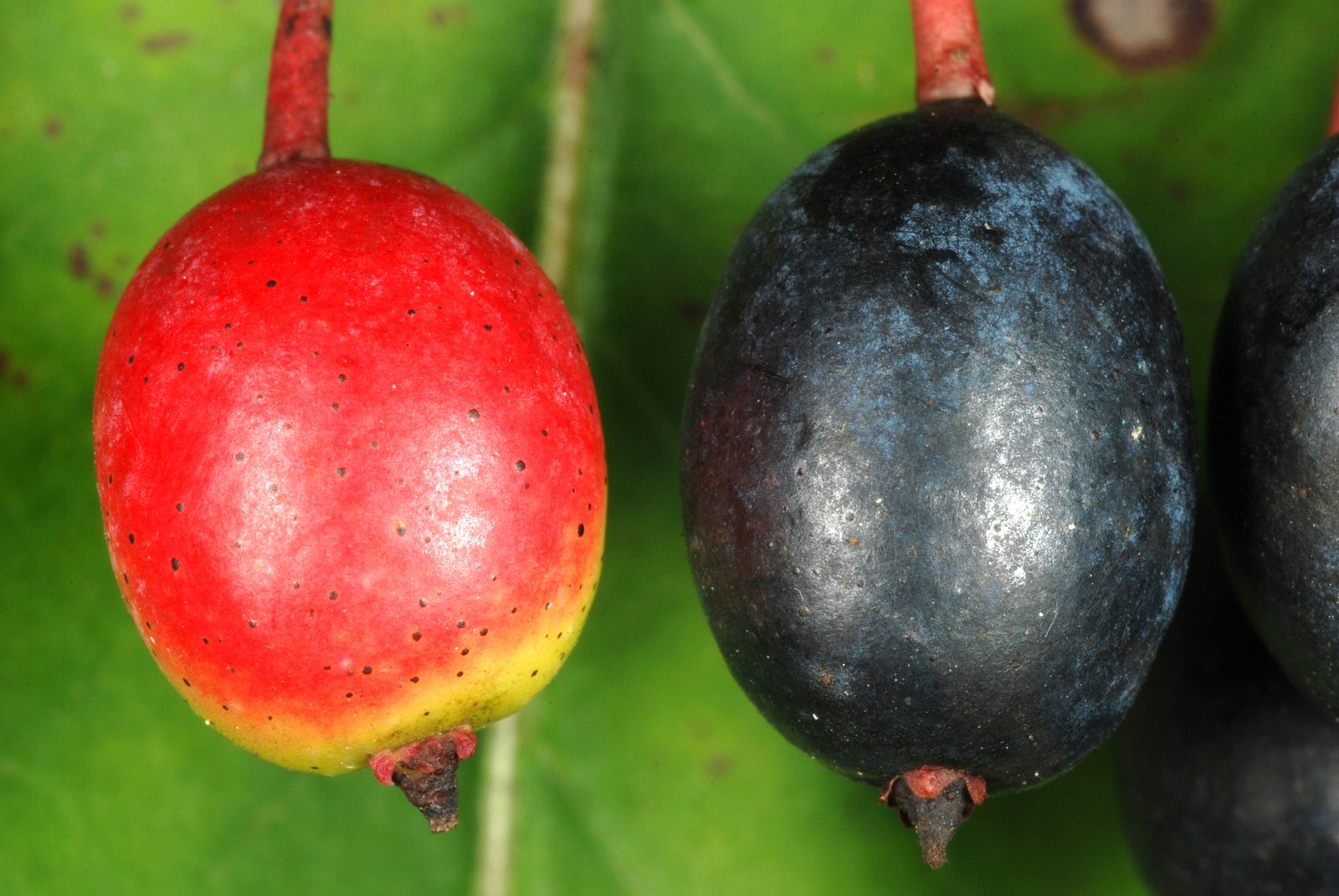
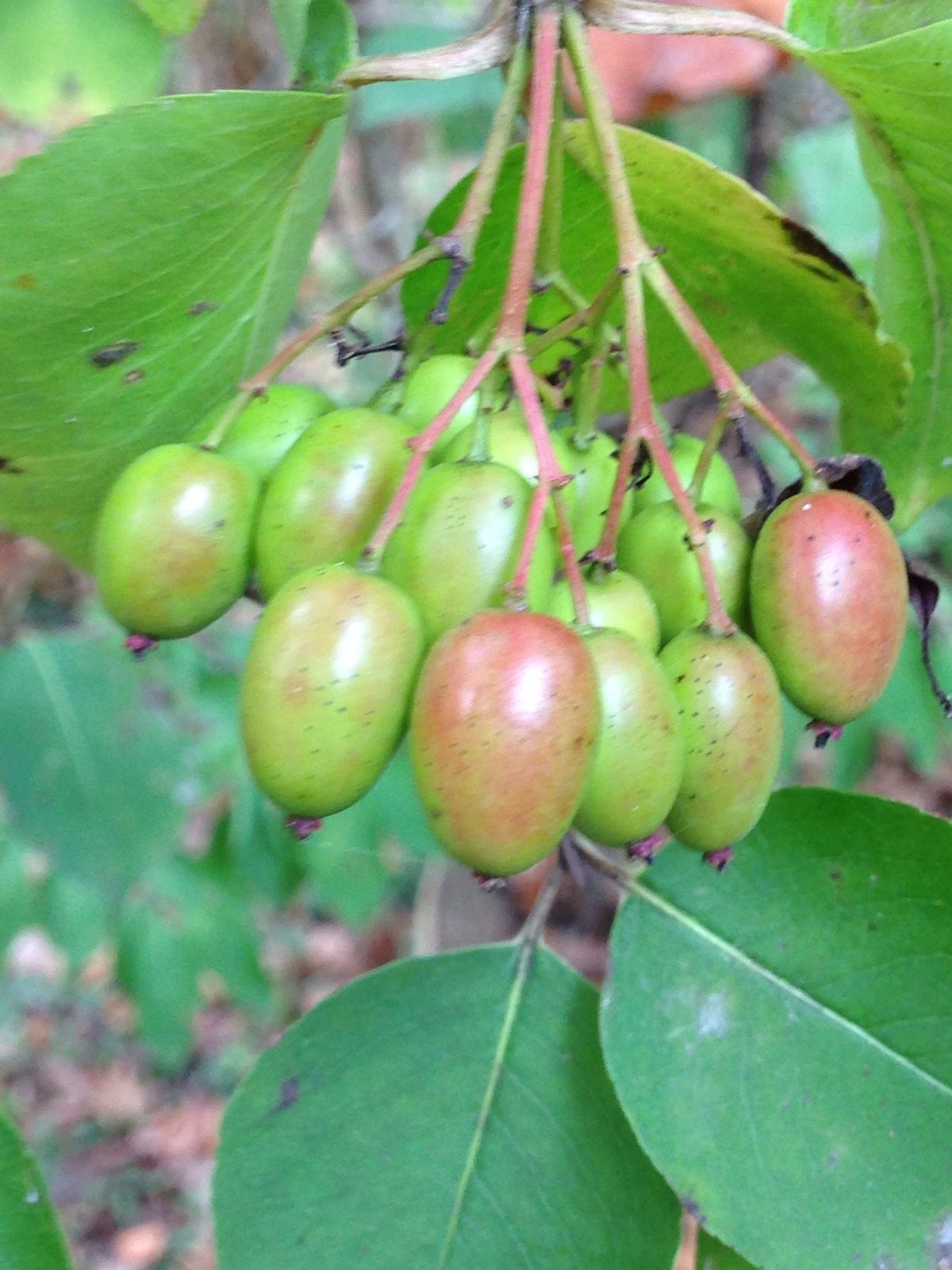
Blackhaw viburnum is a large deciduous shrub or small tree native to eastern and central North America. Gardeners grow it for its white spring flowers, blue-black autumn fruit and reddish-purple fall foliage; it makes a useful informal screen or woodland-edge specimen.
At a glance
- Sun
- Full sun to partial shade; flowering and autumn colour are usually best with more sun.
- Water
- Moderate while establishing; established plants tolerate occasional drought.
- Soil
- Well-drained clay, loam or sandy soil, from mildly acidic to alkaline. Avoid persistently waterlogged ground.
- Height
- 12-15 ft (3.7-4.6 m), occasionally reaching 25 ft (7.6 m)
- Spread
- 6-12 ft (1.8-3.7 m)
- Flowers
- Mid- to late spring; small creamy-white flowers in flat-topped clusters.
- Foliage
- Opposite, oval, finely toothed dark green leaves, turning red, bronze or purple in autumn.
- Growth
- Slow to moderate
- Care needed
- Low
The year at a glance
- Pollinators
- Drought tolerant
- Cold hardy
- Heat tolerant
- Wildlife
- Low allergen
| J | F | M | A | M | J | J | A | S | O | N | D | |
|---|---|---|---|---|---|---|---|---|---|---|---|---|
| Flowers | ||||||||||||
| Fruit | ||||||||||||
| Plant |
Northern hemisphere months. In Australia, shift them by six.
- Difficulty
- Easy
- Toughness
- Very tough
Will it suit your garden?
Pick your zone, country, light and whether you have pets.
Full sun is 6 or more hours of direct sun a day, part shade 3 to 6 hours, shade under 3.
How it grows
Planting day
1.6 ft (0.5 m)
After 1 year
3 ft (1.1 m)
After 2 years
5 ft (1.6 m)
After 3 years
7 ft (2.2 m)
After 5 years
11 ft (3.3 m)
About 7 years to full size.
From a typical nursery size, at an average rate for this kind of plant. A rule of thumb, not a forecast.
Good to know
- Cats and dogs
- Safe
- Native to
- the US
- Growth rate
- Slow
Care
Jobs through the year
- WaterApr–May, Sep–Oct, every 14 days
- Check established shrubs and water only in dry spells; water young plants more often.
- WaterJun–Aug, every 14 days
- Soak established shrubs during prolonged drought, allowing soil to drain between waterings.
- MulchMar–Apr
- Refresh 5–8 cm of organic mulch without covering the stems.
- PruneMay–Jun
- Prune sparingly after flowering and remove unwanted suckers; retain flowered shoots for fruit.
- Water deeply during dry spells for the first two growing seasons.
- Spread 2-3 in (5-8 cm) of organic mulch over the root zone, keeping it clear of the stems.
- Apply compost in spring if growth is weak; routine feeding is usually unnecessary.
- Allow room for the mature canopy rather than keeping it small by repeated clipping.
- For better fruiting, plant a second, genetically different blackhaw nearby.
- Remove basal suckers if you want a single specimen rather than a spreading clump.
Pruning. Prune just after flowering, removing dead, crossing or poorly placed branches and, if needed, a few old stems at ground level. Prune lightly if you want autumn fruit, since removing flowered shoots also removes developing berries.
Through the year
- Early spring
- Plant while the soil is workable, water thoroughly and mulch.
- Spring
- Check new growth for aphids and wash off small colonies with water.
- Late spring
- After flowering, make any necessary shaping cuts and remove unwanted suckers.
- Summer
- Water young plants deeply during dry spells; check that the soil drains between waterings.
- Autumn
- Leave fruit for birds and plant additional blackhaws once conditions are cool and moist.
- Winter
- Inspect the bare framework and remove broken or dead branches.
In the garden
- Plant along a woodland edge with shade-tolerant perennials beneath the canopy.
- Use several plants as a loose boundary screen, allowing their natural branching to develop.
- Train as a small multi-stemmed tree beside a lawn or terrace for flowers and autumn colour.
- Combine with other locally native shrubs in a mixed wildlife hedge.
Garden styles it suits: Woodland, Wildlife garden, Native hedgerow, Autumn colour, Low-maintenance and Traditional.
Plant it with: Eastern redbud, Serviceberry, Witch hazel, Oakleaf hydrangea, Wild geranium and Christmas fern.
Wildlife: Flowers attract bees and other small pollinating insects. Birds and small mammals eat the fruit, while the dense branching provides shelter and nesting cover.
Problems to watch for
- Powdery mildew can coat leaves in crowded, shaded conditions; improve airflow and avoid overhead watering.
- Leaf spots may develop during wet weather; collect fallen leaves and water at soil level. Established plants seldom need treatment.
- Aphids can curl tender shoots; wash them off with a firm spray of water and avoid unnecessary insecticides that kill predators.
- Sparse fruiting can result from deep shade, pruning after flowering or lack of a suitable pollen partner; improve light, prune lightly and add a genetically different blackhaw.
Safety
Not known to be toxic to people, cats, dogs or horses. The ripe fruit flesh is edible, but the hard stones should not be eaten. Bark and root preparations have medicinal uses and should not be used as home remedies without professional advice.
Easily confused with
Nannyberry (Viburnum lentago)
Nannyberry usually has longer, sharply pointed leaf tips and conspicuously winged leaf stalks; blackhaw has shorter leaf tips and narrower, less noticeably winged stalks.
Rusty blackhaw (Viburnum rufidulum)
Rusty blackhaw has thicker, glossier leaves and rusty-brown hairs on young shoots, leaf stalks and the undersides of leaf veins; blackhaw is much less hairy.
The name
The species name prunifolium means plum-leaved, referring to the resemblance of its leaves to those of a plum.
Propagation. Take softwood cuttings in early summer or separate rooted suckers while dormant. Seed germination is slow and irregular, usually requiring a warm period followed by cold stratification and sometimes more than one seasonal cycle.
Checked against open data
- Accepted botanical name
- Viburnum prunifolium
- In the US and Canada
- Native in the lower 48 states.
- Native range
- Alabama, Arkansas, Connecticut, Delaware, District of Columbia, Georgia, Illinois, Indiana, Iowa, Kansas, Kentucky and Louisiana.
- Measured
- Soil pH 4.8 to 7.5. Average height 488 cm.
Sources: GBIF (CC BY 4.0), USDA PLANTS and Trefle (CC BY 4.0). The care and design notes are LandscapeGPT's own.
See it in your own yard.
Upload a photo of your yard and see it redesigned with plants that suit your climate, each checked against your zone.