Blackthorn
Prunus spinosa. Family Rosaceae. Shrub.
Also called Sloe, Sloe plum.
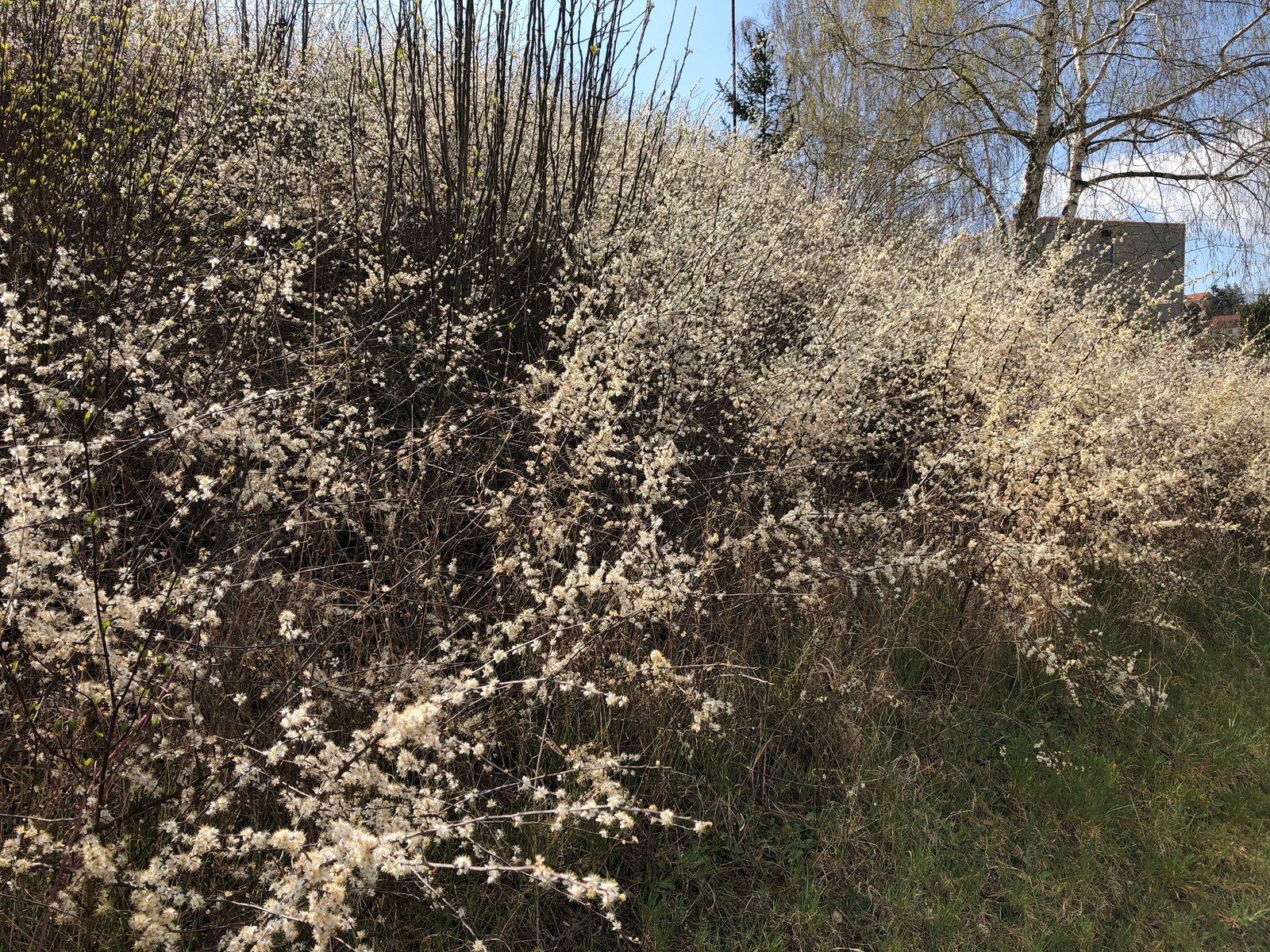
Blackthorn is a deciduous, densely thorny shrub grown for its early white blossom, blue-black sloes and value as a wildlife hedge. It forms spreading thickets through root suckers, so give it room away from paths, lawns and small borders.
At a glance
- Sun
- Full sun to partial shade; flowering and fruiting are best in full sun.
- Water
- Water regularly during the first growing season. Established plants tolerate short dry spells but may need deep watering during prolonged drought.
- Soil
- Most well-drained soils, including clay and chalk; tolerates acidic to alkaline conditions. Avoid persistently waterlogged ground.
- Height
- 10-15 ft (3-4.6 m), occasionally taller
- Spread
- 10-15 ft (3-4.6 m) per mature shrub; suckering colonies can spread much farther
- Flowers
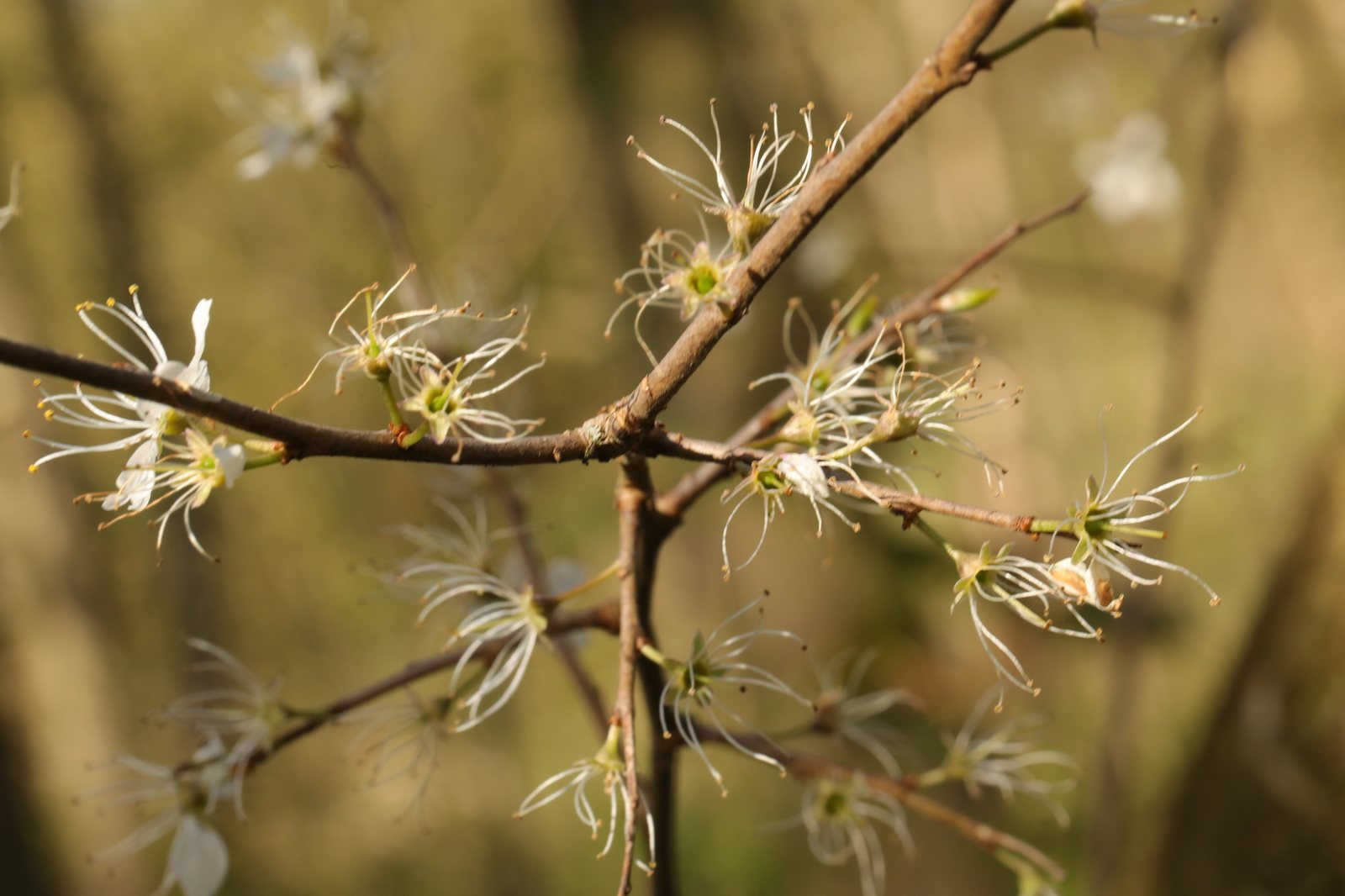
- Early to mid-spring; small white flowers cover the bare branches before the leaves open.
- Foliage
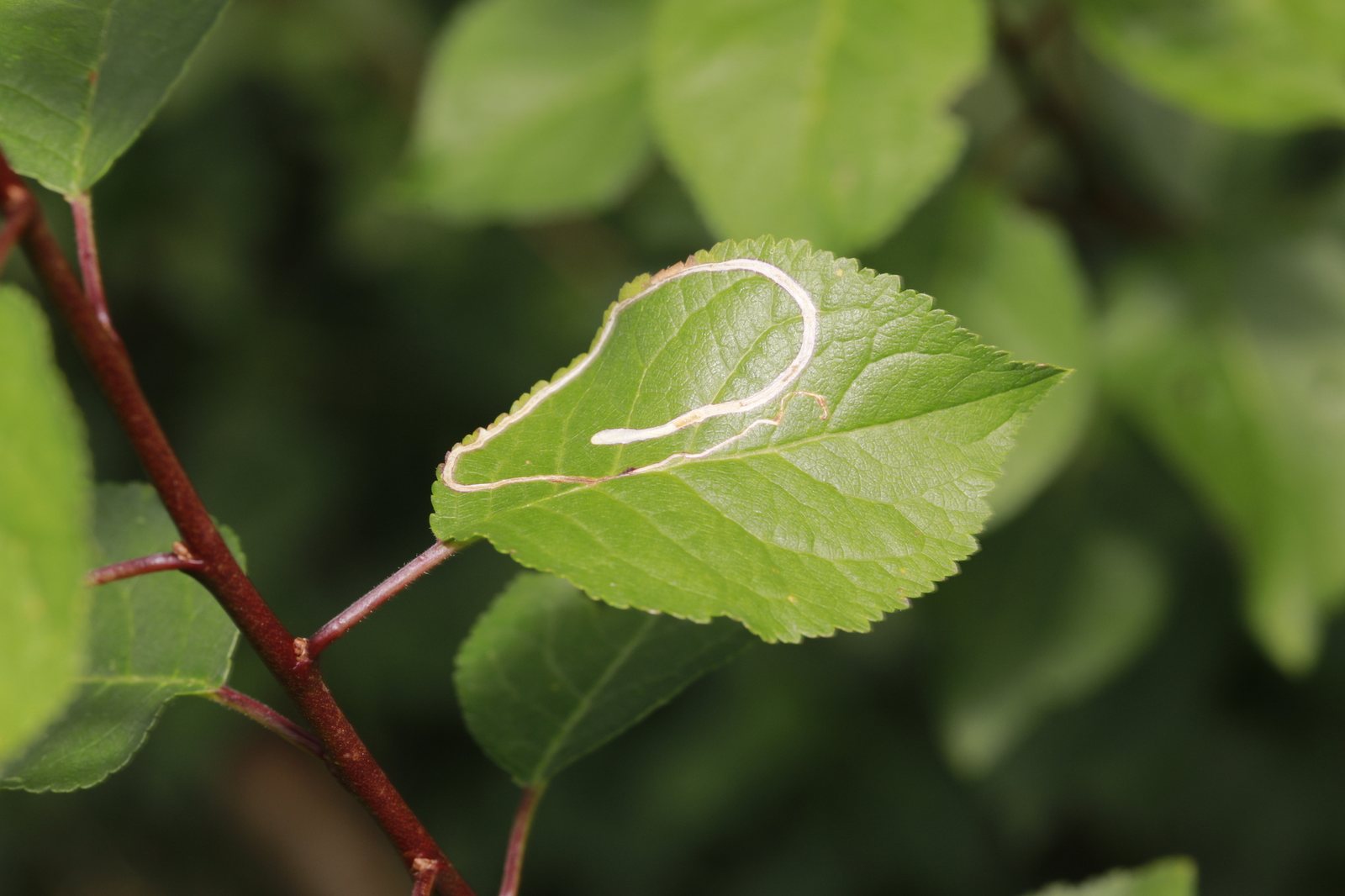
- Small, oval, finely toothed green leaves, sometimes turning yellow in autumn; dark branches carry sharp thorns.
- Growth
- Moderate; root suckers can extend a colony quickly.
- Care needed
- Medium
The year at a glance
- Pollinators
- Drought tolerant
- Cold hardy
- Wildlife
- Low allergen
| J | F | M | A | M | J | J | A | S | O | N | D | |
|---|---|---|---|---|---|---|---|---|---|---|---|---|
| Flowers | ||||||||||||
| Fruit | ||||||||||||
| Plant |
Northern hemisphere months. In Australia, shift them by six.
- Difficulty
- Moderate
- Toughness
- Very tough
Will it suit your garden?
Pick your zone, country, light and whether you have pets.
Full sun is 6 or more hours of direct sun a day, part shade 3 to 6 hours, shade under 3.
How it grows
Planting day
1.6 ft (0.5 m)
After 1 year
4 ft (1.2 m)
After 2 years
6 ft (1.8 m)
After 3 years
8 ft (2.5 m)
After 5 years
12 ft (3.8 m)
full size
About 5 years to full size.
From a typical nursery size, at an average rate for this kind of plant. A rule of thumb, not a forecast.
Good to know
- Cats and dogs
- Toxic
- Native to
- the UK
- In the garden
- Spreads vigorously: plan to contain it.
- Growth rate
- Moderate
Care
Jobs through the year
- WaterApr–May, Sep–Oct, every 14 days
- Water established shrubs only in prolonged dry spells; young plants need more regular watering.
- WaterJun–Aug, every 7 days
- During prolonged drought, water established shrubs deeply; skip when soil remains moist.
- MulchFeb–Mar
- Maintain 5–8 cm of organic mulch over roots, keeping it away from stems.
- PruneApr–Sep, every 30 days
- Remove unwanted suckers at their root attachment; wear thick gloves and eye protection.
- PruneJun–Aug
- Prune only as needed in dry weather; check for active nests and leave fruiting hedge sections untrimmed.
- Plant during the dormant season when the soil is workable, leaving room for its mature width and suckers.
- Water deeply during dry spells in the first growing season rather than giving frequent light sprinklings.
- Apply 2-3 in (5-8 cm) of organic mulch over the root area, keeping it clear of the stems.
- Avoid routine feeding on reasonably fertile soil; use a little compost on poor ground.
- Remove unwanted suckers promptly, exposing their attachment and cutting them close to the parent root.
- Wear thick gloves and eye protection when working among the thorny branches.
Pruning. Prune in dry weather in summer to reduce the risk of silver leaf infection, removing dead, damaged or badly placed branches. Trim hedges lightly and in sections, checking for active bird nests first; heavy annual clipping reduces blossom and sloes.
Through the year
- Late autumn
- Plant bare-root shrubs after leaf fall while the ground is workable.
- Late winter
- Check young plants for wind loosening and replace mulch without covering the stem bases.
- Spring
- Water new plants during dry weather and remove suckers appearing outside the intended planting area.
- Summer
- Carry out necessary pruning in dry weather after checking for active bird nests.
- Late summer
- Lightly trim selected hedge sections, leaving others uncut to retain fruit and next spring's flowering wood.
- Autumn
- Harvest fully coloured sloes for cooking or infusing, leaving some fruit for birds.
In the garden
- Plant with hawthorn, hazel and dog rose as a dense, informal boundary hedge.
- Use at a woodland edge where its early blossom stands out against darker trees.
- Allow a thicket in a large wildlife garden to provide nesting cover and shelter.
- Include in a roomy edible landscape for sloes, keeping thorny growth away from harvesting paths.
Garden styles it suits: Native hedgerow, Wildlife garden, English country, Woodland, Rewilded and Edible landscape.
Plant it with: Common hawthorn, Hazel, Dog rose, Holly, Primrose and Common dog violet.
Wildlife: Early flowers provide pollen and nectar for bees and other insects. Dense thorny growth offers nesting cover, leaves support numerous moth and butterfly caterpillars in its native range, and birds eat the sloes.
Problems to watch for
- Unwanted suckering: remove new shoots at their point of origin and keep the shrub away from small beds; repeated cutting may be needed.
- Aphids on young shoots: tolerate small colonies or wash them off with water; avoid spraying blossom visited by pollinators.
- Brown rot on fruit: remove rotten and mummified sloes and prune out affected twigs in dry summer weather.
- Silver leaf disease: suspect it where leaves become persistently silvery and branches die back; remove affected wood in dry summer weather, cutting back into healthy growth.
Safety
Leaves, bark and the kernels inside the fruit stones contain cyanogenic compounds and can poison people, cats, dogs and horses if enough is eaten, especially when stones are crushed or chewed. Serious poisoning is possible; keep livestock away from prunings. Ripe fruit flesh is edible but very astringent and is usually cooked or infused; do not eat the kernels. Thorns can cause deep puncture wounds.
Where it spreads. Spreads aggressively by root suckers and can form difficult-to-remove thickets even within its native range in the UK and Europe. It is naturalized and can be weedy in southeastern Australia, including Victoria and Tasmania; check local weed guidance before planting outside its native range.
Easily confused with
Common hawthorn (Crataegus monogyna)
Hawthorn has distinctly lobed leaves and usually flowers after its leaves emerge; its fruits are red rather than blue-black.
Cherry plum (Prunus cerasifera)
Cherry plum generally has larger leaves and larger yellow, red or purple fruits, with fewer stout thorns; it commonly develops into a small tree.
Damson (Prunus domestica subsp. insititia)
Damsons usually have larger leaves and larger, often oval fruits, with less densely thorny growth; variable seedlings and hybrids can be difficult to distinguish.
The name
The Latin spinosa means thorny, while blackthorn refers to the dark bark and thorny branches.
Propagation. Lift rooted suckers during dormancy, with the landowner's permission where relevant. Seed needs a prolonged dormancy-breaking treatment and may take more than one season to germinate; rooted suckers are usually easier.
Checked against open data
- Accepted botanical name
- Prunus spinosa
- In the US and Canada
- Introduced in Canada and the lower 48 states.
- Native range
- Albania, Algeria, Austria, Baleares, Baltic States, Belarus, Belgium, Bulgaria, Central European Rus, Corse, Czechoslovakia and Denmark.
- Measured
- Soil pH 5.5 to 6.5. Average height 100 cm.
Sources: GBIF (CC BY 4.0), USDA PLANTS and Trefle (CC BY 4.0). The care and design notes are LandscapeGPT's own.
See it in your own yard.
Upload a photo of your yard and see it redesigned with plants that suit your climate, each checked against your zone.