Blue flag iris
Iris versicolor. Family Iridaceae. Perennial.
Also called Northern blue flag, Harlequin blue flag, Larger blue flag.
Blue flag iris is a clump-forming wetland perennial native to eastern North America, grown for its violet-blue flowers and upright, sword-shaped leaves. It suits pond margins, bog gardens and consistently moist borders, but struggles in soil that dries out.
At a glance
- Sun
- Full sun to partial shade; flowering is best with at least six hours of sun where moisture is plentiful.
- Water
- Keep consistently moist to wet. Established plants tolerate shallow standing water up to about 4 in (10 cm) above the rhizomes.
- Soil
- Humus-rich, moisture-retentive soil, preferably acidic to neutral; tolerates wet clay.
- Height
- 2-3 ft (0.6-0.9 m)
- Spread
- 1-2 ft (0.3-0.6 m), gradually widening through rhizomes
- Flowers
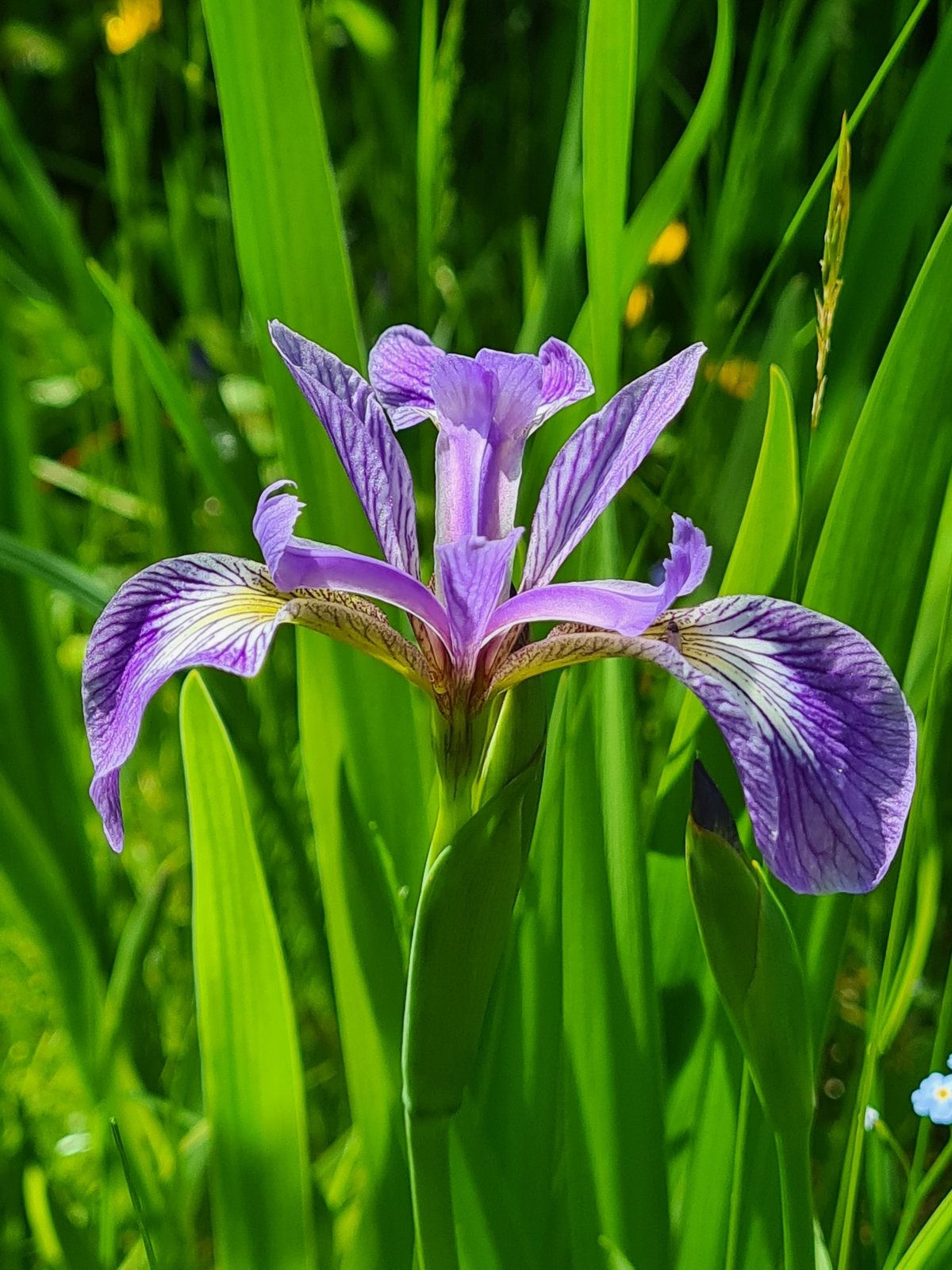
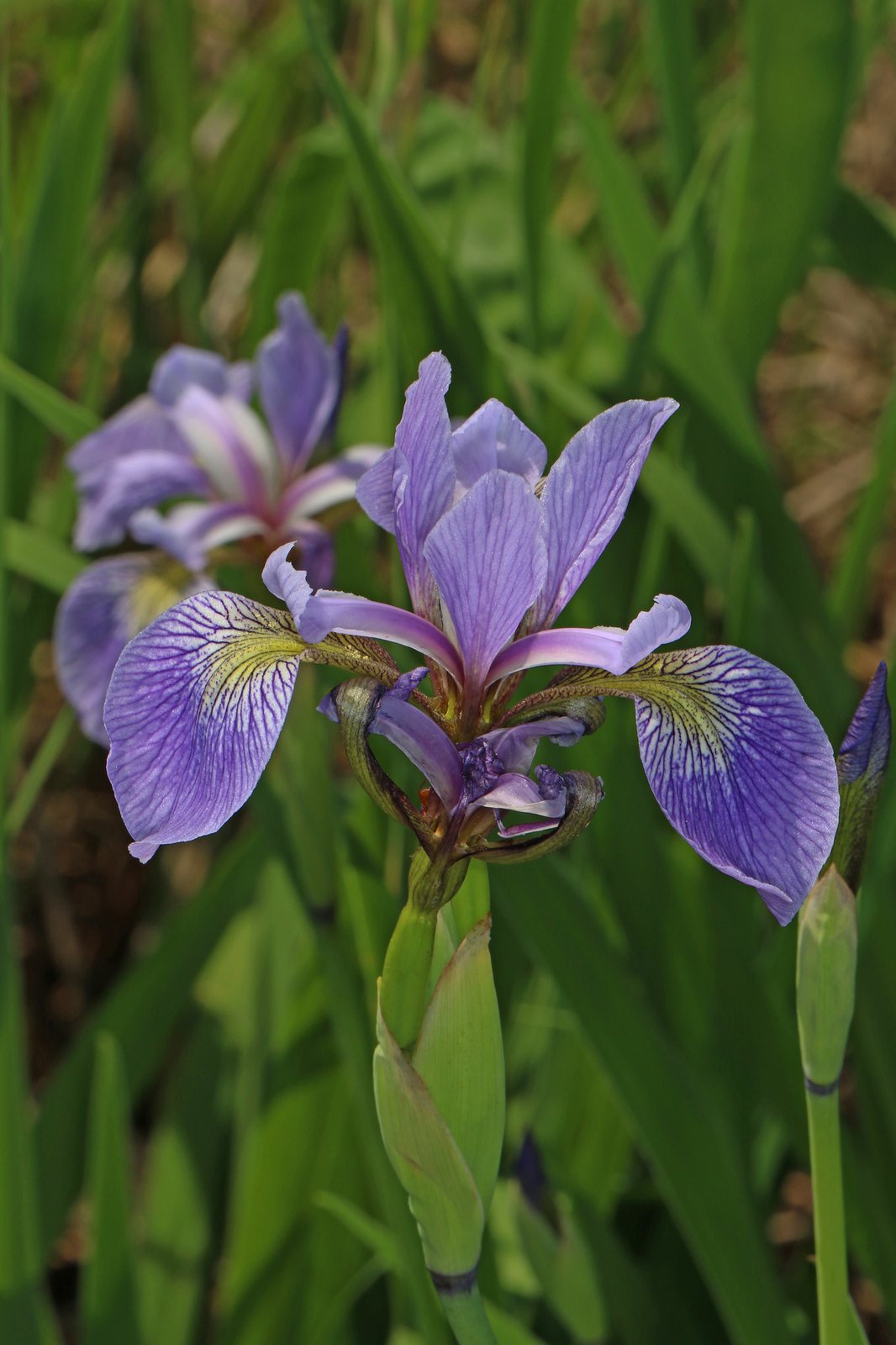
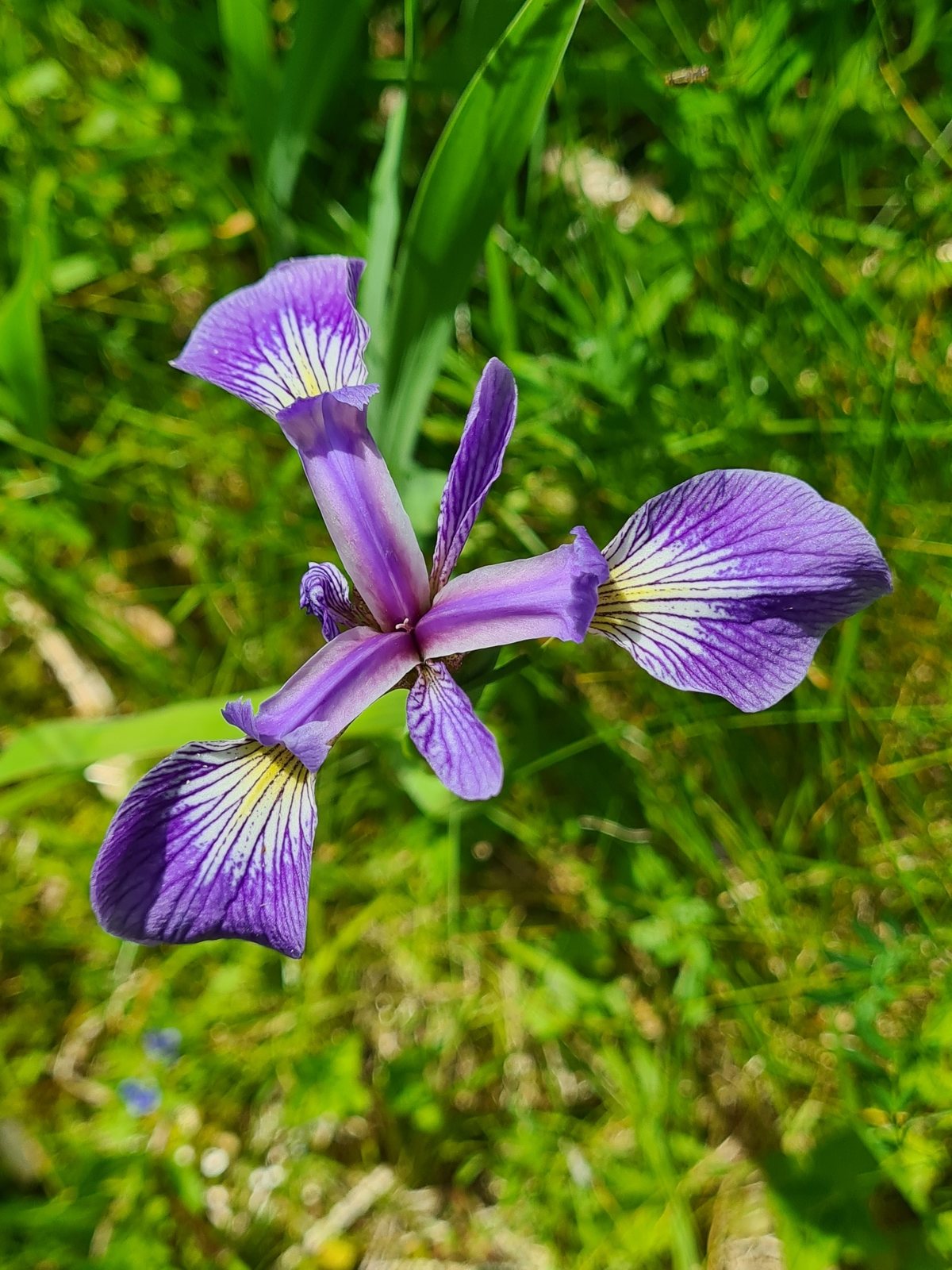
- Late spring to early summer; violet-blue flowers with purple veins and yellow-and-white markings on the falls.
- Foliage
- Upright fans of green to blue-green, sword-shaped leaves; dies back in winter.
- Growth
- Moderate
- Care needed
- Low
The year at a glance
- Pollinators
- Deer resistant
- Cold hardy
- Wildlife
- Low allergen
| J | F | M | A | M | J | J | A | S | O | N | D | |
|---|---|---|---|---|---|---|---|---|---|---|---|---|
| Flowers | ||||||||||||
| Fruit | ||||||||||||
| Plant |
Northern hemisphere months. In Australia, shift them by six.
- Difficulty
- Easy
- Toughness
- Fairly tough
Will it suit your garden?
Pick your zone, country, light and whether you have pets.
Full sun is 6 or more hours of direct sun a day, part shade 3 to 6 hours, shade under 3.
How it grows
Planting day
1 ft (0.3 m)
After 1 year
1.5 ft (0.45 m)
After 2 years
2 ft (0.6 m)
After 3 years
2.5 ft (0.75 m)
full size
About 3 years to full size.
From a typical nursery size, at an average rate for this kind of plant. A rule of thumb, not a forecast.
Good to know
- Cats and dogs
- Toxic
- Native to
- the US and Canada
- In the garden
- Spreads vigorously: plan to contain it.
- Growth rate
- Moderate
Care
Jobs through the year
- WaterMar–May, Sep–Oct, every 7 days
- Keep established border plants consistently moist; pond-grown plants need no supplementary watering.
- WaterJun–Aug, every 3 days
- Soak border plants as needed so roots never dry out; check new plants more frequently.
- FeedMar–Apr
- Top-dress border plants lightly with compost; do not fertilise plants in ponds.
- MulchApr
- Apply leaf mould around moist-border plants without covering leaf bases.
- DeadheadJun–Jul
- Cut spent flower stems at the base unless seed pods are wanted.
- DivideJul–Aug
- Divide congested clumps after flowering every 3–5 years and replant promptly.
- PruneOct–Nov
- Cut yellowed foliage near ground level and remove debris around crowns.
- Plant in spring or early autumn with the rhizomes just below the soil surface.
- Water during dry spells so the root zone never dries out completely.
- Mulch moist-border plants with leaf mould, keeping the leaf bases uncovered.
- In border soil, apply a light compost dressing in spring; avoid fertilising plants in ponds.
- Divide congested clumps after flowering every three to five years.
Pruning. Remove spent flower stems at the base unless you want seed. Cut leaves back near ground level once they have yellowed in autumn, and remove dead foliage rather than leaving it around the crowns.
Through the year
- Early spring
- Clear any remaining dead leaves and check that the planting area remains moist.
- Spring
- Plant new clumps and top-dress border-grown plants lightly with compost.
- Late spring
- Check for chewed leaves or water-soaked streaks that may indicate iris borer in affected North American regions.
- Early summer
- Remove faded flower stems if seed is not wanted.
- Summer
- Maintain moisture and divide crowded clumps after flowering.
- Late autumn
- Cut back yellowed foliage and remove debris around the plants.
In the garden
- Plant in groups along a pond margin for vertical foliage and blue flowers.
- Combine with marsh marigolds and royal ferns in a bog garden for contrasting leaf shapes and successive seasonal interest.
- Use in the reliably moist lower parts of a rain garden, not on its dry upper edges.
- Mix with sedges and cardinal flowers in a naturalistic wetland planting.
Garden styles it suits: Bog garden, Wildlife garden, Native meadow, Cottage garden, New perennial (prairie) and Blues and silvers.
Plant it with: Marsh marigold, Royal fern, Cardinal flower, Swamp milkweed, Tussock sedge and Joe-Pye weed.
Wildlife: Flowers provide nectar and pollen for bees, including bumblebees. Dense clumps offer cover for small wetland animals.
Problems to watch for
- Dry soil causes browning leaves and poor growth: water deeply and move the plant to a wetter position if necessary.
- Iris borer occurs in parts of North America: remove infested leaves or rhizomes and clear dead iris foliage in autumn.
- Fungal leaf spots cause brown patches: remove badly affected leaves, improve spacing and avoid overhead watering.
- Bacterial soft rot makes rhizomes soft and foul-smelling: lift the clump, discard rotten sections and replant only firm, healthy pieces.
Safety
Toxic if eaten by people, cats, dogs or horses. All parts contain irritant compounds, with the highest concentrations in the rhizomes; ingestion can cause drooling, vomiting, abdominal pain and diarrhoea. Sap may irritate skin. Keep rhizomes away from children and animals, and seek medical or veterinary advice after ingestion.
Easily confused with
Yellow flag iris (Iris pseudacorus)
Has yellow rather than violet-blue flowers and generally forms larger, more vigorous clumps. It is invasive in many regions, so identify plants before sharing divisions.
Siberian iris (Iris sibirica)
Usually has much narrower, grass-like leaves and flowers held on slender stems above the foliage. It prefers moist border soil rather than prolonged standing water.
The name
Iris comes from the Greek word for rainbow, while versicolor means variously coloured, referring to the flower's contrasting colours and markings.
Propagation. Divide rhizomes after flowering, retaining healthy roots and at least one leaf fan on each piece. Seed can be sown fresh outdoors; germination often follows a period of winter cold, and seedlings take several years to flower.
Checked against open data
- Accepted botanical name
- Iris versicolor
- In the US and Canada
- Native in Canada, the lower 48 states and St. Pierre and Miquelon.
- Native range
- Connecticut, Labrador, Maine, Manitoba, Maryland, Masachusettes, Michigan, Minnesota, New Brunswick, New Hampshire, New Jersey and New York.
- Measured
- Average height 79 cm.
Sources: GBIF (CC BY 4.0), USDA PLANTS and Trefle (CC BY 4.0). The care and design notes are LandscapeGPT's own.
See it in your own yard.
Upload a photo of your yard and see it redesigned with plants that suit your climate, each checked against your zone.