Blue Muffin arrowwood
Viburnum dentatum 'Christom'. Family Viburnaceae. Shrub.
Also called Viburnum dentatum 'Christom', Blue Muffin viburnum, Arrowwood viburnum.
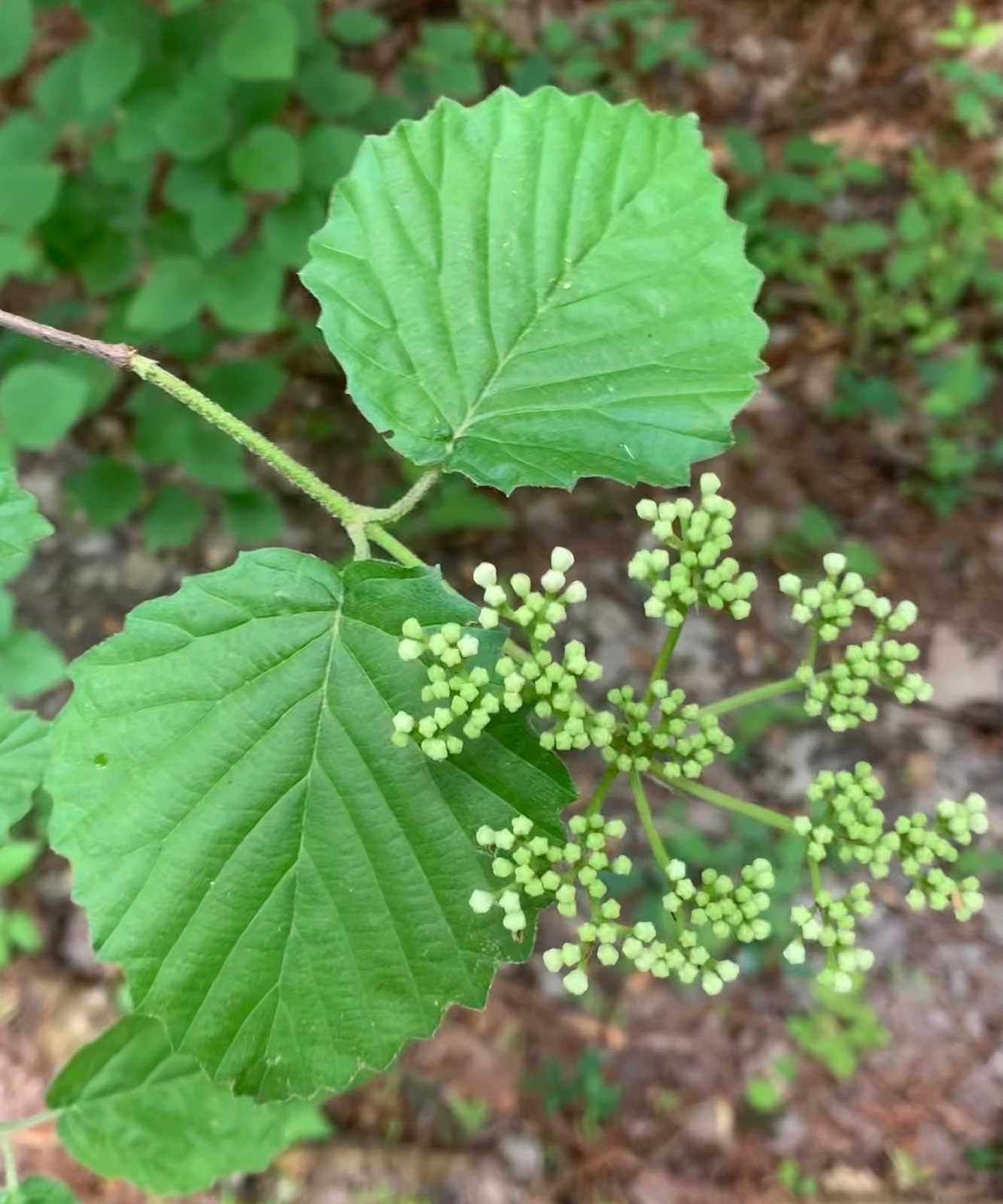
A compact, rounded deciduous shrub grown for flat clusters of white flowers, blue autumn berries and yellow to reddish-purple autumn foliage. For reliable berries, plant a genetically different arrowwood viburnum nearby that flowers at the same time; another Blue Muffin is the same clone and is not a suitable pollen partner.
At a glance
- Sun
- Full sun to partial shade; flowering and berry production are strongest with at least six hours of direct sun.
- Water
- Moderate; keep evenly moist while establishing, then water during prolonged dry spells.
- Soil
- Moist, well-drained soil; tolerates clay and a broad pH range, but avoid persistently waterlogged ground.
- Height
- 5-7 ft (1.5-2.1 m)
- Spread
- 5-7 ft (1.5-2.1 m)
- Flowers
- Late spring to early summer; small white flowers in flat-topped clusters.
- Foliage
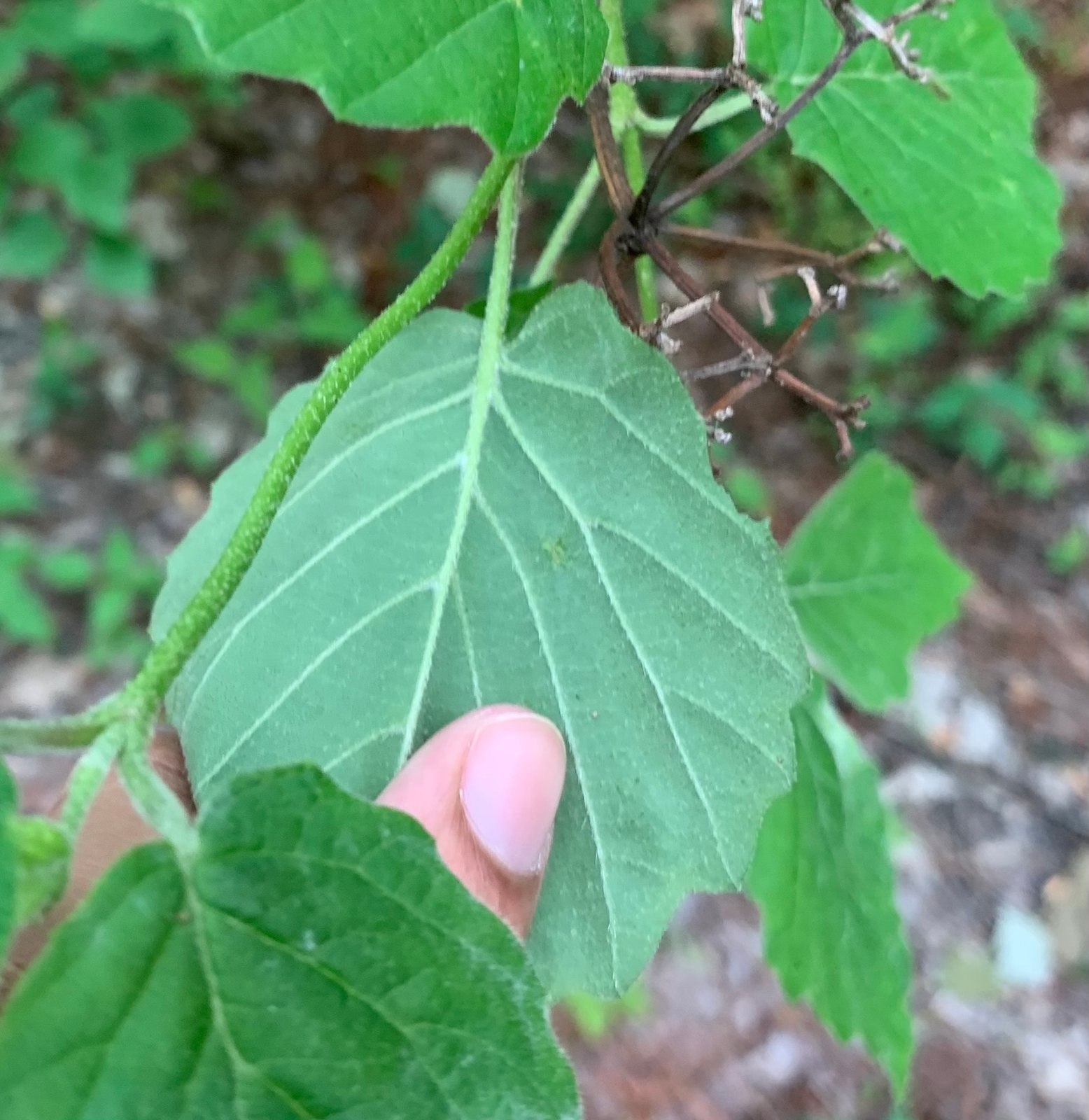
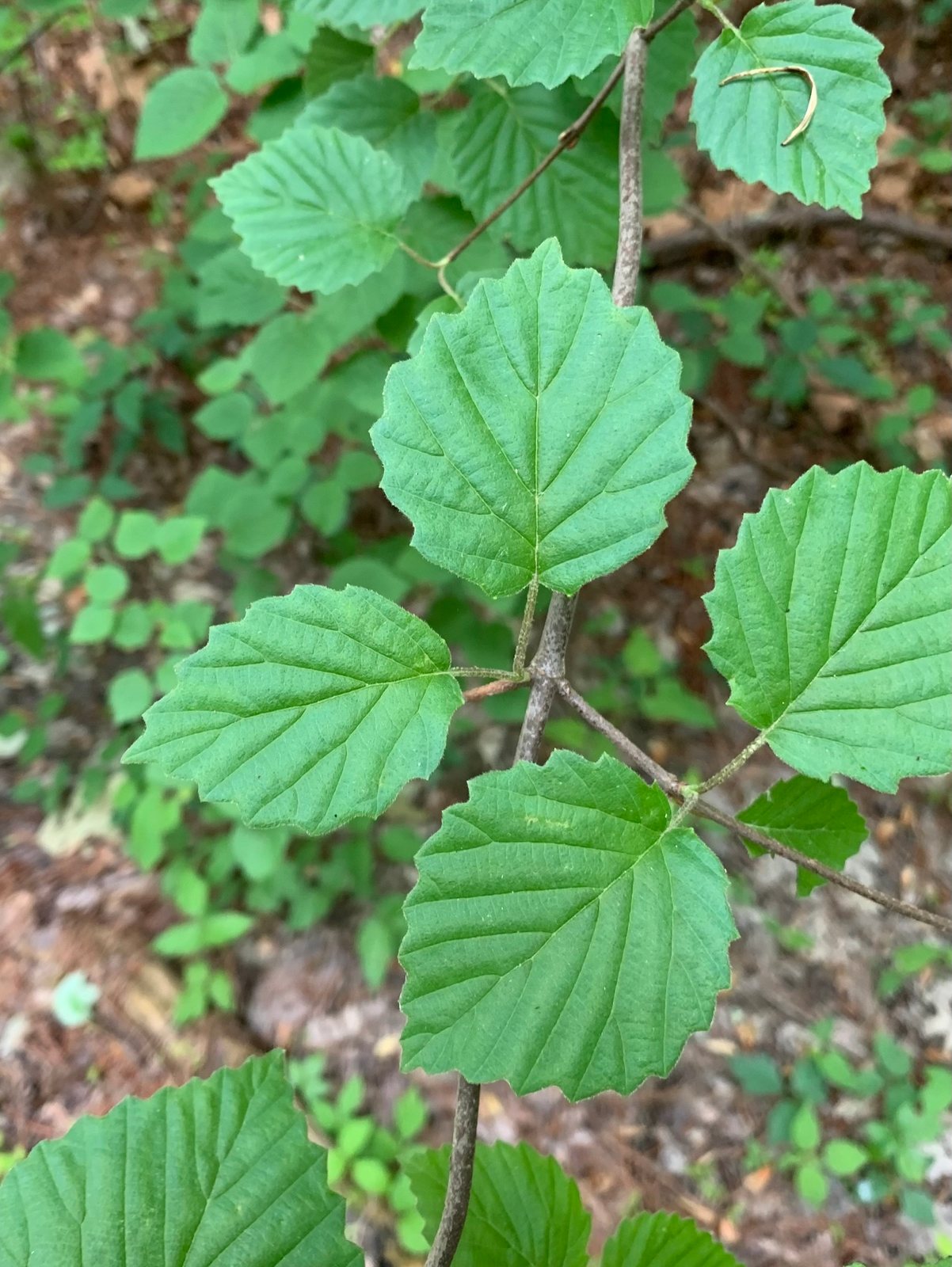
- Opposite, oval, dark green leaves with prominent veins and sharply toothed edges; autumn colour ranges from yellow to burgundy.
- Growth
- Moderate
- Care needed
- Low
The year at a glance
- Pollinators
- Cold hardy
- Wildlife
- Low allergen
| J | F | M | A | M | J | J | A | S | O | N | D | |
|---|---|---|---|---|---|---|---|---|---|---|---|---|
| Flowers | ||||||||||||
| Fruit | ||||||||||||
| Plant |
Northern hemisphere months. In Australia, shift them by six.
- Difficulty
- Easy
- Toughness
- Fairly tough
Will it suit your garden?
Pick your zone, country, light and whether you have pets.
Full sun is 6 or more hours of direct sun a day, part shade 3 to 6 hours, shade under 3.
How it grows
Planting day
1.6 ft (0.5 m)
After 1 year
2.5 ft (0.76 m)
After 2 years
3 ft (1 m)
After 3 years
4 ft (1.3 m)
After 5 years
6 ft (1.8 m)
full size
About 5 years to full size.
From a typical nursery size, at an average rate for this kind of plant. A rule of thumb, not a forecast.
Good to know
- Cats and dogs
- Safe
- Native to
- the US
- In the garden
- Spreads vigorously: plan to contain it.
- Growth rate
- Moderate
Care
Jobs through the year
- WaterApr–May, Sep–Oct, every 14 days
- Water established shrubs only when the root zone is drying; young shrubs need more frequent watering for two years.
- WaterJun–Aug, every 14 days
- Water established shrubs deeply during extended drought, especially while berries develop; water sooner if wilting.
- FeedMar–Apr
- Apply a modest amount of balanced slow-release fertilizer only if growth is weak.
- MulchMar–Apr
- Maintain 5-8 cm of organic mulch, keeping it clear of stem bases.
- PruneJun
- Immediately after flowering, thin only damaged or congested stems; retain flowered shoots for berries.
- ProtectJan–Mar
- Inspect for viburnum leaf beetle egg pits and remove infested twig tips before hatching.
- ProtectApr–Jun, every 7 days
- Inspect young foliage for beetle larvae; remove small infestations or use locally approved controls if needed.
- Water deeply during the first two growing seasons whenever the root zone begins to dry.
- Apply a 2-3 in (5-8 cm) layer of organic mulch, keeping it clear of the stems.
- Feed only if growth is weak; apply a modest amount of balanced slow-release fertiliser in spring.
- Plant a different arrowwood selection with overlapping flowering nearby if you want berries.
- Allow room for its mature width rather than keeping it small by repeated shearing.
- The species range extends into USDA zone 2, but Blue Muffin is generally sold for zones 3-8; choose a sheltered site at its cold limit.
Pruning. Prune immediately after flowering, removing dead or crossing stems and, if needed, a few of the oldest stems at ground level. Keep trimming light because removing flowered shoots also removes developing berries; winter pruning removes the next flower crop.
Through the year
- Late winter
- Inspect twigs for viburnum leaf beetle egg pits; prune out affected tips before eggs hatch.
- Spring
- Refresh mulch and water new plants during dry weather.
- Late spring
- Check that your pollen partner flowers at the same time, and watch new leaves for beetle larvae.
- Early summer
- After flowering, remove damaged or congested stems only where needed.
- Summer
- Water deeply during extended drought, especially while berries are developing.
- Autumn
- Plant container-grown shrubs while soil is workable and leave berries for birds.
In the garden
- Plant as an informal hedge, including compatible arrowwood selections to improve fruiting.
- Use at a sunny woodland edge with ferns and shade-tolerant perennials.
- Place behind flowering perennials as a leafy summer backdrop with autumn colour.
- Include in a mixed wildlife border where flowers feed insects and berries attract birds.
Garden styles it suits: Wildlife garden, Woodland, Native hedgerow, Traditional, Autumn colour and Low-maintenance.
Plant it with: Wild bergamot, Purple coneflower, Black-eyed Susan, New England aster, Christmas fern and Oakleaf hydrangea.
Wildlife: Flowers provide pollen and nectar for visiting insects, and birds eat the blue berries. The dense branching offers shelter; arrowwood also supports native caterpillars within its eastern North American range.
Problems to watch for
- Viburnum leaf beetle can severely skeletonise leaves where established, including parts of North America and Britain. Remove egg-bearing twigs in winter and control young larvae promptly using locally approved methods.
- Few or no berries usually mean there is no compatible pollen partner, flowering times do not overlap, or pruning removed flowers. Add a genetically different arrowwood with matching bloom time and prune lightly.
- Powdery mildew may coat leaves in crowded or shaded conditions. Improve airflow, avoid drought stress and remove badly affected fallen foliage.
- Leaf spots can develop in damp weather. Water at soil level, clear fallen leaves and avoid crowding; minor spotting rarely needs treatment.
Safety
Not known to be toxic to cats, dogs or horses, and not generally considered poisonous to people. It is grown as an ornamental, not a food crop; eating substantial amounts of berries or other plant material may cause stomach upset.
Easily confused with
American cranberrybush (Viburnum opulus var. americanum)
Has three-lobed, maple-like leaves and red fruit rather than unlobed, toothed leaves and blue fruit.
Koreanspice viburnum (Viburnum carlesii)
Has rounded clusters of strongly fragrant flowers opening from pink buds, rather than flat white flower clusters.
Smooth witherod (Viburnum nudum)
Has smoother, glossier leaves with mostly untoothed margins; its fruit often passes through pink before becoming blue-black.
The name
Arrowwood refers to the traditional use of straight stems for arrow shafts, while dentatum means toothed, describing the leaf margins.
Propagation. Root softwood cuttings in late spring or early summer, or layer a low branch. Seedlings will not reliably retain the compact habit or other characteristics of 'Christom'.
Checked against open data
- Accepted botanical name
- Viburnum dentatum
- In the US and Canada
- Native in the lower 48 states.
- Native range
- Connecticut, Delaware, District of Columbia, Illinois, Indiana, Iowa, Kentucky, Maine, Maryland, Missouri, New Jersey and Ohio.
- Measured
- Average height 460 cm.
Sources: GBIF (CC BY 4.0), USDA PLANTS and Trefle (CC BY 4.0). The care and design notes are LandscapeGPT's own.
See it in your own yard.
Upload a photo of your yard and see it redesigned with plants that suit your climate, each checked against your zone.