Blue rush 'Blue Arrows'
Juncus inflexus 'Blue Arrows'. Family Juncaceae. Ornamental grass.
Also called Hard rush 'Blue Arrows', Blue-green rush.
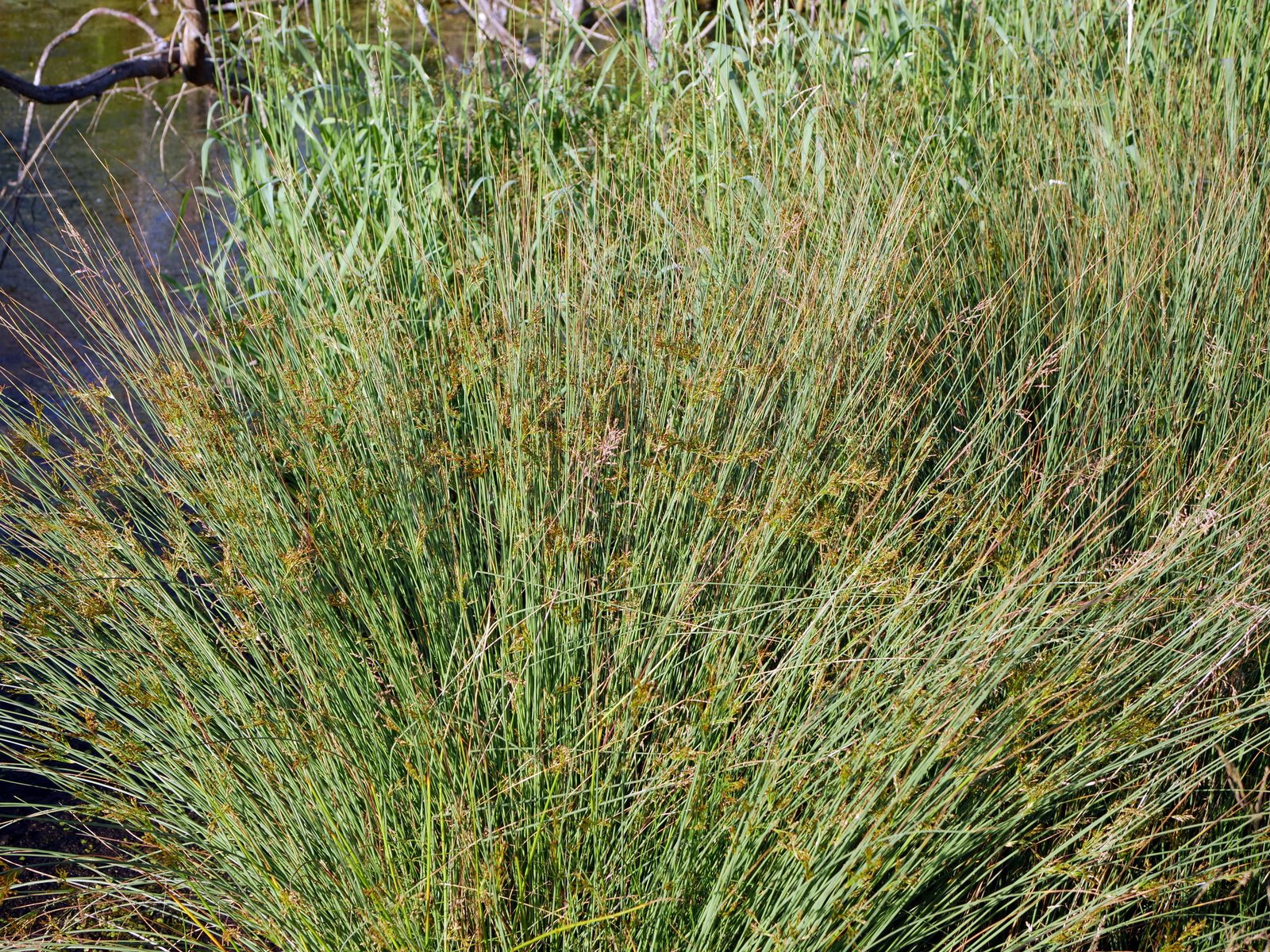
'Blue Arrows' is a clump-forming rush with stiff, upright, blue-grey stems that give beds and containers a strong vertical shape. Grow it in consistently moist soil, rain gardens or shallow pond margins; it is not a drought-tolerant ornamental grass.
At a glance
- Sun
- Full sun for the strongest blue colour and upright growth; tolerates light partial shade.
- Water
- Keep consistently moist to wet. Established plants tolerate brief drying, but prolonged drought causes browning.
- Soil
- Moisture-retentive loam or clay, including poorly drained soil; tolerates neutral to alkaline conditions particularly well.
- Height
- 2-3 ft (0.6-0.9 m)
- Spread
- 1-2 ft (0.3-0.6 m)
- Flowers
- Small, inconspicuous brown flower clusters appear near the stem tips in summer.
- Foliage
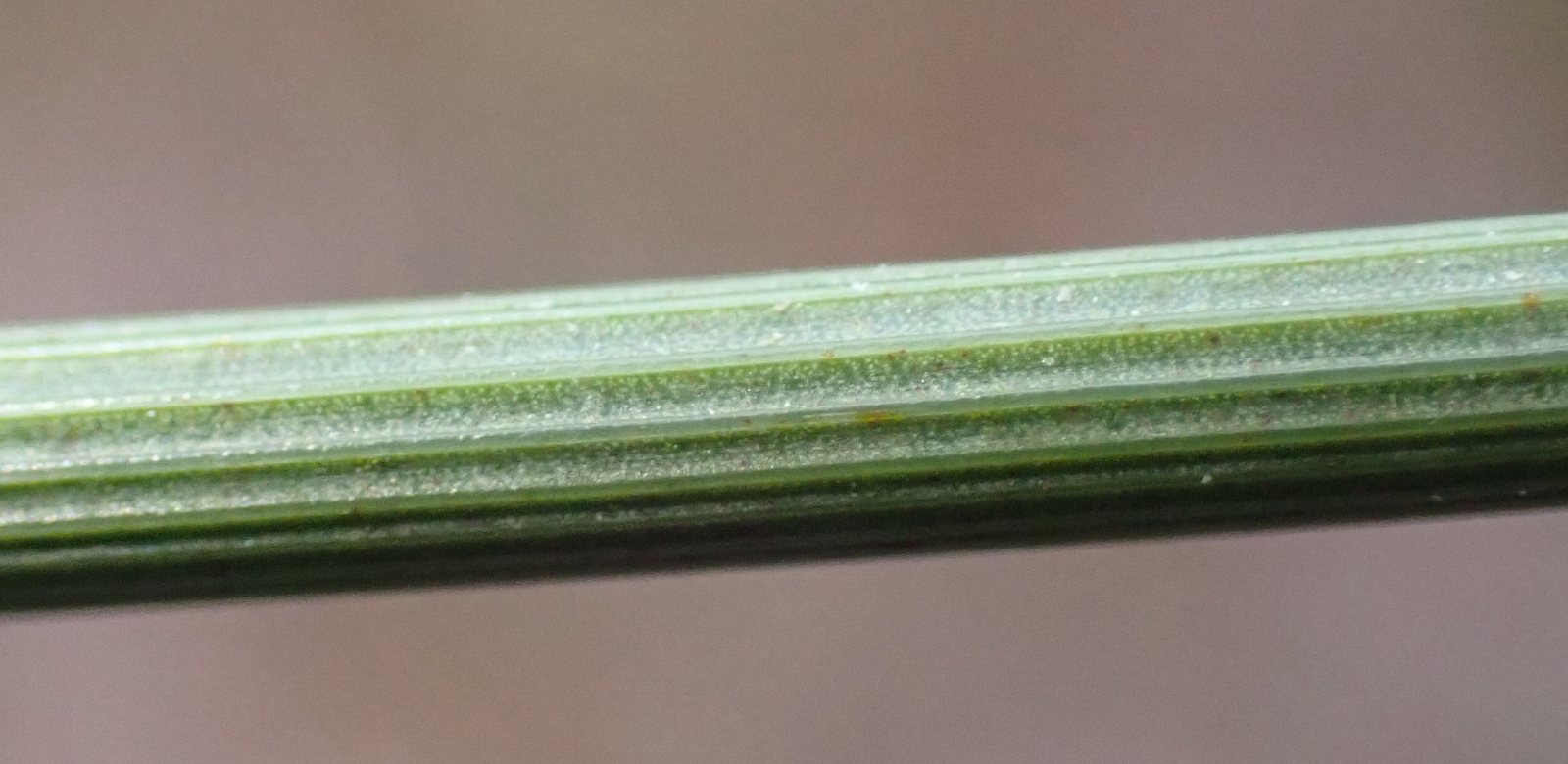
- Evergreen. Narrow, cylindrical, finely ridged blue-grey stems form a dense upright clump; true leaves are reduced to sheaths at the base.
- Growth
- Moderate
- Care needed
- Low
The year at a glance
- Deer resistant
- Cold hardy
- Heat tolerant
- Wildlife
| J | F | M | A | M | J | J | A | S | O | N | D | |
|---|---|---|---|---|---|---|---|---|---|---|---|---|
| Plant |
Northern hemisphere months. In Australia, shift them by six.
- Difficulty
- Easy
- Toughness
- Fairly tough
Will it suit your garden?
Pick your zone, country, light and whether you have pets.
Full sun is 6 or more hours of direct sun a day, part shade 3 to 6 hours, shade under 3.
How it grows
Planting day
1.1 ft (0.35 m)
After 1 year
1.7 ft (0.51 m)
After 2 years
2.2 ft (0.67 m)
After 3 years
2.5 ft (0.75 m)
full size
About 3 years to full size.
From a typical nursery size, at an average rate for this kind of plant. A rule of thumb, not a forecast.
Good to know
- Cats and dogs
- Safe
- Native to
- the UK
- Growth rate
- Moderate
Care
Jobs through the year
- WaterMar–May, Sep–Oct, every 7 days
- Check established plants and replenish moisture before soil dries; young plants need closer checks.
- WaterJun–Aug, every 3 days
- Keep established roots moist to wet; pond-edge plants need watering only if water levels fall.
- MulchMar–Apr
- Top-dress garden soil with a thin layer of compost, leaving the crown clear.
- PruneFeb–Mar
- Remove brown stems at the base; cut back heavily only if most stems are winter-damaged.
- DivideMar–Apr
- Divide congested clumps and discard any dead centre.
- DeadheadJul–Aug
- Remove flower clusters before seed ripens if seedlings are unwanted.
- ProtectJan–Feb, Nov–Dec
- Shelter exposed containers from prolonged freezing; established plants in the ground need no covering.
- Water whenever the root zone begins to dry, especially in containers.
- At pond edges, keep the crown at water level or beneath no more than about 2 in (5 cm) of water.
- In ordinary garden soil, apply a thin layer of compost in spring; avoid heavy feeding.
- Divide congested clumps in spring, keeping several healthy shoots and roots in each division.
- Check pots regularly in summer and protect them from prolonged freezing in colder regions.
Pruning. In late winter or early spring, remove brown stems at the base without cutting healthy blue stems. If most of the clump is winter-damaged, cut it back to about 2-4 in (5-10 cm) before new growth starts.
Through the year
- Late winter
- Remove dead stems and assess winter damage before new shoots emerge.
- Spring
- Plant or divide clumps and water thoroughly.
- Spring
- Add a thin compost dressing to plants in garden beds.
- Summer
- Check soil moisture frequently, particularly in pots and newly planted beds.
- Late summer
- Remove flower clusters before seeds ripen if unwanted seedlings are a concern.
- Autumn
- Leave healthy stems standing for winter structure and move vulnerable containers to a sheltered position.
In the garden
- Plant in repeated groups along a pond edge for upright blue-grey accents.
- Use in rain gardens where the soil stays moist between rainfall events.
- Grow in containers with moisture-loving trailing plants for a contrast in shape.
- Pair with broad-leaved hostas or bergenias in moist, lightly shaded borders.
- Combine with sedges and flowering wetland perennials for an informal waterside planting.
Garden styles it suits: Modern, Contemporary minimal, Architectural minimal, Bog garden, Blues and silvers and Winter interest.
Plant it with: Siberian iris, Marsh marigold, Japanese iris, Hosta, Astilbe and Bowles' golden sedge.
Wildlife: Dense stems provide shelter for small invertebrates around wet ground. The wind-pollinated flowers offer little value to nectar-feeding insects.
Problems to watch for
- Brown tips or dying stems in summer usually indicate dry roots; soak the root zone and water more consistently.
- Winter browning can occur in exposed or very cold sites; remove damaged stems in spring and shelter container-grown plants.
- Rust can cause rusty spots on stems; remove affected growth, improve spacing and avoid wetting stems unnecessarily.
- A crowded clump may develop a dead centre; lift and divide it in spring, discarding the dead section.
Safety
Not known to be toxic to people, cats, dogs or horses. No part is considered a food plant, and the stiff stems can irritate the mouth if chewed.
Easily confused with
Soft rush (Juncus effusus)
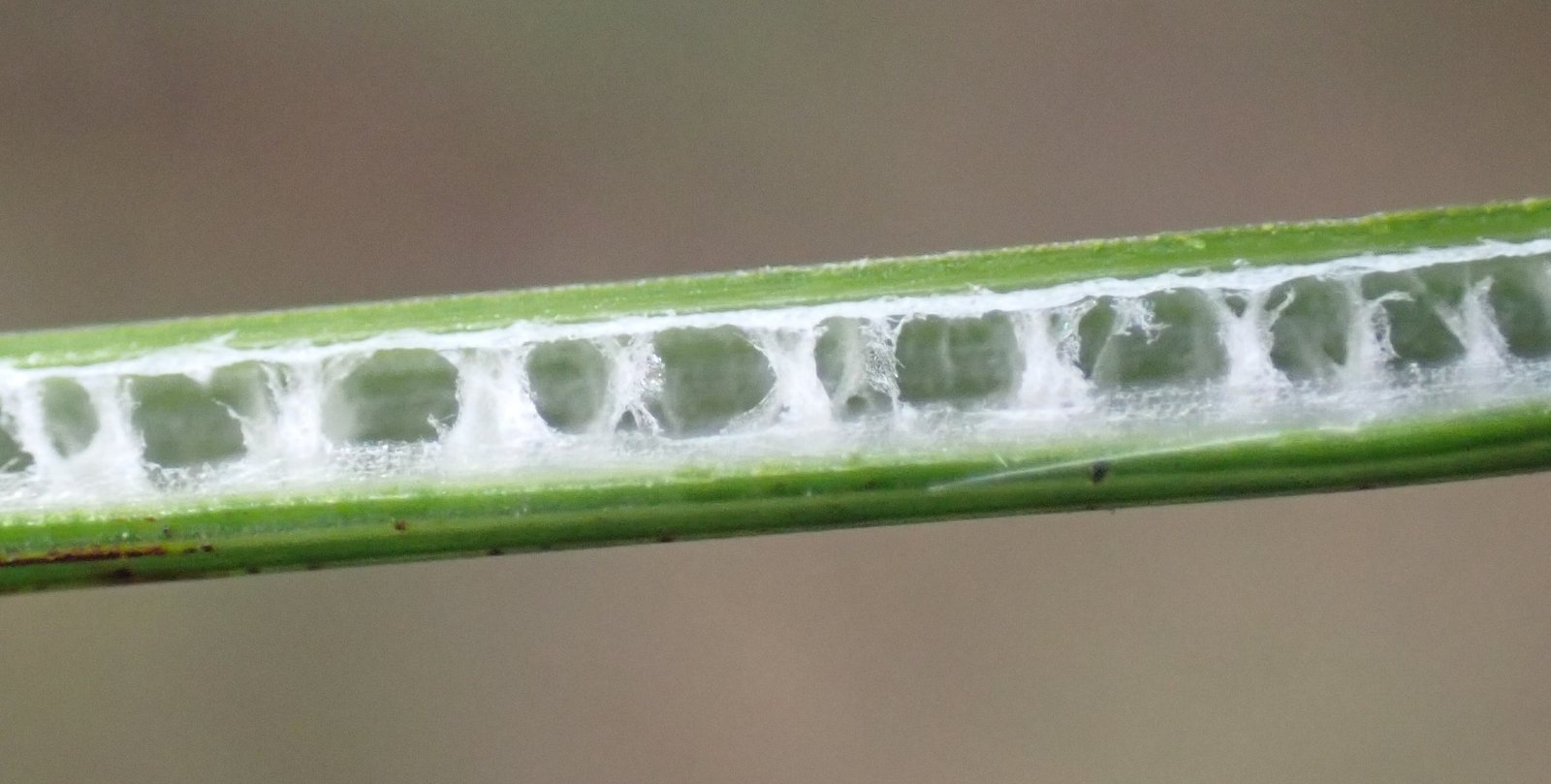
Usually has smoother, greener stems with continuous white pith; hard rush has more visibly ridged, blue-grey stems and interrupted pith.
Blue fescue (Festuca glauca)
Forms shorter, rounded tufts of narrow grass leaves with separate flower stalks; 'Blue Arrows' has taller, upright cylindrical rush stems and needs much wetter soil.
The name
The common name hard rush refers to its firm stems, while 'Blue Arrows' describes the cultivar's blue-grey colour and sharply upright growth.
Propagation. Divide clumps in spring to retain the cultivar's blue colour and upright habit. Seed-grown plants may differ from the parent.
Checked against open data
- Accepted botanical name
- Juncus inflexus
- In the US and Canada
- Introduced in Canada and the lower 48 states.
- Native range
- Afghanistan, Albania, Algeria, Assam, Austria, Baleares, Baltic States, Belarus, Belgium, Bulgaria, Canary Is. and Cape Provinces.
- Measured
- Soil pH 7.5 to 8. Average height 55 cm.
Sources: GBIF (CC BY 4.0), USDA PLANTS and Trefle (CC BY 4.0). The care and design notes are LandscapeGPT's own.
See it in your own yard.
Upload a photo of your yard and see it redesigned with plants that suit your climate, each checked against your zone.