Blue star creeper
Lobelia pedunculata. Family Campanulaceae. Groundcover.
Also called Pratia pedunculata, Matted pratia, Trailing pratia.
An Australian creeping perennial that forms a low carpet of small leaves dotted with pale blue, star-shaped flowers. Grow it between stepping stones or along moist border edges, where its spreading stems can be contained; it tolerates occasional footsteps, not regular walking.
At a glance
- Sun
- Full sun to partial shade; provide afternoon shade in hot climates.
- Water
- Keep the root zone evenly moist, especially while establishing and during hot weather. Avoid prolonged waterlogging.
- Soil
- Moist, humus-rich soil with good drainage; tolerates a range of soil textures if neither parched nor stagnant.
- Height
- 0.1-0.2 ft (0.03-0.06 m)
- Spread
- 1-2 ft (0.3-0.6 m), eventually wider where stems can root
- Flowers
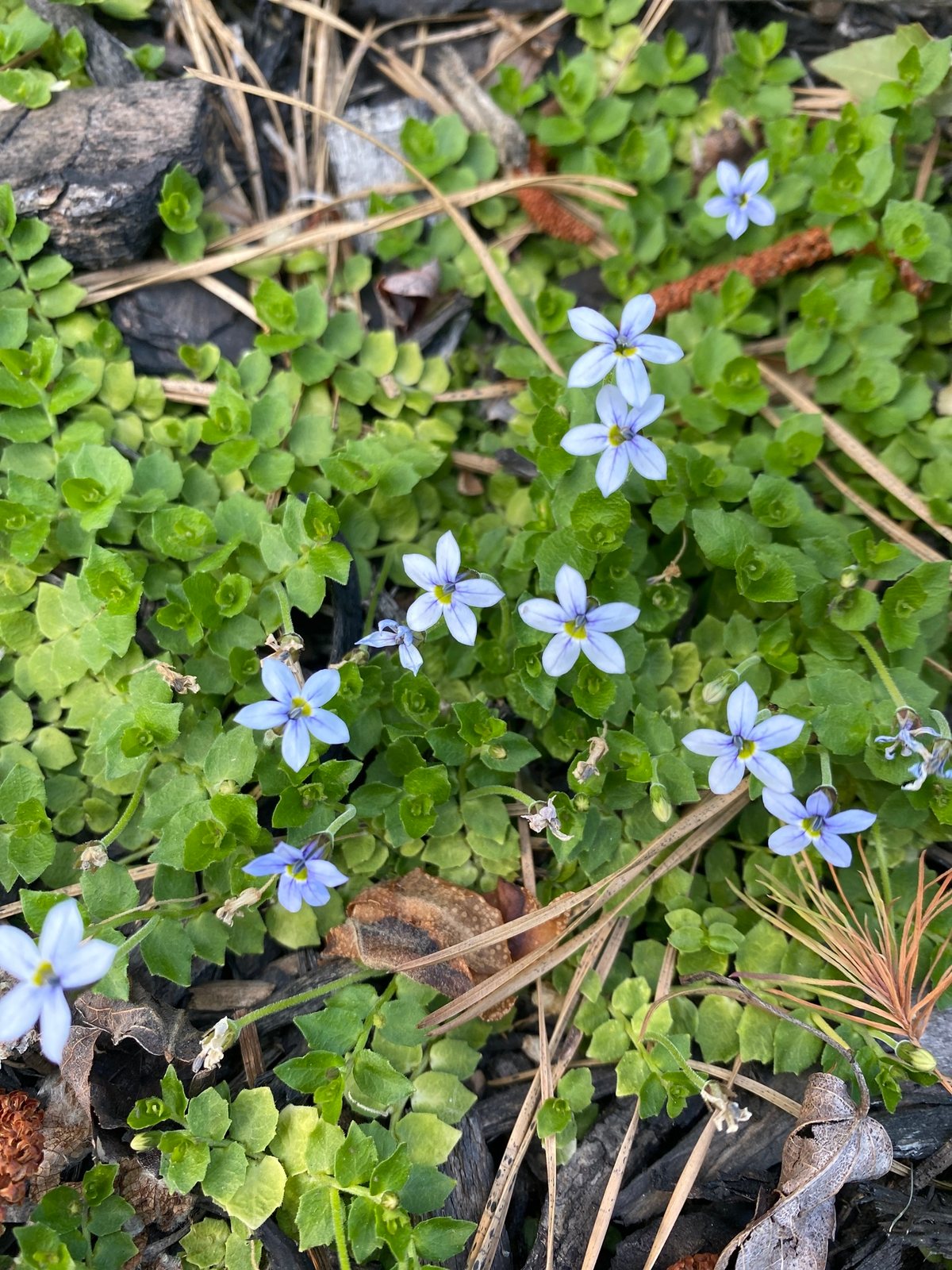
- Pale blue to blue-lilac flowers from late spring through summer, sometimes continuing into autumn in mild climates.
- Foliage
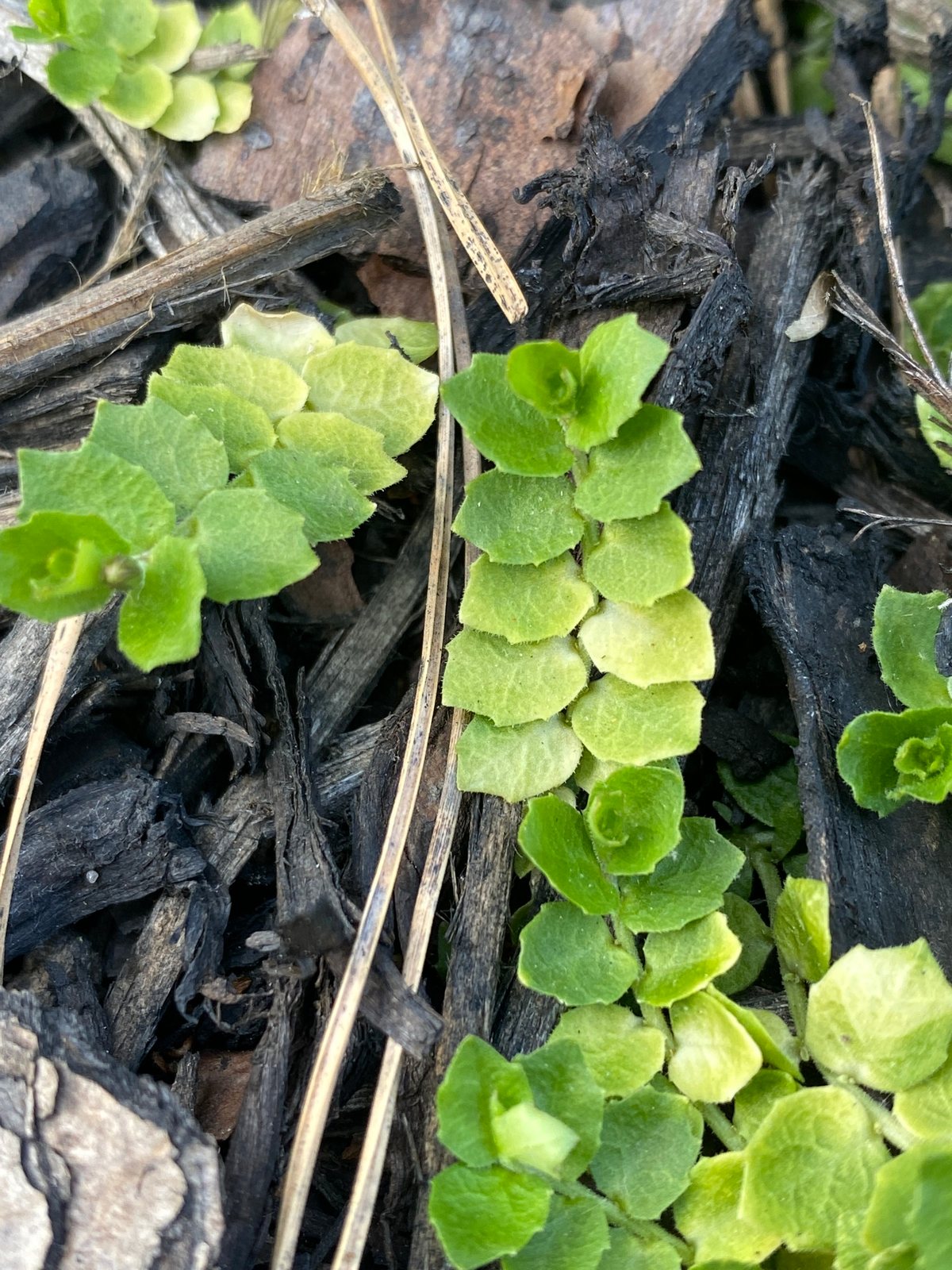
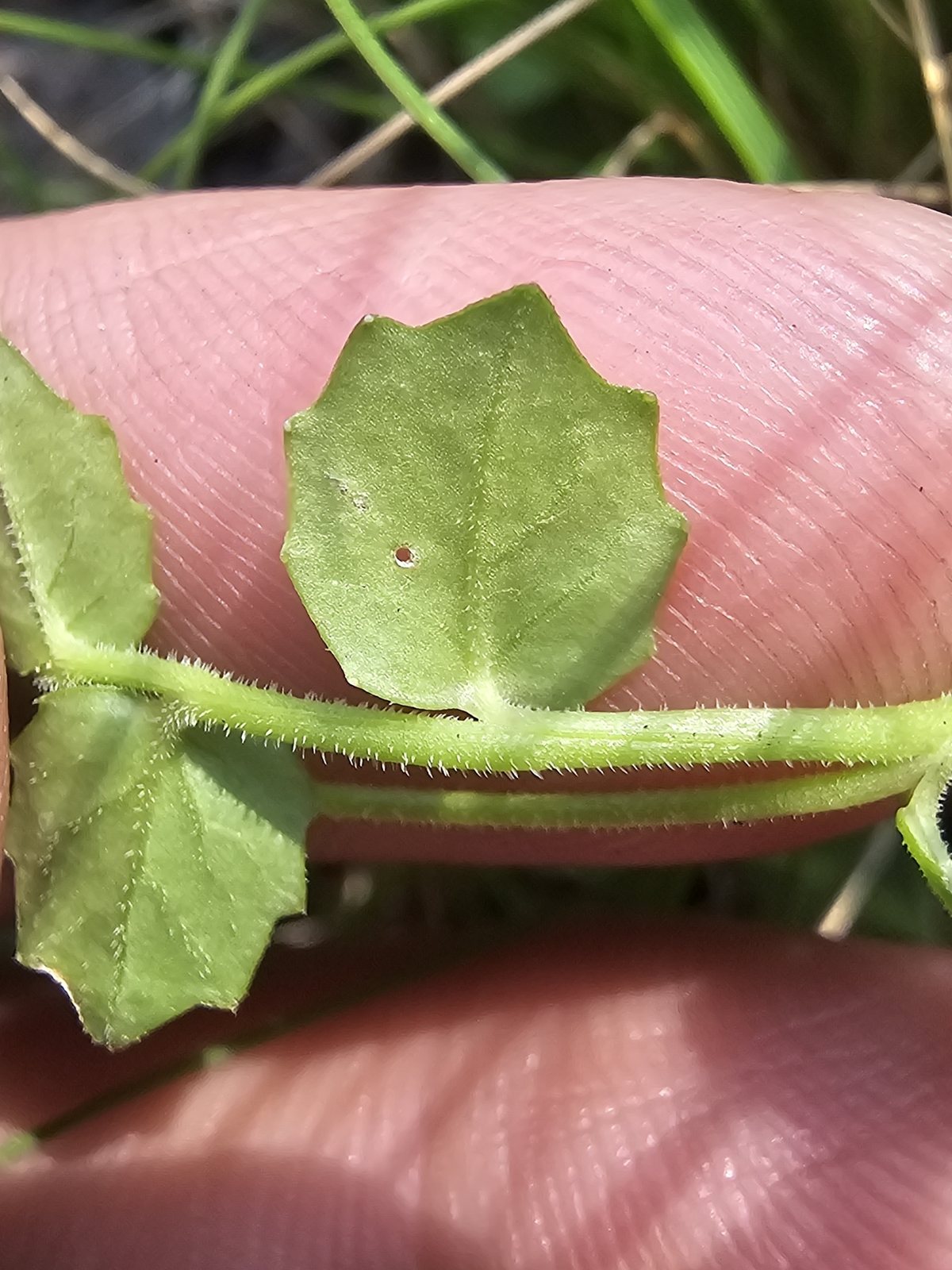
- Tiny green leaves on slender, creeping stems that root as they spread. Evergreen in mild climates, but may become dormant or lose foliage after frost.
- Growth
- Moderate to fast in moist, mild conditions
- Care needed
- Medium
The year at a glance
- Pollinators
- Low allergen
| J | F | M | A | M | J | J | A | S | O | N | D | |
|---|---|---|---|---|---|---|---|---|---|---|---|---|
| Flowers | ||||||||||||
| Plant |
Northern hemisphere months. In Australia, shift them by six.
- Difficulty
- Moderate
- Toughness
- Fairly tough
Will it suit your garden?
Pick your zone, country, light and whether you have pets.
Full sun is 6 or more hours of direct sun a day, part shade 3 to 6 hours, shade under 3.
How it grows
Planting day
0 ft (0.01 m)
After 1 year
0.1 ft (0.03 m)
After 2 years
0.1 ft (0.05 m)
full size
About 2 years to full size.
From a typical nursery size, at an average rate for this kind of plant. A rule of thumb, not a forecast.
Good to know
- Cats and dogs
- Mildly toxic: may upset a stomach
- Native to
- Australia
- In the garden
- Spreads vigorously: plan to contain it.
- Growth rate
- Fast
Care
Jobs through the year
- WaterApr–May, Sep–Oct, every 7 days
- Water established mats if soil starts drying; new plants need more frequent watering.
- WaterJun–Aug, every 3 days
- Water if needed to keep shallow roots evenly moist; skip when rain suffices.
- FeedMar–Apr
- Apply a light compost dressing without burying creeping stems.
- PruneMar–Apr
- Lightly clip winter-damaged growth once new shoots appear.
- PruneMay–Sep, every 30 days
- Lift unwanted rooted runners; clipping their tops alone will not contain them.
- DivideApr–May
- Lift rooted sections if propagation or patch repair is needed.
- ProtectJan–Feb, Oct–Dec
- Clear smothering leaves, maintain drainage and avoid walking on frozen mats.
- Water new plants regularly until their stems have rooted into the surrounding soil.
- Water during dry spells before the shallow-rooted mat dries out completely.
- Apply a light dressing of compost in spring; avoid heavy feeding.
- Keep thick mulch off the creeping stems and small leaves.
- Lift rooted stems that stray into lawns or neighbouring plants before they become established.
Pruning. Trim spreading edges during the growing season and remove the rooted pieces rather than leaving them on moist soil. In spring, lightly clip away winter-damaged growth once new shoots appear.
Through the year
- Spring
- Remove winter-damaged foliage and check that drainage is adequate.
- Spring
- Plant or divide rooted sections, water thoroughly and keep moist while establishing.
- Late spring
- Weed carefully before the mat thickens and flowers open.
- Summer
- Water during dry weather and trim stems spreading beyond their allotted space.
- Autumn
- Remove fallen leaves that would smother the low foliage.
- Winter
- Avoid walking on frozen or saturated mats and keep drainage outlets clear.
In the garden
- Plant in soil-filled joints between widely spaced stepping stones on lightly used paths.
- Use as a low edging beside a moist border, with a firm boundary to limit spread.
- Grow beneath small shrubs in bright, dappled shade for a fine-textured green carpet.
- Let it trail over a container rim beside plants with similar moisture needs.
Garden styles it suits: Cottage garden, Woodland, Modern courtyard, Small-space, Australian native and Blues and silvers.
Plant it with: Japanese painted fern, Hosta, Coral bells, Japanese sedge, Astilbe and Primrose.
Wildlife: The small flowers attract visiting insects. It is not a substitute for a varied planting of locally native flowering plants.
Problems to watch for
- Brown, thinning patches during drought: water deeply enough to moisten the shallow root zone and provide afternoon shade in hot sites.
- Rot and dieback in saturated soil: improve drainage and avoid sites that remain waterlogged through winter.
- Slugs and snails damaging young growth: remove hiding places, hand-pick at dusk or use a locally approved iron-phosphate bait as directed.
- Stems overrunning nearby plants or paving: lift unwanted rooted sections regularly; clipping the tops alone will not remove them.
Safety
Reliable species-specific information for cats, dogs, horses and people is limited, so it should not be described as known to be non-toxic. Treat all parts and sap as potentially harmful if eaten, prevent grazing or chewing, and seek veterinary or medical advice after ingestion; the seriousness of poisoning is not well established for this species.
Where it spreads. Can spread aggressively through moist garden beds and paving joints in mild regions, including the Pacific Northwest of the United States. Garden spread does not by itself mean it is officially listed as invasive; check local guidance before planting near natural areas.
Easily confused with
Blue star creeper (Lobelia fluviatilis)
A closely related plant sold under the same common name, often as Isotoma fluviatilis. Nursery names are frequently confused;
Baby's tears (Soleirolia soleirolii)
Forms a soft mound of tiny rounded leaves but has inconspicuous flowers, not visible blue stars.
Irish moss (Sagina subulata)
Has narrow, needle-like leaves and small white flowers rather than broader leaves and blue flowers.
The name
Blue star creeper describes its star-shaped blue flowers and creeping habit, while pedunculata refers to its stalked flowers.
Propagation. Divide rooted sections in spring or early autumn and replant promptly. Small stem sections with roots attached establish readily if kept moist.
Checked against open data
- Accepted botanical name
- Lobelia pedunculata
- Native range
- New South Wales, Queensland, South Australia, Tasmania and Victoria.
Sources: GBIF (CC BY 4.0) and Trefle (CC BY 4.0). The care and design notes are LandscapeGPT's own.
See it in your own yard.
Upload a photo of your yard and see it redesigned with plants that suit your climate, each checked against your zone.