Bridal bouquet frangipani
Plumeria pudica. Family Apocynaceae. Tree.
Also called Bridal bouquet, White frangipani, Fiddle-leaf plumeria.
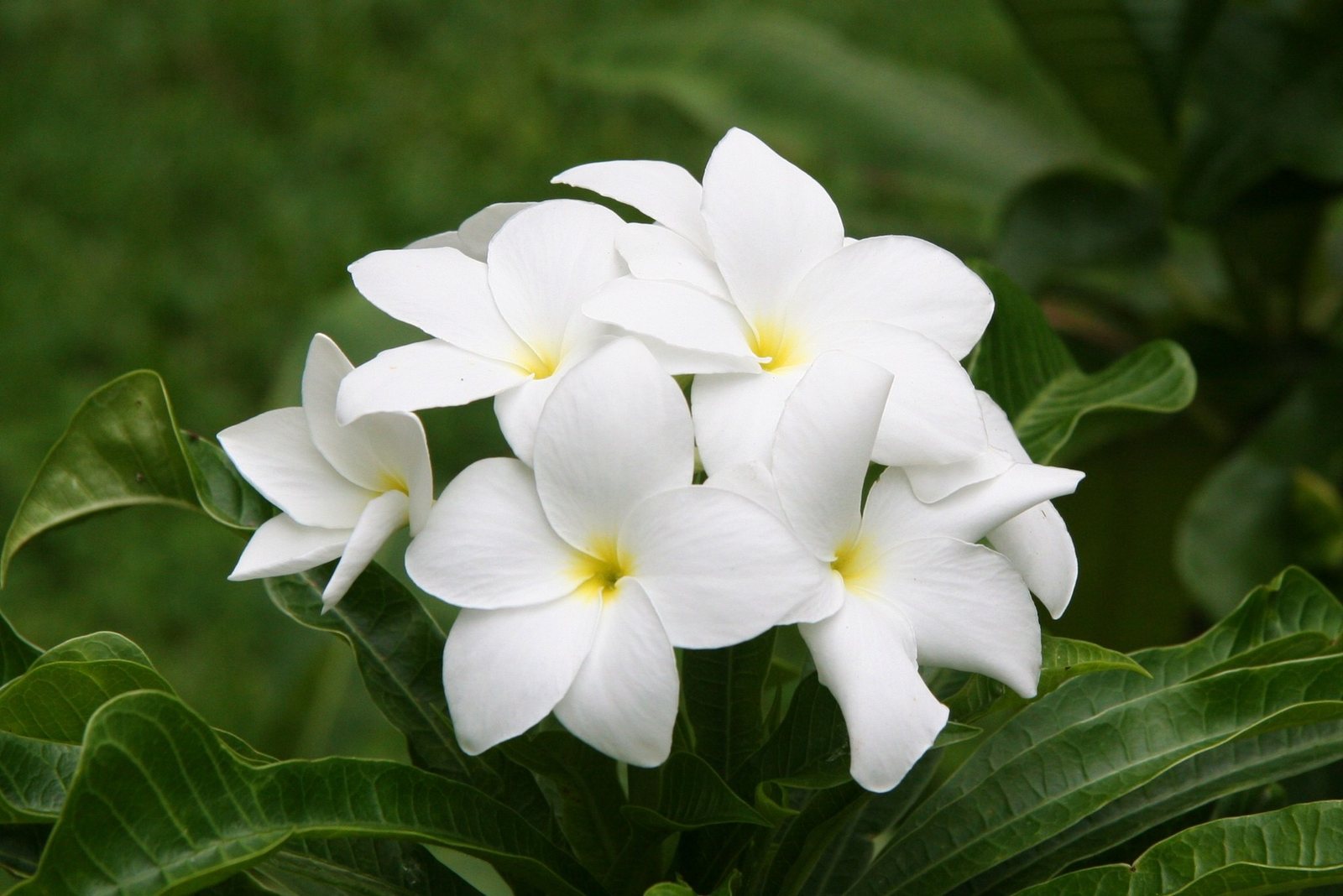
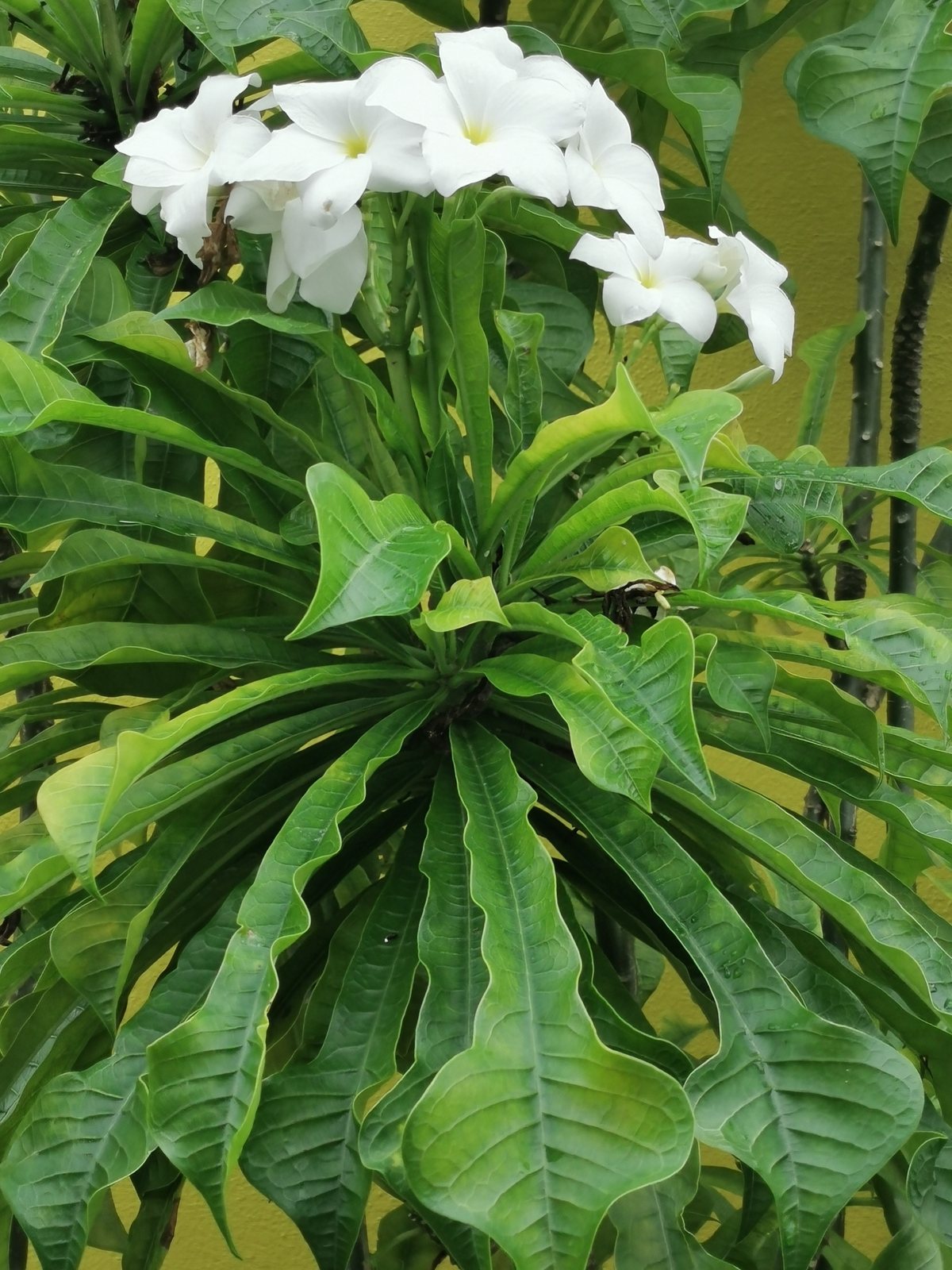
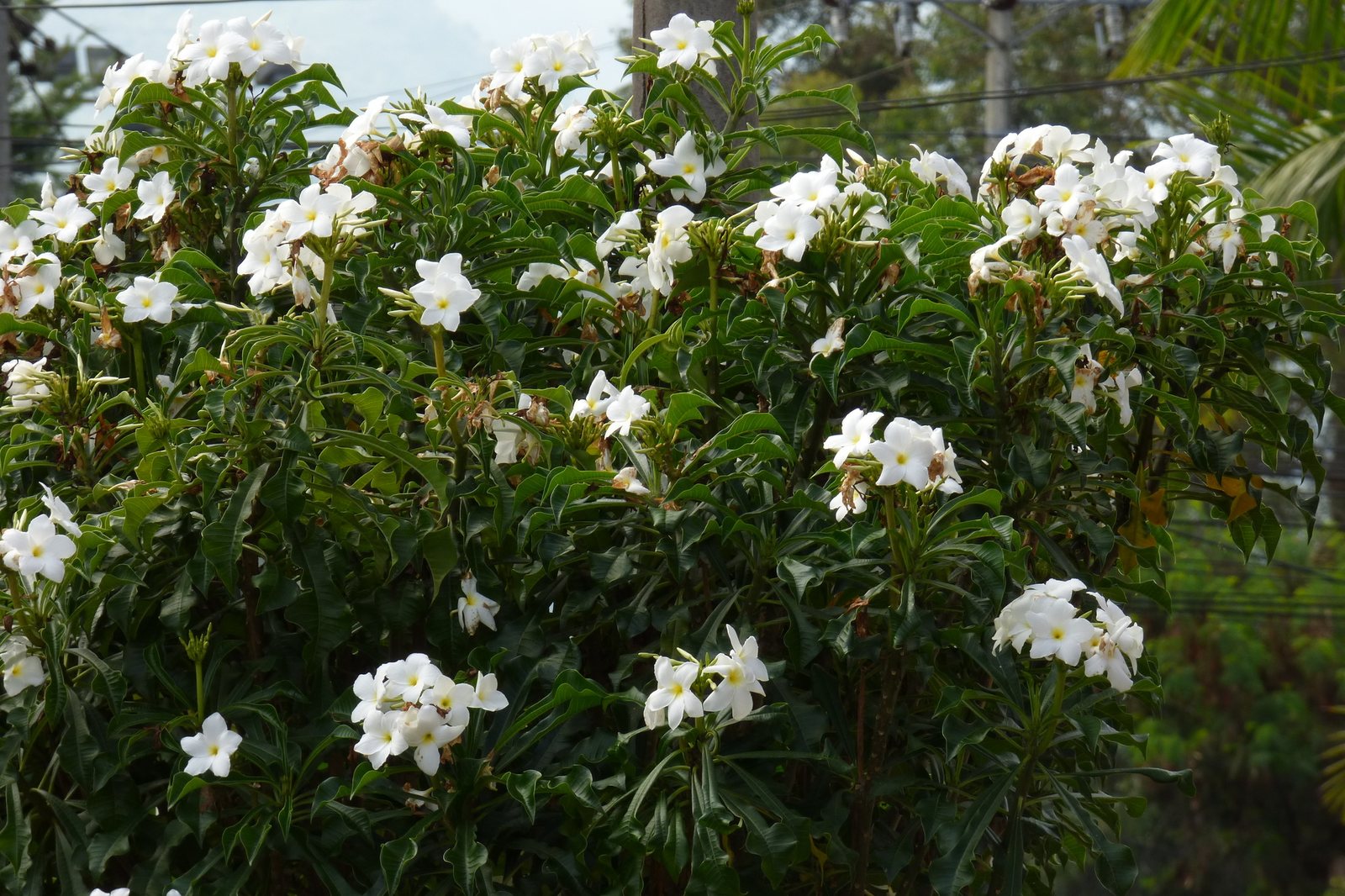
Bridal bouquet frangipani is a frost-tender small tree or large shrub grown for clusters of white, yellow-centred flowers and distinctive spoon-shaped leaves. Its flowers are usually unscented, unlike those of many other frangipanis. Grow it outdoors in tropical and nearly frost-free gardens, or in a container that can spend winter in bright, frost-free shelter.
At a glance
- Sun
- Full sun for the best flowering; tolerates light partial shade with fewer flowers.
- Water
- Water deeply during active growth, then let the soil partly dry before watering again. Keep much drier in cool weather, especially if leaves fall.
- Soil
- Very freely drained sandy or loamy soil; use a gritty container mix and a pot with unobstructed drainage holes.
- Height
- 6-15 ft (1.8-4.6 m)
- Spread
- 6-10 ft (1.8-3 m)
- Flowers
- Clusters of white flowers with yellow centres from late spring through autumn; flowering can continue for much of the year in consistently warm climates.
- Foliage
- Evergreen. Glossy dark-green leaves with narrow bases and broad, spoon-shaped tips; retained in tropical warmth but sometimes shed during cool or dry weather.
- Growth
- Moderate to fast in warm weather; little growth in cool conditions.
- Care needed
- Low
The year at a glance
- Drought tolerant
- Heat tolerant
- Low allergen
| J | F | M | A | M | J | J | A | S | O | N | D | |
|---|---|---|---|---|---|---|---|---|---|---|---|---|
| Flowers | ||||||||||||
| Plant |
Northern hemisphere months. In Australia, shift them by six.
- Difficulty
- Moderate
- Toughness
- Fairly tough
Will it suit your garden?
Pick your zone, country, light and whether you have pets.
Full sun is 6 or more hours of direct sun a day, part shade 3 to 6 hours, shade under 3.
How it grows
Planting day
7 ft (2 m)
After 1 year
7 ft (2.1 m)
After 2 years
7 ft (2.2 m)
After 3 years
7 ft (2.2 m)
After 5 years
8 ft (2.4 m)
About 16 years to full size.
From a typical nursery size, at an average rate for this kind of plant. A rule of thumb, not a forecast.
Good to know
- Cats and dogs
- Toxic
- Growth rate
- Fast
Care
Jobs through the year
- WaterApr–May, Sep–Oct, every 14 days
- Water established ground plants only after partial drying; check pots and newly planted specimens more often.
- WaterJun–Aug, every 7 days
- During dry weather, soak established ground plants, then let the soil partly dry; never leave pots standing in water.
- WaterJan–Mar, Nov–Dec, every 28 days
- Check sheltered pots; give little water only if needed, keeping leafless dormant plants almost dry.
- FeedMay–Aug, every 28 days
- Apply balanced fertiliser at the label rate during active growth; stop when growth slows.
- MulchJun
- Apply a light mulch outdoors without covering the trunk or trapping moisture at its base.
- PruneApr–May
- As growth resumes, remove dead wood and shorten selected branches lightly; wear gloves against irritating sap.
- ProtectJan–May, Sep–Dec
- Keep in a movable pot here; overwinter bright and frost-free, returning outside only when nights are reliably warm.
- Plant in a sunny, sheltered position after cold weather has passed.
- Water at soil level and allow partial drying between waterings; never leave the pot standing in water.
- Apply a balanced fertiliser at the label rate during spring and summer; stop feeding when growth slows.
- Keep mulch away from the trunk and avoid planting in low spots where water collects.
- Move container plants into bright, frost-free shelter before cold nights arrive, and reduce watering.
Pruning. Prune lightly in spring as active growth resumes, removing dead wood and shortening selected branches to encourage branching. Avoid routine hard pruning, which delays flowering, and wear gloves to keep the milky sap off your skin.
Through the year
- Early spring
- Check for dead or damaged branches and prune lightly as new growth begins.
- Spring
- Repot crowded container plants into a slightly larger pot with a freely draining mix.
- Late spring
- Move sheltered plants outdoors once nights are reliably warm, introducing direct sun gradually.
- Summer
- Water when the soil has partly dried and feed while the plant is actively growing.
- Early autumn
- Check leaf undersides for mites, scale and mealybugs before bringing pots under cover.
- Late autumn
- Move container plants to frost-free shelter in cooler regions and reduce watering.
- Winter
- Keep sheltered plants in strong light and water sparingly, especially if they have lost their leaves.
In the garden
- Use as a small flowering specimen in a sunny, sheltered courtyard.
- Grow in a large container beside a terrace, allowing room for its branching crown.
- Combine with agaves and aloes in a well-drained tropical planting for contrasting leaf shapes.
- Plant against a dark evergreen background to make the white flowers stand out.
- Use in a warm-climate white garden where its flowers remain conspicuous into the evening.
Garden styles it suits: Modern tropical, Tropical, Luxury resort, Modern courtyard, White garden and Architectural minimal.
Plant it with: Foxtail agave, Aloe vera, Bird of paradise, Society garlic and Dwarf mondo grass.
Wildlife: Flowers may be visited by moths and other insects, but this is not a dependable nectar plant. Do not rely on it as the main food source in a pollinator planting.
Problems to watch for
- Root or stem rot in cold, wet soil: improve drainage, reduce watering and remove soft, rotting tissue; take healthy cuttings if the base is failing.
- Scale insects or mealybugs: inspect stems and leaf undersides, remove small infestations by hand and use an insecticidal soap labelled for ornamental plants if needed.
- Spider mites in hot, dry or indoor conditions: rinse leaf undersides regularly and treat persistent infestations with a labelled insecticidal soap.
- Cold damage or winter leaf drop: move pots into frost-free shelter, keep the roots relatively dry and wait until spring growth reveals which branches are dead.
Safety
The milky sap can irritate skin and eyes, and swallowed plant material can cause mouth irritation, vomiting or diarrhoea in people, cats and dogs. Keep all parts away from children and pets; serious poisoning is uncommon, but seek advice after ingestion or eye exposure. Horse-specific toxicity information is limited, so keep it out of grazing areas.
Easily confused with
Red frangipani (Plumeria rubra)
Has longer, broadly oval leaves without the distinctive spoon-shaped tips; flowers are often fragrant and may be white, yellow, pink or red. It usually loses its leaves in the cooler or dry season.
Singapore frangipani (Plumeria obtusa)
Also has glossy leaves and white flowers, but its leaves are broadly oval with rounded tips rather than narrowly spoon-shaped, and its flowers are usually fragrant.
White frangipani (Plumeria alba)
Has long, narrow leaves with conspicuously pale, often hairy undersides and fragrant white flowers, rather than the broad-tipped leaves and usually unscented flowers of bridal bouquet.
The name
Plumeria honours the French botanist Charles Plumier, while bridal bouquet refers to the clustered white flowers.
Propagation. Take healthy stem cuttings during warm weather. Let the cut ends dry and seal for several days, then insert them into a very freely draining propagation mix; keep warm and water sparingly until rooted. Wear gloves when handling the sap.
Checked against open data
- Accepted botanical name
- Plumeria pudica
- Native range
- Colombia, Panamá, Venezuela and Venezuelan Antilles.
Sources: GBIF (CC BY 4.0) and Trefle (CC BY 4.0). The care and design notes are LandscapeGPT's own.
See it in your own yard.
Upload a photo of your yard and see it redesigned with plants that suit your climate, each checked against your zone.