Brittle bladder fern
Cystopteris fragilis. Family Cystopteridaceae. Fern.
Also called Fragile fern, Brittle fern.
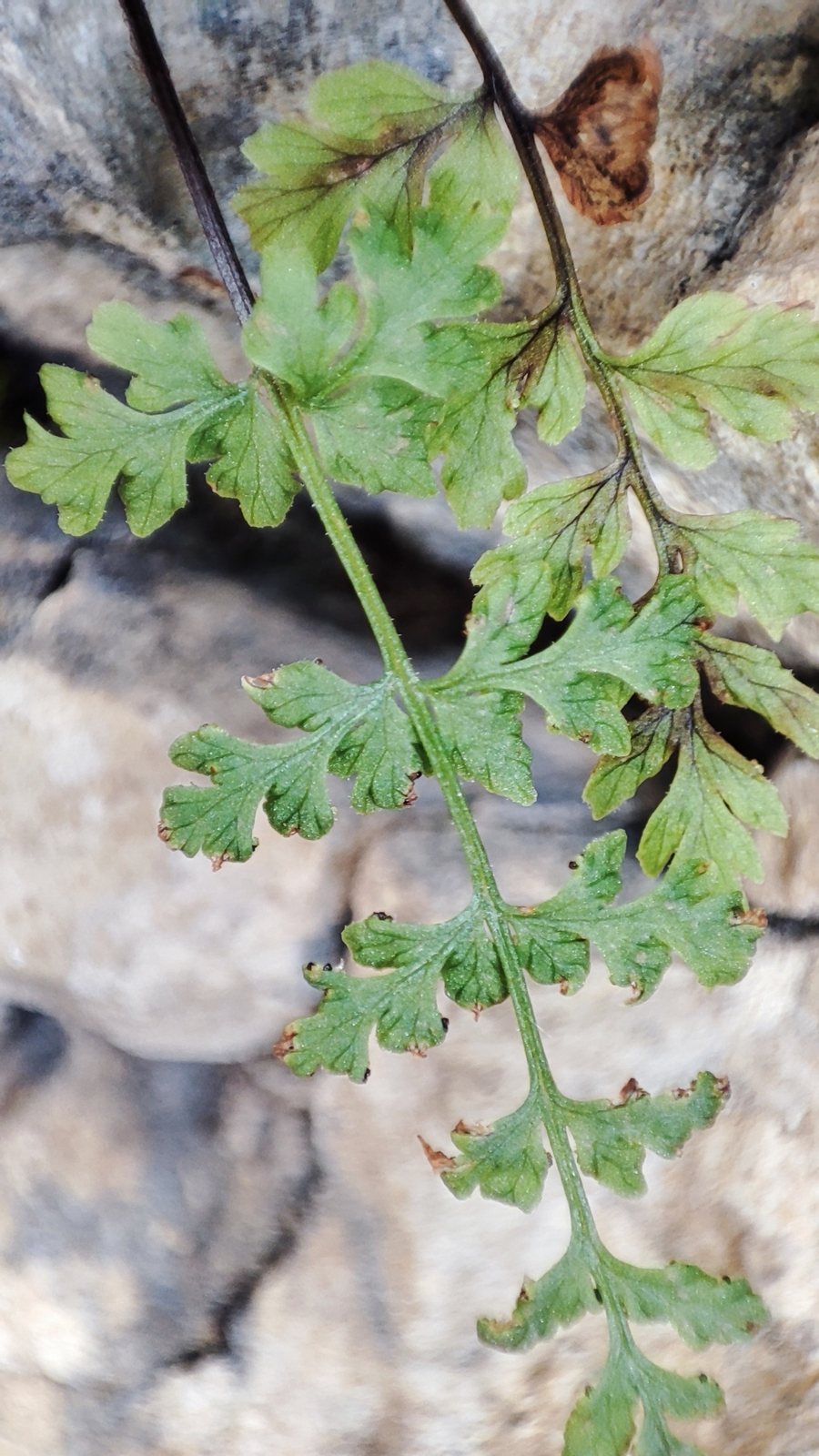
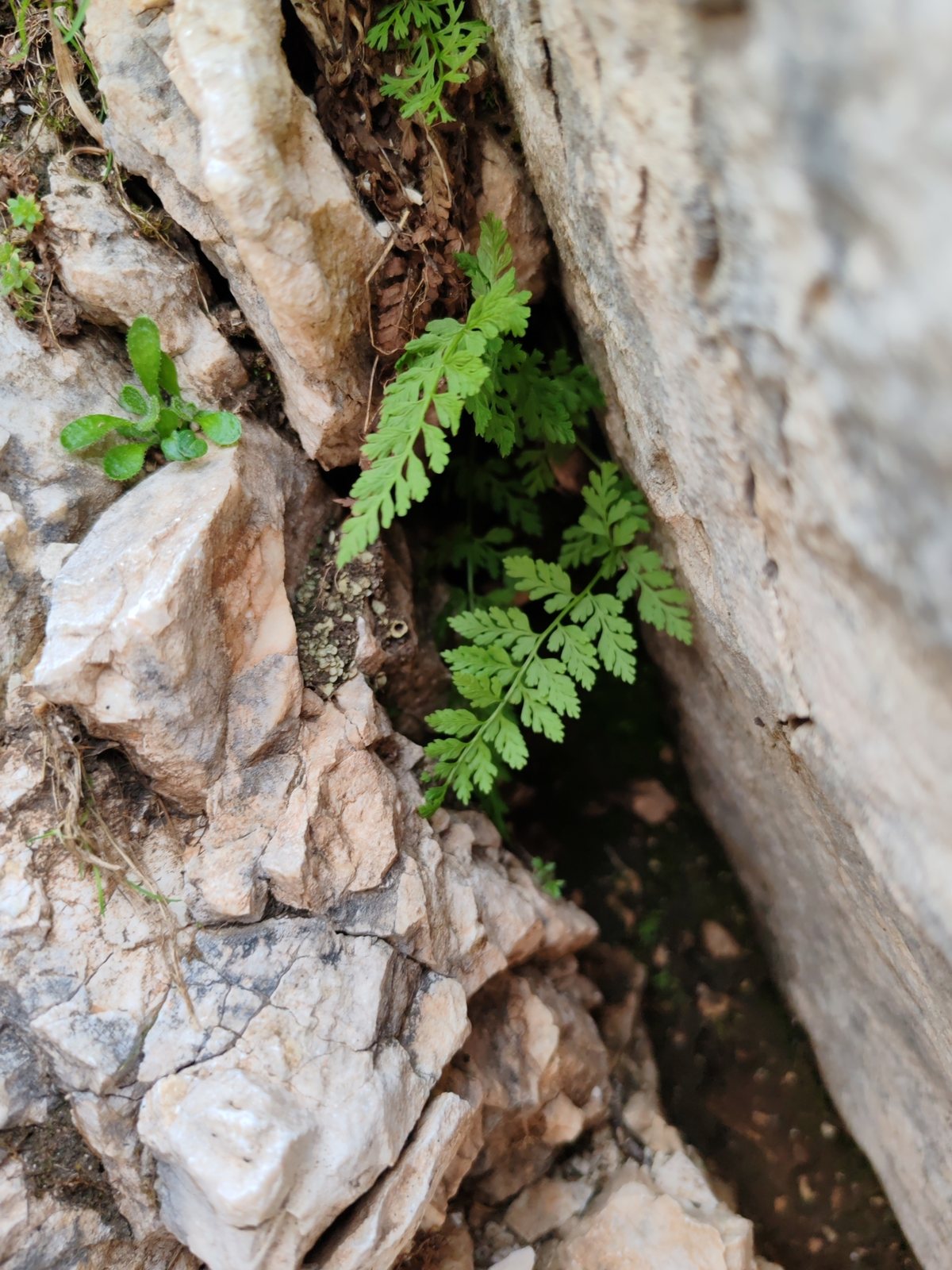
Brittle bladder fern is a small, deciduous fern with finely divided fronds and slender, easily broken stalks. Grow it in cool, shaded rock crevices, walls or woodland pockets where its delicate foliage can be seen close up. It may die back early during hot or dry weather.
At a glance
- Sun
- Partial to full shade; tolerates some morning sun where the roots stay cool and moist.
- Water
- Keep evenly moist during active growth, but avoid waterlogged soil. Established plants can survive short dry spells by going dormant.
- Soil
- Humus-rich, well-drained soil or gritty rock crevices with pockets of leaf mould; often found on limestone, but not restricted to alkaline soil.
- Height
- 0.5-1.5 ft (0.15-0.45 m)
- Spread
- 0.5-1 ft (0.15-0.3 m)
- Foliage
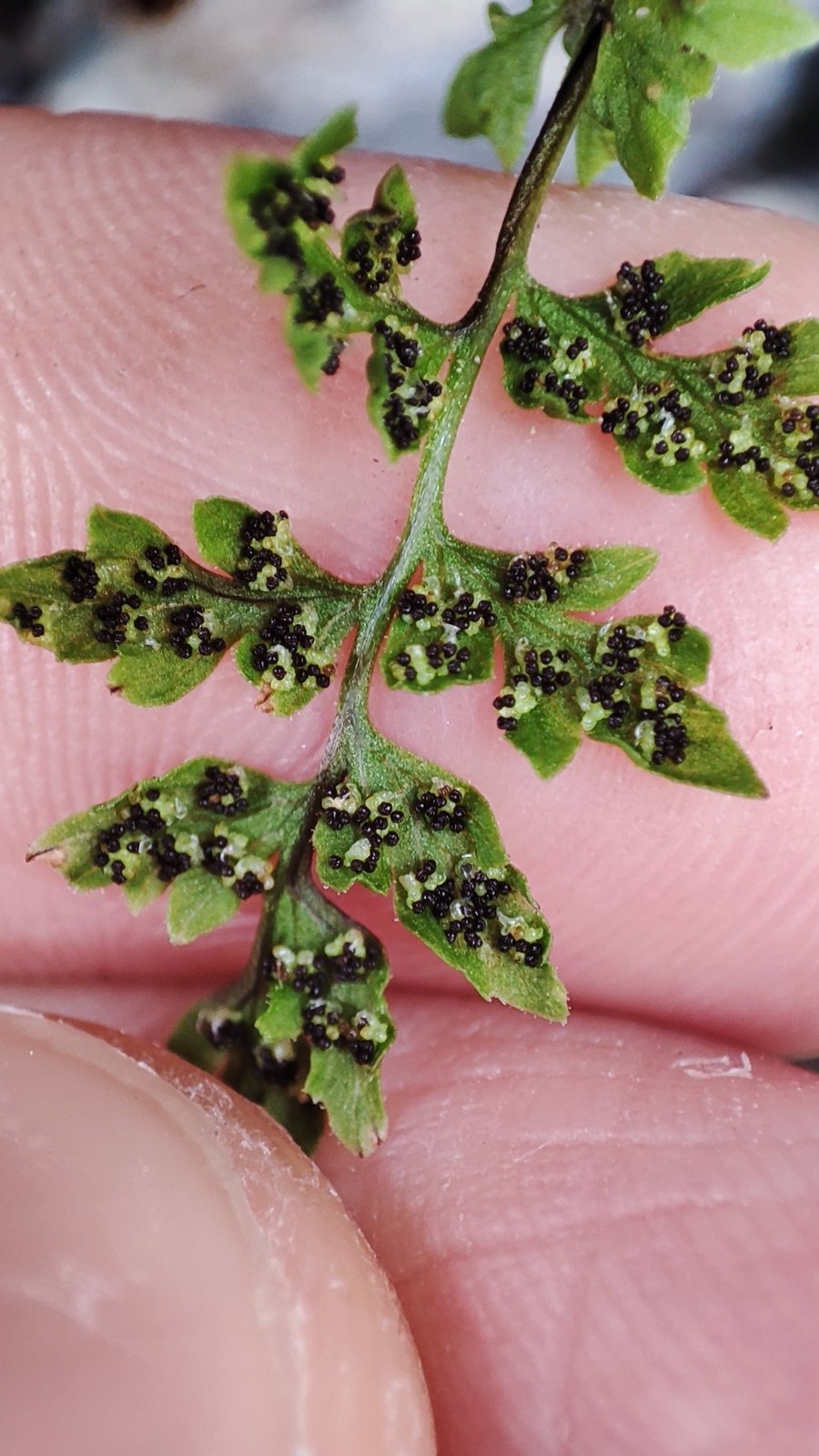
- Soft green, finely divided fronds on thin, brittle stalks. Small, rounded spore clusters form beneath mature fronds, initially covered by tiny bladder-like membranes.
- Growth
- Moderate; forms small clumps rather than a rapidly spreading carpet.
- Care needed
- Low
The year at a glance
- Deer resistant
- Cold hardy
- Wildlife
- Low allergen
| J | F | M | A | M | J | J | A | S | O | N | D | |
|---|---|---|---|---|---|---|---|---|---|---|---|---|
| Plant |
Northern hemisphere months. In Australia, shift them by six.
- Difficulty
- Easy
- Toughness
- Fairly tough
Will it suit your garden?
Pick your zone, country, light and whether you have pets.
Full sun is 6 or more hours of direct sun a day, part shade 3 to 6 hours, shade under 3.
How it grows
Planting day
1 ft (0.3 m)
full size
About 2 years to full size.
From a typical nursery size, at an average rate for this kind of plant. A rule of thumb, not a forecast.
Good to know
- Cats and dogs
- Safe
- Native to
- the US, Canada, the UK and Australia
- Growth rate
- Fast
Care
Jobs through the year
- WaterApr–May, Sep, every 14 days
- Water established plants during dry spells while fronds are green; young plants need more frequent watering.
- WaterJun–Aug, every 7 days
- Water gently if soil dries; do not saturate crowns that have become summer-dormant.
- MulchApr–May
- Apply a thin layer of leaf mould around, not over, the crown.
- PruneFeb–Mar
- Snip dead fronds at their bases rather than pulling on the fragile crown.
- DivideMar–Apr
- Divide established clumps only when propagation is wanted, handling crowns gently.
- Plant in a sheltered, shaded position with excellent drainage.
- Water during dry spells while the fronds are green, especially in containers and wall pockets.
- Apply a thin layer of leaf mould around the clump in spring, keeping the crown uncovered.
- Avoid strong fertilisers; a little leaf mould or mature compost is usually sufficient.
- Handle fronds gently and keep the plant away from frequently used paths.
Pruning. Remove dead fronds in late winter or early spring before new growth appears. Snip them at the base rather than pulling, which can disturb the small crown.
Through the year
- Early spring
- Remove dead fronds and check that fallen leaves have not buried the crown.
- Spring
- Plant or divide established clumps as new growth begins; water gently after planting.
- Late spring
- Add a thin dressing of leaf mould and check young fronds for slug damage.
- Summer
- Water during dry weather; if fronds die back in heat, leave the crown undisturbed rather than assuming the plant has died.
- Autumn
- Clear heavy leaf accumulations and check that wall pockets and containers drain freely.
In the garden
- Tuck into shaded rock-garden crevices for fine foliage among stones.
- Plant in moist pockets in shaded stone walls, where the fronds can arch over the edges.
- Use at the front of a woodland border with small hostas and other compact ferns.
- Grow in a shallow, well-drained trough in a sheltered courtyard for close viewing.
Garden styles it suits: Woodland, Alpine rock garden, Moss and fern garden, Secret garden, Cottage garden and Small-space.
Plant it with: Maidenhair spleenwort, Hart's-tongue fern, Hardy cyclamen, Snowdrops, Small hostas and Primroses.
Wildlife: Offers small sheltered spaces for invertebrates among its fronds and nearby stones. It produces no flowers, nectar or fruit.
Problems to watch for
- Slugs and snails can eat emerging fronds; inspect at dusk, remove pests and use wildlife-conscious controls if damage persists.
- Hot, dry conditions can cause early dormancy; provide shade and steady moisture, but do not keep a dormant crown saturated.
- Waterlogged soil can rot the crown; improve drainage or move the plant into a raised, gritty planting pocket.
- Frond stalks snap easily during weeding or watering; handle gently and use a soft stream of water.
Safety
Not known to be toxic to people, cats, dogs or horses, but species-specific safety information is limited. Do not eat the fronds or other parts, or offer them as animal feed.
Easily confused with
Bulblet bladder fern (Cystopteris bulbifera)
Usually has longer, narrowly triangular fronds and small bulblets beneath the fronds; brittle bladder fern does not produce these bulblets.
Dickie's bladder fern (Cystopteris dickieana)
Often has broader, more crowded and overlapping leaflet divisions. Appearance alone is unreliable; confident separation usually requires microscopic examination of the spores.
Lady fern (Athyrium filix-femina)
Usually forms a much larger clump and has elongated, often curved spore clusters beneath the fronds rather than the small rounded clusters of brittle bladder fern.
The name
Cystopteris means bladder fern, referring to the inflated coverings over young spore clusters, while fragilis means fragile and describes the easily broken frond stalks.
Propagation. Divide a well-established clump carefully in spring, keeping roots and a growing point on each piece. It can also be raised from spores sown on a clean, moist medium under cover; occasional self-sown plants may appear in nearby damp crevices.
Checked against open data
- Accepted botanical name
- Cystopteris fragilis
- In the US and Canada
- Native in Alaska, Canada, Greenland, the lower 48 states and St. Pierre and Miquelon. Introduced in Hawaii.
- Native range
- Afghanistan, Alaska, Albania, Alberta, Algeria, Altay, Amur, Argentina Northeast, Argentina Northwest, Argentina South, Arizona and Austria.
- Measured
- Average height 19 cm.
Sources: GBIF (CC BY 4.0), USDA PLANTS and Trefle (CC BY 4.0). The care and design notes are LandscapeGPT's own.
See it in your own yard.
Upload a photo of your yard and see it redesigned with plants that suit your climate, each checked against your zone.