Brush box
Lophostemon confertus. Family Myrtaceae. Tree.
Also called Queensland brush box, Queensland box, Brisbane box.
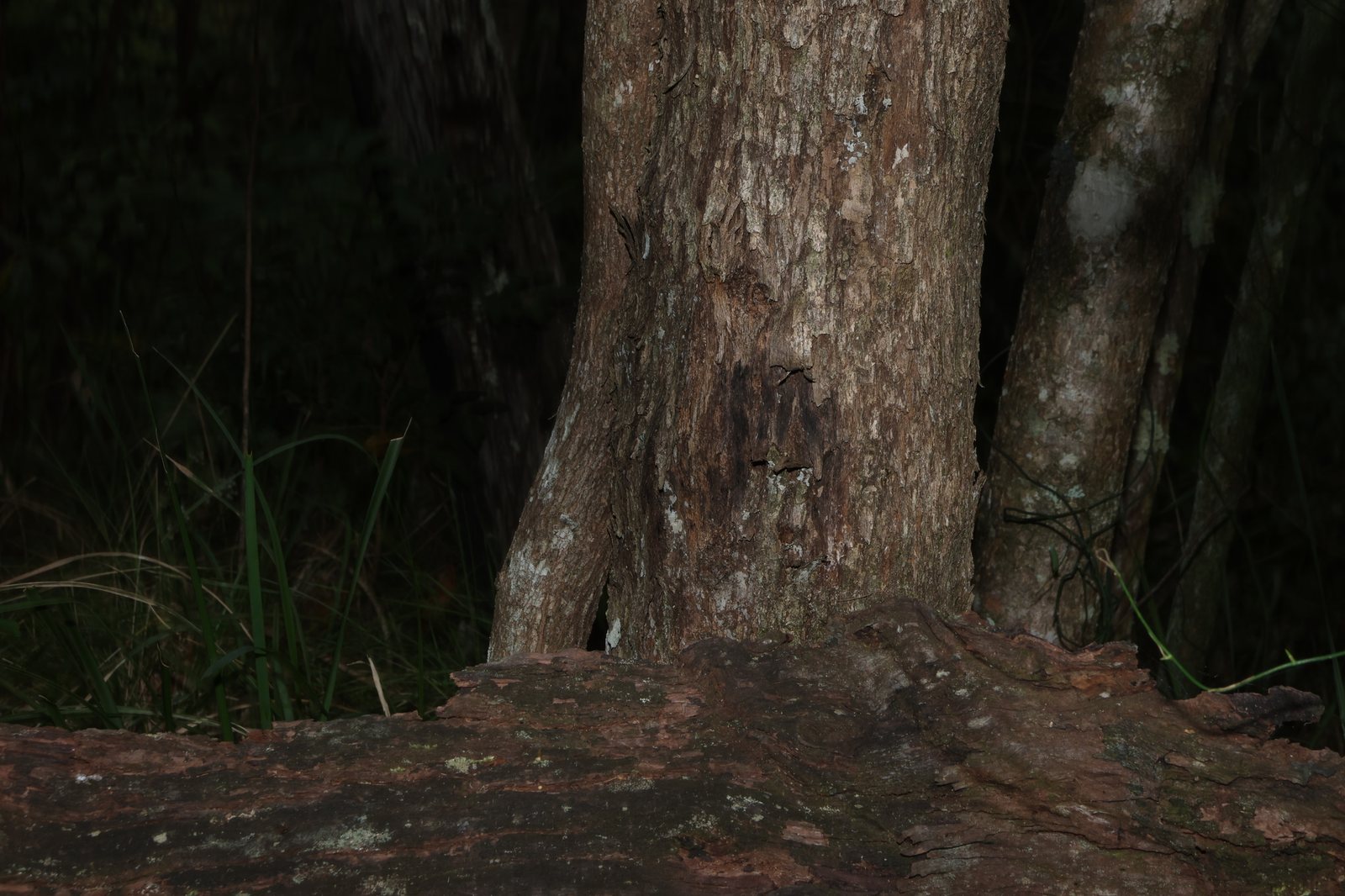
Brush box is a large Australian evergreen tree grown for its dense crown, glossy leaves and attractive bark, which becomes smooth and pinkish brown on the upper trunk and branches. It provides substantial shade in warm climates, but its eventual size and spreading roots make it unsuitable for small gardens or planting close to buildings and paving.
At a glance
- Sun
- Full sun; tolerates partial shade, but develops its best crown in an open position.
- Water
- Water regularly while establishing. Established trees tolerate seasonal drought, though prolonged dry conditions can cause leaf shedding.
- Soil
- Adaptable to clay, loam and sandy soils with reasonable drainage; prefers deep, slightly acidic to neutral soil. Avoid persistently waterlogged ground.
- Height
- 40-65 ft (12-20 m) in cultivation; can exceed 100 ft (30 m) in its native forests.
- Spread
- 25-45 ft (7.5-14 m)
- Flowers
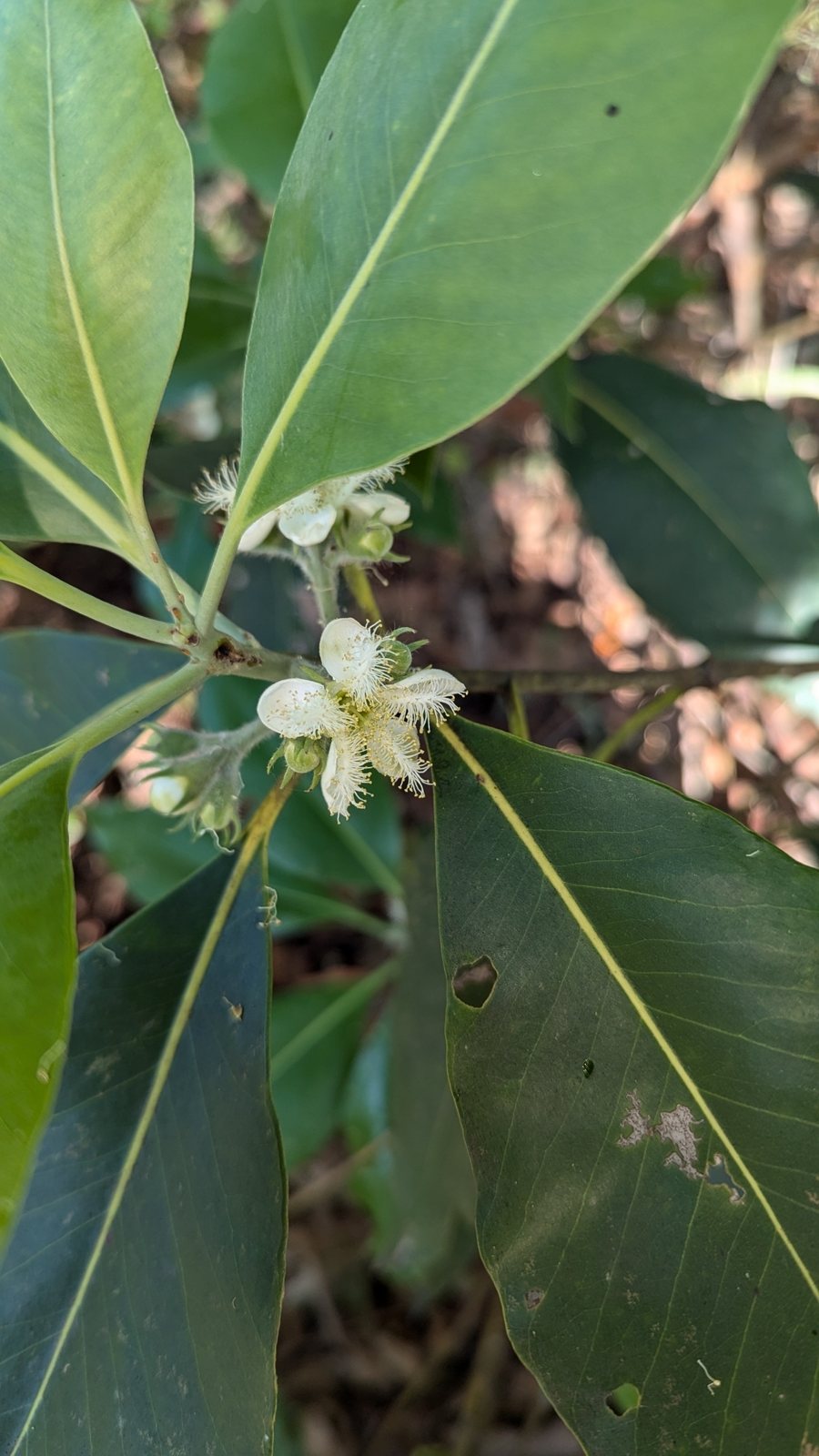
- Small white flowers with conspicuous clusters of stamens in late spring and summer.
- Foliage
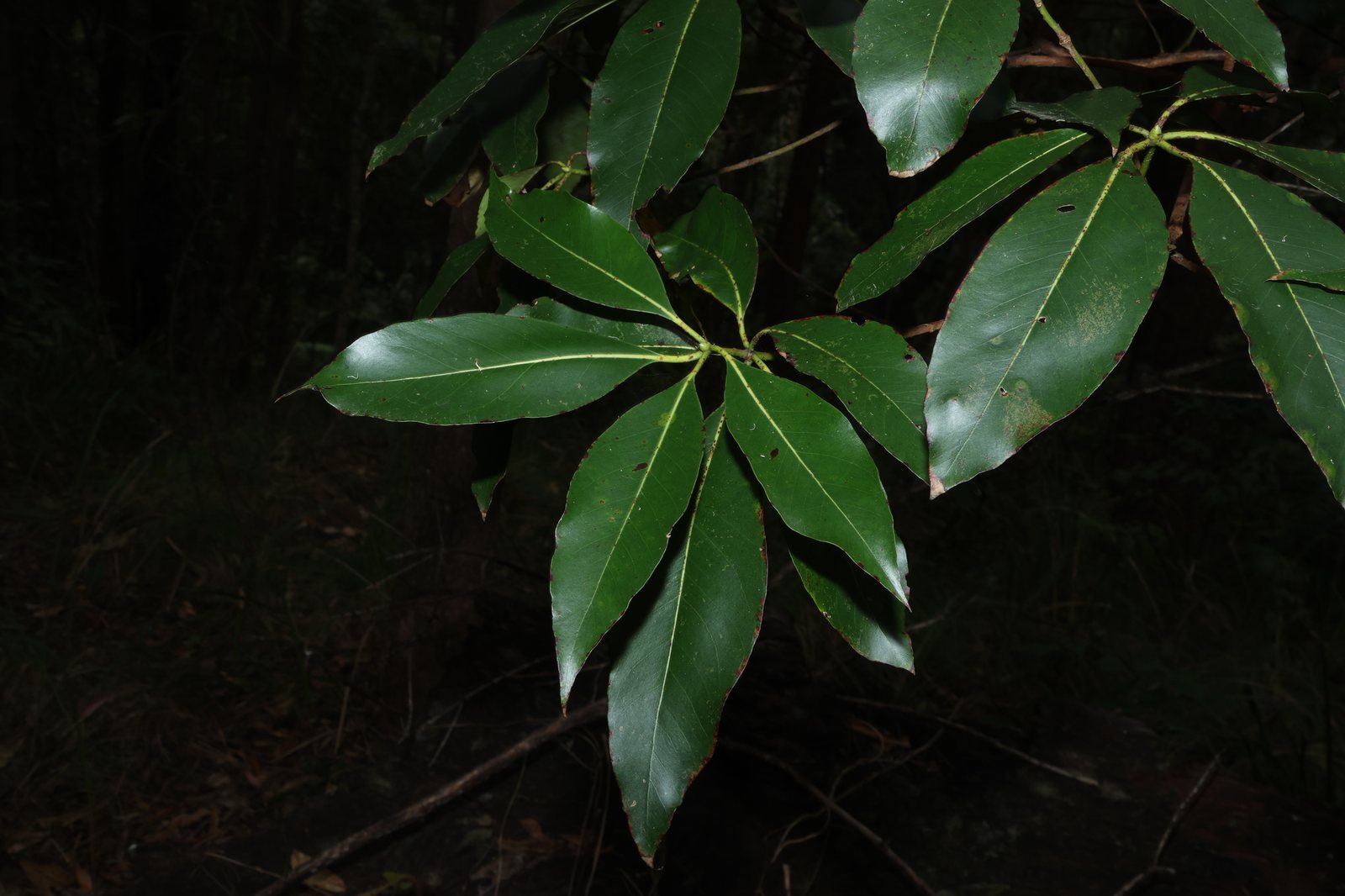
- Evergreen. Glossy, leathery, dark green oval leaves clustered near the ends of branches; the dense canopy provides year-round shade.
- Growth
- Moderate to fast in warm conditions with adequate moisture.
- Care needed
- Medium
The year at a glance
- Pollinators
- Drought tolerant
- Heat tolerant
- Wildlife
| J | F | M | A | M | J | J | A | S | O | N | D | |
|---|---|---|---|---|---|---|---|---|---|---|---|---|
| Flowers | ||||||||||||
| Fruit | ||||||||||||
| Plant |
Northern hemisphere months. In Australia, shift them by six.
- Difficulty
- Hard
- Toughness
- Needs looking after
Will it suit your garden?
Pick your zone, country, light and whether you have pets.
Full sun is 6 or more hours of direct sun a day, part shade 3 to 6 hours, shade under 3.
How it grows
Planting day
7 ft (2 m)
After 1 year
9 ft (2.9 m)
After 2 years
12 ft (3.8 m)
After 3 years
15 ft (4.6 m)
After 5 years
21 ft (6.4 m)
About 16 years to full size.
From a typical nursery size, at an average rate for this kind of plant. A rule of thumb, not a forecast.
Good to know
- Cats and dogs
- Safe
- Native to
- Australia
- Growth rate
- Fast
Care
Jobs through the year
- WaterApr–May, Sep–Oct, every 21 days
- For established trees, water deeply only if soil is dry; young trees need more frequent watering.
- WaterJun–Aug, every 14 days
- Water established trees deeply during prolonged dry spells; water young trees more often.
- FeedApr–May
- Feed young trees lightly only if growth is poor; established trees rarely need feeding.
- PruneApr–May
- After frost risk, train young trees and remove rubbing branches; never top.
- MulchApr, Oct
- Maintain 5–8 cm of organic mulch, keeping it clear of the trunk.
- ProtectJan–Apr, Oct–Dec
- Not reliably hardy in zones 6–7; overwinter a movable specimen frost-free rather than relying on fleece.
- Choose a permanent position well away from buildings, drains, overhead wires and paved surfaces.
- Water deeply through the first two summers, allowing the surface soil to dry between waterings.
- Spread a 2-3 in (5-8 cm) layer of organic mulch over the root zone, keeping it clear of the trunk.
- Feed young trees lightly in spring only if growth is poor; established trees rarely need routine fertiliser.
- Stake only if the root ball is unstable, use flexible ties, and remove supports once the tree is firmly rooted.
- Protect young trees from frost and cold, drying winds.
Pruning. Train young trees in late winter or early spring, after the worst frost risk, retaining a sound main framework and removing rubbing or badly placed branches. Avoid topping; have a qualified arborist assess large limbs and mature trees.
Through the year
- Spring
- Plant after frost danger has passed and water the root ball and surrounding soil thoroughly.
- Spring
- Check young trees for competing leaders, rubbing branches and tight staking ties.
- Summer
- Water establishing trees deeply during dry spells rather than giving frequent light sprinklings.
- Autumn
- Replenish mulch and remove accumulated leaves and woody capsules from paths and drains.
- Winter
- Protect recently planted trees if frost is forecast and inspect established trees after storms.
In the garden
- Use as a broad shade tree in a large lawn, with enough room for its mature crown and roots.
- Plant in spacious Australian-native gardens above lomandra and flax lilies.
- Use repeated trees along a wide driveway or boundary where roots will not conflict with paving or services.
- Create a sheltered woodland setting with shade-tolerant planting beneath the outer canopy.
Garden styles it suits: Australian native, Urban city garden, Woodland, Grand estate, Coastal and Green on green.
Plant it with: Lomandra, Blue flax lily, Clivia and Cast-iron plant.
Wildlife: Flowers attract bees and other insects. The dense canopy provides shelter and potential nesting sites for birds.
Problems to watch for
- Frost damage: young foliage and shoots can blacken in cold weather; protect young trees and wait until spring growth resumes before removing damaged wood.
- Root and paving conflicts: vigorous roots can lift nearby hard surfaces; prevent problems through generous siting rather than cutting major roots.
- Scale insects and sooty mould: inspect affected foliage, encourage beneficial insects and treat reachable infestations with a labelled horticultural oil when needed.
- Root decline in saturated soil: improve drainage before planting and avoid frequent irrigation once the tree is established.
Safety
Not known to be toxic to people, cats, dogs or horses. Species-specific safety information is limited, so do not treat the leaves, bark, flowers or woody capsules as edible or offer them as livestock feed.
Where it spreads. Has naturalised outside Australia, including parts of New Zealand and South Africa. Check local weed guidance before planting near native vegetation; naturalisation does not necessarily mean it is locally listed as invasive.
Easily confused with
Swamp box (Lophostemon suaveolens)
Usually has opposite leaves and rough, fibrous bark extending farther up the trunk and branches; brush box has leaves crowded near branch tips and conspicuously smooth upper bark.
Turpentine tree (Syncarpia glomulifera)
Has rough, fibrous bark extending onto the branches, leaves in opposite pairs that can appear in groups of four, and woody fruit joined into clusters rather than separate brush-box capsules.
The name
Lophostemon comes from Greek words referring to the crested arrangement of the stamens, while confertus means crowded, referring to the clustered leaves.
Propagation. Usually grown from seed collected from mature woody capsules. Surface-sow on a fine, free-draining seed mix, cover very lightly, and keep warm and evenly moist.
Checked against open data
- Accepted botanical name
- Lophostemon confertus
- In the US and Canada
- Introduced in Hawaii.
- Native range
- New South Wales and Queensland.
- Measured
- Average height 1415 cm.
Sources: GBIF (CC BY 4.0), USDA PLANTS and Trefle (CC BY 4.0). The care and design notes are LandscapeGPT's own.
See it in your own yard.
Upload a photo of your yard and see it redesigned with plants that suit your climate, each checked against your zone.