Bur oak
Quercus macrocarpa. Family Fagaceae. Tree.
Also called Burr oak, Mossycup oak.
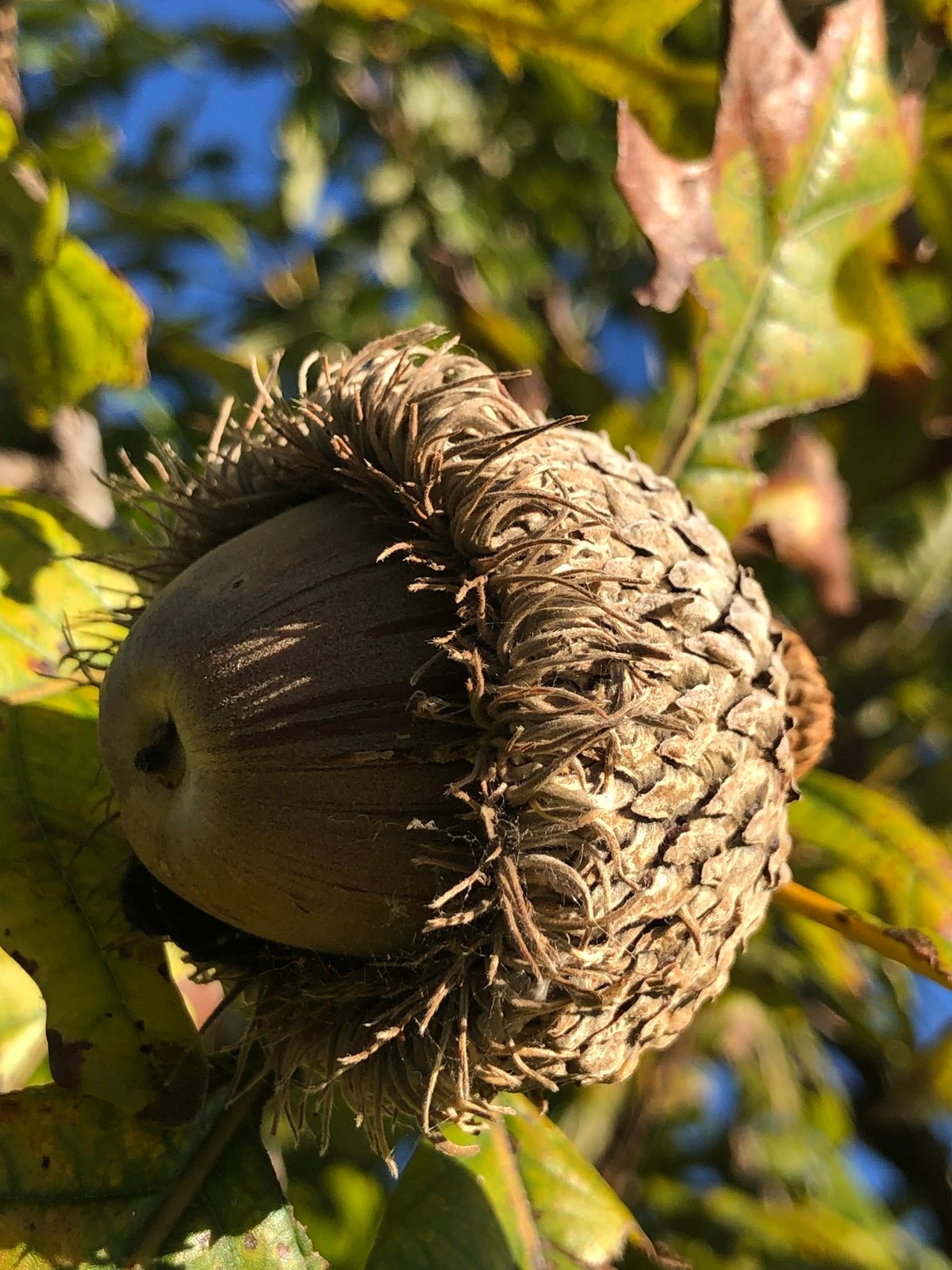
Bur oak is a large, long-lived deciduous tree native to central and eastern North America, grown for its broad shade canopy, rugged bark and distinctive fringed acorn cups. Once established, it tolerates drought, cold and alkaline soil, but its eventual size makes it a tree for large gardens rather than small yards.
At a glance
- Sun
- Full sun; young trees tolerate light shade but develop best in open conditions.
- Water
- Water regularly while establishing; established trees tolerate drought and occasional flooding, but not permanently waterlogged soil.
- Soil
- Deep soil with reasonable drainage; tolerates clay, loam, sandy soil and a wide pH range, including alkaline conditions.
- Height
- 60-80 ft (18-24 m), occasionally taller
- Spread
- 60-80 ft (18-24 m)
- Flowers
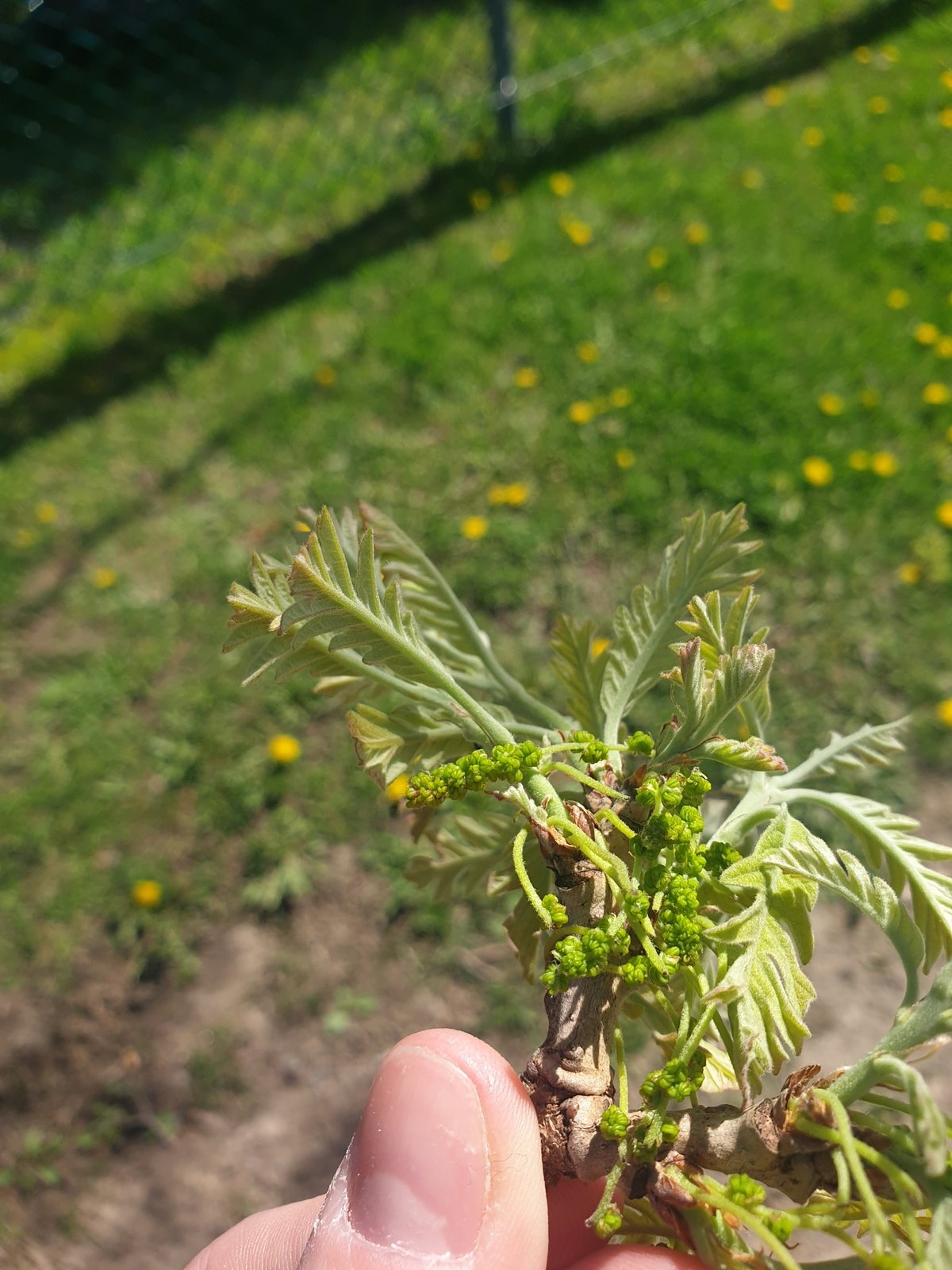
- Spring, as leaves emerge; inconspicuous yellow-green male catkins and tiny female flowers.
- Foliage
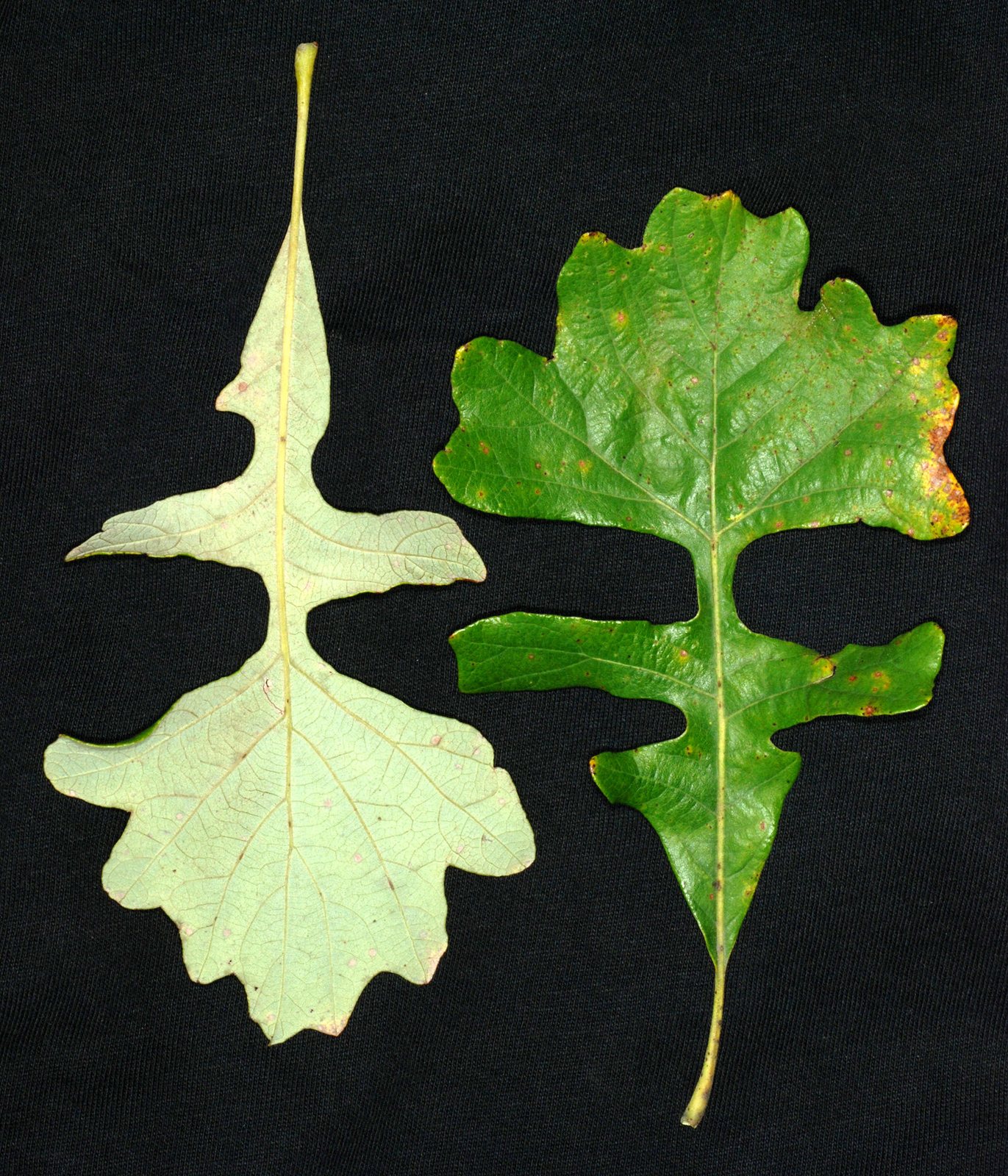
- Large, leathery green leaves with rounded lobes, usually deeply narrowed near the middle and broader toward the tip; yellow-brown to brown in autumn.
- Growth
- Slow to moderate; faster when young in deep soil with adequate moisture.
- Care needed
- Low
The year at a glance
- Drought tolerant
- Cold hardy
- Wildlife
| J | F | M | A | M | J | J | A | S | O | N | D | |
|---|---|---|---|---|---|---|---|---|---|---|---|---|
| Flowers | ||||||||||||
| Fruit | ||||||||||||
| Plant |
Northern hemisphere months. In Australia, shift them by six.
- Difficulty
- Easy
- Toughness
- Very tough
Will it suit your garden?
Pick your zone, country, light and whether you have pets.
Full sun is 6 or more hours of direct sun a day, part shade 3 to 6 hours, shade under 3.
How it grows
Planting day
8 ft (2.5 m)
After 1 year
11 ft (3.4 m)
After 2 years
14 ft (4.4 m)
After 3 years
17 ft (5.3 m)
After 5 years
23 ft (7.1 m)
About 20 years to full size.
From a typical nursery size, at an average rate for this kind of plant. A rule of thumb, not a forecast.
Good to know
- Cats and dogs
- Toxic
- Native to
- the US and Canada
- Growth rate
- Moderate
Care
Jobs through the year
- WaterApr–May, Sep–Oct, every 21 days
- Water established trees only in prolonged dry spells; young trees need more frequent watering for two to three years.
- WaterJun–Aug, every 14 days
- During prolonged drought, soak the root zone deeply rather than sprinkling frequently.
- MulchMar–Apr
- Maintain a broad 5–8 cm mulch ring, leaving the trunk and root flare uncovered.
- PruneJan–Feb, Dec
- Prune young trees for a strong leader in dormancy; follow local oak-wilt restrictions and use an arborist for major work.
- ProtectJan–Feb, Nov–Dec
- Protect young trunks from rabbits and deer with a ventilated guard, checking that it does not constrict growth.
- Plant a small, nursery-grown tree with the root flare at soil level; large specimens can be difficult to establish.
- Water deeply during dry spells for the first two or three growing seasons, allowing the soil surface to dry between waterings.
- Maintain a broad mulch ring 2-3 in (5-8 cm) deep, keeping mulch away from the trunk.
- Do not fertilize routinely; use a soil test if growth or leaf colour suggests a deficiency.
- Stake only if the root ball moves in wind, and remove supports after the first growing season.
- Keep paving, digging and heavy vehicle traffic away from the future root zone.
Pruning. Prune young trees in winter to develop a strong central leader and well-spaced branches; leave major work on mature trees to a qualified arborist. Where oak wilt occurs, avoid pruning during the locally advised high-risk spring and summer period.
Through the year
- Winter
- Inspect branch structure and carry out necessary formative pruning while dormant.
- Early spring
- Plant while dormant if the soil is workable and not waterlogged; refresh the mulch ring.
- Late spring
- Check leaf expansion and look for unusual wilting, spotting or branch dieback.
- Summer
- Water young trees deeply during dry spells and keep grass away from the trunk.
- Autumn
- Collect ripe acorns promptly if you want to raise seedlings; remove unwanted seedlings around the garden.
- Late autumn
- Plant dormant trees where winters are mild enough for root establishment, and check young trunks for animal damage.
In the garden
- Use as a specimen tree in a large lawn, with room for its wide crown and low spreading limbs.
- Place on the sunny edge of a native meadow, paired with prairie grasses and wildflowers.
- Plant in a spacious parkland or estate setting for long-term shade and winter branch structure.
- Use in a mixed native woodland edge with smaller flowering trees and shade-tolerant groundcovers.
Garden styles it suits: Grand estate, Native meadow, Woodland, Wildlife garden, Midwest prairie and Traditional.
Plant it with: Little bluestem, Prairie dropseed, Wild geranium, Pennsylvania sedge, Eastern redbud and Serviceberry.
Wildlife: Acorns feed squirrels, deer, jays and other wildlife. Leaves support many moth and butterfly caterpillars in its native range, while mature trees provide nesting sites, shelter and eventually cavities.
Problems to watch for
- Oak wilt: sudden wilting or branch death needs prompt professional diagnosis. Avoid pruning during local high-risk periods and seek specialist advice on infected trees and nearby root connections.
- Bur oak blight: repeated late-season brown leaf patches and premature leaf loss can weaken susceptible trees. Have persistent symptoms diagnosed; severely affected trees may benefit from arborist-applied treatment.
- Leaf and twig galls: most are cosmetic and need no treatment. Have extensive twig dieback assessed rather than spraying routinely.
- Poor establishment: deep planting, compacted soil and inadequate watering can cause decline. Keep the root flare exposed, protect the root zone and water deeply rather than little and often.
Safety
Acorns, buds and leaves contain tannins and can poison horses, dogs, cats and people if eaten in sufficient quantity. Horses are particularly at risk where fallen acorns or young foliage are accessible; poisoning can cause severe digestive and kidney damage. Keep pets and livestock from eating them, and do not eat raw acorns.
Easily confused with
White oak (Quercus alba)
White oak usually has more evenly distributed rounded leaf lobes and a shallow, unf ringed acorn cup; bur oak has a fringed cup and often a deeply narrowed leaf middle.
Swamp white oak (Quercus bicolor)
Swamp white oak has more shallowly lobed leaves with distinctly whitish undersides and acorns on long stalks; bur oak usually has deeply lobed leaves and much more conspicuously fringed cups.
Overcup oak (Quercus lyrata)
Overcup oak has a cup that nearly encloses the acorn but lacks bur oak's shaggy fringe; its leaves generally have more pointed-looking, though bristle-free, lobes.
The name
Quercus is the Latin name for oak, macrocarpa means large-fruited, and bur oak refers to the burr-like fringe around the acorn cup.
Propagation. Sow fresh, sound acorns promptly in autumn, protected from rodents. They can begin rooting soon after falling and should not be allowed to dry out; use deep containers or a nursery bed and transplant while young.
Checked against open data
- Accepted botanical name
- Quercus macrocarpa
- In the US and Canada
- Native in Canada and the lower 48 states.
- Native range
- Alabama, Alberta, Arkansas, Connecticut, Illinois, Indiana, Iowa, Kansas, Kentucky, Louisiana, Maine and Manitoba.
- Measured
- Average height 1520 cm.
Sources: GBIF (CC BY 4.0), USDA PLANTS and Trefle (CC BY 4.0). The care and design notes are LandscapeGPT's own.
See it in your own yard.
Upload a photo of your yard and see it redesigned with plants that suit your climate, each checked against your zone.