Bush lily
Clivia miniata. Family Amaryllidaceae. Perennial.
Also called Natal lily, Clivia, Kaffir lily.
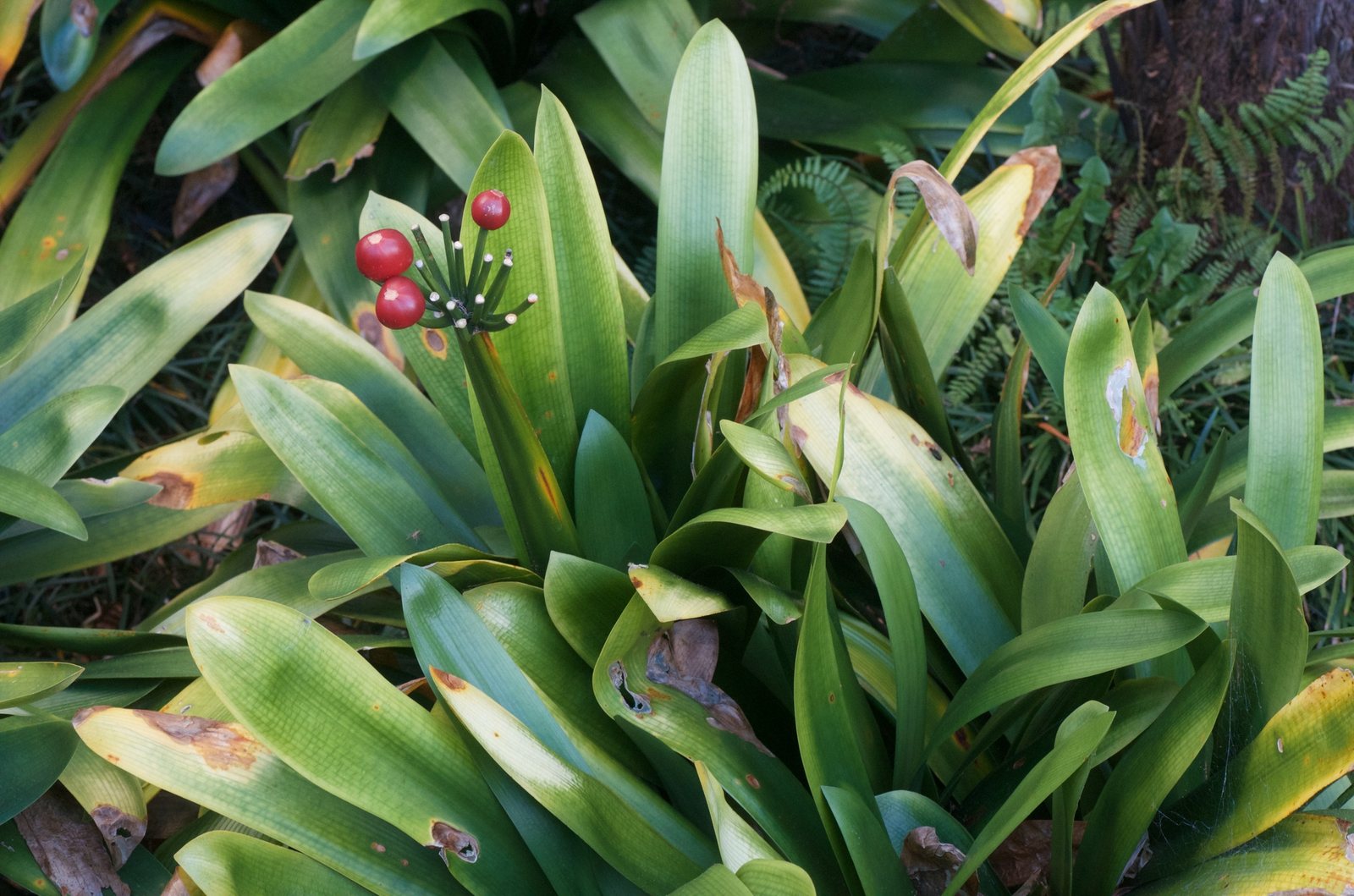
Bush lily is a South African evergreen perennial with broad, arching leaves and clusters of orange flowers held above the foliage. Grow it in sheltered, frost-free shade or in a container that you can move indoors for winter; it also makes a long-lived houseplant.
At a glance
- Sun
- Partial to full shade outdoors; bright, indirect light indoors. Protect from strong midday and afternoon sun.
- Water
- Water moderately during active growth, allowing the surface to dry between waterings. Keep much drier during the cool winter rest, but do not let the roots shrivel.
- Soil
- Humus-rich, well-drained soil. In containers, use a free-draining potting mix with added bark or perlite; avoid oversized pots and standing water.
- Height
- 1.5-2.5 ft (0.45-0.75 m), including flower stems
- Spread
- 2-3 ft (0.6-0.9 m) per mature clump
- Flowers
- Usually late winter to spring; clusters of orange trumpet-shaped flowers, often with yellow throats. Yellow-flowered forms are also available.
- Foliage
- Evergreen. Broad, dark green, strap-shaped leaves arranged in overlapping fans.
- Growth
- Slow
- Care needed
- Low
The year at a glance
- Low allergen
| J | F | M | A | M | J | J | A | S | O | N | D | |
|---|---|---|---|---|---|---|---|---|---|---|---|---|
| Flowers | ||||||||||||
| Fruit | ||||||||||||
| Plant |
Northern hemisphere months. In Australia, shift them by six.
- Difficulty
- Moderate
- Toughness
- Fairly tough
Will it suit your garden?
Pick your zone, country, light and whether you have pets.
Full sun is 6 or more hours of direct sun a day, part shade 3 to 6 hours, shade under 3.
How it grows
Planting day
1 ft (0.3 m)
After 1 year
1.2 ft (0.36 m)
After 2 years
1.4 ft (0.42 m)
After 3 years
1.6 ft (0.49 m)
After 5 years
2 ft (0.6 m)
full size
About 5 years to full size.
From a typical nursery size, at an average rate for this kind of plant. A rule of thumb, not a forecast.
Good to know
- Cats and dogs
- Toxic
- Growth rate
- Slow
Care
Jobs through the year
- WaterMar–May, Sep, every 14 days
- Water when the surface dries; these intervals suit established ground plants only in frost-free climates.
- WaterJun–Aug, every 7 days
- Water during active growth once the surface dries; check pots more often and empty saucers.
- WaterJan–Feb, Oct–Dec, every 28 days
- During the cool sheltered rest, water only enough to prevent roots shrivelling; increase as flower stems develop.
- FeedMar–Aug, every 30 days
- Apply a balanced liquid feed at half strength during active growth.
- DeadheadApr–Jun
- Cut spent flower stems near the base unless ornamental berries or seed are wanted.
- DivideMay–Jun
- Only divide heavily congested clumps after flowering, retaining several leaves and healthy roots per division.
- ProtectJan–Apr, Oct–Dec
- Overwinter containers frost-free in bright indirect light, ideally at 7–13°C for a cool flowering rest.
- Water thoroughly during active growth, then let the surface dry before watering again; empty pot saucers.
- Apply a balanced liquid feed at half strength about monthly during spring and summer.
- Give established plants a cool, relatively dry winter rest to encourage flowering; keep container plants frost-free.
- Repot after flowering only when roots crowd the container heavily, usually every three to four years; keep the crown above the potting mix.
- Divide congested clumps after flowering, retaining several healthy leaves and roots on each division.
Pruning. Cut spent flower stems near the base after flowering unless you want berries or seed. Remove dead or badly damaged leaves at the base, but leave healthy foliage intact.
Through the year
- Late winter
- Watch for emerging flower stems and gradually increase watering as growth resumes.
- Spring
- Begin light feeding and water regularly without leaving the roots saturated.
- Late spring
- After flowering, remove spent stems and repot or divide only if needed.
- Summer
- Keep plants shaded from strong sun and check leaf bases for mealybugs.
- Autumn
- Stop feeding, reduce watering and move containers under cover before frost.
- Winter
- Keep resting container plants in a bright, cool position, ideally around 45-55°F (7-13°C), with sparse watering.
In the garden
- Plant beneath high tree canopies in frost-free gardens for bold evergreen foliage and spring colour.
- Group in shaded courtyards with ferns and cast-iron plants for contrasting leaf shapes.
- Use a substantial container beside a sheltered entrance, moving it indoors where winters are cold.
- Repeat clumps along shaded paths or walls for a consistent, architectural foliage edge.
Garden styles it suits: Woodland, Tropical, Architectural minimal, Modern courtyard, Low-maintenance and Small-space.
Plant it with: Cast-iron plant, Bird's nest fern, Mondo grass, Liriope and Bromeliads.
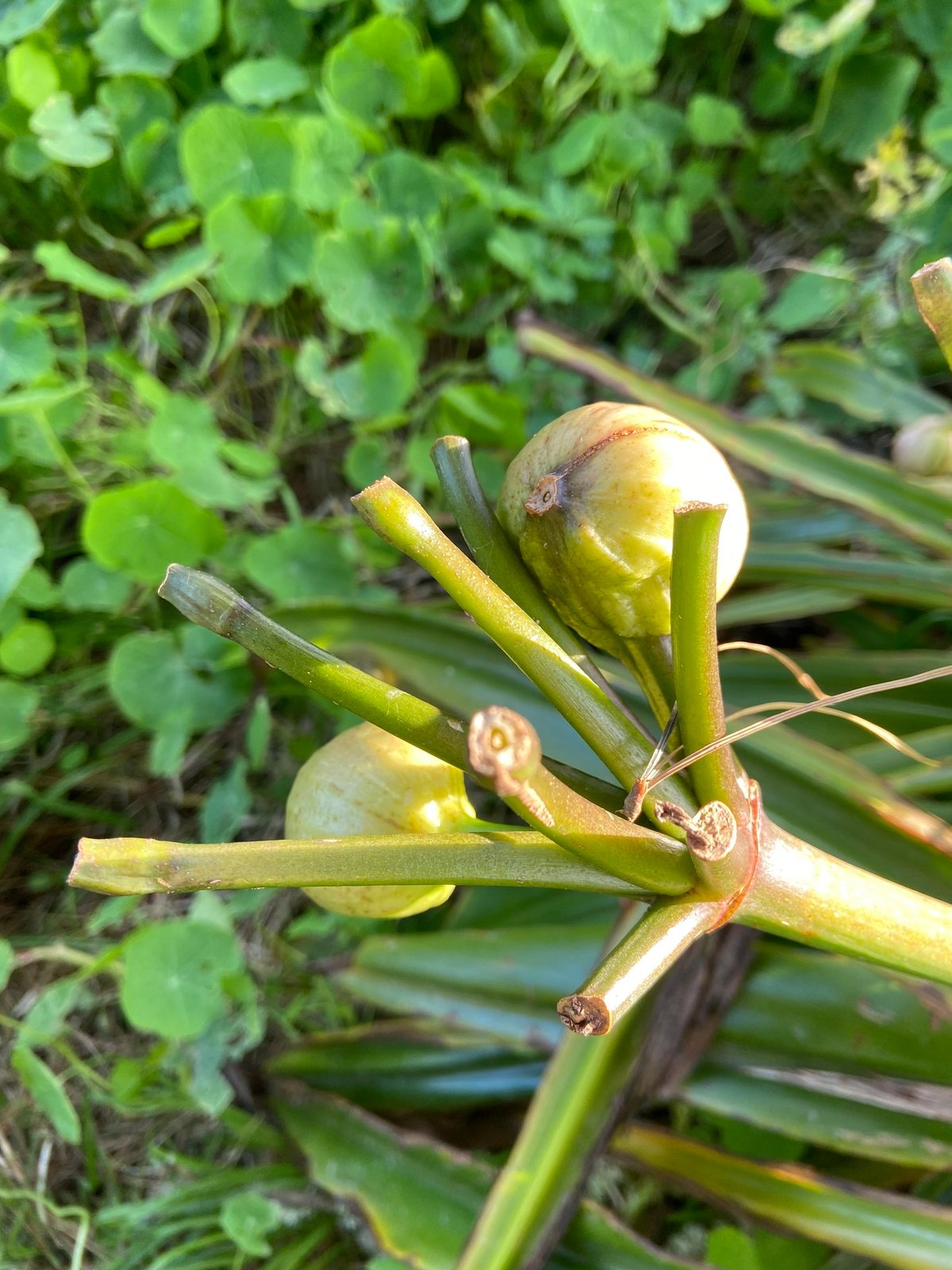
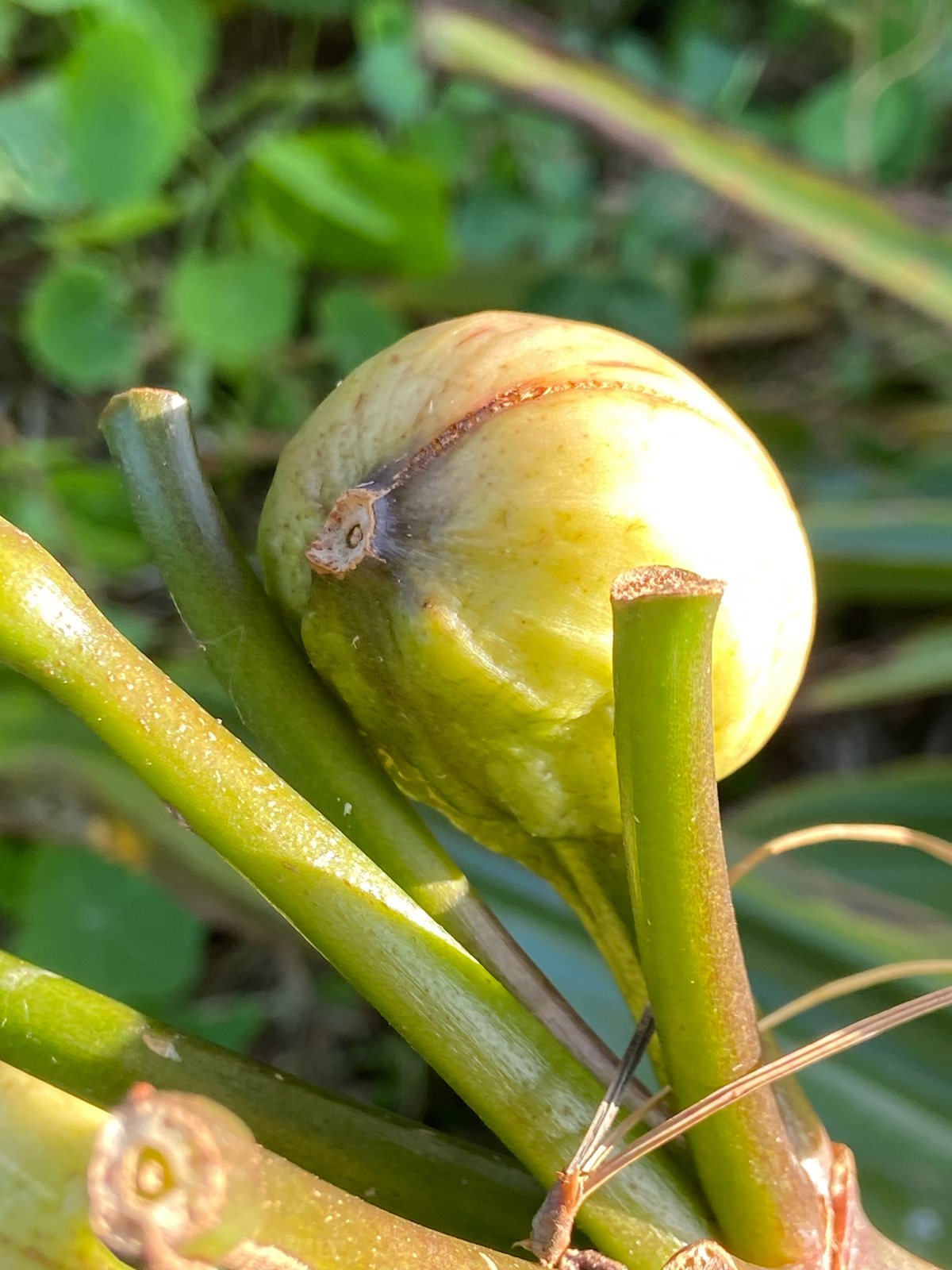
Wildlife: Flowers can provide pollen and nectar to visiting insects. Birds may eat the ripe berries in suitable climates; it is not a major wildlife planting outside its native range.
Problems to watch for
- Mealybugs hide between leaf bases and around roots: isolate affected pots, remove visible insects and use a labelled treatment if necessary.
- Slugs and snails chew leaves and flowers: inspect after dark, remove hiding places and use barriers or an appropriate bait.
- Root rot develops in waterlogged soil: improve drainage, reduce watering and remove rotted roots before repotting in fresh mix.
- Failure to flower often follows insufficient light, a warm winter without a resting period, or recent division: provide bright indirect light and a cool, drier winter, then allow time to re-establish.
Safety
Toxic if eaten by people, cats, dogs and horses. All parts contain toxic alkaloids, with particularly high concentrations in the thickened base and roots; berries are also unsafe. Poisoning commonly causes vomiting, diarrhoea and drooling, and larger amounts can cause serious illness. Seek medical or veterinary advice after ingestion.
Easily confused with
Drooping clivia (Clivia nobilis)
Its flowers are narrow, hanging tubes, usually with green tips, rather than the broad, open trumpets of bush lily.
Amaryllis (Hippeastrum hybrids)
It grows from a conspicuous bulb and carries fewer, much larger trumpet flowers; bush lily forms persistent fans of leaves above thick, fleshy roots.
African lily (Agapanthus species)
It usually has narrower leaves and rounded heads of many blue or white flowers on taller stalks, rather than orange flowers above broad leaf fans.
The name
Clivia honours Charlotte Clive, Duchess of Northumberland, while miniata means vermilion-coloured, referring to the flowers.
Propagation. Separate rooted offsets after flowering; divisions may take a season or more to flower again. Sow fresh seed after removing the berry pulp, keeping it warm and lightly moist; seedlings commonly take several years to bloom and may differ from the parent.
Checked against open data
- Accepted botanical name
- Clivia miniata
- Native range
- Cape Provinces, KwaZulu-Natal, Northern Provinces and Swaziland.
Sources: GBIF (CC BY 4.0) and Trefle (CC BY 4.0). The care and design notes are LandscapeGPT's own.
See it in your own yard.
Upload a photo of your yard and see it redesigned with plants that suit your climate, each checked against your zone.