Canada wild rye
Elymus canadensis. Family Poaceae. Ornamental grass.
Also called Canadian wild rye, Nodding wild rye.
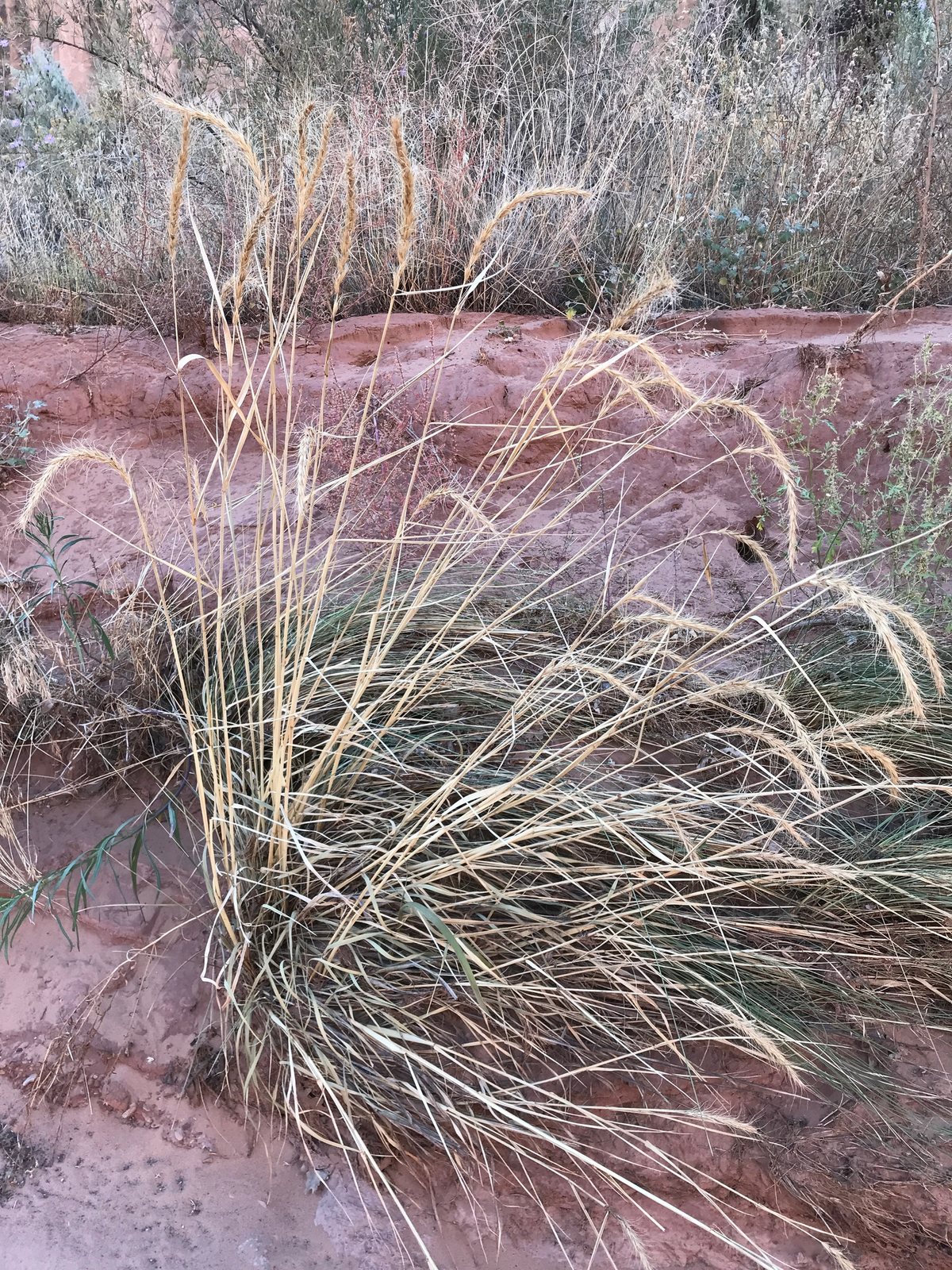
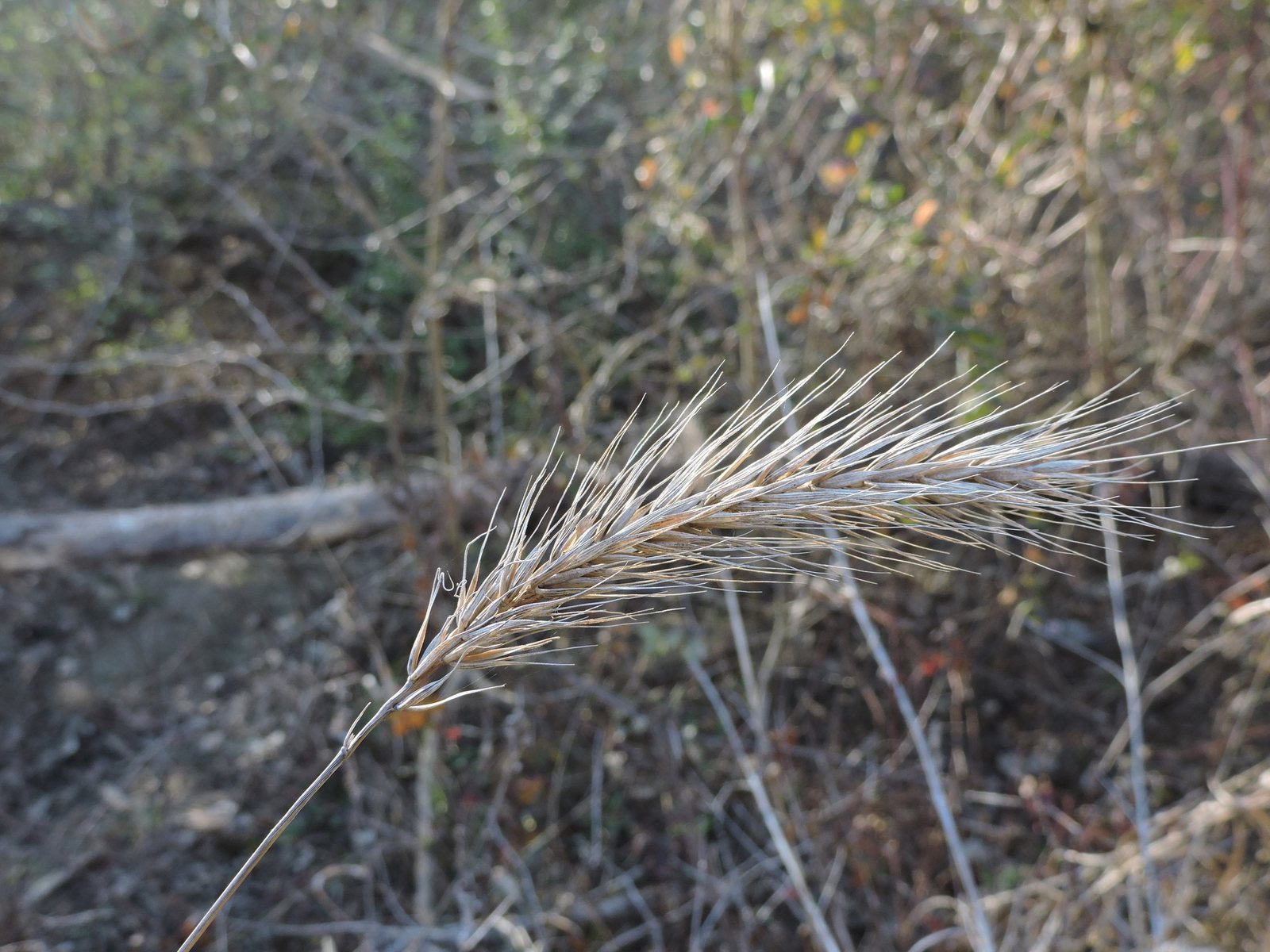
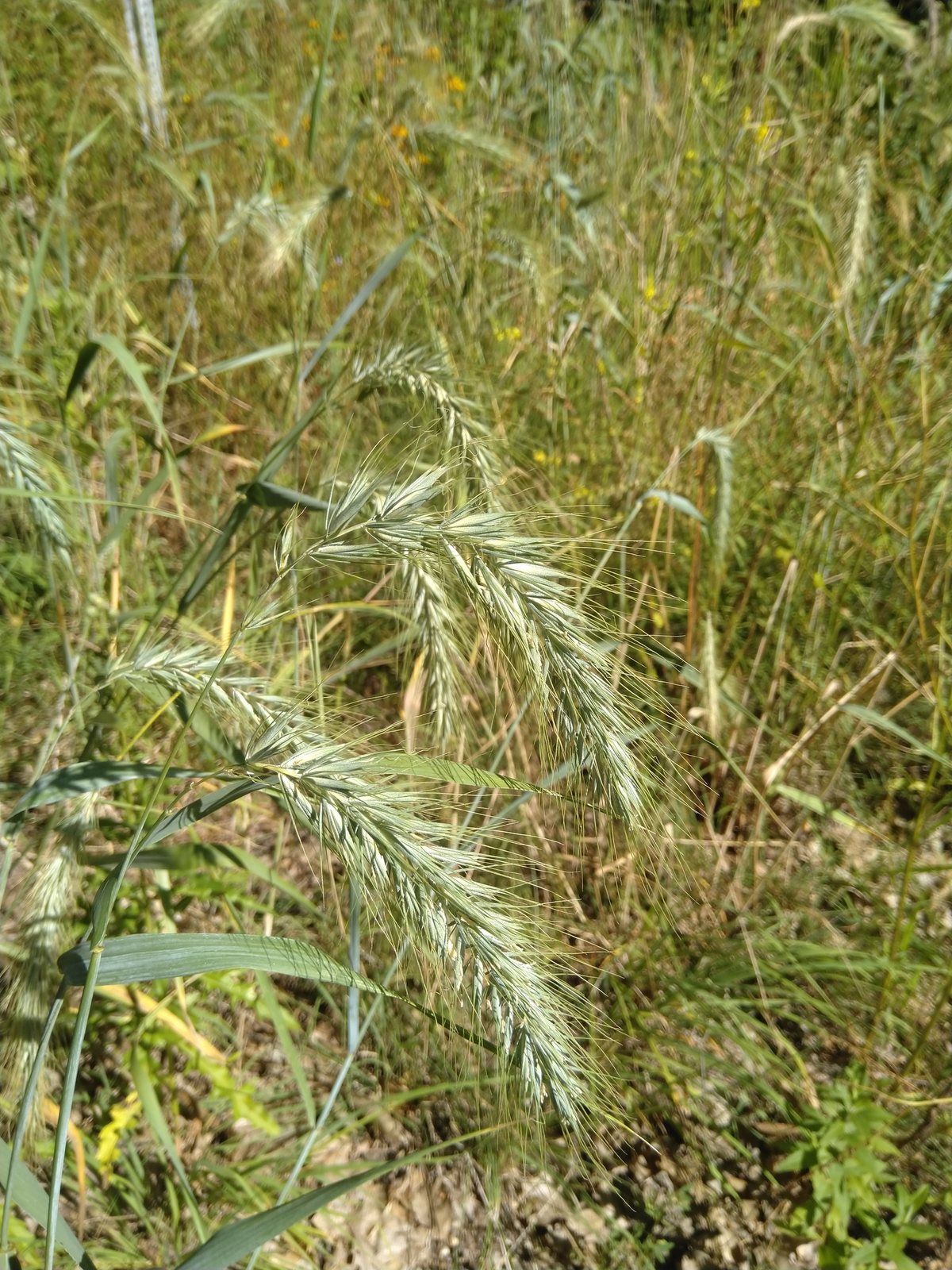
Canada wild rye is a cool-season perennial grass native to much of North America, grown for its arching leaves and nodding, bristly seed heads. It establishes quickly in meadow plantings and naturalistic borders, but individual clumps can be short-lived and often persist through self-seeding.
At a glance
- Sun
- Full sun to light shade; flowering and upright growth are best in sun.
- Water
- Moderate while establishing; tolerates dry spells once rooted, but grows best with occasional deep watering during prolonged drought.
- Soil
- Well-drained sandy, loamy or clay soil; tolerates lean soil and a broad pH range. Avoid persistently waterlogged ground.
- Height
- 3-5 ft (0.9-1.5 m)
- Spread
- 1-2 ft (0.3-0.6 m) per clump; seedlings can occupy a wider area.
- Flowers
- Early to midsummer; greenish flower spikes mature into nodding, straw-coloured seed heads with long, curved bristles.
- Foliage
- Arching, flat green to blue-green leaves turn yellow or tan as they age; growth may become untidy after flowering.
- Growth
- Fast; often flowers in its first or second growing season.
- Care needed
- Low
The year at a glance
- Deer resistant
- Drought tolerant
- Cold hardy
- Wildlife
| J | F | M | A | M | J | J | A | S | O | N | D | |
|---|---|---|---|---|---|---|---|---|---|---|---|---|
| Flowers | ||||||||||||
| Fruit | ||||||||||||
| Plant |
Northern hemisphere months. In Australia, shift them by six.
- Difficulty
- Easy
- Toughness
- Very tough
Will it suit your garden?
Pick your zone, country, light and whether you have pets.
Full sun is 6 or more hours of direct sun a day, part shade 3 to 6 hours, shade under 3.
How it grows
Planting day
1.1 ft (0.35 m)
After 1 year
2.9 ft (0.87 m)
After 2 years
4 ft (1.2 m)
full size
About 2 years to full size.
From a typical nursery size, at an average rate for this kind of plant. A rule of thumb, not a forecast.
Good to know
- Cats and dogs
- Safe
- Native to
- the US and Canada
- Growth rate
- Fast
Care
Jobs through the year
- WaterApr–May, Sep–Oct, every 21 days
- Water established plants only during prolonged dry spells; new plants need regular watering.
- WaterJun–Aug, every 14 days
- Give an occasional deep soak in prolonged drought, allowing surface soil to dry between waterings.
- PruneFeb–Mar
- Cut old stems to 10–15 cm before new shoots lengthen.
- DivideMar–Apr
- Divide vigorous clumps if propagation or renewal is needed.
- DeadheadJul–Aug
- Remove ripening seed heads only to limit self-seeding; otherwise retain them for wildlife.
- Water regularly through the first growing season, allowing the surface soil to dry between soakings.
- Avoid routine feeding; rich soil and excess nitrogen encourage floppy stems.
- Space plants 1-2 ft (0.3-0.6 m) apart and keep thick mulch away from their crowns.
- Remove unwanted seedlings while small, or cut off seed heads before they shed.
- Divide vigorous clumps in early spring if you need more plants; retain a few seedlings to replace ageing clumps.
Pruning. Cut dead stems back to 4-6 in (10-15 cm) in late winter or early spring, before fresh growth lengthens. Leave seed heads standing through winter where they remain attractive, unless you need to limit self-seeding.
Through the year
- Late winter
- Cut down old stems before new shoots emerge.
- Early spring
- Plant or divide clumps and water them in thoroughly.
- Spring
- Thin crowded seedlings and remove weeds around young plants.
- Early summer
- Check for leaning stems; avoid feeding and water only when the soil is becoming dry.
- Late summer
- Remove ripening seed heads if you do not want seedlings.
- Autumn
- Leave sound stems for winter structure and wildlife, or sow fresh seed outdoors.
In the garden
- Use in prairie or meadow plantings as a quick-establishing grass among slower-growing perennials.
- Plant loose groups with coneflowers and black-eyed Susans for contrasting flower shapes and nodding seed heads.
- Use on sunny banks or naturalised edges where its fibrous roots help hold soil.
- Place behind lower perennials so their foliage screens its sometimes untidy late-season base.
Garden styles it suits: Native meadow, Midwest prairie, New perennial (prairie), Wildlife garden, Rewilded and Modern rustic.
Plant it with: Purple coneflower, Black-eyed Susan, Wild bergamot, Butterfly weed, Little bluestem and Smooth blue aster.
Wildlife: Seeds provide food for seed-eating birds and small mammals. Foliage supports some native butterfly and moth larvae within its North American range, and standing clumps offer cover for insects. Flowers are wind-pollinated rather than a nectar source.
Problems to watch for
- Flopping in rich soil or shade: move to a sunnier position and stop fertilising.
- Rust or leaf spots: allow air movement, avoid wetting foliage repeatedly and remove badly affected dead material.
- Excessive self-seeding: remove seed heads before they shed and pull seedlings promptly.
- Short-lived clumps or summer browning: retain replacement seedlings and combine with later-season grasses and perennials.
Safety
Not known to be poisonous to people, cats, dogs or horses. The long, stiff bristles on mature seed heads can mechanically irritate or injure mouths, eyes and skin; keep pets and grazing animals away from ripe heads.
Easily confused with
Virginia wild rye (Elymus virginicus)
Usually has more upright, compact seed spikes with shorter, straighter bristles; Canada wild rye has conspicuously nodding heads with long bristles that curve outward as they mature.
Bottlebrush grass (Elymus hystrix)
Its spikelets project widely from the stem, making an open bottlebrush shape rather than the dense, drooping head of Canada wild rye.
The name
The species name canadensis means 'of Canada', and 'wild rye' refers to its rye-like flower and seed heads.
Propagation. Grow from seed sown outdoors in autumn or early spring; cold, moist conditions can improve germination. Divide established clumps in early spring. It also self-seeds readily where soil is exposed.
Checked against open data
- Accepted botanical name
- Elymus canadensis
- In the US and Canada
- Native in Canada and the lower 48 states.
- Native range
- Alabama, Alaska, Alberta, Arizona, Arkansas, British Columbia, California, Colorado, Connecticut, Delaware, District of Columbia and Georgia.
- Measured
- Soil pH 5 to 7.9. Average height 102 cm.
Sources: GBIF (CC BY 4.0), USDA PLANTS and Trefle (CC BY 4.0). The care and design notes are LandscapeGPT's own.
See it in your own yard.
Upload a photo of your yard and see it redesigned with plants that suit your climate, each checked against your zone.