Cape aloe
Aloe ferox. Family Asphodelaceae. Succulent.
Also called Bitter aloe, Tap aloe.
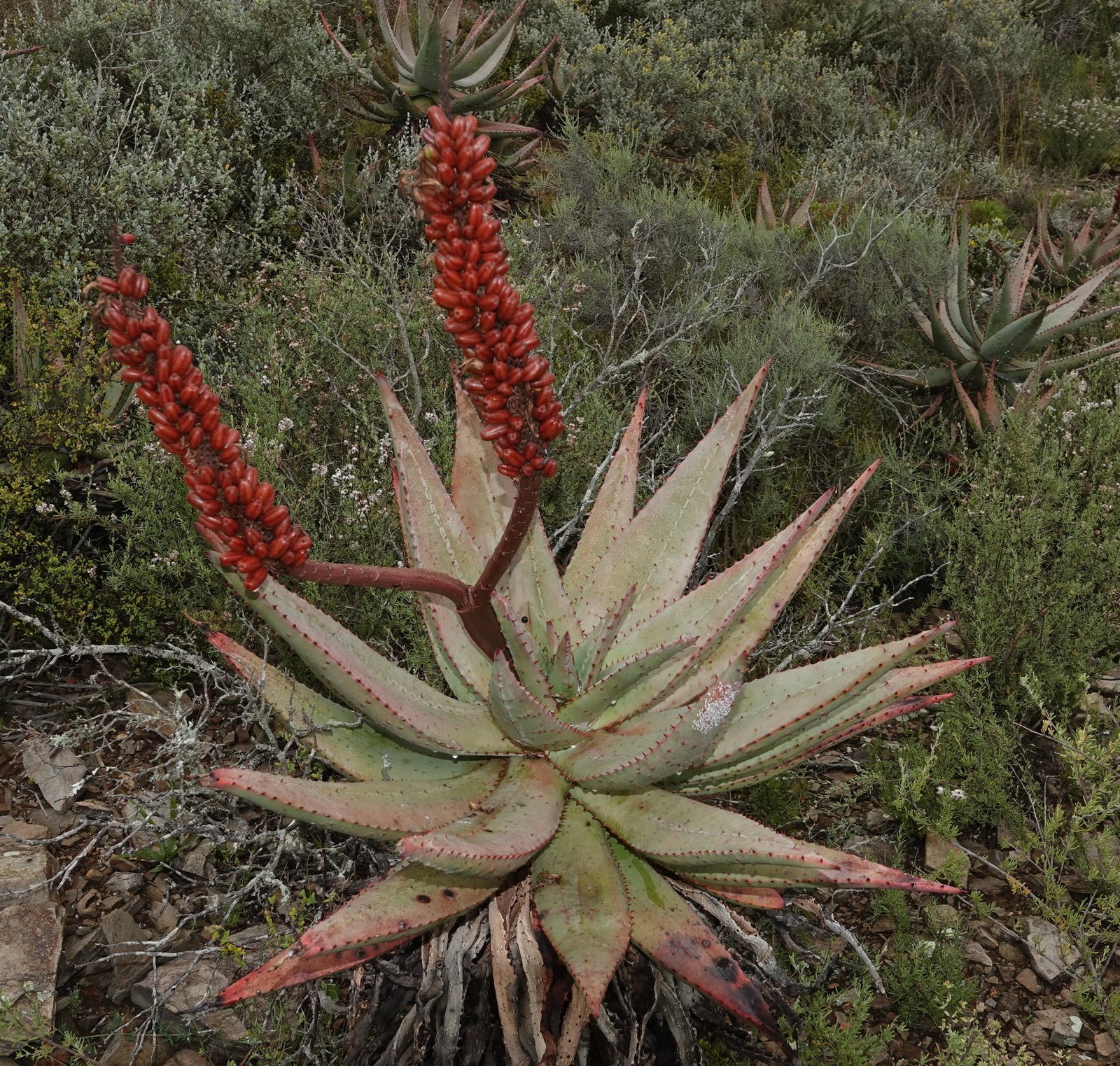
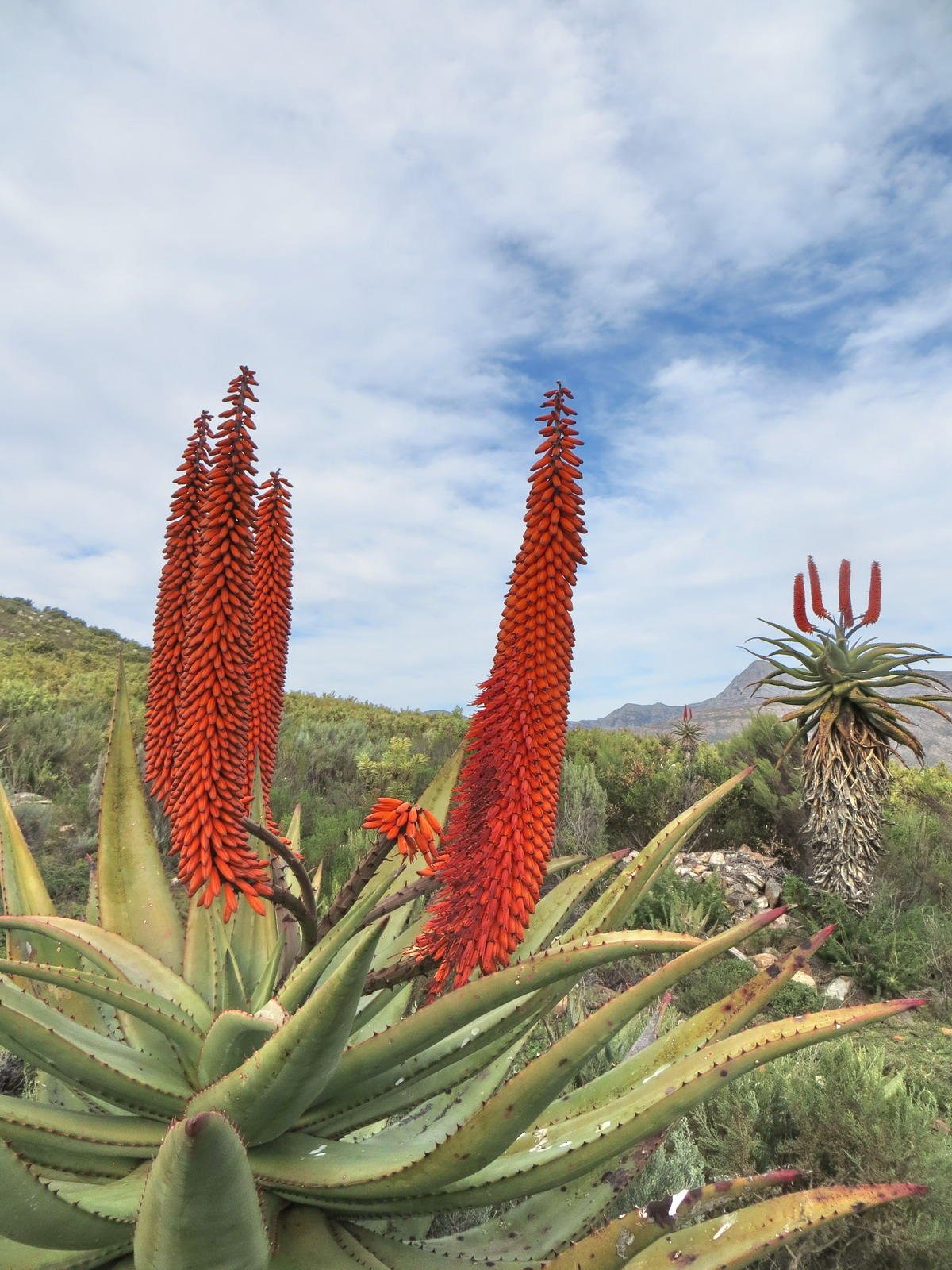
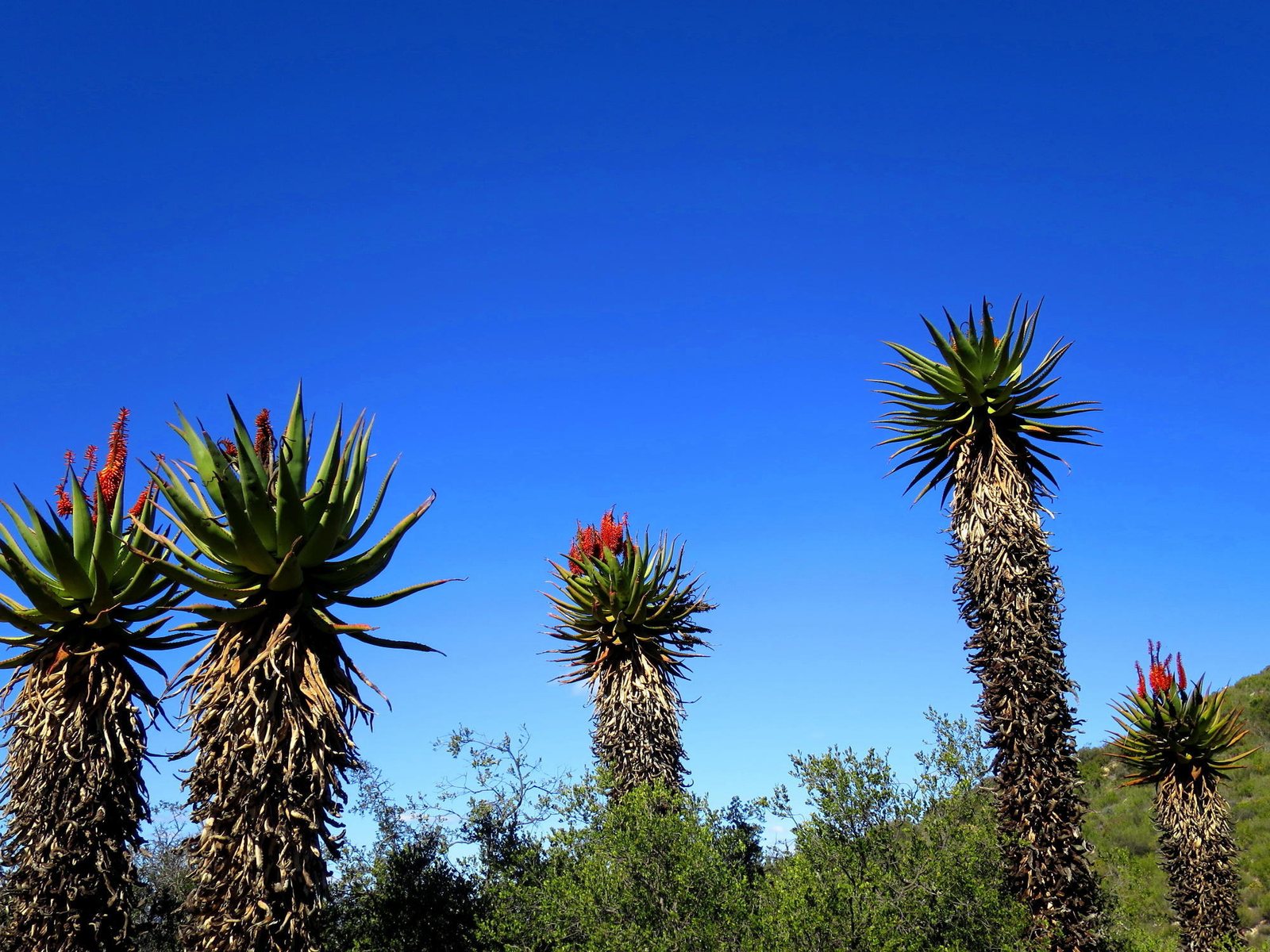
Cape aloe is a large, usually single-stemmed South African succulent with a crown of spiny leaves and upright spikes of orange-red flowers. Grow it for its bold shape and winter flowers in mild, dry gardens; in colder regions, keep it in a container that can be moved into bright, frost-free shelter.
At a glance
- Sun
- Full sun; introduce plants grown under cover to strong outdoor sun gradually.
- Water
- Low once established. Water deeply during active growth, then let the soil dry; keep much drier in cool weather.
- Soil
- Very free-draining sandy or gravelly soil. In containers, use a gritty cactus and succulent mix and a pot with drainage holes.
- Height
- 6-10 ft (1.8-3 m)
- Spread
- 3-5 ft (0.9-1.5 m)
- Flowers
- Usually winter into spring, with timing varying by climate; branched flower stalks carry dense spikes of tubular orange-red flowers, occasionally yellow.
- Foliage
- Evergreen. Thick, blue-green to dull green leaves form a large rosette. Reddish-brown teeth line the margins; young plants often also have prickles on the leaf surfaces. Dead leaves commonly remain as a skirt around the trunk.
- Growth
- Slow
- Care needed
- Low
The year at a glance
- Pollinators
- Deer resistant
- Drought tolerant
- Heat tolerant
- Low allergen
| J | F | M | A | M | J | J | A | S | O | N | D | |
|---|---|---|---|---|---|---|---|---|---|---|---|---|
| Flowers | ||||||||||||
| Plant |
Northern hemisphere months. In Australia, shift them by six.
- Difficulty
- Moderate
- Toughness
- Fairly tough
Will it suit your garden?
Pick your zone, country, light and whether you have pets.
Full sun is 6 or more hours of direct sun a day, part shade 3 to 6 hours, shade under 3.
How it grows
Planting day
0.9 ft (0.29 m)
After 1 year
1.7 ft (0.51 m)
After 2 years
2.4 ft (0.73 m)
After 3 years
3 ft (0.95 m)
After 5 years
5 ft (1.4 m)
About 10 years to full size.
From a typical nursery size, at an average rate for this kind of plant. A rule of thumb, not a forecast.
Good to know
- Cats and dogs
- Toxic
- Growth rate
- Slow
Care
Jobs through the year
- WaterMar–May, Sep–Oct, every 21 days
- Grow in a movable container; water only after the root zone dries and drain fully.
- WaterJun–Aug, every 14 days
- Water deeply only when dry; recently planted specimens may need more frequent checks.
- WaterJan–Feb, Nov–Dec, every 30 days
- Keep sheltered plants mostly dry; water sparingly only if needed and keep the crown dry.
- FeedApr
- Give container plants one light application of diluted cactus fertiliser.
- MulchMay
- Top-dress with gravel, leaving the crown clear.
- PruneApr–May
- Remove finished flower stalks; leave the leaf skirt or remove only fully dry leaves, wearing protection.
- ProtectJan–Apr, Oct–Dec
- Keep in bright, frost-free shelter protected from persistent winter rain.
- ProtectMay–Jun
- After frost risk passes, acclimatise gradually to full outdoor sun.
- Plant on a raised mound or slope if drainage is uncertain; do not plant in a low spot that stays wet.
- Water newly planted specimens when the root zone has dried, then reduce watering once established.
- Keep water out of the crown during cold weather and empty container saucers after watering.
- Feed container plants lightly once in spring with a diluted cactus fertiliser; established plants in the ground seldom need feeding.
- Use gravel rather than moisture-holding mulch around the base, keeping the crown clear.
- Protect from frost and persistent winter rain; move containers under bright, frost-free cover in cold climates.
Pruning. Cut spent flower stalks near their base after flowering. Leave the natural skirt of dead leaves, or remove only fully dry leaves carefully; wear thick gloves and eye protection around the spines.
Through the year
- Spring
- Plant or repot once frost risk has passed, using a very free-draining mix.
- Late spring
- Acclimatise overwintered container plants gradually to outdoor sunshine.
- Summer
- Water deeply only after the root zone dries, and check leaf bases for mealybugs.
- Autumn
- Reduce watering as temperatures fall and move containers into shelter before frost.
- Winter
- Keep sheltered plants bright and mostly dry; protect outdoor crowns from prolonged cold rain.
- After flowering
- Remove faded flower stalks without cutting into the leafy crown.
In the garden
- Use as a single focal plant in a sunny gravel garden, with open space around its spiny crown.
- Combine with low-growing succulents and rounded rocks for contrasting shapes in a dry border.
- Grow in a large, stable container on a sunny terrace where winter shelter is available.
- Plant on a well-drained bank with other South African drought-tolerant plants for winter colour.
Garden styles it suits: Architectural minimal, Desert modern, Mediterranean, Desert / xeriscape, Dry gravel garden and Winter interest.
Plant it with: Blue chalksticks, Rock purslane, Ice plant, Red yucca, Lavender and Pincushion euphorbia.
Wildlife: Nectar-rich flowers attract sunbirds in its native range, and may attract hummingbirds where grown in the Americas. Bees also visit the flowers.
Problems to watch for
- Root or crown rot: prevent standing water, improve drainage and reduce winter watering; badly rotted crowns are usually beyond saving.
- Mealybugs and scale: inspect leaf bases regularly, remove small infestations by hand and use a labelled treatment if they persist.
- Aloe gall mite: distorted, knobbly growth can indicate mites; isolate affected plants, remove affected tissue and seek local treatment advice. Discard severely affected plants.
- Frost damage: leaves become soft or blackened after freezing; provide winter shelter and wait until spring to remove clearly dead tissue.
Safety
Do not eat the leaves or use them for home remedies. The yellow latex beneath the leaf skin contains strong laxative compounds and can cause abdominal pain, diarrhoea and dehydration in people. Treat the leaves as toxic to cats, dogs and horses if eaten. The sharp leaf teeth can also injure people and animals.
Easily confused with
Mountain aloe (Aloe marlothii)
Usually has more conspicuous prickles across the leaf surfaces and a broad flower head with spreading, often nearly horizontal branches; Cape aloe generally has more upright flower spikes.
Krantz aloe (Aloe arborescens)
Forms a branching, many-headed shrub with narrower leaves, rather than the usually single trunk and large crown of Cape aloe.
Aloe vera (Aloe vera)
Usually forms low, offsetting clumps with little visible trunk and commonly yellow flowers; Cape aloe develops a tall trunk and a large crown with mostly orange-red flowers.
The name
Cape refers to its South African origin, while the Latin ferox means fierce, referring to its formidable leaf spines.
Propagation. Usually grown from seed sown in spring in a warm, bright place using a free-draining seed mix. Keep lightly moist, not wet, until established. It rarely produces offsets, so division is not a dependable method.
Checked against open data
- Accepted botanical name
- Aloe ferox
- Native range
- Cape Provinces, Free State and Lesotho.
Sources: GBIF (CC BY 4.0) and Trefle (CC BY 4.0). The care and design notes are LandscapeGPT's own.
See it in your own yard.
Upload a photo of your yard and see it redesigned with plants that suit your climate, each checked against your zone.