Cape rush
Elegia tectorum. Family Restionaceae. Perennial.
Also called Small Cape rush, Thatching reed, Chondropetalum tectorum.
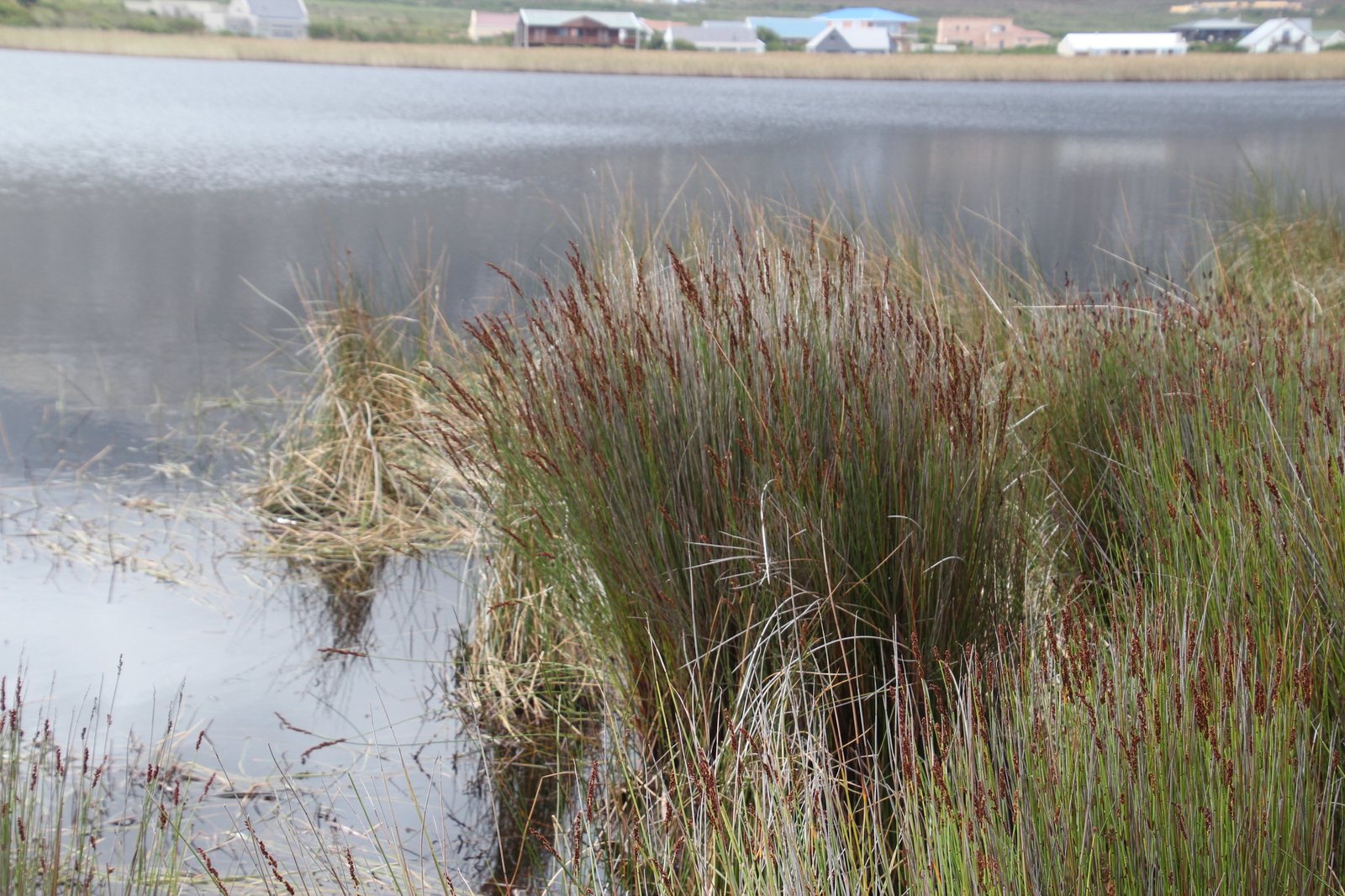
Cape rush is an evergreen, grass-like perennial from South Africa, grown for its upright green stems and gently arching tips. It forms a dense, rounded clump that gives gardens year-round structure and movement; it is a restio, not a true grass or rush.
At a glance
- Sun
- Full sun; tolerates light shade, but usually grows less densely.
- Water
- Water regularly while establishing. Established plants tolerate some dry weather, but look better with occasional deep watering during prolonged drought.
- Soil
- Well-drained sandy or loamy soil, preferably acidic to neutral. Tolerates moist ground provided it is not stagnant or persistently waterlogged.
- Height
- 3-5 ft (0.9-1.5 m)
- Spread
- 3-5 ft (0.9-1.5 m)
- Flowers
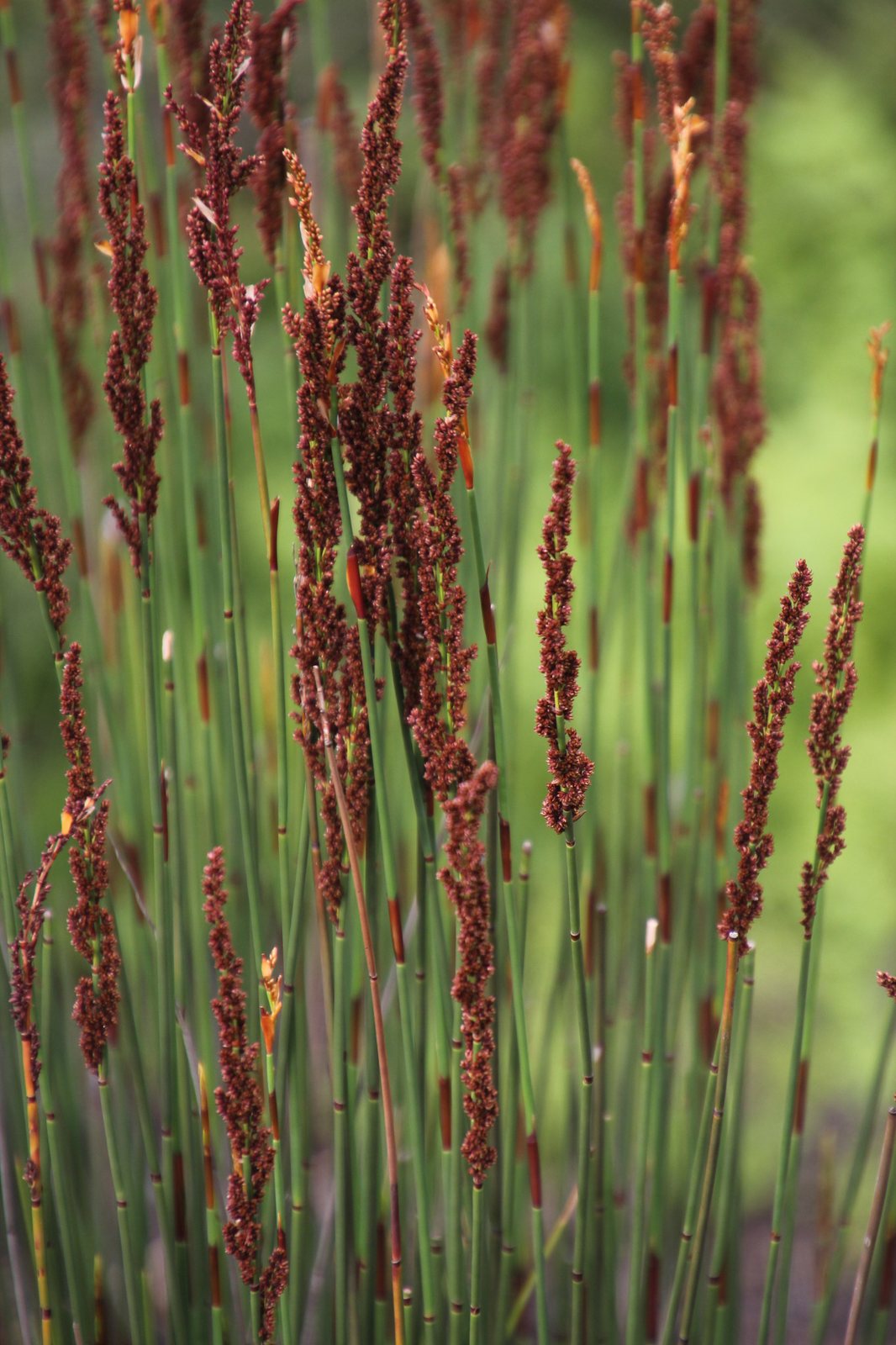
- Small brown flower heads at the stem tips, mainly in summer; male and female flowers occur on separate plants.
- Foliage
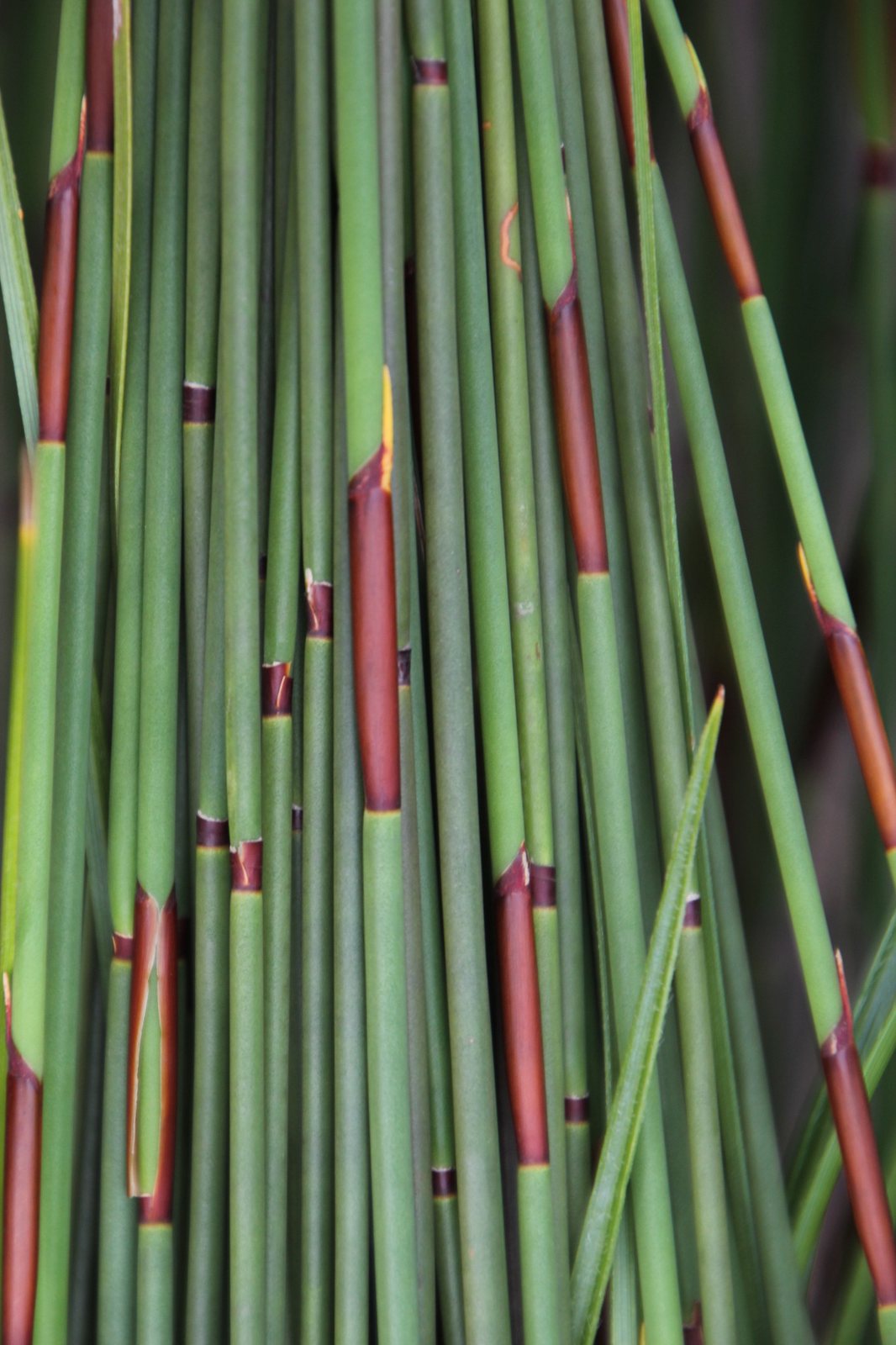
- Evergreen. Slender, jointed green stems with dark brown, papery sheaths at the nodes. True leaves are reduced to small scales.
- Growth
- Moderate
- Care needed
- Low
The year at a glance
- Deer resistant
- Drought tolerant
- Heat tolerant
- Wildlife
| J | F | M | A | M | J | J | A | S | O | N | D | |
|---|---|---|---|---|---|---|---|---|---|---|---|---|
| Flowers | ||||||||||||
| Fruit | ||||||||||||
| Plant |
Northern hemisphere months. In Australia, shift them by six.
- Difficulty
- Moderate
- Toughness
- Needs looking after
Will it suit your garden?
Pick your zone, country, light and whether you have pets.
Full sun is 6 or more hours of direct sun a day, part shade 3 to 6 hours, shade under 3.
How it grows
Planting day
1 ft (0.3 m)
After 1 year
2 ft (0.6 m)
After 2 years
3 ft (0.9 m)
After 3 years
4 ft (1.2 m)
full size
About 3 years to full size.
From a typical nursery size, at an average rate for this kind of plant. A rule of thumb, not a forecast.
Good to know
- Cats and dogs
- Safe
- Growth rate
- Moderate
Care
Jobs through the year
- WaterApr–May, Sep, every 14 days
- Water established ground-grown clumps only during dry spells; young and container plants need more.
- WaterJun–Aug, every 10 days
- Give established ground-grown clumps a deep soak during prolonged drought; containers need more frequent checks.
- WaterJan–Mar, Oct–Dec, every 14 days
- For frost-free overwintering containers, check compost and water sparingly only when nearly dry.
- PruneApr
- Cut individual dead or damaged stems at ground level; never shear the whole clump.
- FeedApr–May
- Apply a light low-phosphorus feed only if growth is weak.
- MulchMay
- Apply a thin mulch, leaving stem bases uncovered.
- ProtectJan–Apr, Oct–Dec
- In zone 6–7, grow in a container and keep under bright, frost-free cover until frost risk passes.
- Water deeply during the first growing season, allowing the surface soil to begin drying between waterings.
- Give established clumps occasional deep watering during long dry spells.
- Feed sparingly in spring with a low-phosphorus fertiliser; avoid heavy feeding.
- Apply a light mulch around the clump, keeping it clear of the stem bases.
- In colder climates, grow it in a container and move it into bright, frost-free shelter for winter.
Pruning. In spring, cut dead or damaged stems individually at ground level. Do not shear the clump or cut all stems down as you would an ornamental grass; old stems do not regrow from their cut ends.
Through the year
- Spring
- Plant after the risk of hard frost has passed, leaving room for the mature clump.
- Spring
- Remove dead stems at the base and apply a light, low-phosphorus feed if growth is weak.
- Summer
- Water new plants regularly and established plants during prolonged dry spells.
- Autumn
- Check drainage and clear fallen leaves from the crown.
- Late autumn
- Move container plants under bright, frost-free cover where winters are colder than the plant can tolerate.
- Winter
- Keep sheltered container plants barely moist rather than wet.
In the garden
- Repeat clumps through a gravel garden for a consistent, fine-textured structure.
- Use beside a pond or water feature, planting above the permanently saturated margin.
- Grow in a large container to soften paving, walls and modern architecture.
- Combine with bold-leaved plants such as agapanthus for a contrast in texture.
- Plant in mild coastal gardens where its moving stems complement low shrubs and open views.
Garden styles it suits: Architectural minimal, Contemporary minimal, Coastal, Dry gravel garden, South African fynbos and Winter interest.
Plant it with: Agapanthus, Kangaroo paw, New Zealand flax, Leucadendron, African daisy and Society garlic.
Wildlife: Dense clumps provide shelter for small garden animals and invertebrates. Flowers are wind-pollinated and are not a significant nectar source.
Problems to watch for
- Frost damage: stems may brown after freezing weather; protect container plants and remove damaged stems once spring growth begins.
- Root or crown rot in stagnant soil: improve drainage, avoid burying the crown and reduce watering during cool weather.
- Brown tips during drought: water deeply and mulch around, rather than over, the crown.
- Poor recovery after hard pruning: remove only individual dead stems rather than cutting the whole clump down.
Safety
Not known to be toxic to people, cats, dogs or horses. Species-specific information is limited, so do not treat any part as edible or encourage pets to chew it.
Easily confused with
Large Cape rush (Elegia elephantina)
A much larger, coarser plant with thicker stems, often reaching 6-8 ft (1.8-2.4 m). It has frequently been sold under the name Chondropetalum tectorum.
Horsetail restio (Elegia capensis)
Has conspicuous tiers of fine, branching green shoots around the main stems, giving a feathery appearance; Cape rush has largely unbranched stems.
The name
The species name tectorum means 'of roofs', referring to the traditional use of its stems for thatching.
Propagation. Raise from seed, which can germinate unevenly and often responds to smoke treatment. Established clumps can be divided carefully in spring, but divisions are slow to recover; keep substantial roots and several healthy stems on each piece.
Checked against open data
- Accepted botanical name
- Elegia tectorum
- Native range
- Cape Provinces.
Sources: GBIF (CC BY 4.0) and Trefle (CC BY 4.0). The care and design notes are LandscapeGPT's own.
See it in your own yard.
Upload a photo of your yard and see it redesigned with plants that suit your climate, each checked against your zone.