Carolina cherry laurel
Prunus caroliniana. Family Rosaceae. Tree.
Also called Carolina laurelcherry, Cherry laurel, Laurel cherry.
Carolina cherry laurel is an evergreen tree native to the southeastern United States, grown for dense screening, glossy foliage and small, creamy-white flowers. It can be trained as a hedge or allowed to develop into a small shade tree, but needs room and may produce many bird-sown seedlings.
At a glance
- Sun
- Full sun to partial shade; growth is usually densest in sun.
- Water
- Water regularly while establishing. Established trees tolerate some drought, but benefit from deep watering during prolonged dry weather.
- Soil
- Well-drained soil, preferably slightly acidic to neutral. Tolerates sand, loam and clay where drainage is adequate; strongly alkaline soil can cause yellowing leaves.
- Height
- 20-40 ft (6-12 m)
- Spread
- 15-25 ft (4.5-7.5 m)
- Flowers
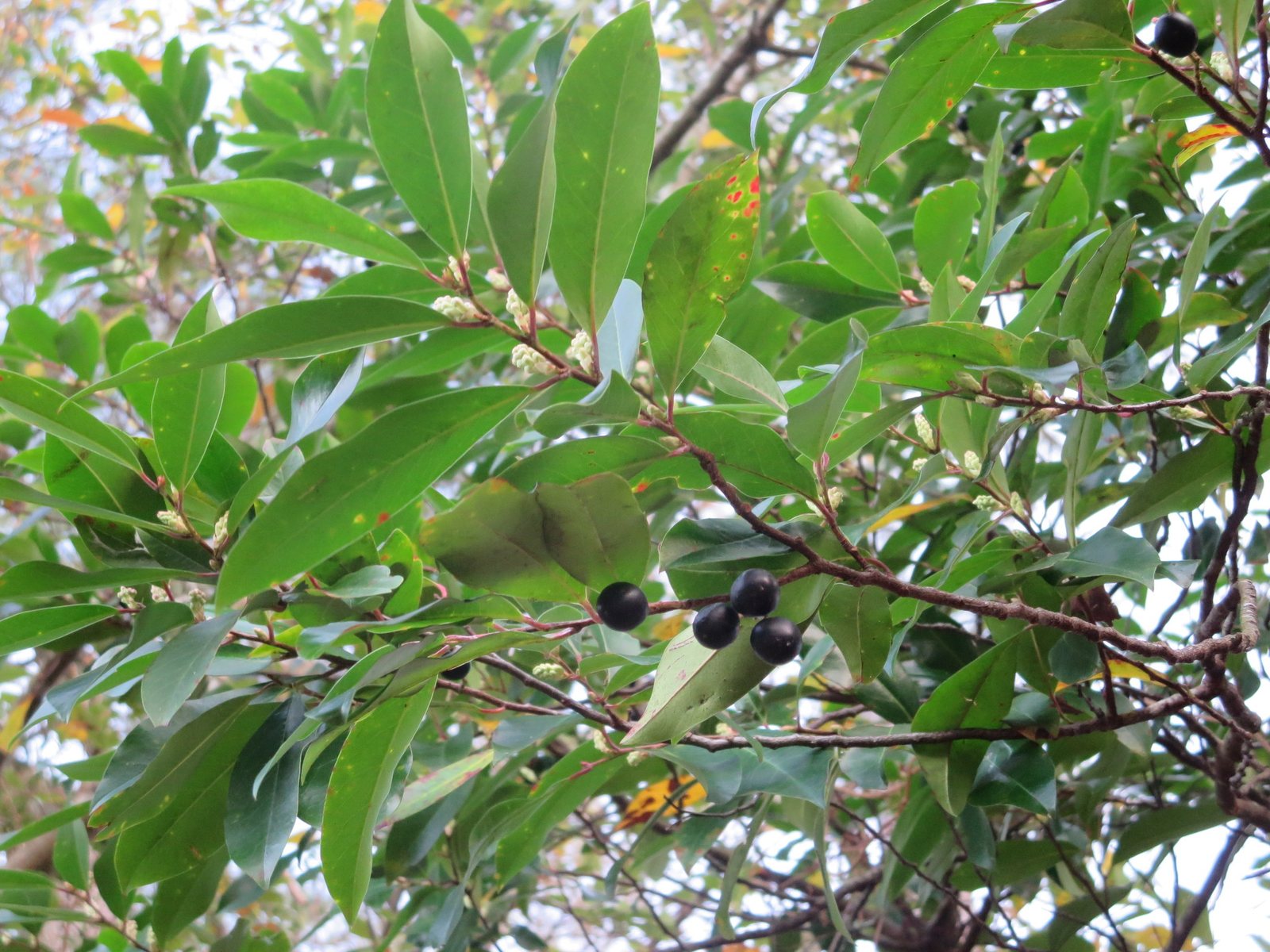
- Late winter to spring; small, creamy-white flowers in upright clusters.
- Foliage
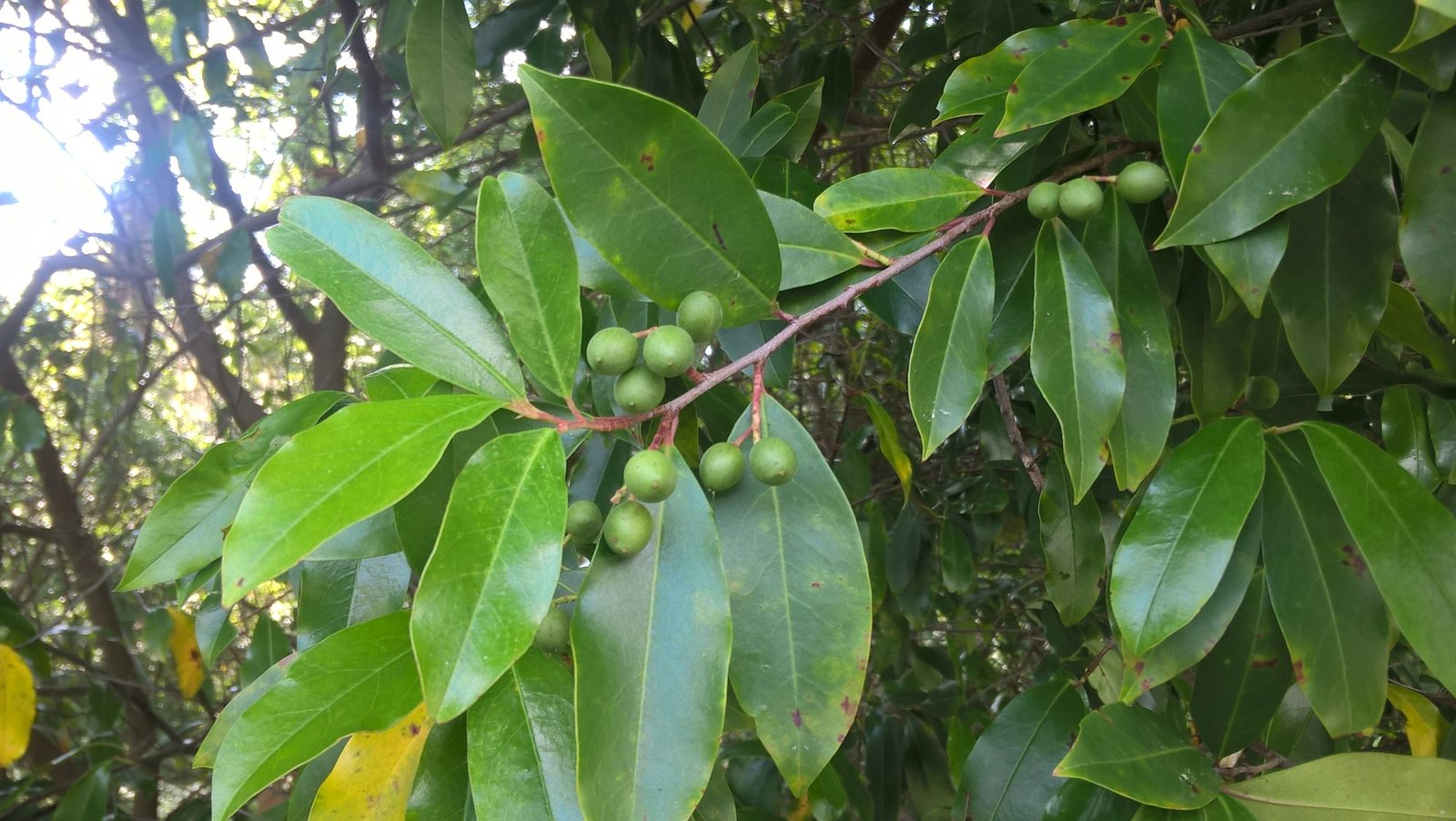
- Evergreen. Glossy, dark-green, leathery leaves with pointed tips and mostly smooth or finely toothed edges.
- Growth
- Moderate to fast in warm climates with adequate moisture.
- Care needed
- Medium
The year at a glance
- Pollinators
- Drought tolerant
- Heat tolerant
- Wildlife
- Low allergen
- Fragrant
| J | F | M | A | M | J | J | A | S | O | N | D | |
|---|---|---|---|---|---|---|---|---|---|---|---|---|
| Flowers | ||||||||||||
| Fruit | ||||||||||||
| Plant |
Northern hemisphere months. In Australia, shift them by six.
- Difficulty
- Moderate
- Toughness
- Fairly tough
Will it suit your garden?
Pick your zone, country, light and whether you have pets.
Full sun is 6 or more hours of direct sun a day, part shade 3 to 6 hours, shade under 3.
How it grows
Planting day
7 ft (2 m)
After 1 year
8 ft (2.4 m)
After 2 years
9 ft (2.9 m)
After 3 years
11 ft (3.3 m)
After 5 years
14 ft (4.2 m)
About 16 years to full size.
From a typical nursery size, at an average rate for this kind of plant. A rule of thumb, not a forecast.
Good to know
- Cats and dogs
- Toxic
- Native to
- the US
- Growth rate
- Fast
Care
Jobs through the year
- WaterApr–May, Sep–Oct, every 21 days
- Water established trees only during dry spells; young trees need more for two seasons.
- WaterJun–Aug, every 14 days
- Soak the root area during prolonged drought, allowing soil to dry between waterings.
- MulchApr
- Spread 5–8 cm of mulch over the roots, keeping the trunk clear.
- FeedApr
- Feed only if growth is weak; check drainage and soil pH before treating yellow leaves.
- PruneMay
- Prune after flowering to shape or remove crossing branches; never top a tree.
- ProtectMay, Sep
- Pull unwanted seedlings, especially near woodland or natural areas.
- ProtectJan–Mar, Nov–Dec
- Shelter young trees from cold winds; avoid exposed zone 7 sites and zone 6.
- Water deeply during dry spells for the first two growing seasons, letting the soil begin to dry between waterings.
- Apply 2-3 in (5-8 cm) of mulch over the root area, keeping it away from the trunk.
- Avoid sites that remain waterlogged after rain.
- Feed in spring only if growth is weak; investigate drainage and soil pH before treating yellow foliage.
- Pull unwanted seedlings while small, especially beside woodland or natural areas.
Pruning. Prune after flowering to shape a hedge or remove crossing branches; keep hedges wider at the base than at the top. For a tree, establish a clear trunk gradually and avoid topping.
Through the year
- Late winter
- Inspect for cold-damaged shoots, but wait until new growth begins before deciding what to remove.
- Spring
- Plant in colder parts of its range and water thoroughly; check established plants for yellowing foliage or poor drainage.
- Late spring
- Prune after flowering and remove unwanted seedlings.
- Summer
- Water young plants deeply during dry weather and inspect stressed branches for scale insects or borers.
- Autumn
- Plant in mild-winter climates and refresh mulch without covering the trunk base.
- Winter
- Water recently planted trees during dry, frost-free spells; protect young plants from drying winds near their cold limit.
In the garden
- Use as an evergreen boundary screen where there is space for its mature width.
- Clip into a tall hedge to enclose a formal garden, keeping the base broad enough to receive light.
- Train as a small shade tree over a lawn or broad planting bed, away from paving where fallen fruit would be troublesome.
- Combine with native hollies, beautyberry and ornamental grasses for a layered southeastern US planting.
Garden styles it suits: Southern, Formal, Traditional, Woodland, Native hedgerow and Winter interest.
Plant it with: Yaupon holly, American beautyberry, Oakleaf hydrangea, Pink muhly grass and Eastern redbud.
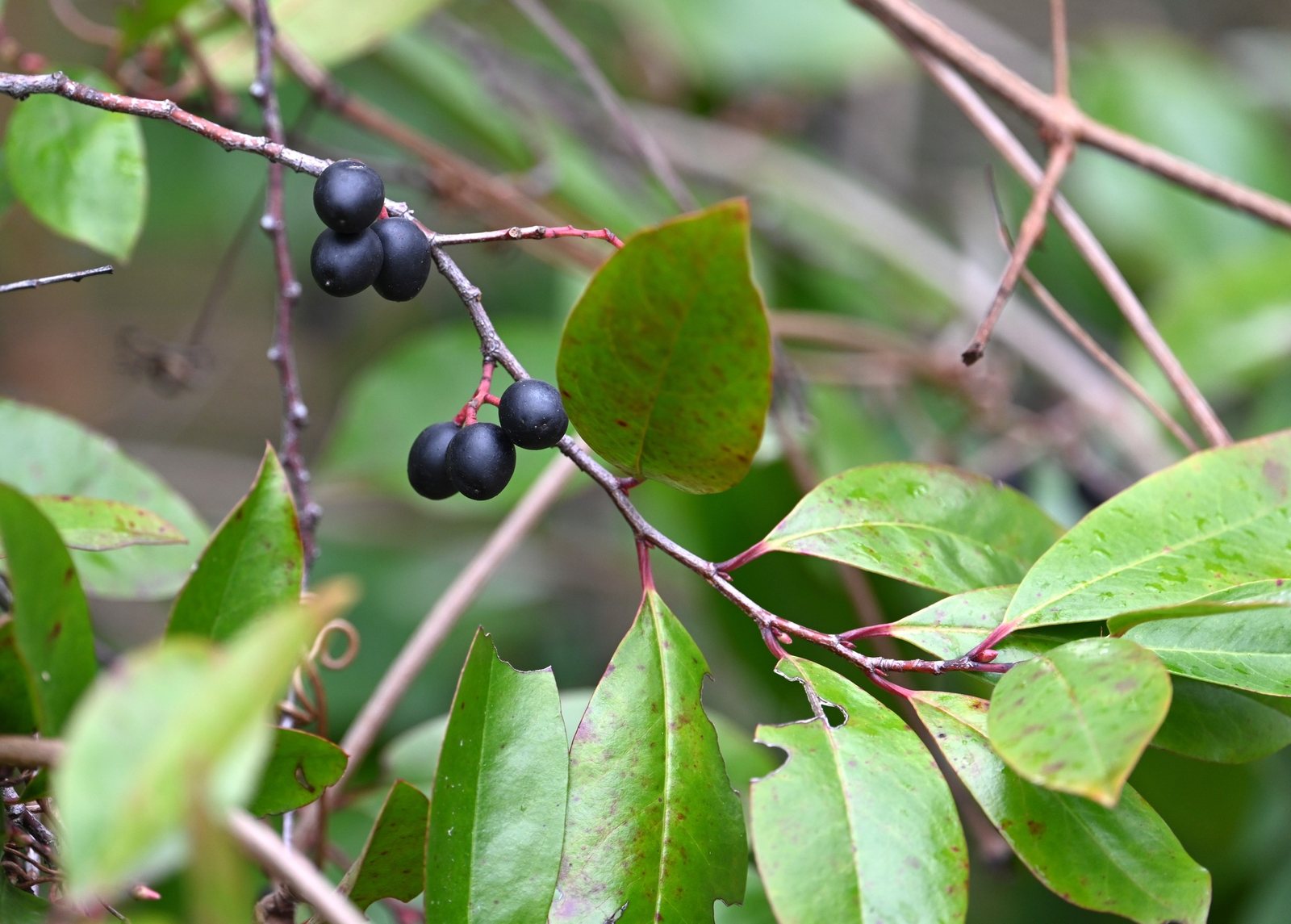
Wildlife: Flowers provide nectar and pollen for bees and other insects. Birds eat the small black fruits and disperse the seeds; dense foliage provides shelter and nesting cover.
Problems to watch for
- Root rot in wet soil: improve drainage and reduce irrigation; choose another site if the ground stays saturated.
- Leaf spots and shot-hole symptoms: remove fallen affected leaves, avoid overhead watering and improve airflow.
- Scale insects: inspect stems and leaf undersides; treat confirmed infestations with a horticultural oil labelled for the plant and pest.
- Borers and branch dieback on stressed plants: maintain appropriate watering, avoid trunk injuries and remove dead branches; seek an arborist's advice for extensive damage.
Safety
Toxic to people, cats, dogs and horses. Leaves, stems and seeds contain cyanogenic compounds that can release cyanide when chewed; wilted leaves are particularly hazardous to grazing animals. Poisoning can be severe or fatal. Do not eat the fruit or allow animals access to prunings; seek urgent medical or veterinary advice after suspected ingestion.
Where it spreads. Can escape cultivation through bird-dispersed seed in parts of California, where it is naturalized outside its native range. Remove seedlings near natural areas and check local planting guidance.
Easily confused with
English cherry laurel (Prunus laurocerasus)
Usually has much larger, broader leaves with more conspicuous teeth; Carolina cherry laurel has narrower leaves with mostly smooth or finely toothed edges.
Portuguese laurel (Prunus lusitanica)
Usually has red leaf stalks and young shoots, distinctly toothed leaves and longer, more slender flower clusters.
The name
Prunus is the Latin name for plum, caroliniana refers to Carolina, and 'cherry laurel' describes its cherry-like fruit and laurel-like evergreen leaves.
Propagation. Raise from fresh seed given a period of cold, moist stratification, or take semi-ripe cuttings in summer. Seedlings may differ from the parent; use cuttings to preserve a named cultivar.
Checked against open data
- Accepted botanical name
- Prunus caroliniana
- In the US and Canada
- Native in the lower 48 states.
- Native range
- Alabama, Arkansas, Florida, Georgia, Louisiana, Mississippi, North Carolina, South Carolina and Texas.
- Measured
- Average height 775 cm.
Sources: GBIF (CC BY 4.0), USDA PLANTS and Trefle (CC BY 4.0). The care and design notes are LandscapeGPT's own.
See it in your own yard.
Upload a photo of your yard and see it redesigned with plants that suit your climate, each checked against your zone.