Carolina jessamine
Gelsemium sempervirens. Family Gelsemiaceae. Climber.
Also called Carolina jasmine, Yellow jessamine, Evening trumpetflower.
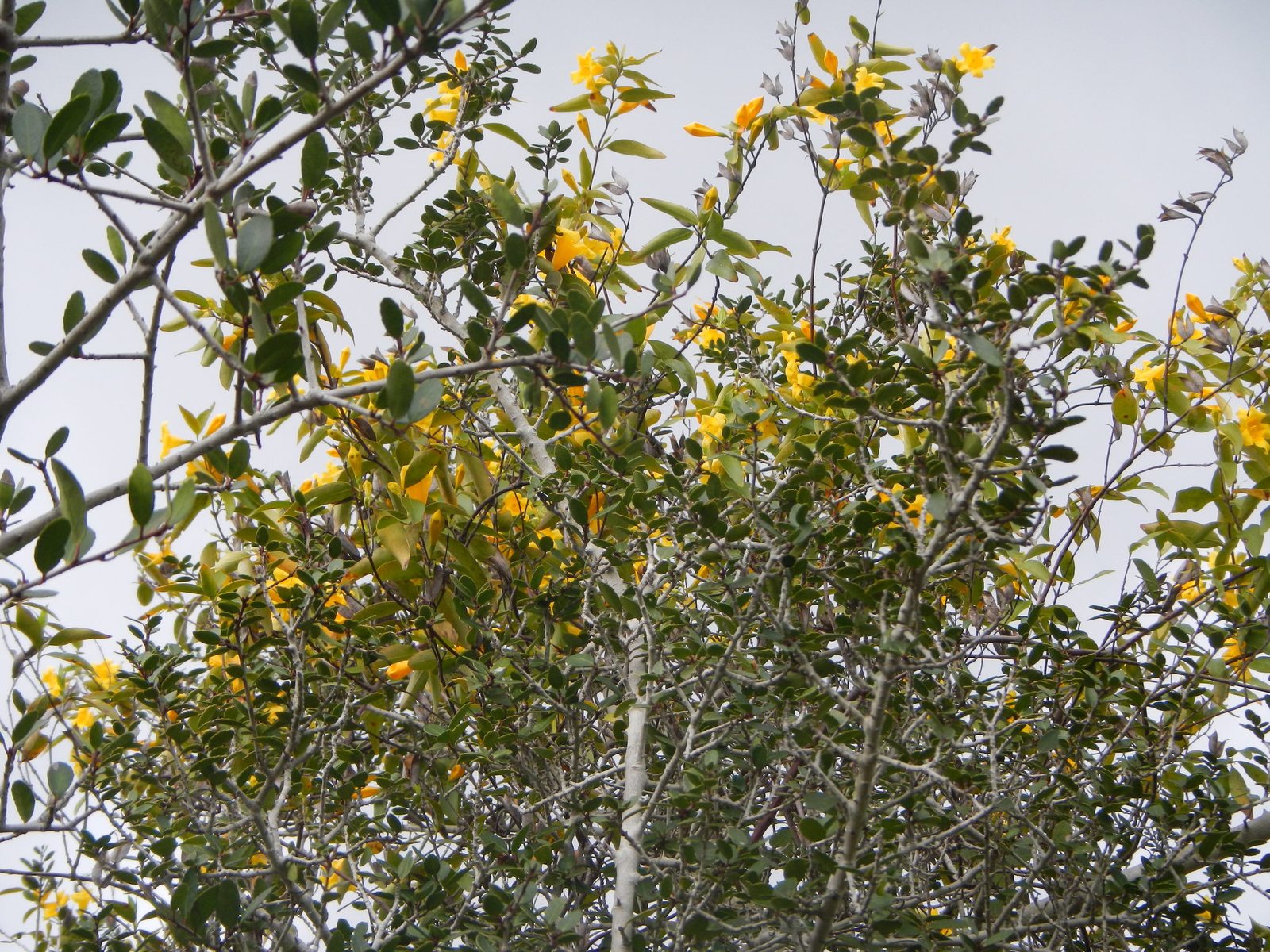
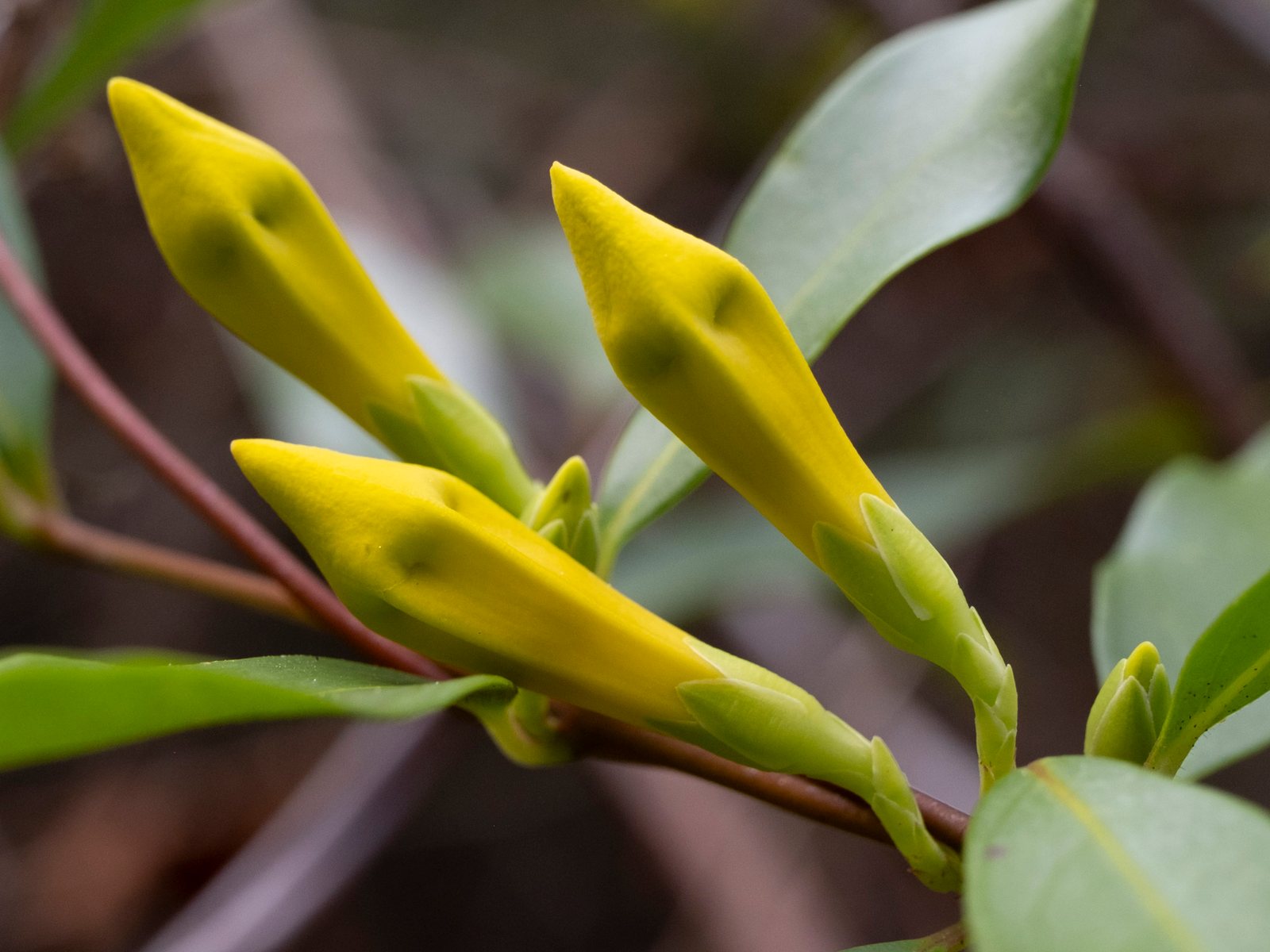
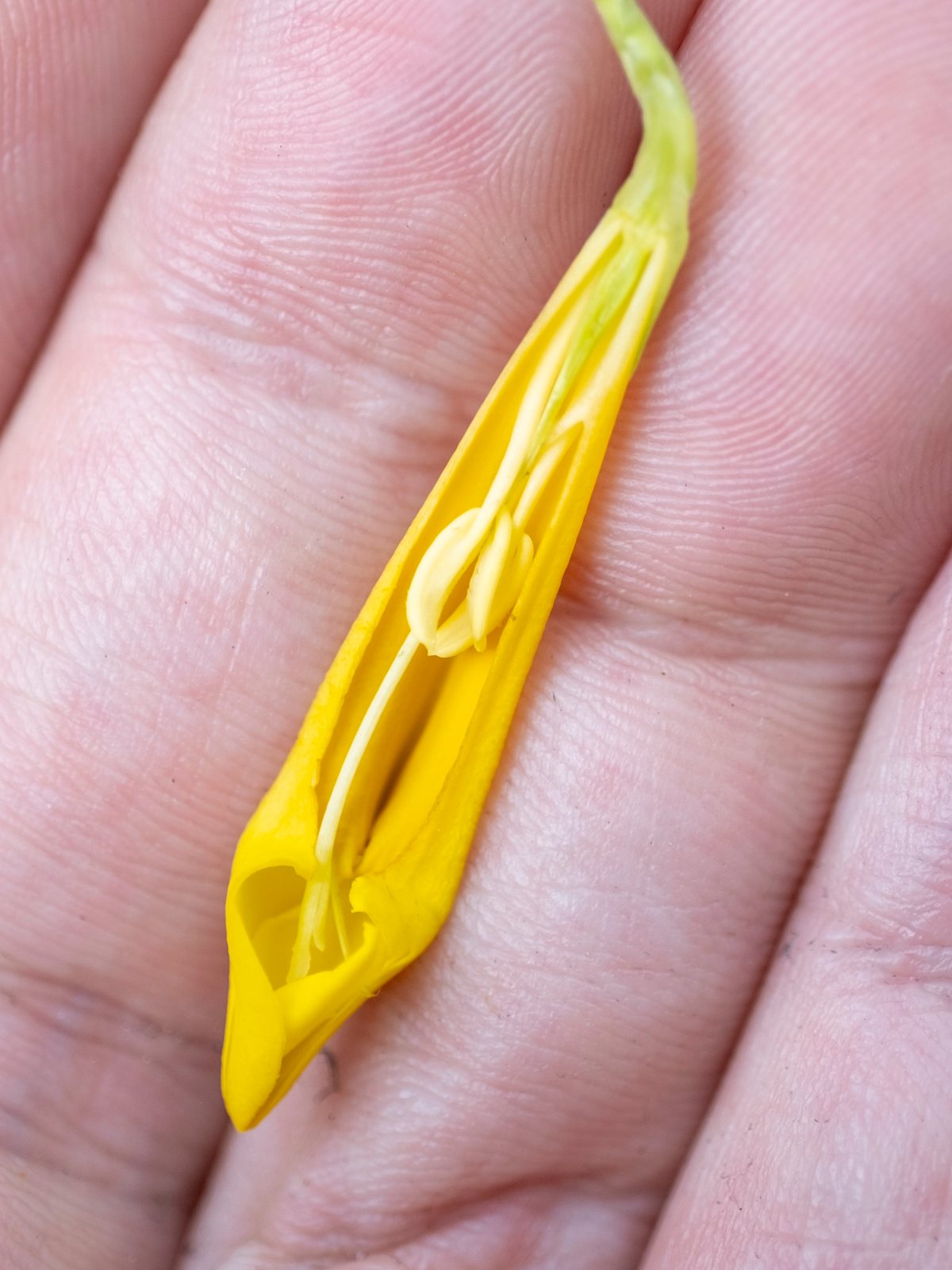
Carolina jessamine is a twining, evergreen climber native to the southeastern United States and nearby regions, grown for its fragrant yellow trumpets in late winter and spring. It covers trellises and fences with narrow, glossy foliage, but needs a warm, sheltered position near its hardiness limit. All parts are highly poisonous if eaten.
At a glance
- Sun
- Full sun to partial shade; flowering is heaviest in sun. Shelter from cold, drying winds.
- Water
- Water regularly during establishment, then during prolonged dry spells. Established plants tolerate some drought but flower and grow better with moderate moisture.
- Soil
- Moist but well-drained soil, preferably fertile and slightly acidic. Avoid persistently waterlogged ground.
- Height
- 10-20 ft (3-6 m)
- Spread
- 3-6 ft (0.9-1.8 m), wider if allowed to trail along the ground
- Flowers
- Fragrant, golden-yellow trumpet flowers in late winter to spring; timing depends on climate.
- Foliage
- Evergreen. Opposite, narrow, glossy green leaves; foliage may bronze or turn purplish in cold weather and can partly drop near the cold limit.
- Growth
- Moderate to fast once established
- Care needed
- Low
The year at a glance
- Deer resistant
- Drought tolerant
- Heat tolerant
- Low allergen
- Fragrant
| J | F | M | A | M | J | J | A | S | O | N | D | |
|---|---|---|---|---|---|---|---|---|---|---|---|---|
| Flowers | ||||||||||||
| Plant |
Northern hemisphere months. In Australia, shift them by six.
- Difficulty
- Moderate
- Toughness
- Fairly tough
Will it suit your garden?
Pick your zone, country, light and whether you have pets.
Full sun is 6 or more hours of direct sun a day, part shade 3 to 6 hours, shade under 3.
How it grows
Planting day
2 ft (0.6 m)
After 1 year
3 ft (0.98 m)
After 2 years
4 ft (1.4 m)
After 3 years
6 ft (1.7 m)
After 5 years
6 ft (1.8 m)
full size
About 3 years to full size.
From a typical nursery size, at an average rate for this kind of plant. A rule of thumb, not a forecast.
Good to know
- Cats and dogs
- Toxic
- Native to
- the US
- Growth rate
- Fast
Care
Jobs through the year
- WaterApr–May, Sep–Oct, every 14 days
- Water established plants if the soil is dry; young plants need more regular watering.
- WaterJun–Aug, every 7 days
- Water deeply during extended dry weather, allowing the surface to dry between waterings.
- FeedApr
- Feed lightly only if growth is weak or the soil is poor.
- MulchOct
- Renew a 5–8 cm organic mulch, keeping it clear of stem bases.
- PruneMay–Jun
- Prune immediately after flowering to shorten wayward shoots and thin tangled growth.
- ProtectOct–Nov
- Secure supports and shelter from cold winds; in zone 6, move a container-grown plant into frost-free shelter.
- Provide a trellis, wires or an open fence; guide and tie young stems until they begin twining.
- Water deeply during the first growing season, allowing the soil surface to begin drying between waterings.
- Apply a 2-3 in (5-8 cm) organic mulch, keeping it clear of the stem bases.
- Feed lightly in spring only if growth is weak or the soil is poor; excess nitrogen encourages leaves rather than flowers.
- In cold districts, plant against a sheltered, sunny wall; most of Canada requires frost-free overwintering.
Pruning. Prune immediately after the main spring flowering, shortening long shoots and removing dead or tangled stems. Avoid routine autumn or winter pruning, which removes developing flower buds.
Through the year
- Late winter
- Check supports and loose ties without cutting back shoots carrying flower buds.
- Spring
- Plant after severe frost risk has passed in cooler districts, and water thoroughly.
- Late spring
- After flowering, shorten wayward stems and thin congested growth.
- Early summer
- Guide new shoots onto supports and take softwood cuttings if desired.
- Summer
- Water during extended dry weather, especially for young or container-grown plants.
- Autumn
- Renew mulch and check that stems and supports are secure before winter winds.
In the garden
- Train over a porch trellis or open fence for fragrant early-season flowers and year-round foliage.
- Grow against a sunny, sheltered wall to soften masonry without using a self-clinging climber.
- Combine with spring-flowering shrubs and bulbs for a yellow-and-white spring display.
- Use on a sturdy arbor in a southern-style garden, keeping it separate from edible climbers.
Garden styles it suits: Southern, Traditional, Cottage garden, Romantic rose garden, Coastal and Low-maintenance.
Plant it with: Camellias, Azaleas, Daffodils, Lenten roses, Virginia sweetspire and Dwarf yaupon holly.
Wildlife: Flowers attract bees, butterflies and, within its native range, hummingbirds. Its nectar can be toxic to some bees, including honeybees, so it should not be treated as an unqualified pollinator planting.
Problems to watch for
- Few flowers: move or train growth into more sun, avoid high-nitrogen feeding, and prune only after flowering.
- Winter leaf burn or stem dieback: provide shelter from cold winds and remove dead growth once spring growth reveals the damage.
- Root decline in wet soil: improve drainage or replant in a raised position; do not keep the root zone saturated.
- Scale insects: inspect stems and leaf undersides; remove small infestations by hand or use a horticultural oil labelled for the plant and pest.
Safety
Highly toxic to people, cats, dogs and horses if eaten. All parts, including leaves, stems, roots and flowers, contain poisonous alkaloids; nectar is also toxic. Poisoning can cause severe weakness, breathing failure and death. Keep away from grazing animals and places where children or pets may chew plants, and never use the flowers in food or drinks. Sap may irritate skin; wear gloves when pruning. Seek immediate medical or veterinary advice after suspected ingestion.
Easily confused with
Swamp jessamine (Gelsemium rankinii)
Has very similar yellow trumpets, but the flowers lack the strong fragrance of Carolina jessamine; it commonly flowers again in autumn.
Winter jasmine (Jasminum nudiflorum)
Has yellow, usually unscented flowers on bare green stems and leaves divided into three leaflets; Carolina jessamine has simple evergreen leaves and twining stems.
Star jasmine (Trachelospermum jasminoides)
Has white, pinwheel-shaped flowers, broader leathery leaves and milky sap, rather than yellow trumpet flowers.
The name
Gelsemium comes from an Italian word for jasmine, reflecting its fragrant flowers rather than a close relationship, while sempervirens means evergreen.
Propagation. Take softwood cuttings in early summer or semi-ripe cuttings later in summer, using gloves when handling cut stems. Layering a low stem is another straightforward method; seed propagation is possible but slower.
Checked against open data
- Accepted botanical name
- Gelsemium sempervirens
- In the US and Canada
- Native in the lower 48 states.
- Native range
- Alabama, Arkansas, Florida, Georgia, Guatemala, Honduras, Louisiana, Mexico Central, Mexico Gulf, Mexico Northeast, Mexico Northwest and Mexico Southeast.
Sources: GBIF (CC BY 4.0), USDA PLANTS and Trefle (CC BY 4.0). The care and design notes are LandscapeGPT's own.
See it in your own yard.
Upload a photo of your yard and see it redesigned with plants that suit your climate, each checked against your zone.