Dwarf yaupon holly
Ilex vomitoria 'Nana'. Family Aquifoliaceae. Shrub.
Also called Nana yaupon holly, Dwarf yaupon.
A compact, rounded evergreen shrub with small, spineless leaves, grown for low hedges, clipped shapes and year-round structure. It tolerates heat, coastal conditions and drought once established; 'Nana' is a male selection and does not produce the red berries associated with female yaupon hollies.
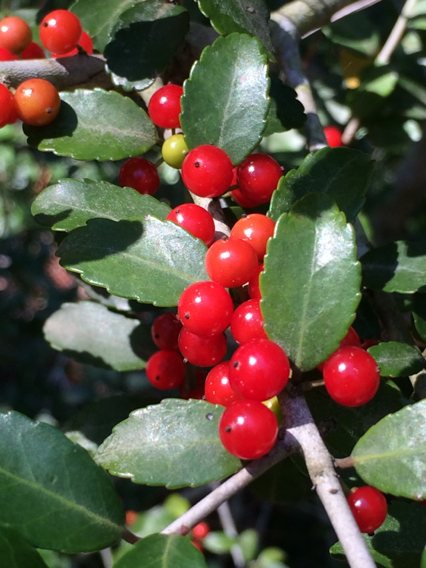
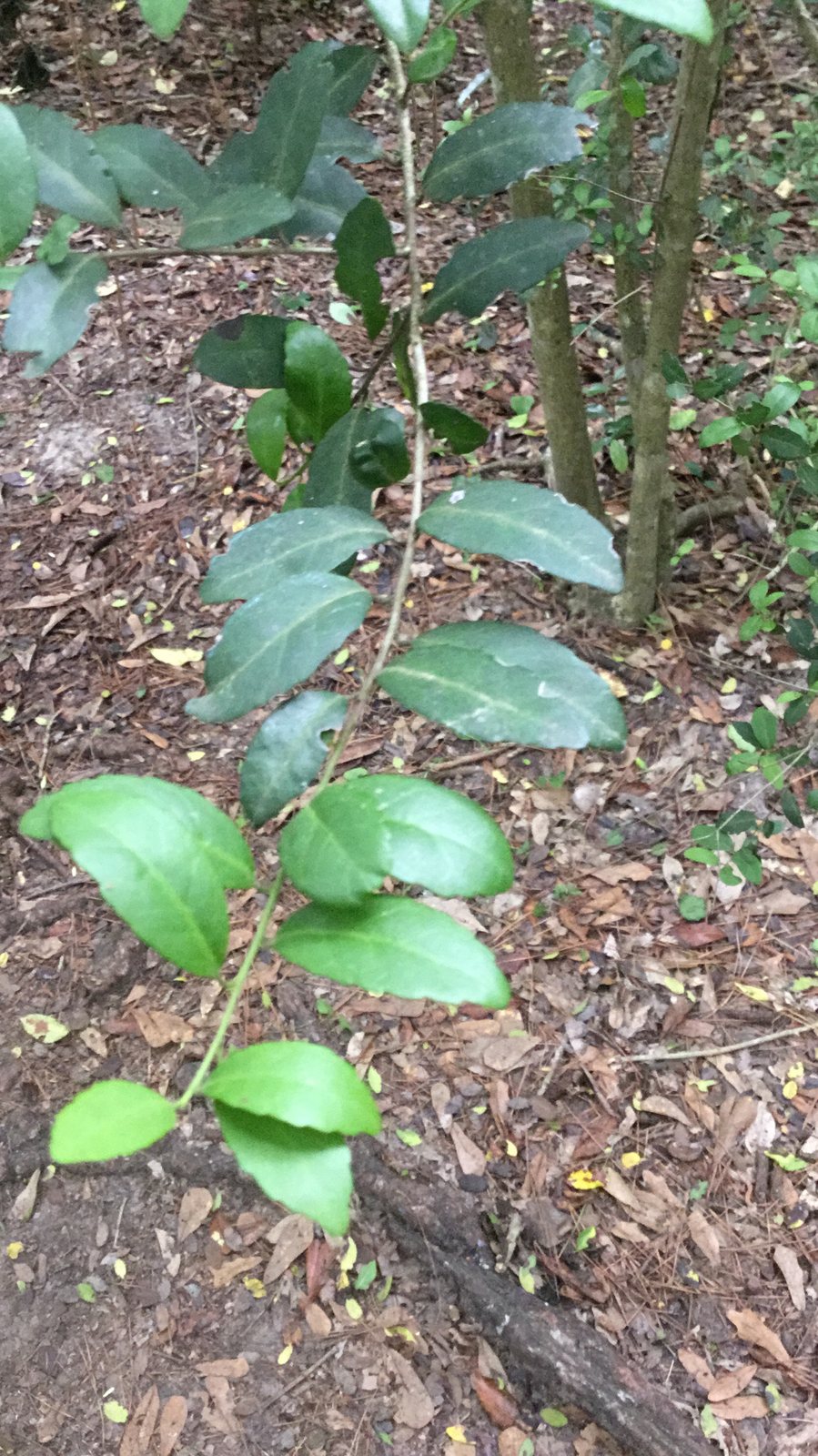
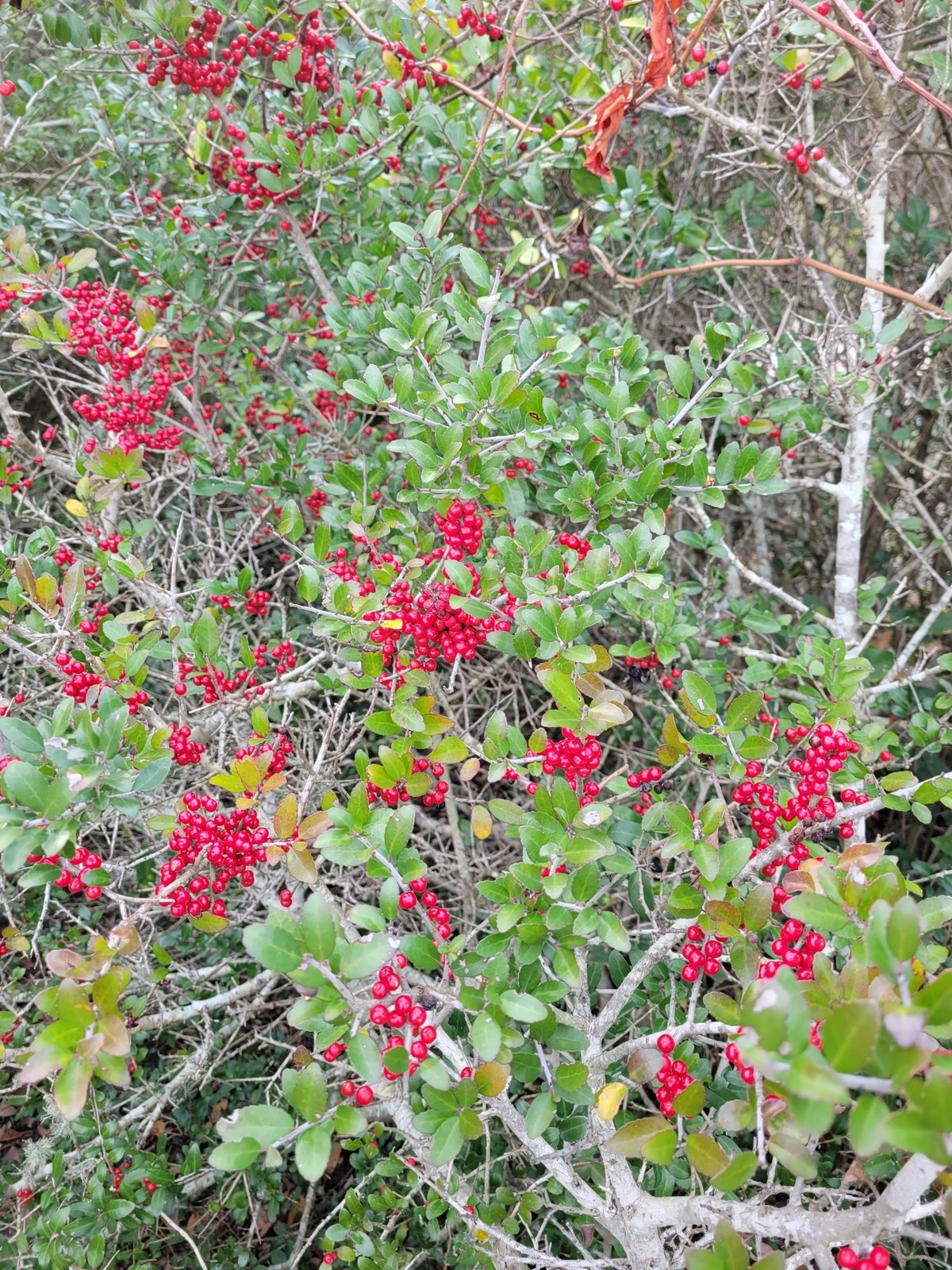
At a glance
- Sun
- Full sun to partial shade; growth is densest in sun.
- Water
- Water regularly while establishing; established plants tolerate dry spells but benefit from deep watering during prolonged drought.
- Soil
- Adaptable to sandy, loamy or clay soils, from acidic to mildly alkaline, provided drainage is reasonable.
- Height
- 3-5 ft (0.9-1.5 m)
- Spread
- 4-6 ft (1.2-1.8 m)
- Flowers
- Small, inconspicuous white flowers in spring.
- Foliage
- Evergreen. Small, glossy, dark green leaves with rounded, finely scalloped edges and no sharp spines.
- Growth
- Slow to moderate
- Care needed
- Low
The year at a glance
- Pollinators
- Deer resistant
- Drought tolerant
- Heat tolerant
- Wildlife
- Low allergen
| J | F | M | A | M | J | J | A | S | O | N | D | |
|---|---|---|---|---|---|---|---|---|---|---|---|---|
| Flowers | ||||||||||||
| Plant |
Northern hemisphere months. In Australia, shift them by six.
- Difficulty
- Easy
- Toughness
- Very tough
Will it suit your garden?
Pick your zone, country, light and whether you have pets.
Full sun is 6 or more hours of direct sun a day, part shade 3 to 6 hours, shade under 3.
How it grows
Planting day
1.6 ft (0.5 m)
After 1 year
2 ft (0.61 m)
After 2 years
2.3 ft (0.72 m)
After 3 years
2.7 ft (0.82 m)
After 5 years
3 ft (1 m)
About 7 years to full size.
From a typical nursery size, at an average rate for this kind of plant. A rule of thumb, not a forecast.
Good to know
- Cats and dogs
- Toxic
- Native to
- the US
- Growth rate
- Slow
Care
Jobs through the year
- WaterApr–May, Sep–Oct, every 21 days
- Water established shrubs only if soil is dry; new plants need more frequent watering.
- WaterJun–Aug, every 14 days
- Deep-water established shrubs during prolonged drought; check young plants more often.
- MulchApr, Oct
- Maintain 5-8 cm of organic mulch, keeping it clear of stems.
- FeedApr
- Feed lightly only if growth is weak or a soil test identifies a deficiency.
- PruneMar
- Remove dead stems and selectively reshape after severe cold, before new growth.
- PruneMay–Jun
- If needed, lightly clip formal hedges after the spring flush.
- PruneOct
- Remove unwanted suckers at ground level.
- ProtectJan–Mar, Nov–Dec
- Near its zone 7 limit, shelter from drying winds; it is not reliably hardy in zone 6.
- Water deeply whenever the root zone begins to dry during the first growing season.
- Apply 2-3 in (5-8 cm) of organic mulch, keeping it clear of the stems.
- Feed lightly in spring only if growth is weak or a soil test identifies a deficiency.
- Remove unwanted basal shoots or suckers at ground level.
- Allow room for its mature width rather than relying on frequent hard clipping.
Pruning. Prune in late winter or early spring before new growth, removing dead stems and shortening branches selectively. Lightly clip after the spring flush for a formal hedge, keeping the base wider than the top.
Through the year
- Late winter
- Remove dead or damaged wood and carry out any substantial reshaping.
- Spring
- Plant when soil is workable, water thoroughly and mulch around the root zone.
- Late spring
- Lightly clip formal hedges after the first flush of growth.
- Summer
- Check new plants for dry roots and water deeply during dry spells.
- Autumn
- Remove unwanted suckers and refresh mulch without covering the stem bases.
- Winter
- Check plants in exposed sites for wind scorch; water during dry, frost-free periods if needed.
In the garden
- Plant as a low evergreen hedge along paths, leaving enough room for its spreading habit.
- Use rounded plants beside grasses and flowering perennials to provide permanent structure.
- Clip into simple mounds or informal topiary in courtyards and formal gardens.
- Mass beneath taller trees where there is bright, filtered light.
- Use in coastal foundation planting where salt spray and summer heat limit other shrubs.
Garden styles it suits: Southern, Formal, Topiary garden, Coastal, Low-maintenance and Green on green.
Plant it with: Pink muhly grass, Dwarf palmetto, Purple coneflower, Black-eyed Susan, Oakleaf hydrangea and Lilyturf.
Wildlife: Spring flowers provide nectar and pollen for small bees and other insects, and dense foliage offers shelter for birds. As a male cultivar, 'Nana' supplies no berries, though its pollen can help nearby female yaupon hollies set fruit.
Problems to watch for
- Yellowing and dieback in persistently waterlogged soil: improve drainage or relocate the plant; do not keep watering an already wet root zone.
- Scale insects, sometimes followed by black sooty mould: inspect stems and leaf undersides, prune heavily infested shoots and use a labelled horticultural oil when appropriate.
- Spider mites during hot, dry weather: look for stippled leaves and fine webbing; rinse foliage thoroughly and avoid broad-spectrum insecticides.
- Winter leaf scorch near its cold limit: choose a sheltered position, mulch the roots and wait until spring growth begins before removing damaged shoots.
Safety
Yaupon berries are harmful if eaten by people, cats, dogs or horses, usually causing vomiting, diarrhoea or abdominal discomfort; 'Nana' is male and normally has no berries. Leaves contain caffeine and should not be eaten by pets or horses. Although properly prepared yaupon leaves have a history of human use as tea, this ornamental shrub should not be treated as a ready-to-eat herb.
Easily confused with
Japanese holly (Ilex crenata)
Also has small, alternate leaves, but female plants bear black rather than red fruit; leaves commonly have tiny dark gland dots beneath.
Common box (Buxus sempervirens)
Box leaves grow in opposite pairs and have smooth margins; yaupon leaves are alternate with finely scalloped edges.
Dwarf inkberry (Ilex glabra)
Leaves are generally longer, with teeth concentrated near their tips, and female plants produce black berries.
The name
The cultivar name 'Nana' comes from the Latin word for dwarf, referring to its compact growth.
Propagation. Take semi-ripe cuttings in summer to preserve the cultivar. Seedlings will not reliably retain its dwarf habit or male sex.
Checked against open data
- Accepted botanical name
- Ilex vomitoria
- In the US and Canada
- Native in the lower 48 states.
- Native range
- Alabama, Arkansas, Cuba, Florida, Georgia, Louisiana, Mexico Southeast, Mississippi, North Carolina, Oklahoma, South Carolina and Texas.
- Measured
- Soil pH 4.5 to 7. Average height 415 cm.
Sources: GBIF (CC BY 4.0), USDA PLANTS and Trefle (CC BY 4.0). The care and design notes are LandscapeGPT's own.
See it in your own yard.
Upload a photo of your yard and see it redesigned with plants that suit your climate, each checked against your zone.