Dwarf palmetto
Sabal minor. Family Arecaceae. Shrub.
Also called Blue palmetto, Swamp palmetto.
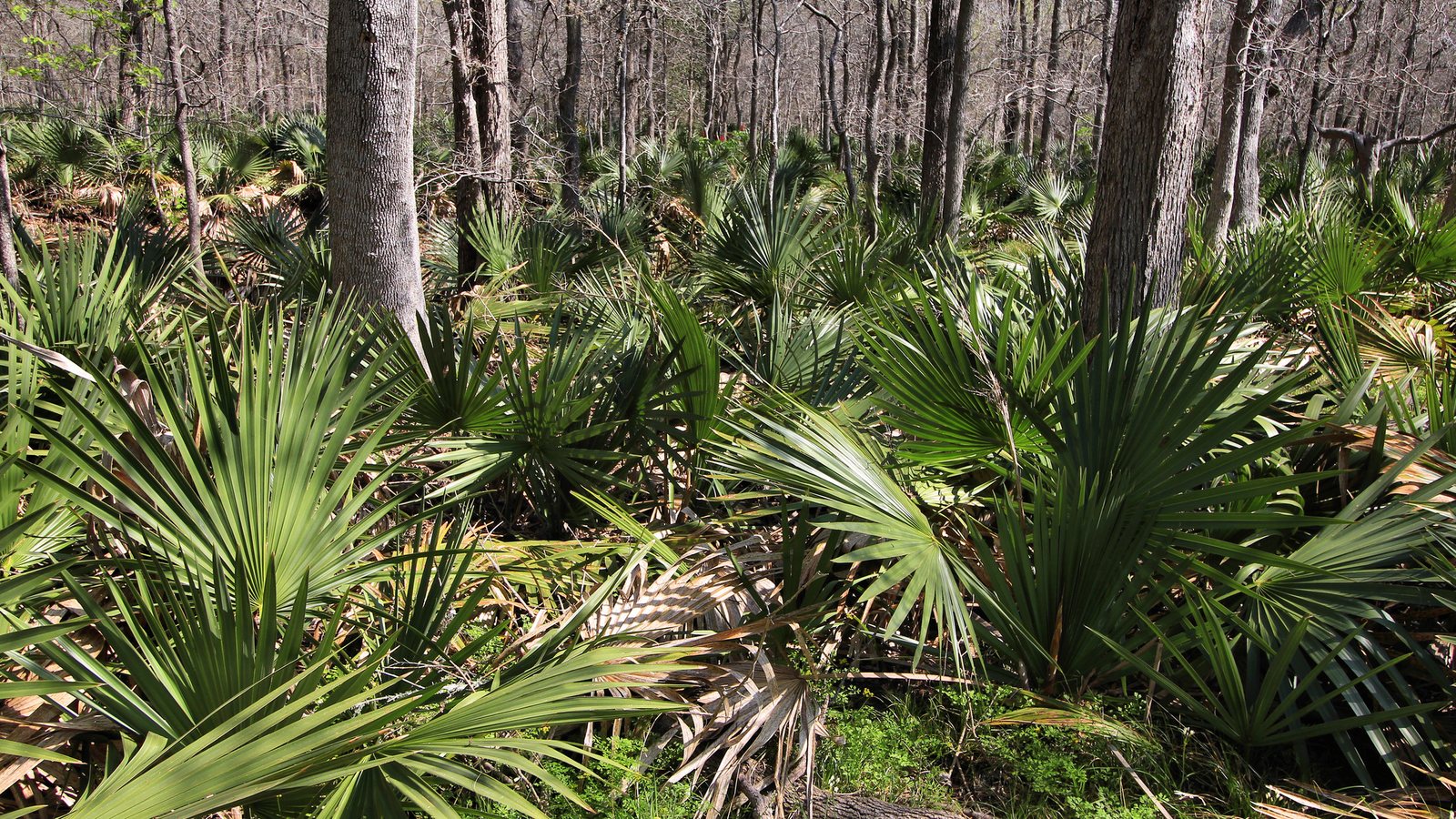
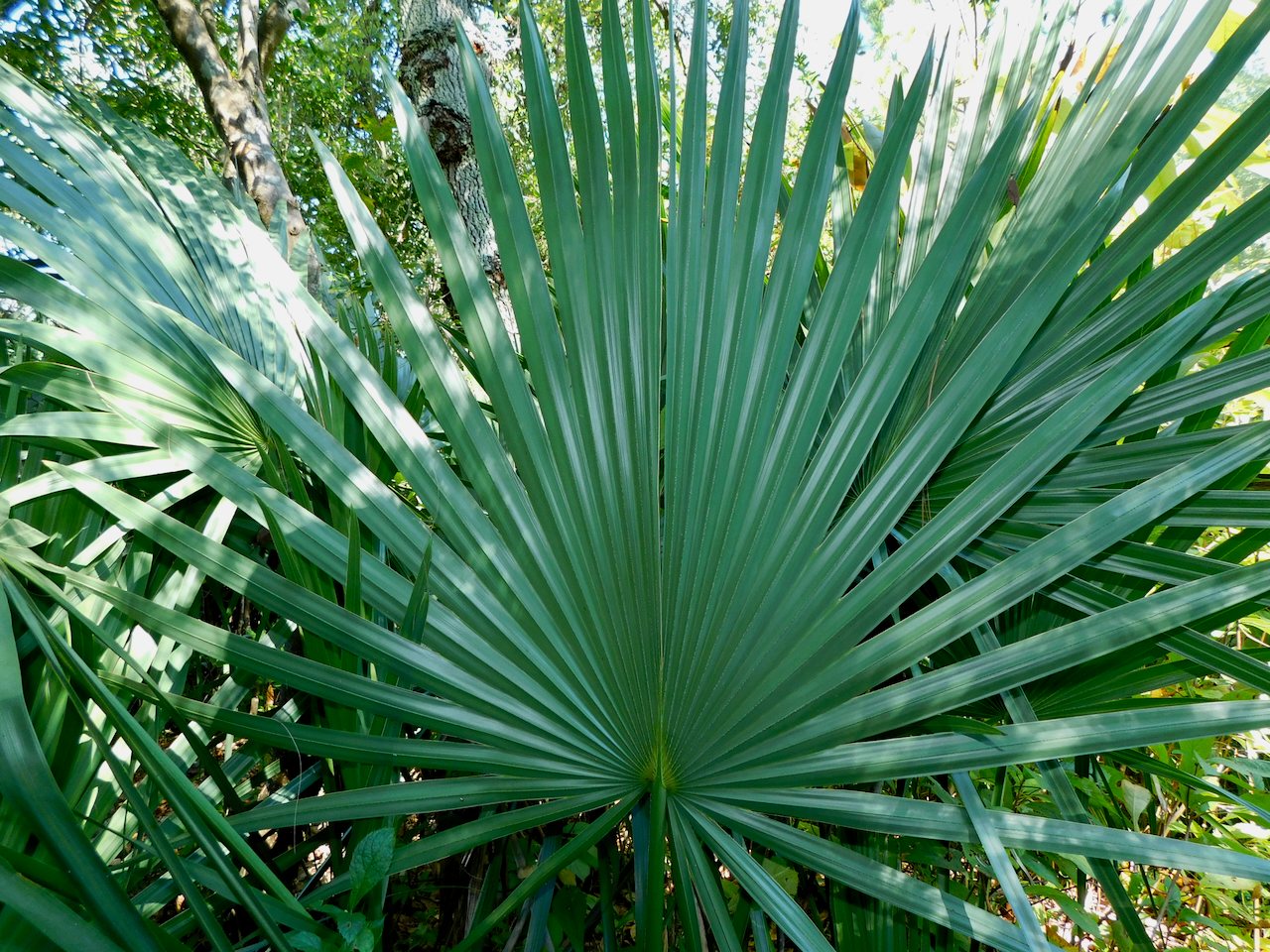
Dwarf palmetto is a slow-growing, usually trunkless palm native to the southeastern and south-central United States and northeastern Mexico. Gardeners grow it for its broad evergreen fans, which bring strong shape to shaded borders and moist woodland gardens. It is unusually cold-hardy for a palm, though exposed leaves can suffer winter damage near its cold limit.
At a glance
- Sun
- Full sun to partial shade; tolerates deeper shade but grows more slowly and flowers less freely. Shelter from cold, drying winds near its hardiness limit.
- Water
- Keep evenly moist while establishing. Established plants tolerate short dry spells and periodic flooding, but grow best with regular moisture.
- Soil
- Moist soil enriched with organic matter; tolerates clay, loam and sandy soils, including periodically wet ground. Avoid very dry, shallow soil.
- Height
- 3-6 ft (0.9-1.8 m), occasionally taller in warm, favourable conditions
- Spread
- 4-6 ft (1.2-1.8 m)
- Flowers
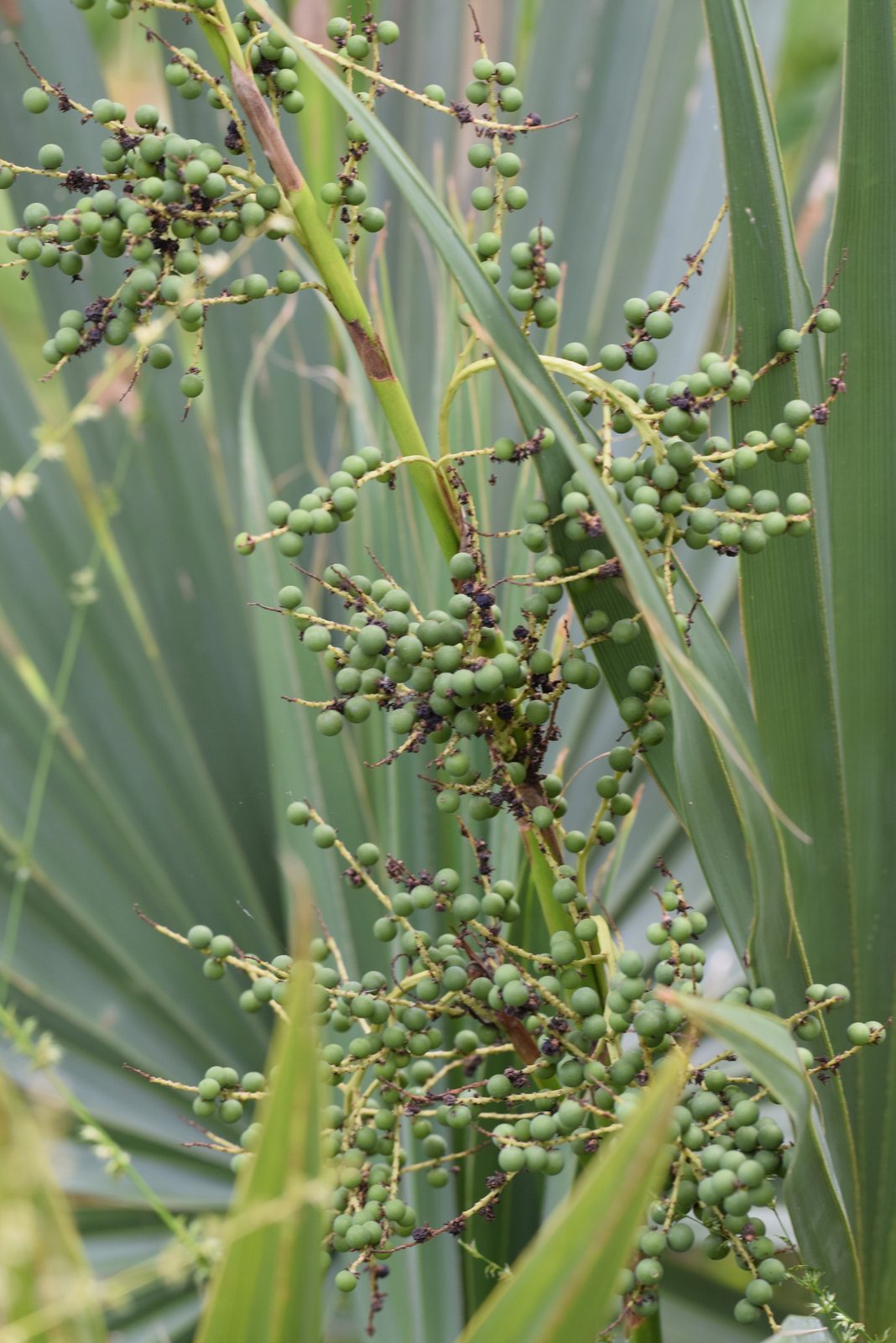
- Small creamy-white flowers on slender, branching stalks above the leaves in late spring to summer, followed by small black fruits.
- Foliage
- Evergreen. Large, stiff, fan-shaped leaves, green to blue-green, divided into narrow segments; the trunk usually remains underground.
- Growth
- Slow, especially in cool climates
- Care needed
- Low
The year at a glance
- Pollinators
- Deer resistant
- Heat tolerant
- Wildlife
| J | F | M | A | M | J | J | A | S | O | N | D | |
|---|---|---|---|---|---|---|---|---|---|---|---|---|
| Flowers | ||||||||||||
| Fruit | ||||||||||||
| Plant |
Northern hemisphere months. In Australia, shift them by six.
- Difficulty
- Moderate
- Toughness
- Fairly tough
Will it suit your garden?
Pick your zone, country, light and whether you have pets.
Full sun is 6 or more hours of direct sun a day, part shade 3 to 6 hours, shade under 3.
How it grows
Planting day
1.6 ft (0.5 m)
After 1 year
2 ft (0.61 m)
After 2 years
2.3 ft (0.71 m)
After 3 years
2.7 ft (0.82 m)
After 5 years
3 ft (1 m)
About 8 years to full size.
From a typical nursery size, at an average rate for this kind of plant. A rule of thumb, not a forecast.
Good to know
- Cats and dogs
- Safe
- Native to
- the US
- Growth rate
- Slow
Care
Jobs through the year
- WaterApr–May, Sep–Oct, every 14 days
- Water established plants when rainfall is insufficient; keep young root balls evenly moist.
- WaterJun–Aug, every 7 days
- Deeply water established roots during dry weather; newly planted palms need more frequent checks.
- MulchMay–Jun
- Maintain 5–8 cm of organic mulch over roots without covering the crown.
- FeedMay–Jun
- Only if needed, apply palm fertilizer with micronutrients at the labelled rate.
- PruneApr–May
- After severe frost has passed, remove fully brown or broken leaves without damaging the central spear.
- ProtectJan–Mar, Nov–Dec
- In zone 7, protect young crowns with breathable fleece during severe freezes; zone 6 needs stronger winter protection.
- Plant in spring after severe frost has passed, keeping the crown at its original soil level.
- Water deeply through dry spells during the first two growing seasons; do not let a newly planted root ball dry out.
- Spread 2-3 in (5-8 cm) of organic mulch over the root area, keeping it clear of the crown.
- Feed only if growth or soil conditions indicate a need; use a palm fertiliser with micronutrients at the labelled rate during active growth.
- Near its cold limit, protect the crown and gathered leaves with breathable fleece during severe freezes, removing it when conditions improve.
Pruning. In spring, remove fully brown or broken leaves by cutting their stalks near the base without damaging the crown. Keep green leaves, and never cut the central growing spear.
Through the year
- Spring
- Remove dead winter-damaged leaves once severe frost has passed.
- Late spring
- Plant new specimens as the soil warms, and water them thoroughly.
- Early summer
- Refresh mulch and apply palm fertiliser only where needed.
- Summer
- Water young plants during dry weather and check sheltered foliage for scale insects.
- Autumn
- Leave fruit stalks for birds, or collect fully ripe black fruit for seed.
- Winter
- Protect young plants during exceptional cold near the edge of their hardiness range.
In the garden
- Use as a low evergreen focal point beneath high-canopied trees.
- Plant beside ferns and sedges for contrasting foliage in a moist woodland border.
- Repeat in loose groups to give structure to a southeastern US native planting.
- Place beside a sheltered courtyard or patio, allowing enough room for the full spread of the fans.
Garden styles it suits: Architectural minimal, Woodland, Southern, Modern tropical, Wildlife garden and Low-maintenance.
Plant it with: Royal fern, Cinnamon fern, Virginia sweetspire, Oakleaf hydrangea, River oats and Cherokee sedge.
Wildlife: Flowers attract bees and other insects. Birds and small mammals eat the ripe fruits, and the dense foliage provides shelter close to the ground.
Problems to watch for
- Winter leaf burn: use a sheltered site and protect young plants during severe freezes; wait until spring to remove dead foliage.
- Crown rot: avoid burying the crown or packing wet mulch against it; improve drainage around plants that remain cold and stagnant in winter.
- Scale insects: inspect leaf undersides and stalks; remove small infestations by hand or use a labelled horticultural oil as directed.
- Brown tips and stalled growth in dry soil: water deeply and mulch the root area; do not try to force growth with extra fertiliser.
Safety
Not known to be toxic to people, cats, dogs or horses. No part is recognised as a significant poisoning hazard, although the tough leaves and hard fruit seeds are unsuitable for pets to chew or swallow.
Easily confused with
Saw palmetto (Serenoa repens)
Saw palmetto has conspicuous sharp teeth along its leaf stalks and often forms spreading colonies; dwarf palmetto has smooth-edged stalks.
Cabbage palm (Sabal palmetto)
Young plants can look similar, but cabbage palm develops a tall trunk and usually has larger, more strongly folded and arching leaves. Dwarf palmetto normally keeps its trunk underground.
Needle palm (Rhapidophyllum hystrix)
Needle palm forms clumps with long, dark, needle-like spines around the stem bases; dwarf palmetto lacks these spines.
The name
The species name minor is Latin for 'smaller', referring to its relatively small stature among palms.
Propagation. Grow from fresh seed after removing the ripe fruit flesh. Sow in a deep container, keep warm and consistently moist, and allow several months for germination; seedlings develop slowly. Division is generally unsuitable because plants normally have a single growing point and resent root disturbance.
Checked against open data
- Accepted botanical name
- Sabal minor
- In the US and Canada
- Native in the lower 48 states.
- Native range
- Alabama, Arkansas, Florida, Louisiana, Mexico Northeast, Mississippi, North Carolina, Oklahoma, South Carolina and Texas.
- Measured
- Soil pH 5.5 to 6.5. Average height 287 cm.
Sources: GBIF (CC BY 4.0), USDA PLANTS and Trefle (CC BY 4.0). The care and design notes are LandscapeGPT's own.
See it in your own yard.
Upload a photo of your yard and see it redesigned with plants that suit your climate, each checked against your zone.