Chayote
Sechium edule. Family Cucurbitaceae. Climber.
Also called Choko, Mirliton, Vegetable pear, Christophine.
Chayote is a vigorous, tendril-climbing perennial grown for its mild-flavoured, pear-shaped fruit and edible young shoots. It needs a strong support and a long, warm growing season; in colder regions it is grown as an annual, but outdoor crops are unreliable where autumn turns cold early.
At a glance
- Sun
- Full sun; light afternoon shade is useful in very hot climates.
- Water
- Water deeply and regularly during active growth, keeping the root zone moist but never waterlogged.
- Soil
- Fertile, well-drained soil enriched with compost; slightly acidic to neutral soil is ideal.
- Height
- 10-20 ft (3-6 m) on a support; vines can grow considerably longer.
- Spread
- 15-30 ft (4.5-9 m)
- Flowers
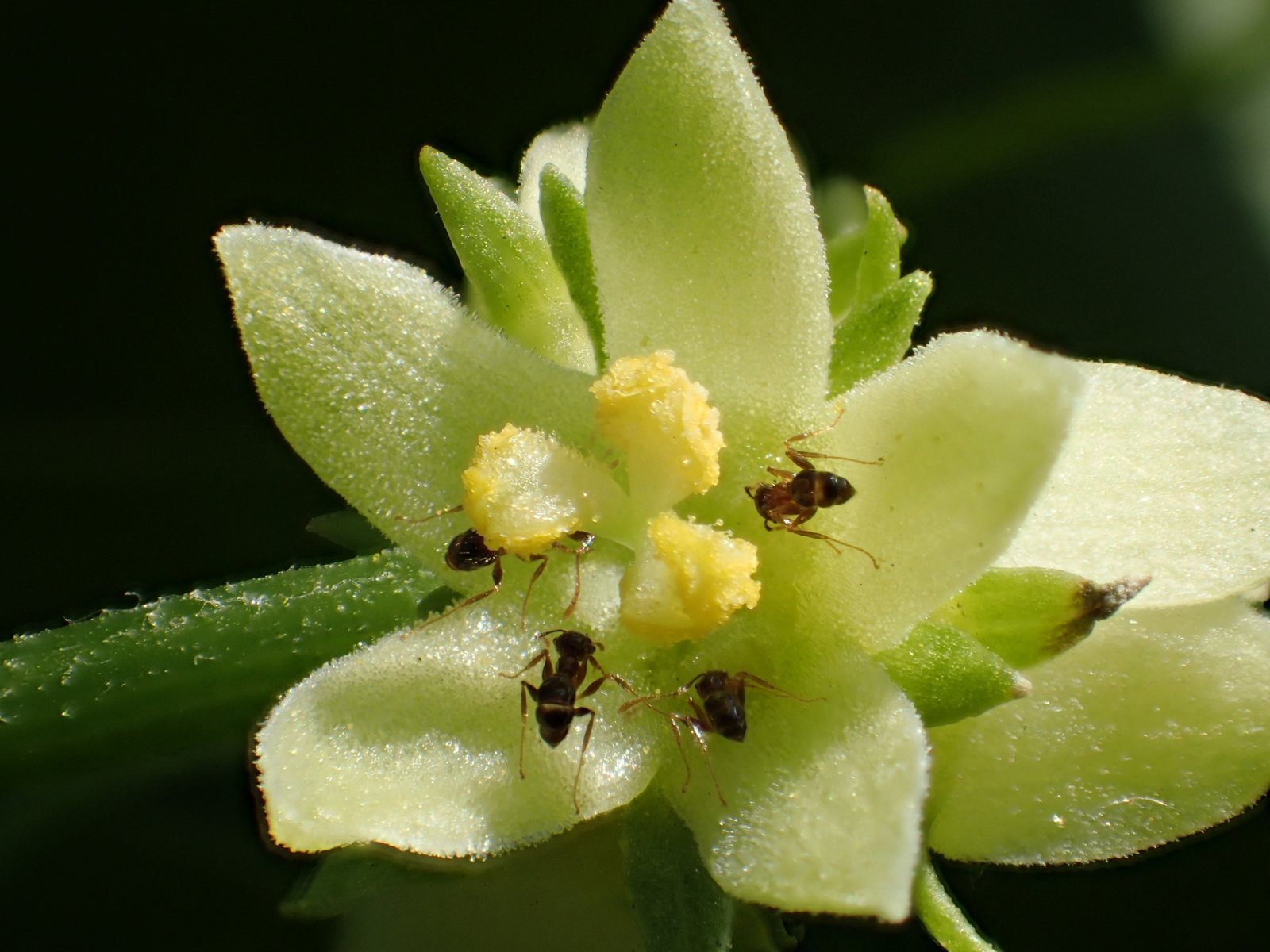
- Small, greenish-white flowers, usually in late summer and autumn; timing depends on day length and climate.
- Foliage
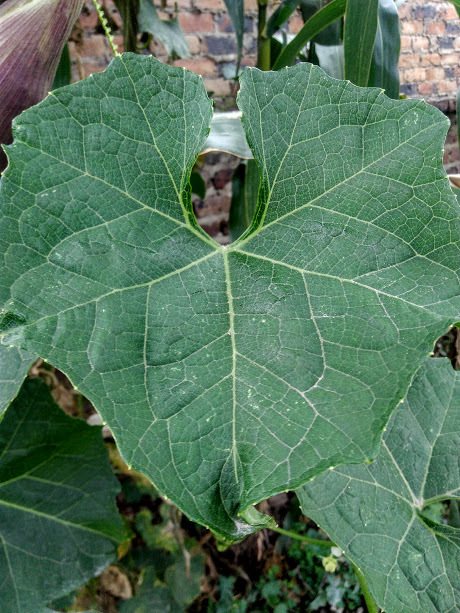
- Large, rough-textured, heart-shaped leaves with shallow lobes and curling tendrils.
- Growth
- Fast in warm weather
- Care needed
- Medium
The year at a glance
- Pollinators
- Heat tolerant
- Wildlife
- Low allergen
- Edible
| J | F | M | A | M | J | J | A | S | O | N | D | |
|---|---|---|---|---|---|---|---|---|---|---|---|---|
| Flowers | ||||||||||||
| Fruit | ||||||||||||
| Plant |
Northern hemisphere months. In Australia, shift them by six.
- Difficulty
- Hard
- Toughness
- Fairly tough
Will it suit your garden?
Pick your zone, country, light and whether you have pets.
Full sun is 6 or more hours of direct sun a day, part shade 3 to 6 hours, shade under 3.
How it grows
Planting day
2 ft (0.6 m)
After 1 year
3 ft (1.1 m)
After 2 years
5 ft (1.5 m)
After 3 years
6 ft (1.8 m)
full size
About 3 years to full size.
From a typical nursery size, at an average rate for this kind of plant. A rule of thumb, not a forecast.
Good to know
- Cats and dogs
- Safe
- In the garden
- Spreads vigorously: plan to contain it.
- Growth rate
- Fast
Care
Jobs through the year
- WaterMay–Jun, Sep, every 7 days
- Water established vines deeply when rainfall is insufficient; young plants need more frequent checks.
- WaterJul–Aug, every 3 days
- Check established vines and water as needed to keep roots moist, never waterlogged.
- WaterOct, every 10 days
- Water only while vines remain active and soil is drying; stop after frost kills growth.
- FeedJun–Jul
- Give a light balanced feed if needed; excess nitrogen encourages foliage rather than fruit.
- MulchJun
- Mulch to retain moisture, keeping the crown clear.
- PruneJun–Sep, every 14 days
- Redirect shoots onto a sturdy support and trim only wayward or crowded growth.
- HarvestJun–Aug, every 14 days
- If wanted, pick young shoot tips lightly once the vine is well established.
- HarvestSep–Oct
- If fruit sets before frost, cut tender fruits at 10–15 cm; cool-climate crops may fail to mature.
- PruneOct–Nov
- Cut frost-killed stems back near ground level.
- ProtectOct–Nov
- In zones 6–7, treat as annual or lift the crown into frost-free shelter; outdoor mulch alone is insufficient.
- Plant out after frost danger has passed and the soil is warm.
- Provide a sturdy trellis, pergola or fence before growth becomes tangled.
- Water deeply during dry spells, especially while fruit is developing.
- Apply compost before planting and a balanced fertiliser sparingly during growth; excess nitrogen encourages leaves rather than fruit.
- Mulch the root zone, keeping mulch away from the crown; add winter protection where light frosts occur.
Pruning. Guide and tie young vines to their support, trimming wayward stems as needed during summer. After frost kills the top growth, cut dead stems back near ground level; in frost-free gardens, thin old or tangled growth after harvest.
Harvest
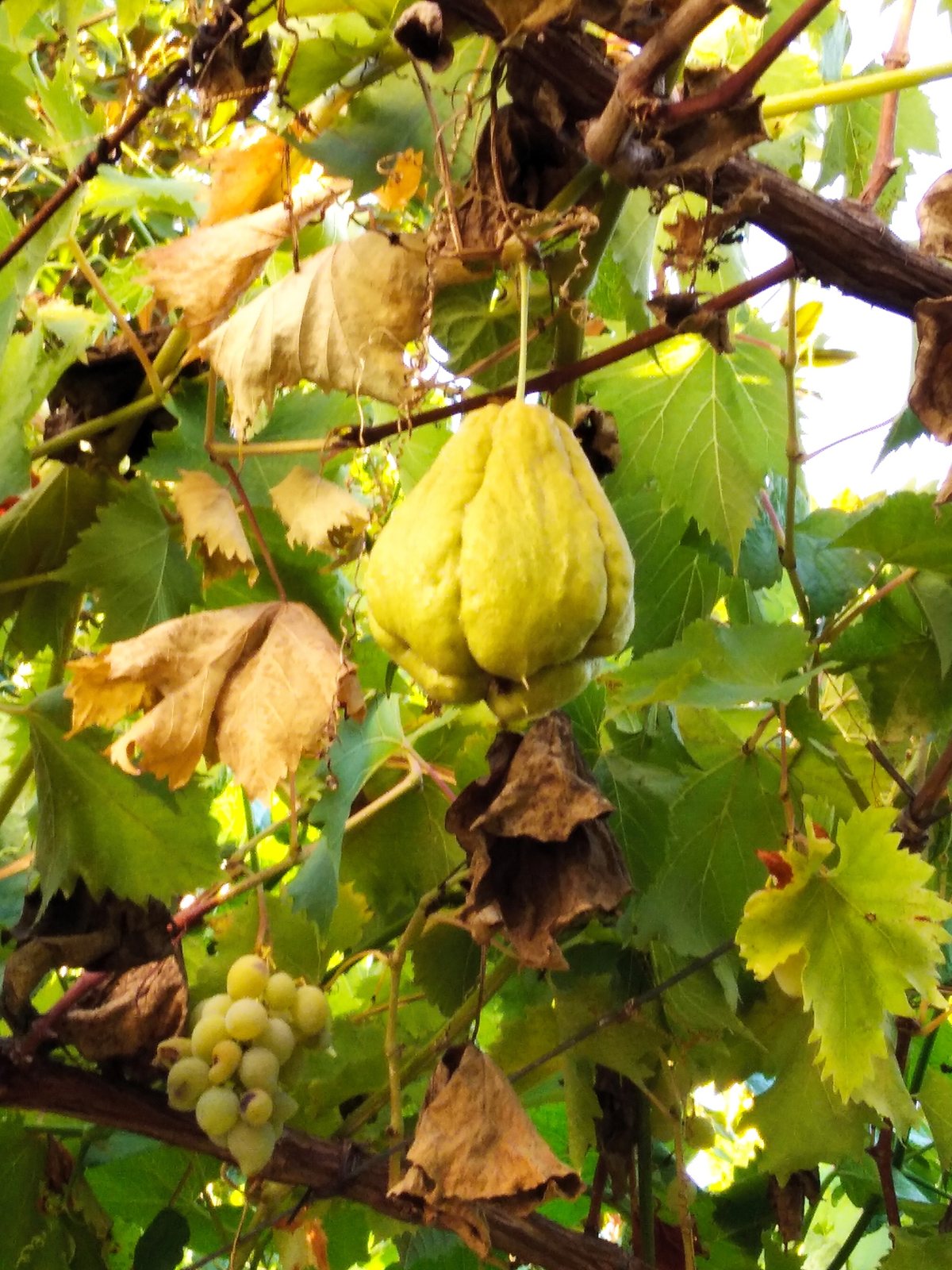
Pick fruit while tender, usually when about 4-6 in (10-15 cm) long and before the skin becomes tough; cut the stalk rather than pulling. A first crop may take roughly 4-6 months from planting, but flowering often waits for shortening days, so cool-climate plants may not fruit before frost. Young shoot tips can also be picked lightly once the vine is established.
Through the year
- Late winter
- In cool climates, start a whole mature fruit in a pot under warm, bright, frost-free conditions.
- Spring
- Prepare fertile, well-drained ground and install a strong support.
- Late spring
- Plant out after frost and train new shoots onto the support.
- Summer
- Water regularly, maintain mulch and redirect vigorous shoots before they cover nearby plants.
- Late summer
- Watch for flowers and developing fruit; avoid heavy nitrogen feeding.
- Autumn
- Harvest tender fruit regularly and save a sound, mature fruit for propagation.
- Late autumn
- Remove frost-killed stems and protect the crown where winters are mild enough for survival.
In the garden
- Train over a strong pergola for seasonal shade and hanging edible fruit.
- Cover a sturdy fence at the sunny edge of a vegetable garden.
- Use as a large vertical crop in an edible landscape, leaving room for its spreading canopy.
- Grow on a separate framework beside a seating area so fruit remains easy to reach.
Garden styles it suits: Potager (kitchen garden), Edible landscape, Homestead, Tropical, Food forest and Cottage garden.
Plant it with: Nasturtiums, French marigolds, Basil and Lemongrass.
Wildlife: Flowers attract bees and other small pollinating insects. The dense canopy provides temporary shelter for insects and small garden animals.
Problems to watch for
- No fruit: many forms flower as days shorten and need warm autumn weather. Start early, choose the warmest sheltered position and avoid excess nitrogen; short-season gardens may still fail to crop.
- Root and crown rot: improve drainage, avoid standing water and keep mulch clear of the crown.
- Powdery mildew: thin crowded growth, improve airflow and remove badly affected leaves.
- Aphids: wash colonies from young shoots with water; use insecticidal soap if needed, following the label.
Safety
Chayote is not known to be toxic to people, cats, dogs or horses, although specific pet and livestock safety information is limited. The fruit, young shoots and tuberous roots are eaten, usually cooked. Sap from cut raw fruit can irritate or tighten the skin; wear gloves if sensitive, and handle spiny-fruited forms carefully.
Where it spreads. Invasive on Réunion in the Indian Ocean, where vines can smother other vegetation. It can also spread aggressively in humid, frost-free gardens; keep it away from natural vegetation and remove unwanted plants promptly.
Easily confused with
Bottle gourd (Lagenaria siceraria)
Bottle gourd has conspicuous white flowers and mature fruit with a hard shell; chayote has small greenish-white flowers and a single large seed within fleshy fruit.
Moth vine (Araujia sericifera)
This toxic climber has opposite leaves, milky sap and inflated pods that split to release silky seeds. Chayote has alternate, lobed leaves and solid edible fruit; never identify an edible fruit by shape alone.
The name
Chayote comes through Spanish from the Nahuatl word chayotli, while edule means edible.
Propagation. Plant a whole mature fruit containing its single seed; do not remove the seed. Set the broad end downward in a large pot or prepared soil, with the upper part of the fruit exposed. Keep warm and lightly moist, then plant outdoors after frost danger has passed.
Checked against open data
- Accepted botanical name
- Sechium edule
- In the US and Canada
- Native in Puerto Rico. Introduced in Hawaii, the lower 48 states and Pacific Basin.
Sources: GBIF (CC BY 4.0) and USDA PLANTS. The care and design notes are LandscapeGPT's own.
See it in your own yard.
Upload a photo of your yard and see it redesigned with plants that suit your climate, each checked against your zone.