Chinese fan palm
Livistona chinensis. Family Arecaceae. Tree.
Also called Fountain palm.
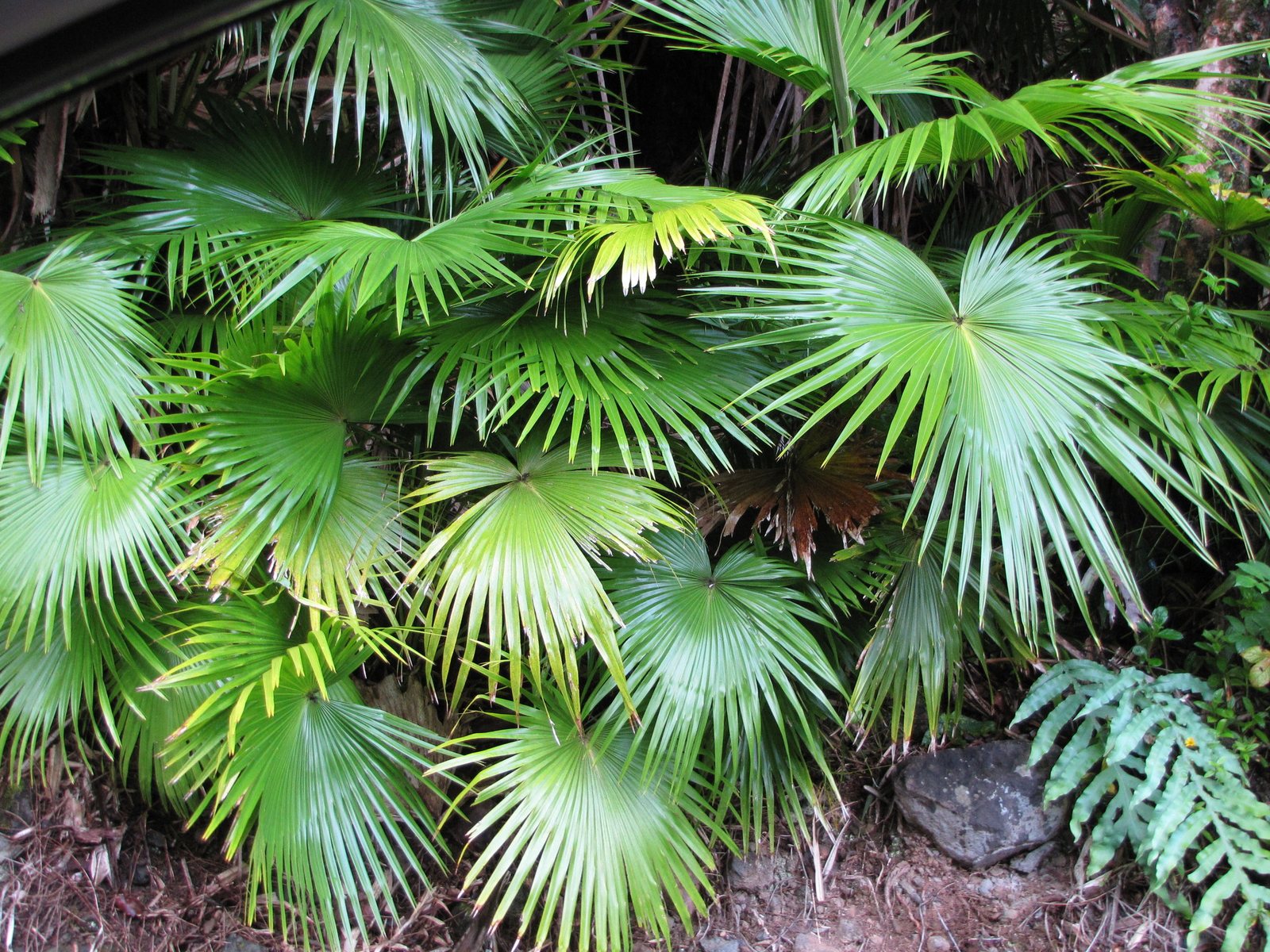
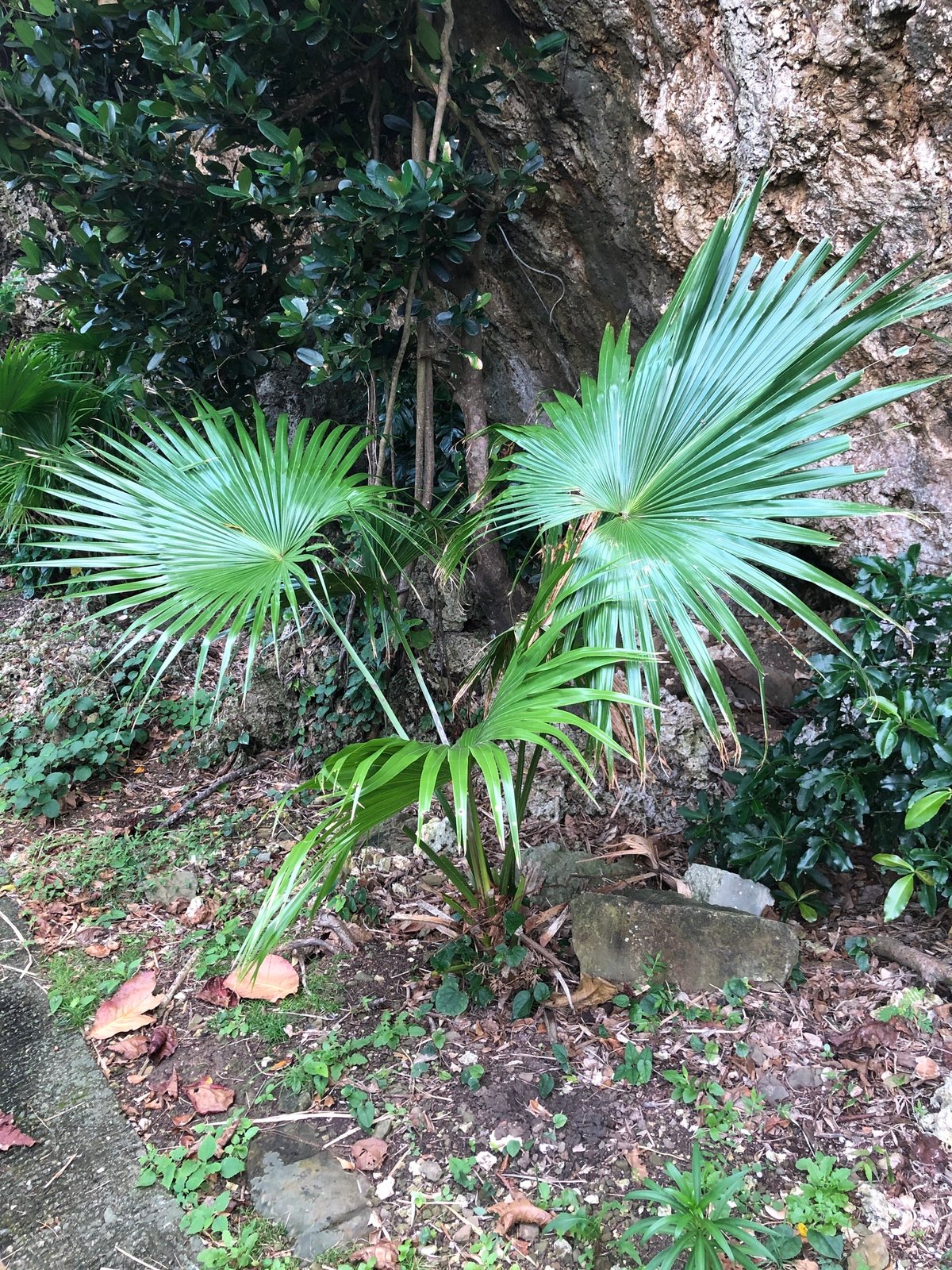
Chinese fan palm is a slow-growing, evergreen palm with broad, fan-shaped leaves whose tips droop like a fountain. Gardeners grow it as an architectural specimen in warm climates or in a large container that can be sheltered over winter; it is not reliably hardy outdoors across most of the UK or Canada.
At a glance
- Sun
- Full sun to partial shade; young plants benefit from light shade, especially in hot, dry climates.
- Water
- Water regularly while establishing, then during prolonged dry spells. Keep container plants evenly moist in active growth but never waterlogged; water less in winter.
- Soil
- Well-drained loam or sandy soil, preferably slightly acidic to neutral. Avoid sites that stay wet in winter.
- Height
- 30-50 ft (9-15 m) outdoors in suitable climates; considerably smaller in containers
- Spread
- 10-15 ft (3-4.5 m)
- Foliage
- Evergreen. Large, glossy green fans divided into narrow segments with distinctly drooping tips. Leaf stalks carry sharp spines, especially on younger plants.
- Growth
- Slow
- Care needed
- Medium
The year at a glance
- Pollinators
- Drought tolerant
- Heat tolerant
- Wildlife
| J | F | M | A | M | J | J | A | S | O | N | D | |
|---|---|---|---|---|---|---|---|---|---|---|---|---|
| Fruit | ||||||||||||
| Plant |
Northern hemisphere months. In Australia, shift them by six.
- Difficulty
- Moderate
- Toughness
- Fairly tough
Will it suit your garden?
Pick your zone, country, light and whether you have pets.
Full sun is 6 or more hours of direct sun a day, part shade 3 to 6 hours, shade under 3.
How it grows
Planting day
7 ft (2 m)
After 1 year
8 ft (2.3 m)
After 2 years
9 ft (2.6 m)
After 3 years
10 ft (2.9 m)
After 5 years
12 ft (3.6 m)
About 32 years to full size.
From a typical nursery size, at an average rate for this kind of plant. A rule of thumb, not a forecast.
Good to know
- Cats and dogs
- Safe
- Invasive in
- the US
- In the garden
- Spreads vigorously: plan to contain it.
- Growth rate
- Slow
Care
Jobs through the year
- WaterApr–May, Sep–Oct, every 14 days
- For established ground-grown palms, water during dry spells; young plants and containers need more.
- WaterJun–Aug, every 7 days
- Water established palms deeply during prolonged dryness; check containers frequently.
- WaterJan–Mar, Nov–Dec, every 21 days
- Check sheltered containers and water only enough to keep the root ball slightly moist.
- FeedMay–Aug, every 60 days
- Use palm fertilizer with potassium, magnesium and trace elements at the label rate.
- MulchMay
- Renew organic mulch around the roots without covering the trunk.
- PruneJun–Aug
- Remove fully brown fronds only; wear gloves and eye protection against spines.
- ProtectJan–May, Oct–Dec
- Overwinter containers in bright, frost-free shelter; outdoor planting is not reliable in zones 6–7.
- Water deeply through the first growing seasons, allowing the soil surface to dry slightly between waterings.
- Feed during the warm growing season with a palm fertiliser containing potassium, magnesium and trace elements, following the label.
- Mulch the root area, keeping mulch clear of the trunk.
- Use a sturdy container with drainage holes, and repot when roots fill the pot.
- Move container plants to a bright, frost-free position before cold weather; acclimatise them gradually to outdoor sun in spring.
Pruning. Remove fully brown fronds during warm weather, cutting the stalk without damaging the trunk; wear gloves and eye protection against the spines. Leave green and partly green fronds in place, and never cut the central growing spear.
Through the year
- Spring
- Check drainage and repot container plants if root-bound.
- Late spring
- After frost risk has passed, gradually return sheltered plants outdoors and begin feeding.
- Summer
- Water deeply during dry weather and check container plants frequently for drying out.
- Summer
- Inspect leaves for scale insects and spider mites; remove only fully dead fronds.
- Autumn
- Bring container plants under bright, frost-free cover before cold nights.
- Winter
- Reduce watering under cover, keeping the root ball slightly moist rather than wet.
In the garden
- Plant as a specimen in a sheltered lawn or generous border where its fountain-shaped crown has room to develop.
- Use a large container beside a sunny terrace or entrance, allowing clearance from the spiny leaf stalks.
- Combine with bird of paradise and cordylines for layered, bold foliage in warm-climate gardens.
- Underplant established palms with cast iron plants or mondo grass in the shade beneath the crown.
Garden styles it suits: Architectural minimal, Modern tropical, Tropical, Luxury resort, Modern courtyard and Chinese scholar garden.
Plant it with: Bird of paradise, Cast iron plant, Clivia, Dwarf mondo grass and Cordyline.
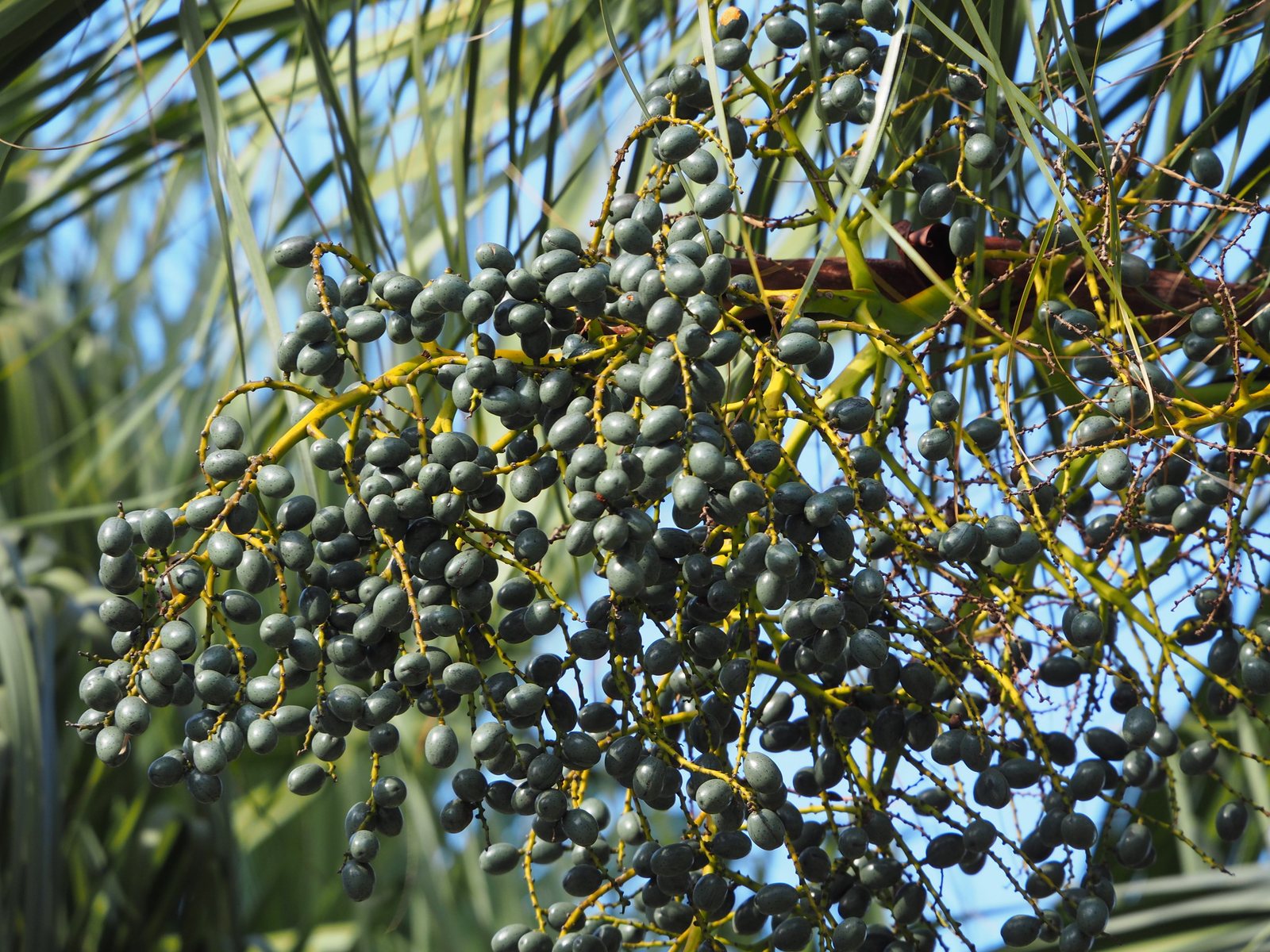
Wildlife: Flowers attract insects, and ripe fruit is eaten by birds and other animals that can spread the seeds. Prevent fruiting where the palm is invasive.
Problems to watch for
- Spider mites, especially under cover: look for fine webbing and stippled leaves; rinse leaf undersides and use an approved mite treatment if needed.
- Scale insects: inspect leaf stalks and undersides; wipe off small infestations and treat with a labelled horticultural oil where appropriate.
- Potassium or magnesium deficiency: older fronds develop spotting or yellow margins; use a balanced palm fertiliser rather than removing affected leaves prematurely.
- Root rot in wet soil: improve drainage and reduce watering; badly rotted plants may not recover.
Safety
Not known to be toxic to people, cats, dogs or horses. It is not a food plant; the sharp spines on its leaf stalks can cause puncture injuries.
Where it spreads. Listed as invasive in Florida and Hawaii, and invasive on islands including Bermuda, Mauritius and Réunion. Birds spread the fruit into woodland and other habitats; check local guidance before planting and remove flower or fruit stalks where spread is a concern.
Easily confused with
Mexican fan palm (Washingtonia robusta)
Usually develops a much taller, slimmer trunk, and its fan leaves often have threadlike fibres along the segment edges rather than the pronounced fountain-like tips of Chinese fan palm.
Australian fan palm (Livistona australis)
Typically forms a taller, straighter palm with more upright-looking leaves and less conspicuously drooping segment tips; its ripe fruit is dark rather than the blue-green fruit typical of Chinese fan palm.
European fan palm (Chamaerops humilis)
Usually forms a low clump of several stems with smaller, stiffer fans, rather than a single trunk carrying large, drooping fans.
The name
Livistona honours Patrick Murray of Livingston, a Scottish plant collector, while chinensis means 'from China'.
Propagation. Grow from fresh seed after removing the fleshy fruit covering. Sow in a free-draining medium and keep warm and lightly moist; germination can take several weeks to several months. It does not produce divisions, and stem cuttings will not root.
Checked against open data
- Accepted botanical name
- Livistona chinensis
- Native range
- China Southeast, Hainan, Japan, Nansei-shoto and Taiwan.
Sources: GBIF (CC BY 4.0) and Trefle (CC BY 4.0). The care and design notes are LandscapeGPT's own.
See it in your own yard.
Upload a photo of your yard and see it redesigned with plants that suit your climate, each checked against your zone.