Cliff jamesia
Jamesia americana. Family Hydrangeaceae. Shrub.
Also called Cliffbush, Waxflower, Fivepetal cliffbush.
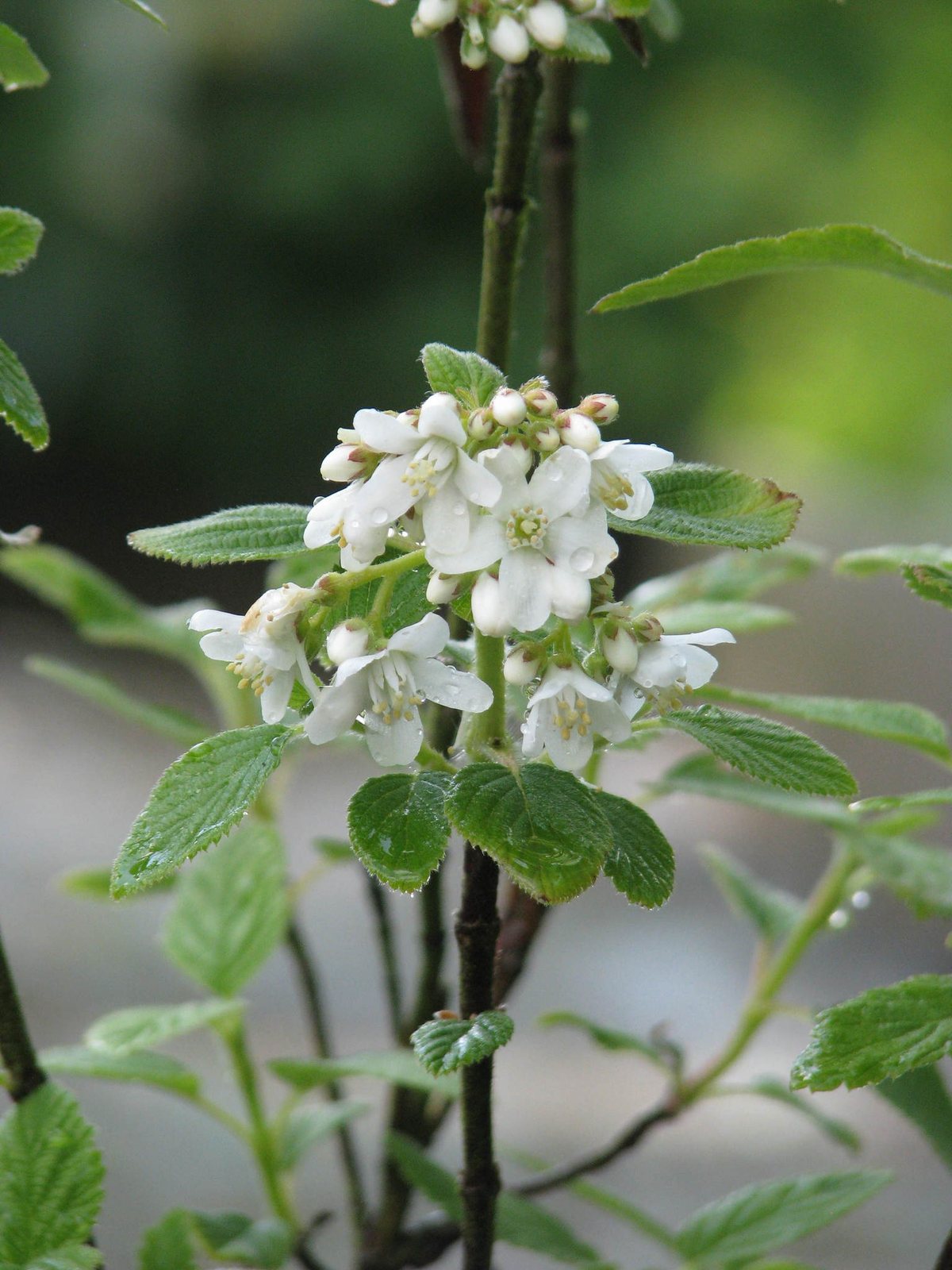
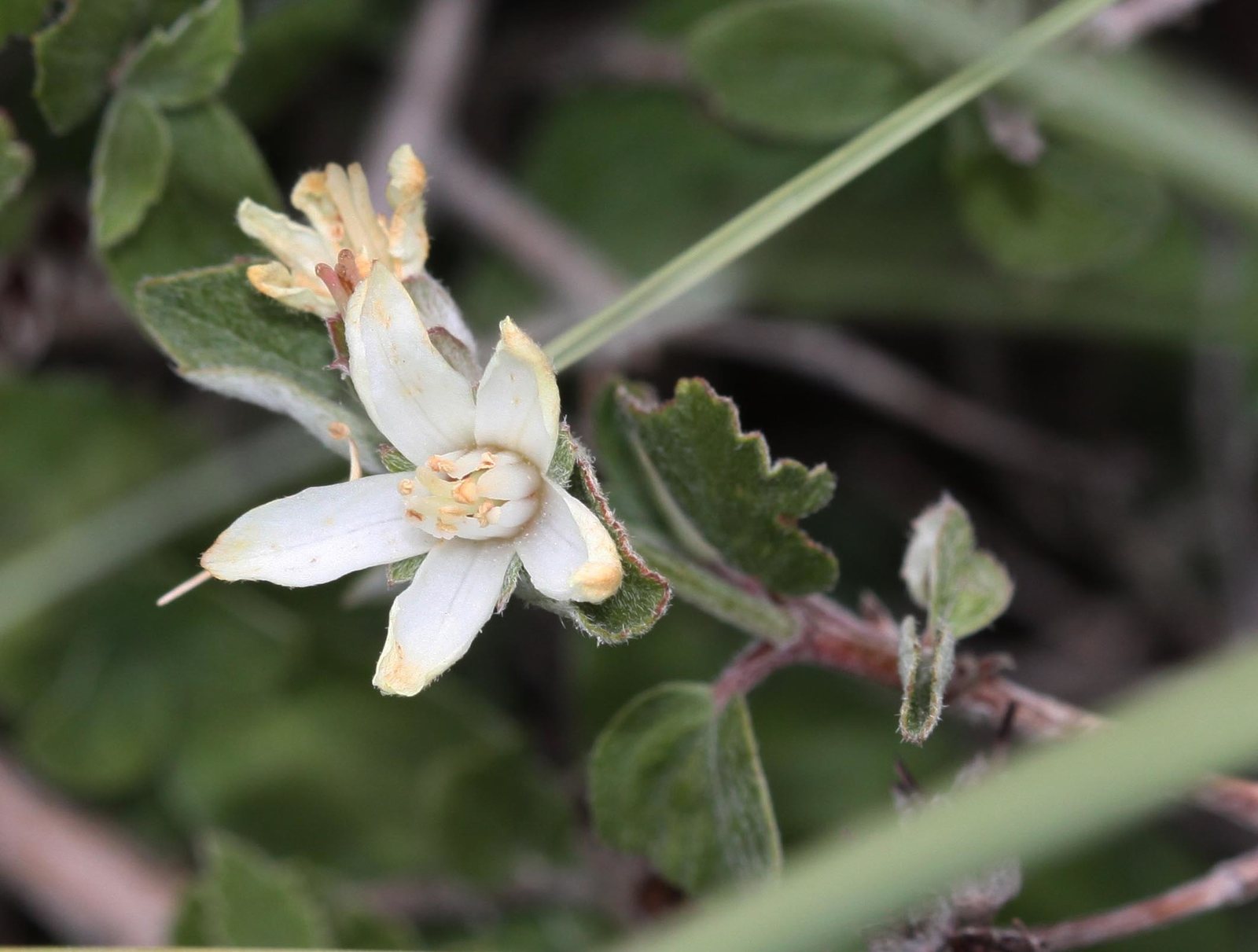
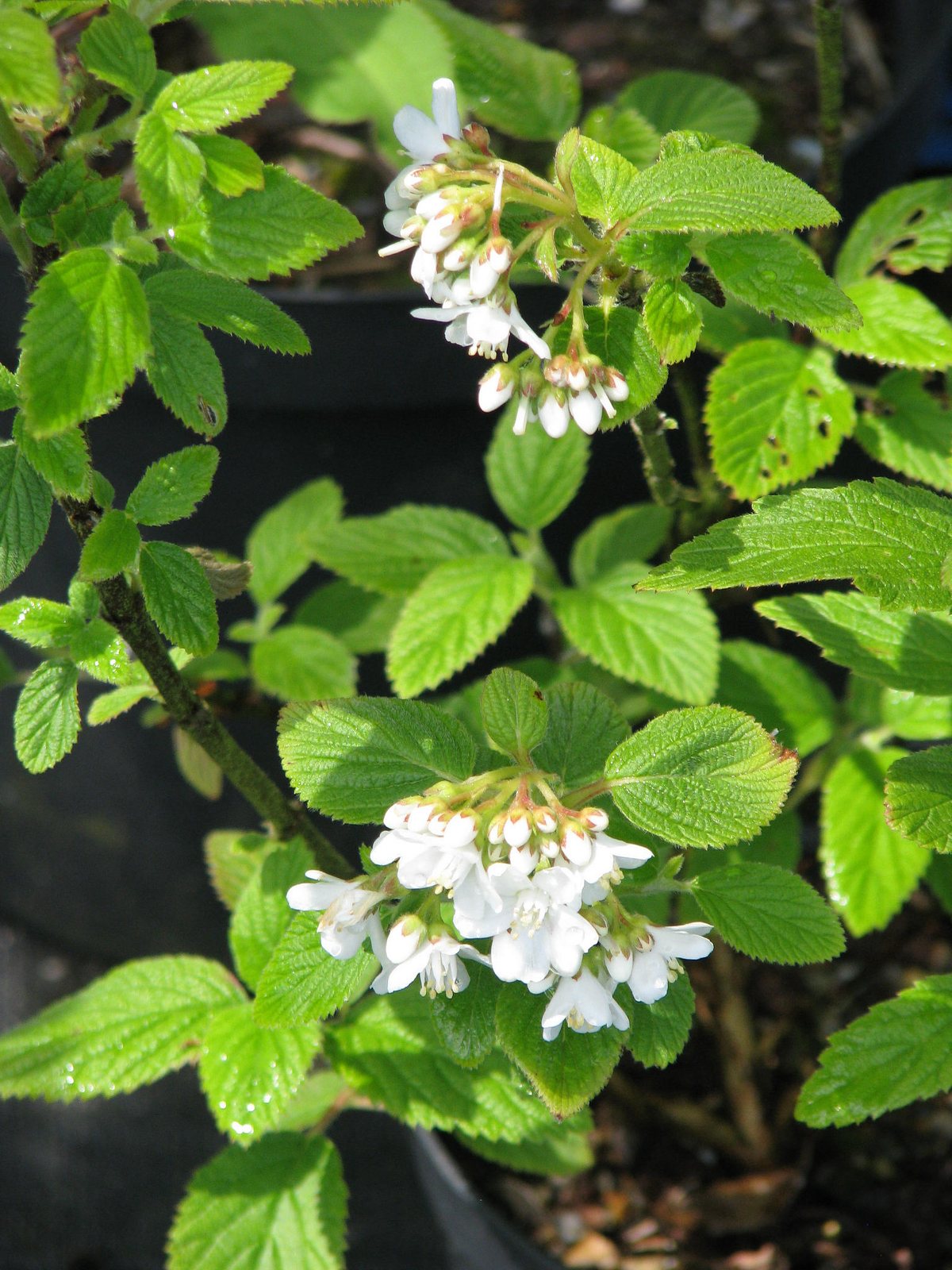
Cliff jamesia is a deciduous shrub native to rocky slopes and cliffs in the western United States. Gardeners grow it for its clusters of fragrant white flowers, peeling bark and yellow to reddish autumn foliage. It suits cool, dry gardens with excellent drainage better than hot, humid sites.
At a glance
- Sun
- Full sun to partial shade; afternoon shade is helpful in warmer gardens.
- Water
- Moderate while establishing; low to moderate once established. Water during prolonged drought, but avoid persistently wet roots.
- Soil
- Well-drained, rocky, sandy or gravelly soil; tolerates alkaline soil. Avoid heavy, waterlogged ground.
- Height
- 3-6 ft (0.9-1.8 m)
- Spread
- 3-6 ft (0.9-1.8 m)
- Flowers
- Late spring to early summer; fragrant white, five-petalled flowers in clusters at the shoot tips.
- Foliage
- Opposite, oval, toothed green leaves with pale, hairy undersides; often yellow, orange or reddish in autumn.
- Growth
- Slow to moderate
- Care needed
- Low
The year at a glance
- Pollinators
- Drought tolerant
- Cold hardy
- Wildlife
- Low allergen
- Fragrant
| J | F | M | A | M | J | J | A | S | O | N | D | |
|---|---|---|---|---|---|---|---|---|---|---|---|---|
| Flowers | ||||||||||||
| Plant |
Northern hemisphere months. In Australia, shift them by six.
- Difficulty
- Easy
- Toughness
- Very tough
Will it suit your garden?
Pick your zone, country, light and whether you have pets.
Full sun is 6 or more hours of direct sun a day, part shade 3 to 6 hours, shade under 3.
How it grows
Planting day
1.6 ft (0.5 m)
After 1 year
2.1 ft (0.63 m)
After 2 years
2.5 ft (0.76 m)
After 3 years
2.9 ft (0.89 m)
After 5 years
4 ft (1.2 m)
About 7 years to full size.
From a typical nursery size, at an average rate for this kind of plant. A rule of thumb, not a forecast.
Good to know
- Cats and dogs
- Safe
- Native to
- the US
- Growth rate
- Slow
Care
Jobs through the year
- WaterApr–May, Sep–Oct, every 21 days
- For established shrubs, water only if prolonged drought has dried the root zone; water young plants more often.
- WaterJun–Aug, every 14 days
- Water established shrubs deeply only during prolonged drought; let soil dry between soakings.
- MulchApr
- Apply a thin gravel mulch, keeping it clear of stems.
- PruneJun–Jul
- Immediately after flowering, remove damaged wood and selectively thin old stems only if needed.
- ProtectOct–Nov
- Clear sodden leaves from stem bases and prevent winter waterlogging.
- Plant with the root flare at soil level in freely draining ground; use a raised bed if drainage is poor.
- Water deeply during the first growing season, letting the upper soil dry between waterings.
- Once established, water during extended dry spells rather than keeping the soil constantly moist.
- Use a light gravel mulch around the root zone, keeping it clear of the stems.
- Avoid routine feeding; rich soil and heavy fertilising are unnecessary.
Pruning. Prune just after flowering, removing dead or damaged wood and shortening awkward shoots only as needed. To renew an older shrub, remove a few of the oldest stems at ground level rather than shearing the whole plant.
Through the year
- Spring
- Plant when the ground is workable and drains freely; water thoroughly after planting.
- Late spring
- Check soil moisture around newly planted shrubs and water if the root ball is drying out.
- Early summer
- After flowering, remove damaged branches and lightly shape only where necessary.
- Summer
- Water established plants during prolonged drought; check that irrigation is not keeping the crown wet.
- Autumn
- Clear wet leaf accumulations from around the stem bases and check drainage before winter.
In the garden
- Set among boulders in a large rock garden to echo its natural cliff habitat.
- Use on a well-drained bank with penstemons and low-growing native plants.
- Plant at a sunny woodland edge where its white flowers brighten the transition to shade.
- Use as an informal specimen near a path, allowing room for its natural branching and fragrant flowers.
Garden styles it suits: Mountain lodge, Alpine rock garden, Dry gravel garden, Wildlife garden, Low-maintenance and White garden.
Plant it with: Rocky Mountain penstemon, Blue columbine, Sulphur buckwheat, Kinnikinnick and Creeping phlox.
Wildlife: Flowers provide pollen and nectar for visiting insects, including native bees. The branching shrub also offers cover for small birds.
Problems to watch for
- Root decline in wet soil: improve drainage or move the shrub to a raised, rocky site; do not leave it standing in irrigation runoff.
- Leaf scorch during hot, dry weather: provide afternoon shade in warmer regions and water deeply during extended drought.
- Poor flowering in deep shade: move to a brighter position with direct sun for part of the day.
- Poor performance in hot, humid climates: choose a cool, airy site with sharp drainage; this mountain shrub may remain unsuitable where summer nights stay hot.
Safety
Not known to be toxic to people, cats, dogs or horses, but species-specific safety information is limited. No particular toxic part is established; do not treat the leaves, flowers or seeds as food.
Easily confused with
Lewis's mock orange (Philadelphus lewisii)
Its white flowers usually have four petals rather than five, and its leaves lack the conspicuously pale, hairy undersides typical of cliff jamesia.
Cliff fendlerbush (Fendlera rupicola)
It has much narrower leaves and white flowers with four petals, rather than the broader, toothed leaves and five-petalled flowers of cliff jamesia.
The name
Jamesia honours the American botanist and explorer Edwin James, while americana means American and the common name refers to the shrub's rocky cliff habitat.
Propagation. Propagate from seed, which may benefit from a period of cold, moist stratification, or take softwood cuttings in early summer. Germination and rooting can be variable.
Checked against open data
- Accepted botanical name
- Jamesia americana
- In the US and Canada
- Native in the lower 48 states.
- Native range
- Arizona, California, Colorado, Mexico Northeast, Nevada, New Mexico, Utah and Wyoming.
- Measured
- Soil pH 7 to 8.5. Average height 137 cm.
Sources: GBIF (CC BY 4.0), USDA PLANTS and Trefle (CC BY 4.0). The care and design notes are LandscapeGPT's own.
See it in your own yard.
Upload a photo of your yard and see it redesigned with plants that suit your climate, each checked against your zone.