Rocky Mountain penstemon
Penstemon strictus. Family Plantaginaceae. Perennial.
Also called Rocky Mountain beardtongue, Strict beardtongue.
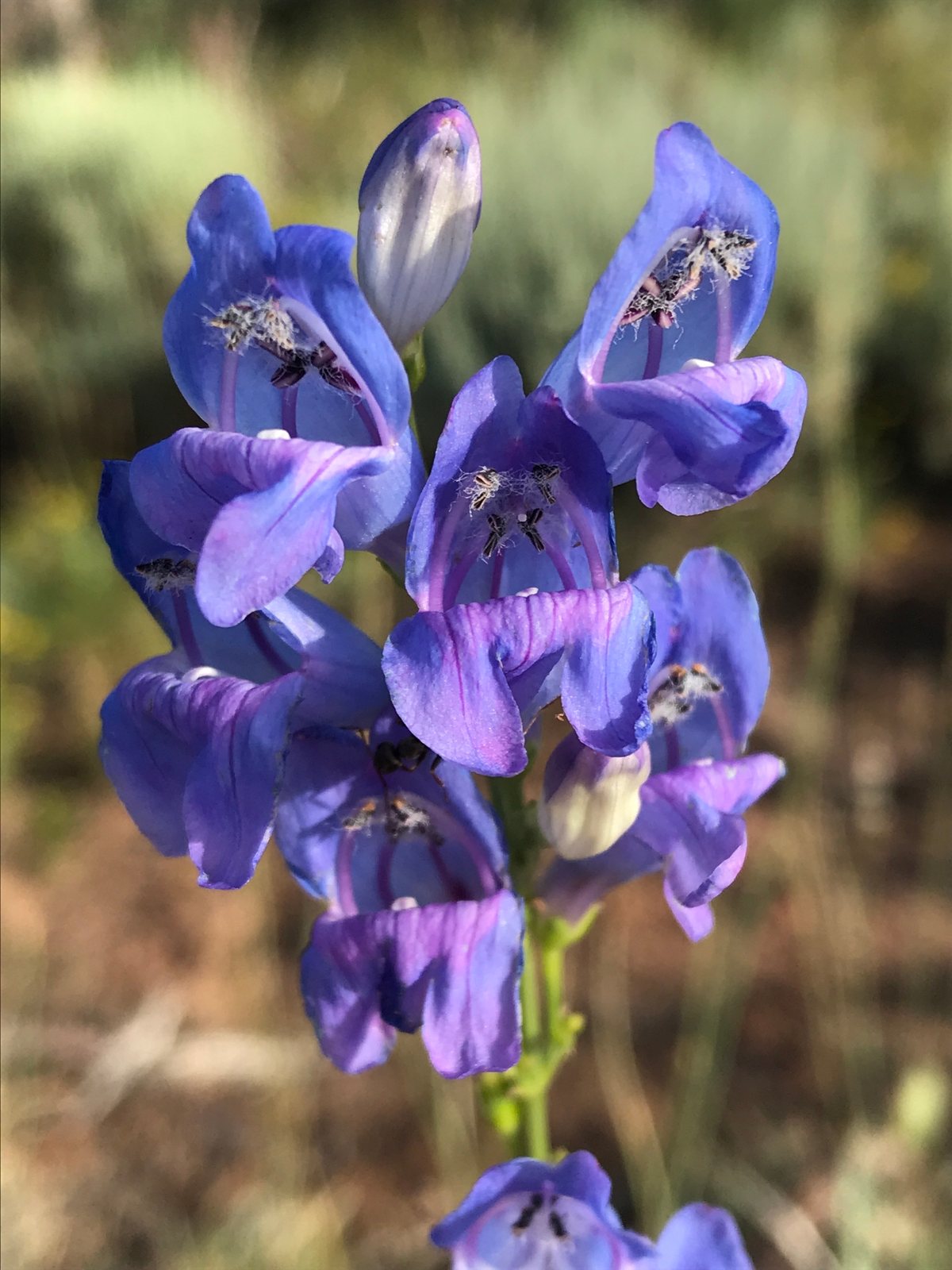
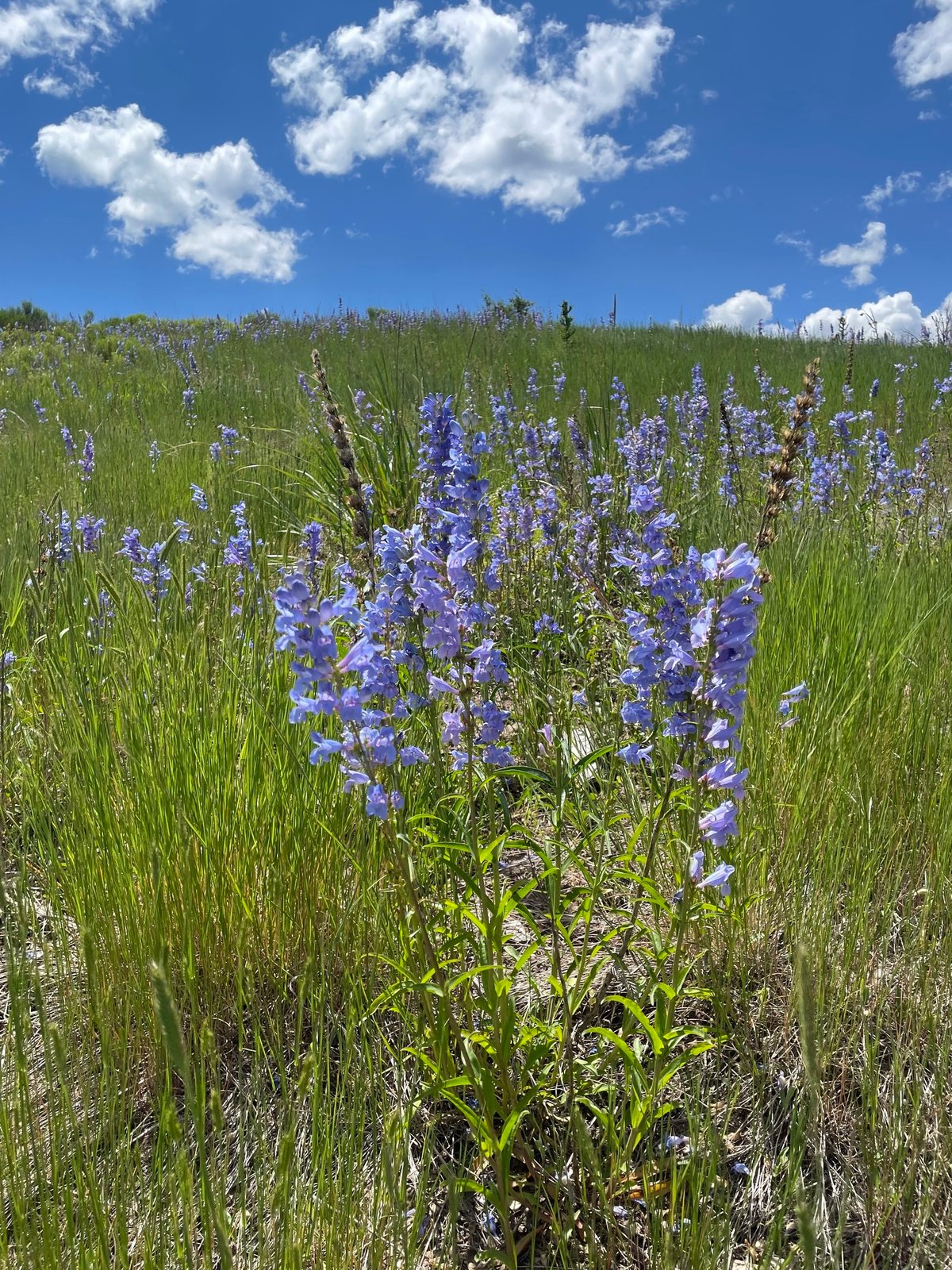
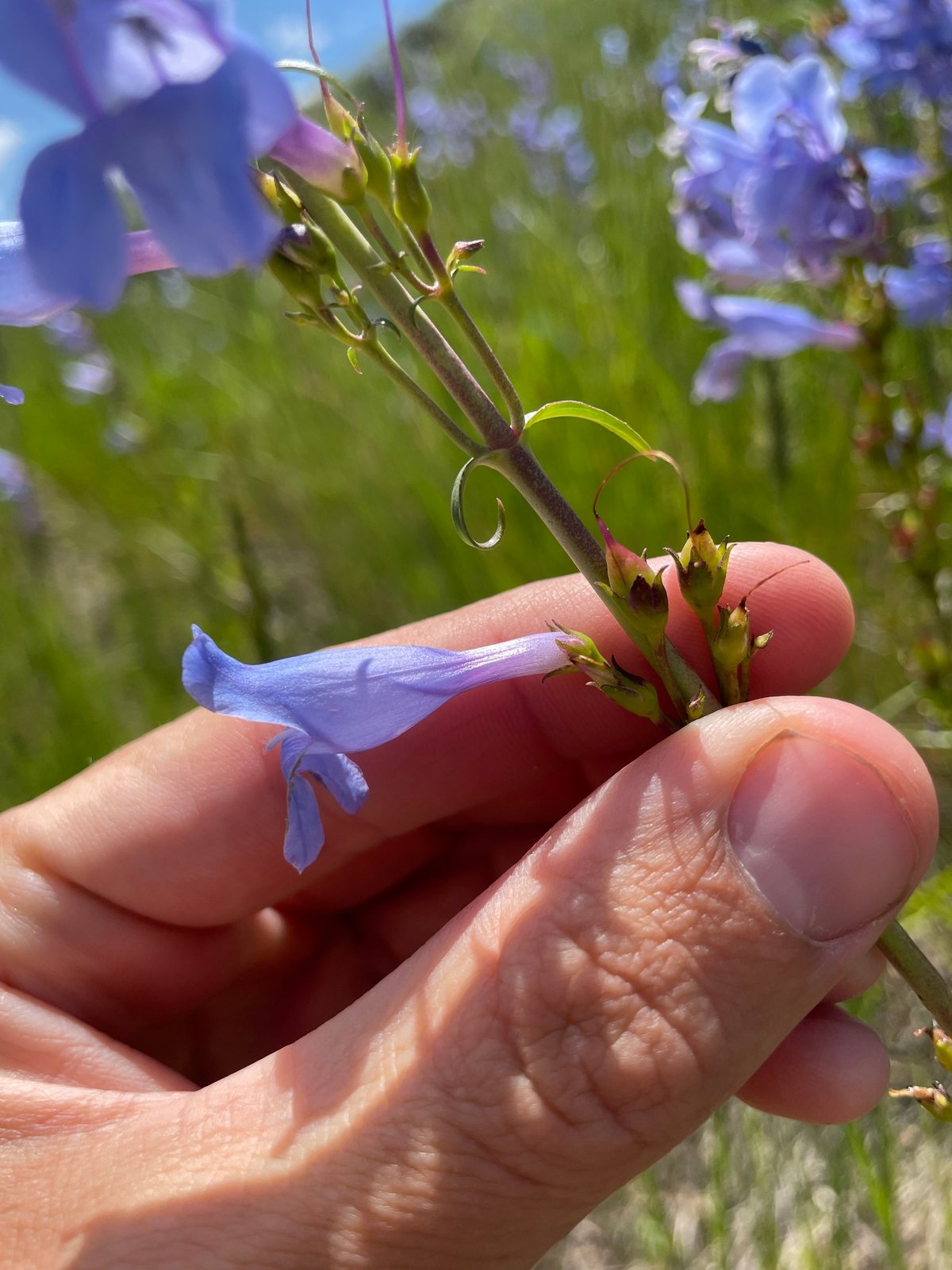
Rocky Mountain penstemon is a clump-forming perennial native to the western United States, grown for upright spikes of blue-violet flowers above low rosettes of narrow leaves. It suits sunny, dry gardens with excellent drainage and attracts bees, but often struggles in humid climates or soil that stays wet through winter.
At a glance
- Sun
- Full sun; tolerates light afternoon shade in hot, dry climates, though flowering may be reduced.
- Water
- Water regularly during establishment, allowing the soil to dry between waterings. Established plants need little supplemental water except during prolonged drought.
- Soil
- Lean, sharply drained sandy, gravelly or rocky soil. Avoid waterlogged ground and heavily enriched beds; neutral to alkaline soil is suitable.
- Height
- 2-3 ft (0.6-0.9 m)
- Spread
- 1-2 ft (0.3-0.6 m)
- Flowers
- Late spring to early summer; tubular blue-violet to purple flowers in upright spikes.
- Foliage
- Narrow, smooth green leaves form basal rosettes, with smaller paired leaves along the flowering stems. Basal foliage is evergreen to semi-evergreen, depending on winter conditions.
- Growth
- Moderate
- Care needed
- Low
The year at a glance
- Pollinators
- Deer resistant
- Drought tolerant
- Cold hardy
- Low allergen
| J | F | M | A | M | J | J | A | S | O | N | D | |
|---|---|---|---|---|---|---|---|---|---|---|---|---|
| Flowers | ||||||||||||
| Fruit | ||||||||||||
| Plant |
Northern hemisphere months. In Australia, shift them by six.
- Difficulty
- Easy
- Toughness
- Very tough
Will it suit your garden?
Pick your zone, country, light and whether you have pets.
Full sun is 6 or more hours of direct sun a day, part shade 3 to 6 hours, shade under 3.
How it grows
Planting day
1 ft (0.3 m)
After 1 year
1.5 ft (0.45 m)
After 2 years
2 ft (0.6 m)
After 3 years
2.5 ft (0.75 m)
full size
About 3 years to full size.
From a typical nursery size, at an average rate for this kind of plant. A rule of thumb, not a forecast.
Good to know
- Cats and dogs
- Safe
- Native to
- the US
- Growth rate
- Moderate
Care
Jobs through the year
- WaterApr–May, Sep, every 21 days
- Water established ground plants only during prolonged drought; water new plants more often as roots establish.
- WaterJun–Aug, every 14 days
- During prolonged drought, soak established ground plants at the base and let soil dry between waterings.
- PruneMar–Apr
- Remove dead leaves and winter-damaged stems without cutting healthy basal rosettes.
- DeadheadJun–Jul, every 14 days
- Cut faded flower stems to basal foliage, leaving a few for seed if desired.
- MulchApr
- Apply a thin gravel mulch and keep the crown uncovered.
- ProtectJan–Feb, Oct–Dec
- Remove wet leaf litter and keep crowns freely drained; cold protection is unnecessary.
- Plant with the crown at soil level in a sunny position with excellent drainage.
- Water at the base during establishment, then reduce watering once roots are established.
- Avoid routine feeding and rich compost; excessive fertility encourages weak, floppy growth.
- Use a thin gravel mulch rather than moisture-retentive organic mulch around the crown.
- Keep nearby plants from crowding the basal rosettes, especially in damp climates.
Pruning. After flowering, cut spent flower stems back to the basal foliage, leaving a few if you want seed. In early spring, remove dead leaves and winter-damaged stems without cutting away healthy rosettes.
Through the year
- Late winter
- Check that water is draining away from crowns and remove accumulated wet leaves.
- Early spring
- Trim winter-damaged growth, keeping healthy basal foliage intact.
- Spring
- Plant young plants after the soil becomes workable; water them through establishment.
- Late spring
- Check flowering stems for aphids and wash off small colonies with water.
- Summer
- Remove faded flower stems, or retain a few until their seed capsules turn brown and dry.
- Autumn
- Sow fresh seed outdoors in a free-draining pot or prepared seedbed for natural winter chilling.
In the garden
- Plant in repeated groups through a gravel garden for strong blue-violet colour above low foliage.
- Combine with fine-textured grasses and drought-tolerant perennials in a sunny naturalistic border.
- Use on sunny banks or raised beds where drainage is better than in surrounding soil.
- Place near paths or seating areas where you can watch bees visiting the flowers.
Garden styles it suits: Dry gravel garden, Desert / xeriscape, Mountain lodge, Pollinator garden, New perennial (prairie) and Cottage garden.
Plant it with: Prairie dropseed, Blue grama, Blanket flower, Lanceleaf coreopsis, Yarrow and Sulphur buckwheat.
Wildlife: Flowers provide nectar and pollen for bees, including bumblebees, and may also attract hummingbirds within their American range. Deer and rabbits often leave it alone, but browsing is still possible.
Problems to watch for
- Crown and root rot in wet soil: improve drainage or move plants to a raised gravelly bed; avoid frequent irrigation.
- Flopping stems in shade or rich soil: provide more sun and stop feeding; support existing stems discreetly if needed.
- Aphids on young shoots: rinse off with water and encourage natural predators.
- Poor persistence in humid climates: allow generous spacing, keep the crown dry and raise replacement plants from seed.
Safety
Not known to be toxic to people, cats, dogs or horses. Species-specific toxicity information is limited, so do not treat any part as edible or allow pets or livestock to consume large amounts.
Easily confused with
Scarlet bugler (Penstemon barbatus)
The species usually has scarlet-red, narrower flowers with strongly reflexed lower lobes, rather than the broader blue-violet flowers of Rocky Mountain penstemon.
The name
Penstemon refers to the flower's five stamens, including one sterile stamen, while strictus means upright or erect, describing its growth.
Propagation. Grow from seed, which often germinates better after a period of cold, moist conditions; autumn sowing outdoors is a straightforward method. Take softwood cuttings from non-flowering shoots in late spring or early summer to preserve a particular plant.
Checked against open data
- Accepted botanical name
- Penstemon strictus
- In the US and Canada
- Native in the lower 48 states.
- Native range
- Arizona, Colorado, New Mexico, Utah and Wyoming.
- Measured
- Soil pH 6 to 8.
Sources: GBIF (CC BY 4.0), USDA PLANTS and Trefle (CC BY 4.0). The care and design notes are LandscapeGPT's own.
See it in your own yard.
Upload a photo of your yard and see it redesigned with plants that suit your climate, each checked against your zone.