Clustered bellflower
Campanula glomerata. Family Campanulaceae. Perennial.
Also called Dane's blood.
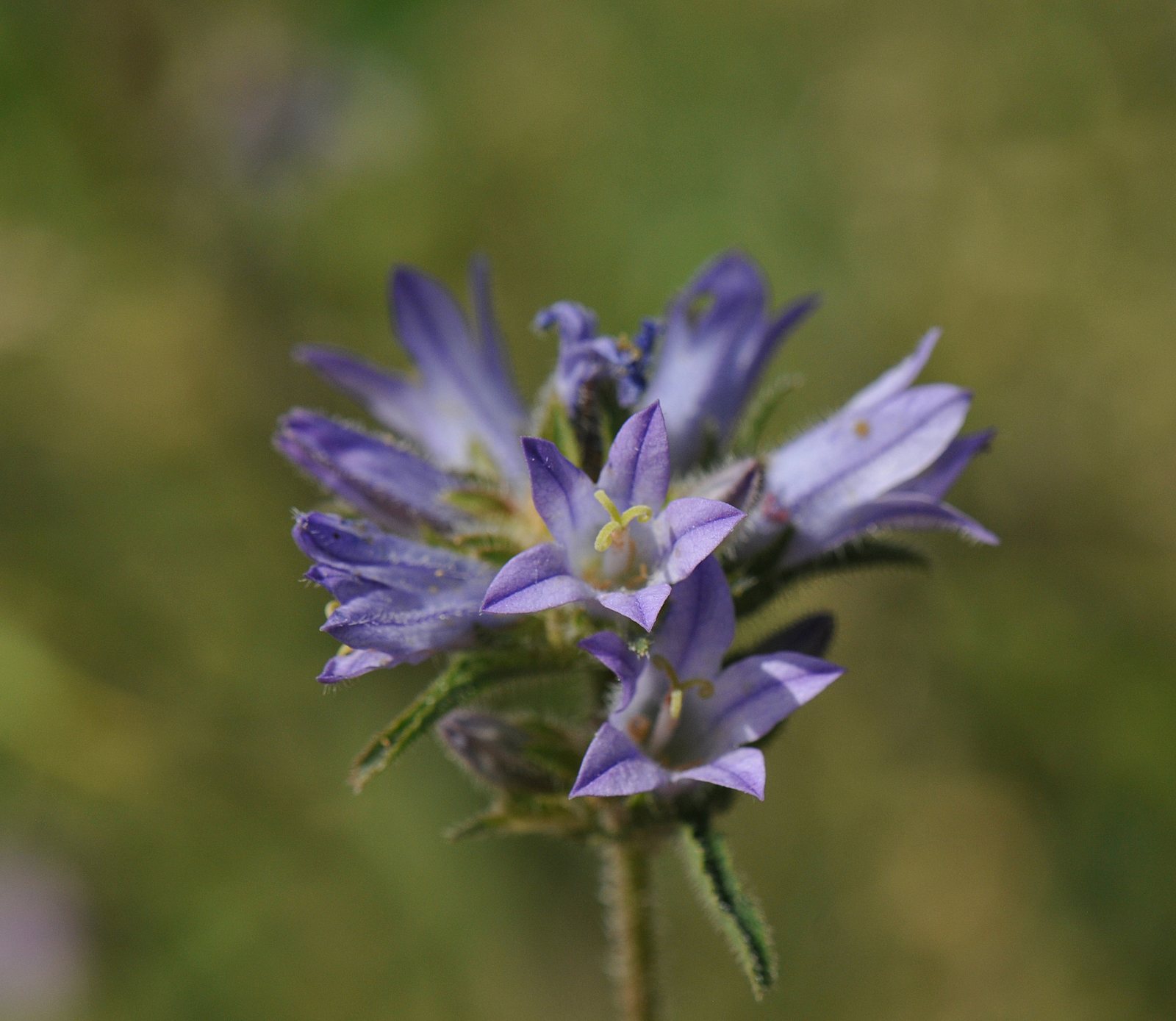
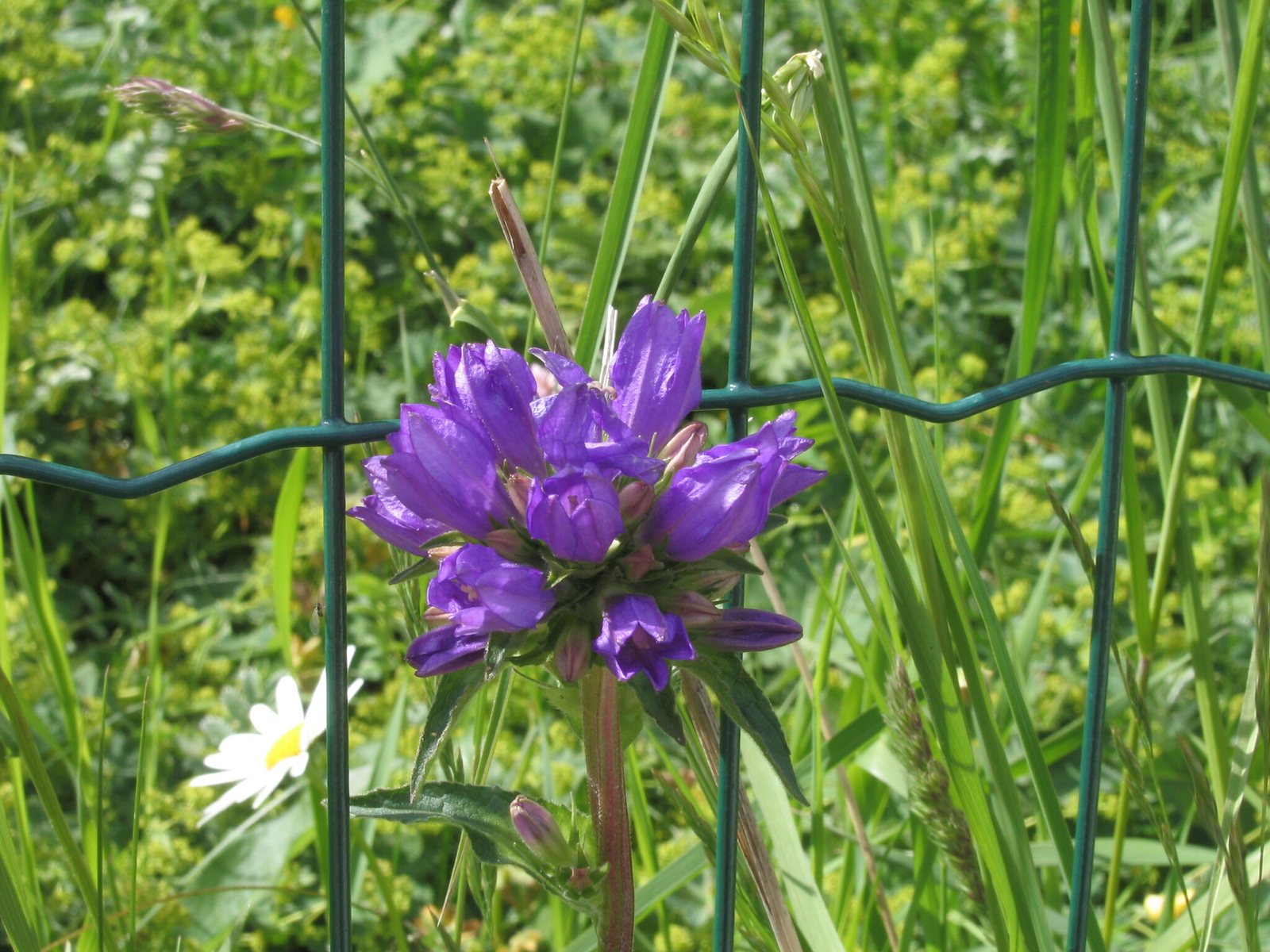
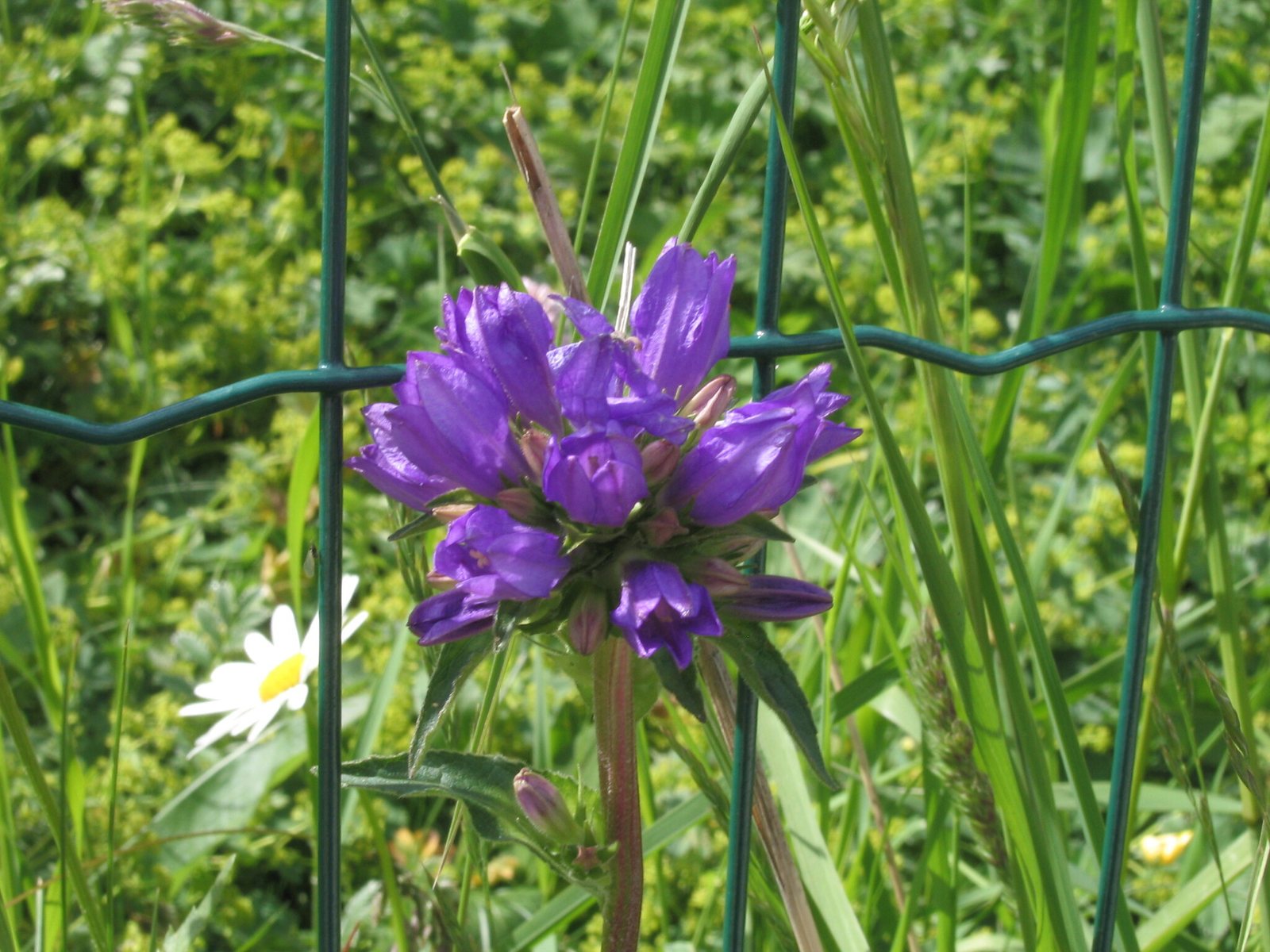
Clustered bellflower is a hardy perennial with upright stems topped by tight bunches of violet-blue, bell-shaped flowers. Gardeners grow it for early-summer colour and bee visits, but its spreading underground stems need watching in small borders.
At a glance
- Sun
- Full sun to partial shade; afternoon shade helps in hot summers.
- Water
- Moderate; keep evenly moist while establishing, then water during prolonged dry spells. Avoid waterlogged ground.
- Soil
- Well-drained loam, chalky soil or improved clay; tolerates slightly acidic to alkaline conditions.
- Height
- 1-2.5 ft (0.3-0.75 m)
- Spread
- 1-3 ft (0.3-0.9 m), spreading farther over time
- Flowers
- Late spring to midsummer; violet-blue to deep purple, with white-flowered selections available.
- Foliage
- Green, slightly hairy leaves; lower leaves are broad and stalked, while upper leaves are narrower and clasp the stems.
- Growth
- Moderate to fast once established
- Care needed
- Medium
The year at a glance
- Pollinators
- Cold hardy
- Low allergen
| J | F | M | A | M | J | J | A | S | O | N | D | |
|---|---|---|---|---|---|---|---|---|---|---|---|---|
| Flowers | ||||||||||||
| Plant |
Northern hemisphere months. In Australia, shift them by six.
- Difficulty
- Easy
- Toughness
- Very tough
Will it suit your garden?
Pick your zone, country, light and whether you have pets.
Full sun is 6 or more hours of direct sun a day, part shade 3 to 6 hours, shade under 3.
How it grows
Planting day
1 ft (0.3 m)
After 1 year
1.3 ft (0.39 m)
After 2 years
1.6 ft (0.49 m)
After 3 years
1.7 ft (0.53 m)
full size
About 2 years to full size.
From a typical nursery size, at an average rate for this kind of plant. A rule of thumb, not a forecast.
Good to know
- Cats and dogs
- Safe
- Native to
- the UK
- In the garden
- Spreads vigorously: plan to contain it.
- Growth rate
- Fast
Care
Jobs through the year
- WaterApr–May, Sep–Oct, every 14 days
- Water established clumps during extended dry spells; keep new plants evenly moist.
- WaterJun–Aug, every 7 days
- Water established clumps deeply during prolonged dry weather; avoid saturated soil.
- MulchMar–Apr
- Apply a thin compost mulch clear of the crown; avoid heavy nitrogen feeding.
- DivideMar–Apr, Sep
- Divide congested clumps every three to four years; use spring in colder or wetter sites.
- DeadheadJun–Aug, every 7 days
- Cut spent flower stems to basal foliage to discourage seedlings and encourage repeat bloom.
- PruneFeb–Mar
- Remove dead stems before vigorous spring growth starts.
- PruneSep
- Lift unwanted spreading shoots with their roots to contain the clump.
- ProtectMar–May, every 7 days
- Inspect young shoots for slugs and snails and remove pests.
- ProtectMay
- Use twiggy supports if taller stems lean.
- Water new plants regularly through their first growing season; water established clumps during extended drought.
- Apply a thin layer of compost in spring; avoid heavy nitrogen feeding, which encourages floppy growth.
- Mulch lightly to conserve moisture, keeping mulch away from the crown.
- Support tall stems with twiggy stakes if they lean in shade or rich soil.
- Divide congested clumps every three to four years and remove shoots that spread beyond their allotted space.
Pruning. Cut flowered stems back to basal foliage after the main display to discourage seeding and sometimes encourage a smaller repeat bloom. Remove dead stems in late autumn or early spring.
Through the year
- Early spring
- Remove dead growth and divide established clumps before vigorous growth begins.
- Spring
- Plant into well-drained soil, water thoroughly and apply a light compost mulch.
- Late spring
- Check young shoots for slugs and support taller stems if needed.
- Summer
- Water during dry spells and cut back spent flower stems.
- Early autumn
- Remove unwanted spreading shoots; plant or divide where winters are not severe.
- Late autumn
- Clear collapsed foliage if diseased and check that winter water drains freely.
In the garden
- Plant in informal border groups with hardy geraniums and lady's mantle for contrasting flower and leaf shapes.
- Use beside paths in cottage gardens where the upright flower clusters can be seen closely.
- Combine with yarrow and meadow sage in sunny, pollinator-friendly planting.
- Use white-flowered selections in white or cool-coloured borders, allowing room for clumps to expand.
Garden styles it suits: Cottage garden, English country, Pollinator garden, Blues and silvers, Traditional and New perennial (prairie).
Plant it with: Hardy geranium, Lady's mantle, Meadow sage, Yarrow, Catmint and Oxeye daisy.
Wildlife: The flowers provide nectar and pollen for bees, including bumblebees. Open, single flowers are readily accessible to visiting insects.
Problems to watch for
- Slugs and snails eat emerging shoots: inspect at dusk, remove by hand and use iron-based slug bait if necessary.
- Powdery mildew can coat leaves in dry, crowded conditions: improve airflow, water the soil during drought and remove badly affected foliage.
- Crown or root rot develops in wet soil: improve drainage and avoid planting the crown deeply.
- Floppy stems or excessive spread occur in rich soil or too much shade: reduce feeding, provide more sun and divide or thin the clump.
Safety
Not known to be toxic to people, cats, dogs or horses; no part is recognised as a significant poisoning hazard. It is an ornamental plant, not a recommended food plant.
Where it spreads. Can spread aggressively by underground stems and seed in temperate gardens in the United States, Canada, the United Kingdom and cooler parts of Australia. It has escaped cultivation in parts of North America; keep it out of adjoining natural vegetation and remove unwanted shoots.
Easily confused with
Creeping bellflower (Campanula rapunculoides)
Its drooping bells are spaced along one side of an elongated stem rather than packed into dense clusters; it is a particularly persistent invasive weed in parts of North America.
Peach-leaved bellflower (Campanula persicifolia)
Has narrow, peach-like leaves and larger, open bells spaced along loose flowering stems rather than crowded into heads.
Canterbury bells (Campanula medium)
Usually a biennial, with much larger, inflated bells arranged along branched stems rather than small bells in tight clusters.
The name
Campanula means 'little bell' in Latin, while glomerata means 'clustered', describing the tightly grouped flowers.
Propagation. Divide clumps in spring or early autumn. Sow seed in spring, but seedlings may not match named varieties; use division to preserve their characteristics.
Checked against open data
- Accepted botanical name
- Campanula glomerata
- In the US and Canada
- Introduced in Alaska, Canada and the lower 48 states.
- Native range
- Albania, Altay, Amur, Austria, Baltic States, Belarus, Belgium, Bulgaria, Buryatiya, Central European Rus, Chita and Czechoslovakia.
- Measured
- Average height 38 cm.
Sources: GBIF (CC BY 4.0), USDA PLANTS and Trefle (CC BY 4.0). The care and design notes are LandscapeGPT's own.
See it in your own yard.
Upload a photo of your yard and see it redesigned with plants that suit your climate, each checked against your zone.