Coast tea tree
Leptospermum laevigatum. Family Myrtaceae. Shrub.
Also called Coastal tea tree, Australian tea tree, Victorian tea tree.
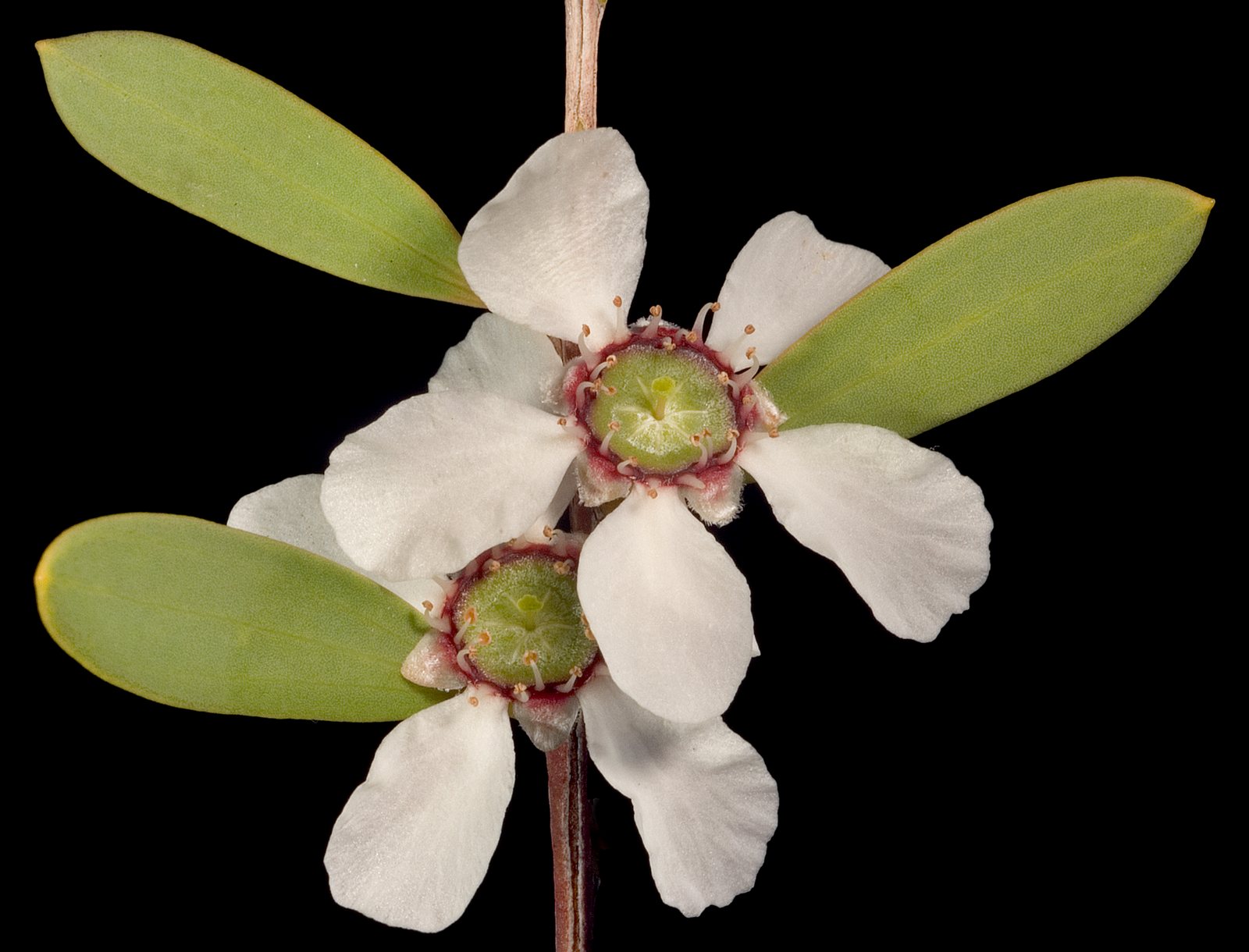
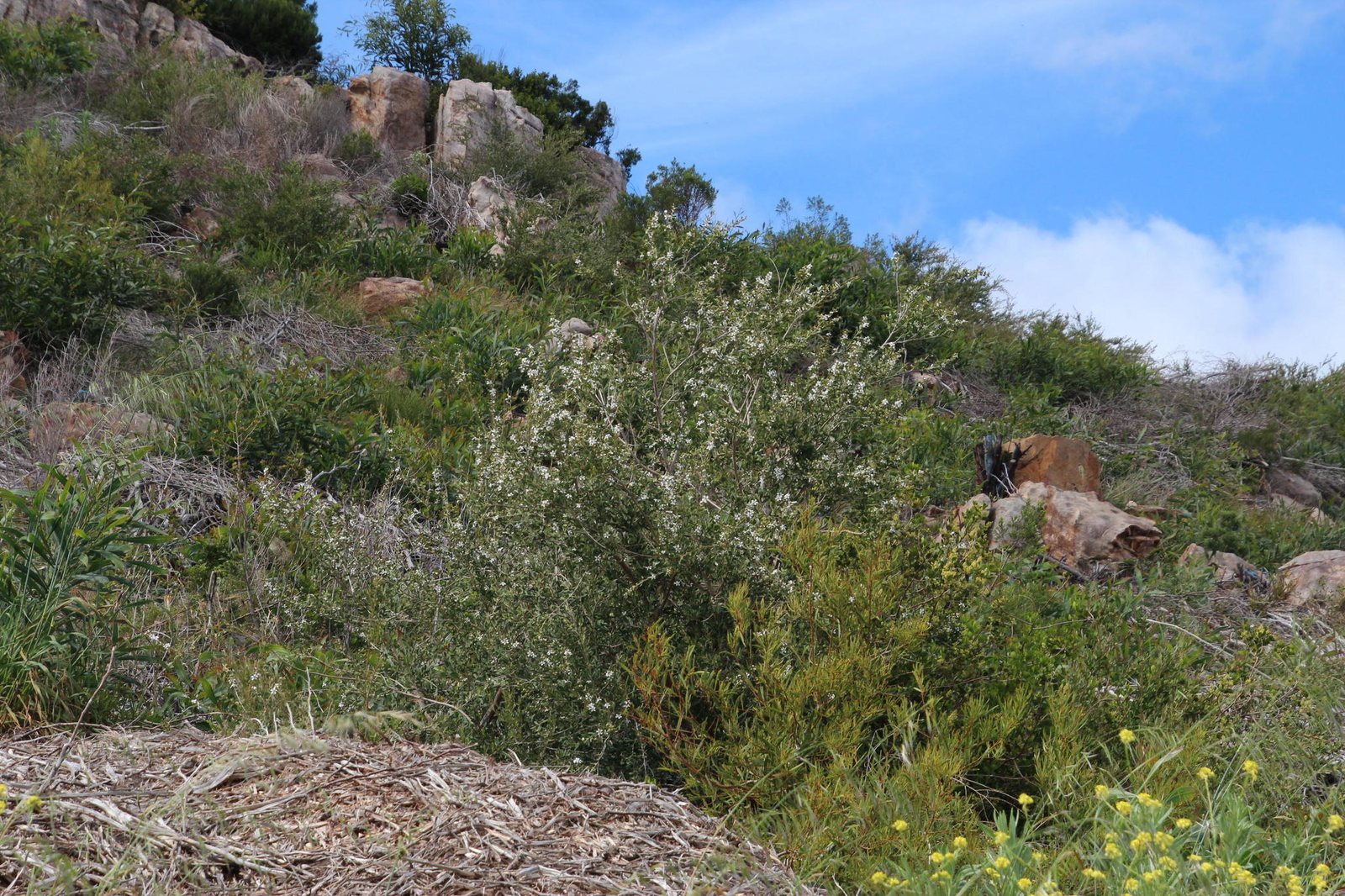
Coast tea tree is a large evergreen shrub or small tree from southeastern Australia, with grey-green leaves, white flowers and peeling bark. Gardeners grow it for coastal shelter, informal screening and its wind-shaped branching, but it needs room and can become invasive outside its natural range.
At a glance
- Sun
- Full sun; tolerates light shade, but grows more openly and flowers less.
- Water
- Water regularly while establishing; established plants tolerate drought and usually need water only during prolonged dry weather.
- Soil
- Well-drained sandy or gravelly soil is ideal. Tolerates poor soils and coastal conditions, but not persistent waterlogging.
- Height
- 15-25 ft (4.5-7.5 m)
- Spread
- 10-20 ft (3-6 m)
- Flowers
- White, five-petalled flowers in spring, sometimes beginning in late winter or continuing into early summer.
- Foliage
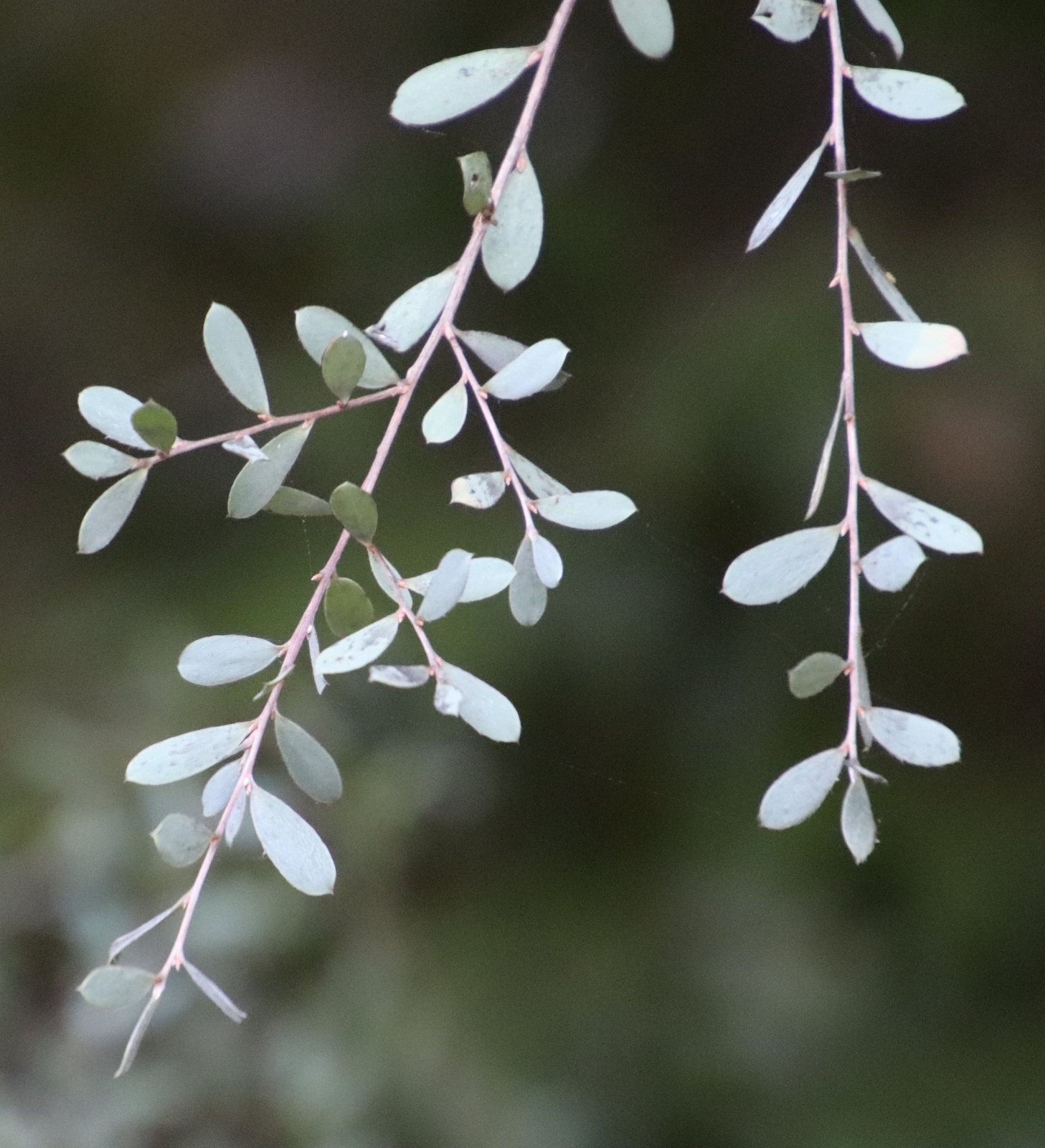
- Evergreen. Small, leathery, grey-green leaves with rounded or blunt tips; aromatic when crushed.
- Growth
- Moderate to fast in mild climates.
- Care needed
- Low
The year at a glance
- Pollinators
- Drought tolerant
- Heat tolerant
- Wildlife
- Low allergen
| J | F | M | A | M | J | J | A | S | O | N | D | |
|---|---|---|---|---|---|---|---|---|---|---|---|---|
| Flowers | ||||||||||||
| Fruit | ||||||||||||
| Plant |
Northern hemisphere months. In Australia, shift them by six.
- Difficulty
- Moderate
- Toughness
- Fairly tough
Will it suit your garden?
Pick your zone, country, light and whether you have pets.
Full sun is 6 or more hours of direct sun a day, part shade 3 to 6 hours, shade under 3.
How it grows
Planting day
2.4 ft (0.72 m)
After 1 year
7 ft (2 m)
After 2 years
11 ft (3.4 m)
After 3 years
15 ft (4.7 m)
After 5 years
20 ft (6 m)
full size
About 4 years to full size.
From a typical nursery size, at an average rate for this kind of plant. A rule of thumb, not a forecast.
Good to know
- Cats and dogs
- Safe
- Invasive in
- the US and Australia
- In the garden
- Spreads vigorously: plan to contain it.
- Growth rate
- Fast
Care
Jobs through the year
- WaterApr–May, Sep–Oct, every 28 days
- Water established ground plants only during prolonged dry weather; young plants and pots need more frequent checks.
- WaterJun–Aug, every 21 days
- Deep-water established ground plants only if drought persists; allow the soil to dry somewhat between waterings.
- WaterJan–Mar, Nov–Dec, every 21 days
- Check sheltered pots and water sparingly before the root ball dries completely.
- FeedApr–May
- Use a small amount of low-phosphorus fertilizer only if growth is weak.
- MulchMay, Nov
- Maintain a light mulch over the roots, keeping it clear of the trunk.
- PruneJun–Jul
- Trim lightly after flowering; avoid cutting into bare old wood and remove seed-bearing growth if locally advised.
- ProtectJan–Apr, Oct–Dec
- Cannot reliably survive zone 6–7 winters outdoors; overwinter pots in bright, frost-free shelter.
- Plant in a sunny, freely drained position with enough space for its broad mature crown.
- Water deeply during the first one or two growing seasons, allowing the soil to dry somewhat between waterings.
- Apply a light mulch over the root area, keeping it clear of the trunk.
- Avoid heavy feeding; use a small amount of low-phosphorus fertiliser in spring only if growth is weak.
- Check surrounding beds and bare ground for seedlings, especially after soil disturbance or fire.
Pruning. Prune lightly just after flowering to shape young plants and encourage branching. Remove dead or damaged branches as needed, but avoid cutting hard into bare old wood because regrowth can be unreliable.
Through the year
- Spring
- Plant after hard frosts where winters are marginal; water new plants thoroughly.
- Late spring
- Trim lightly after flowering and remove damaged branches.
- Summer
- Check soil moisture around young plants and water deeply during dry spells.
- Autumn
- Plant in mild, frost-light climates while the soil is still warm.
- Late autumn
- Refresh mulch without piling it against the trunk, and remove unwanted seedlings.
- Winter
- Protect young plants from unusually severe frost and check that water is not collecting around their roots.
In the garden
- An informal coastal screen or windbreak where its mature width can be accommodated.
- A multi-stemmed specimen with lower branches selectively removed to reveal twisting trunks and peeling bark.
- A backdrop to drought-tolerant planting with coastal rosemary, lomandra and kangaroo paws.
- A large evergreen anchor in sandy gravel gardens, where its grey-green foliage softens hard landscaping.
Garden styles it suits: Coastal, Australian native, Mediterranean, Dry gravel garden, Desert / xeriscape and Low-maintenance.
Plant it with: Coastal rosemary, Lomandra, Kangaroo paw, Coast banksia, Pigface and Woolly bush.
Wildlife: Flowers attract bees and other insects, and dense branches provide shelter for small birds. Outside its native range, spreading stands can displace more valuable local habitat.
Problems to watch for
- Root rot in wet soil: improve drainage before planting and avoid frequent watering once established.
- Scale insects and associated sooty mould: inspect stems, encourage beneficial insects and treat accessible infestations with horticultural oil according to the label.
- Frost damage to young growth: choose a sheltered site, protect young plants during cold snaps and wait until spring to assess damaged wood.
- Unwanted seedlings and dense thickets: pull seedlings while small and remove seed-bearing plants where local invasive-plant guidance recommends it.
Safety
Not known to be toxic to people, cats, dogs or horses, but species-specific information is limited. Do not treat the leaves as a culinary tea or allow pets or livestock to eat large quantities; concentrated oils should not be ingested.
Where it spreads. An invasive environmental weed in southwestern Western Australia, parts of South Australia outside its natural range, and South Africa, particularly the Cape region. It is also naturalised and locally invasive along parts of coastal California. Check local restrictions before planting, especially near dunes, heathland or other native vegetation.
Easily confused with
Mānuka (Leptospermum scoparium)
Mānuka usually has smaller, narrower, sharply pointed leaves; coast tea tree has broader, blunt-tipped grey-green leaves.
Coast teatree (Gaudium laevigatum)
This is the same species under a newer botanical classification, not a different plant; both names occur in nursery and botanical records.
Coastal rosemary (Westringia fruticosa)
Coastal rosemary has narrow leaves arranged in whorls, with pale undersides, and small two-lipped flowers rather than open, five-petalled tea-tree flowers.
The name
Leptospermum means 'slender seed' in Greek, while laevigatum comes from Latin for 'smooth' or 'polished', referring to the smooth leaves.
Propagation. Grow from seed sown on the surface of a freely draining seed mix, or take semi-ripe cuttings in summer. Do not propagate or distribute it where it is restricted or threatens nearby native habitat.
Checked against open data
- Accepted botanical name
- Leptospermum laevigatum
Sources: GBIF (CC BY 4.0). The care and design notes are LandscapeGPT's own.
See it in your own yard.
Upload a photo of your yard and see it redesigned with plants that suit your climate, each checked against your zone.