Common alder
Alnus glutinosa. Family Betulaceae. Tree.
Also called Black alder, European alder.
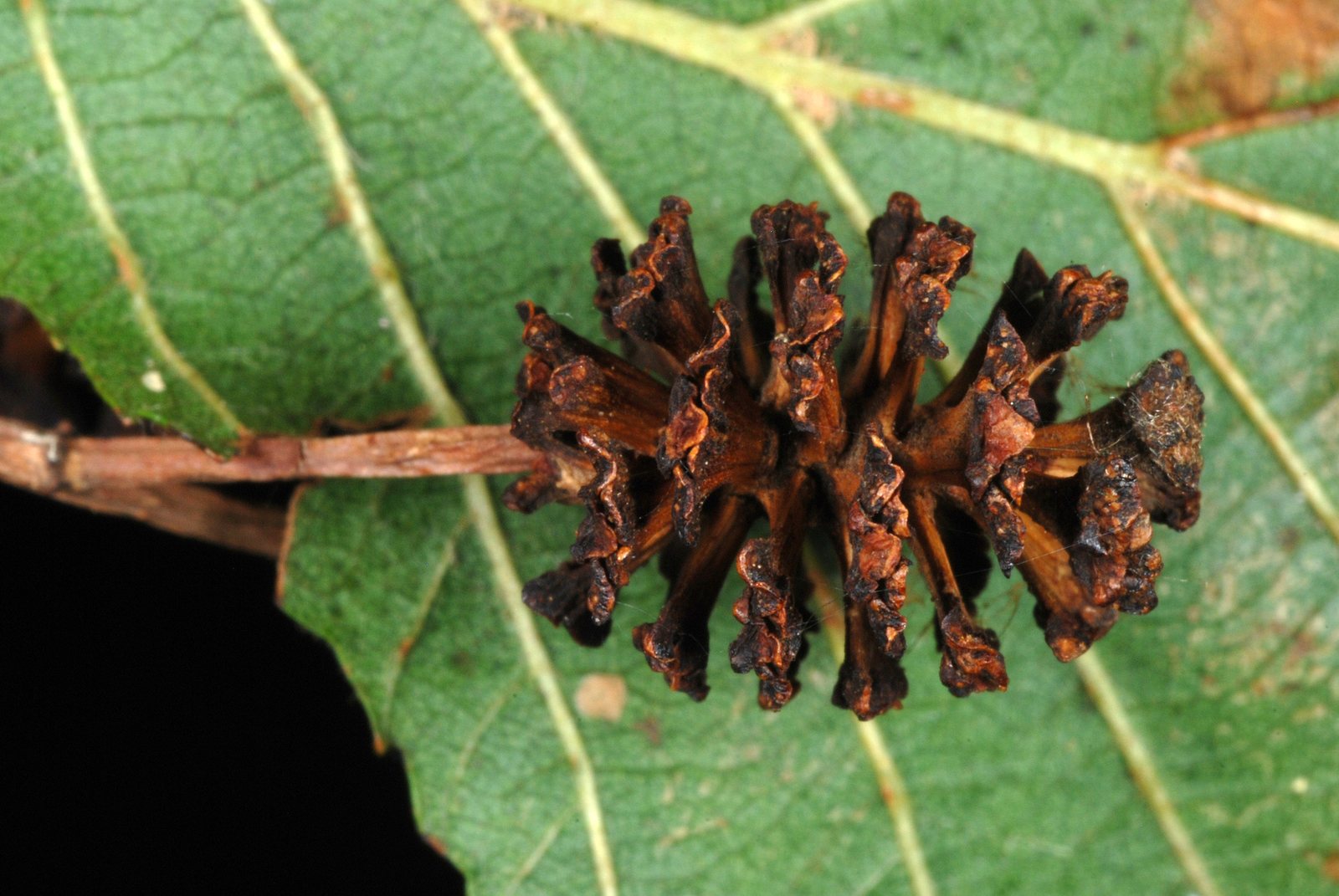
Common alder is a fast-growing deciduous tree with rounded leaves, early catkins and small, woody, cone-like fruits that remain through winter. It suits large, damp gardens and pond margins, tolerating waterlogged ground and providing shelter and food for wildlife. It is native to Europe and parts of western Asia and northern Africa, but can be invasive outside its native range.
At a glance
- Sun
- Full sun to partial shade; best growth and shape in full sun.
- Water
- High; prefers consistently moist or wet ground and tolerates seasonal flooding. Poorly suited to dry gardens.
- Soil
- Moist to waterlogged clay, loam or sandy soil, preferably acidic to neutral. Tolerates compacted ground better than many trees.
- Height
- 50-80 ft (15-24 m)
- Spread
- 25-40 ft (7.5-12 m)
- Flowers
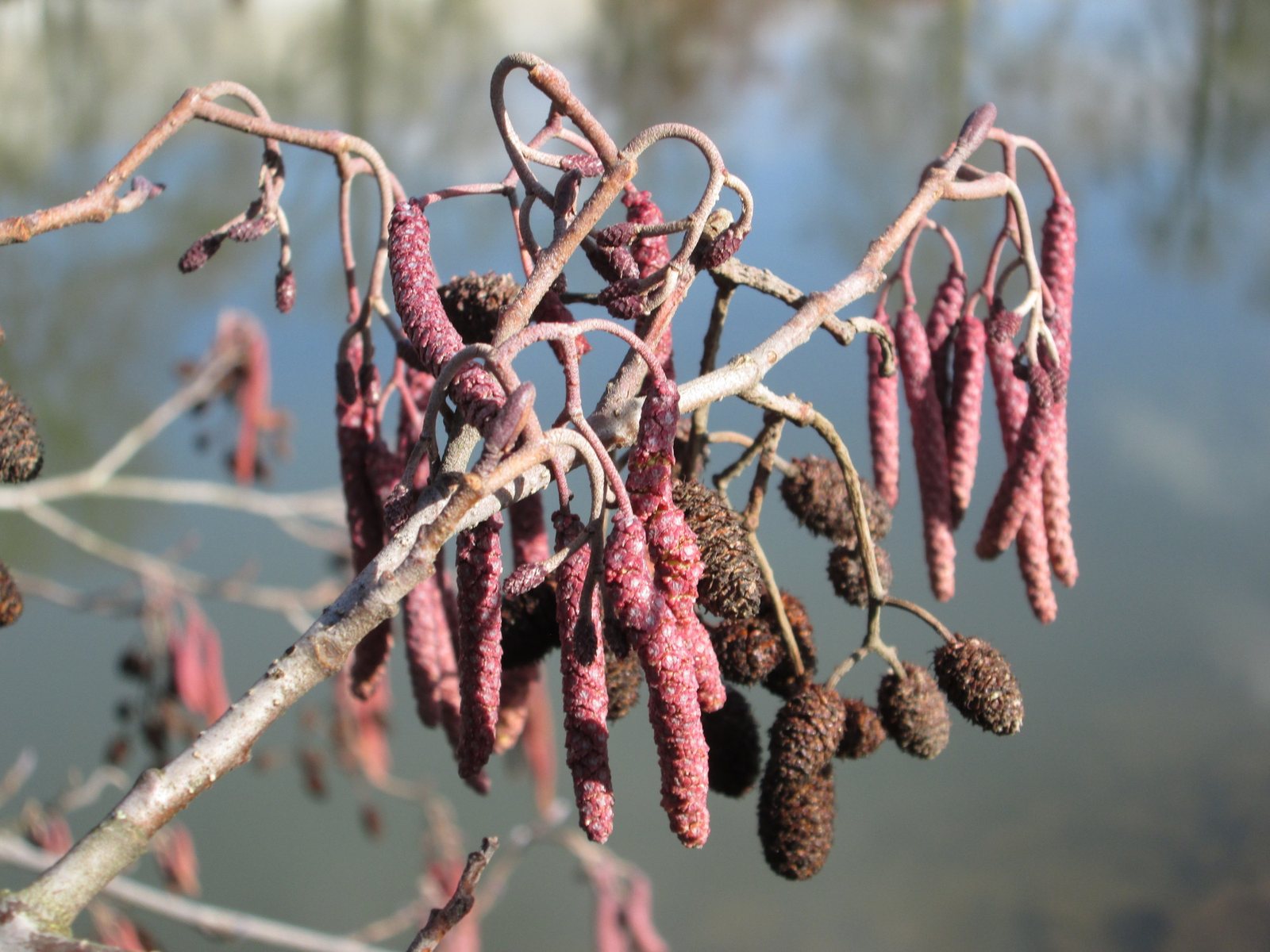
- Late winter to early spring, before the leaves open; hanging yellow-brown male catkins and small reddish female flowers.
- Foliage
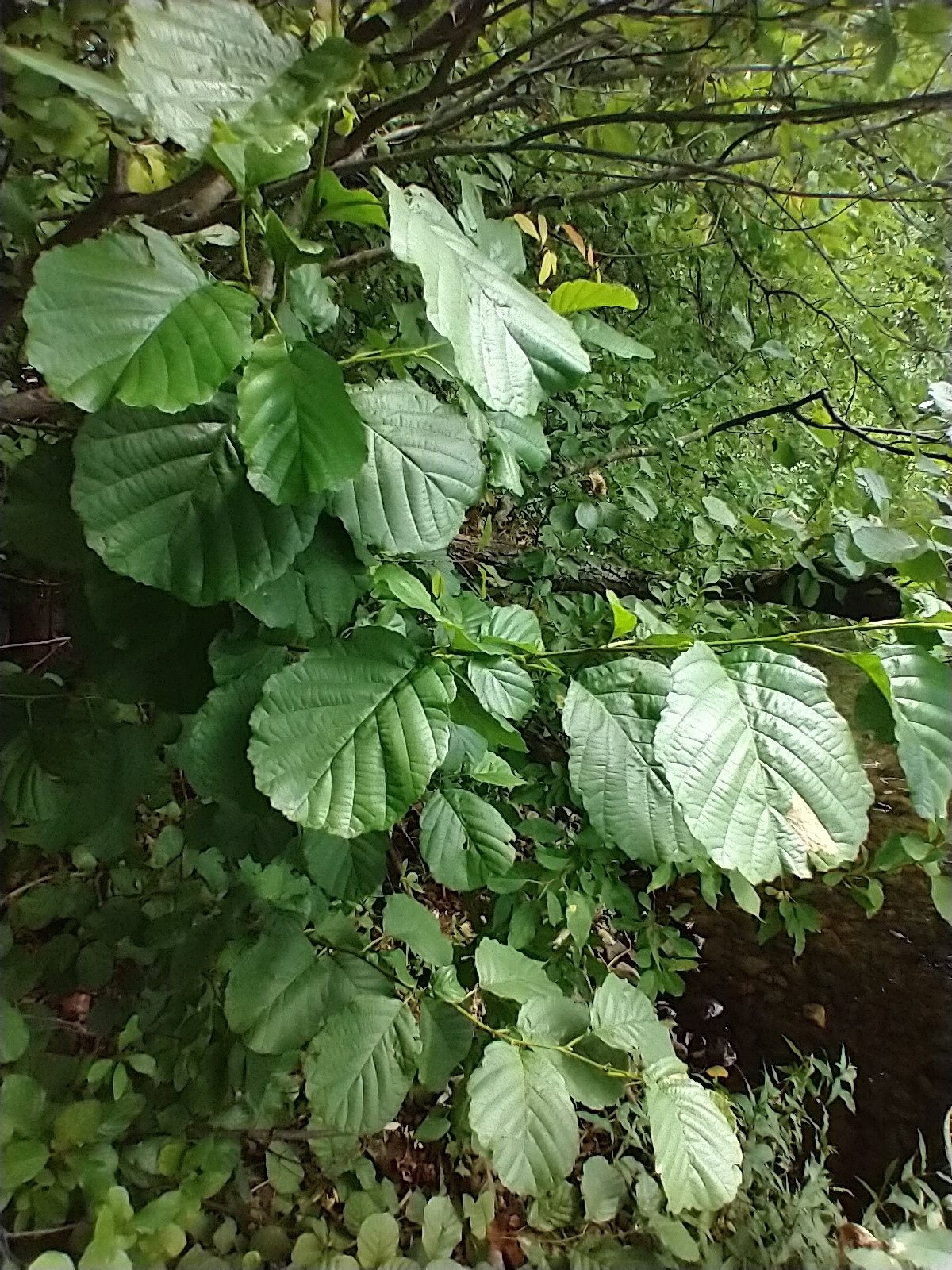
- Rounded, toothed, dark green leaves, often with a notched tip; young leaves feel sticky. Usually falls green or dull yellow, with little autumn colour.
- Growth
- Fast, especially on moist ground.
- Care needed
- Low
The year at a glance
- Cold hardy
- Wildlife
| J | F | M | A | M | J | J | A | S | O | N | D | |
|---|---|---|---|---|---|---|---|---|---|---|---|---|
| Flowers | ||||||||||||
| Fruit | ||||||||||||
| Plant |
Northern hemisphere months. In Australia, shift them by six.
- Difficulty
- Easy
- Toughness
- Fairly tough
Will it suit your garden?
Pick your zone, country, light and whether you have pets.
Full sun is 6 or more hours of direct sun a day, part shade 3 to 6 hours, shade under 3.
How it grows
Planting day
8 ft (2.3 m)
After 1 year
12 ft (3.7 m)
After 2 years
16 ft (5 m)
After 3 years
21 ft (6.3 m)
After 5 years
29 ft (8.9 m)
About 13 years to full size.
From a typical nursery size, at an average rate for this kind of plant. A rule of thumb, not a forecast.
Good to know
- Cats and dogs
- Safe
- Native to
- the UK
- Invasive in
- the US, Canada and Australia
- In the garden
- Spreads vigorously: plan to contain it.
- Growth rate
- Fast
Care
Jobs through the year
- WaterApr–May, Sep–Oct, every 14 days
- On a suitable moist site, established trees need water only during drought; water young trees more often.
- WaterJun–Aug, every 7 days
- Water deeply if the root zone begins drying; young trees must not dry out during their first two seasons.
- MulchMar–Apr
- Maintain 5–8 cm of organic mulch over the root area, keeping it clear of the trunk.
- PruneJan–Feb, Nov–Dec
- Prune young trees lightly while dormant; remove defective branches and use an arborist for large limbs.
- Plant during the dormant season in moist ground, leaving room for a full-sized tree well away from drains and buildings.
- Water deeply during dry spells for the first two growing seasons; do not let the root ball dry out.
- Apply a 2-3 in (5-8 cm) layer of organic mulch, keeping it clear of the trunk.
- Do not routinely fertilise: root nodules containing Frankia bacteria help the tree obtain nitrogen.
- Stake only where needed on exposed sites, and remove support once the roots hold firmly.
- Outside its native range, check local invasive-plant advice before planting and remove unwanted seedlings promptly.
Pruning. Prune in late autumn or winter while dormant, removing dead, damaged or crossing branches and establishing a sound framework while the tree is young. Avoid topping or heavy pruning of mature trees; use a qualified arborist for large limbs.
Through the year
- Autumn
- Plant after leaf fall where the soil is workable and not deeply flooded.
- Winter
- Prune young trees lightly and check ties and stakes.
- Late winter
- Leave catkins and woody fruits in place for seasonal interest and seed-eating birds.
- Spring
- Refresh mulch and inspect new leaves for beetle damage.
- Summer
- Water young trees during dry weather and check for thinning foliage or crown dieback.
- Autumn
- Pull unwanted seedlings while small, particularly beside ponds and streams.
In the garden
- Use as a canopy tree at the damp edge of a large pond, with royal ferns and marsh marigolds beneath.
- Plant in loose groups on wet ground to create an informal woodland with winter catkins and woody fruits.
- Use in a broad shelterbelt where moist soil limits the choice of trees.
- Within its native range, include in streamside restoration or wildlife planting, allowing space for its mature roots and crown.
Garden styles it suits: Woodland, Wildlife garden, Bog garden, Rewilded, Winter interest and Grand estate.
Plant it with: Royal fern, Lady fern, Marsh marigold, Meadowsweet, Tufted hair grass and Siberian iris.
Wildlife: Catkins provide early pollen for insects, while seeds feed siskins, redpolls and other small birds. Leaves support numerous insects, and mature trees provide nesting cover. It is wind-pollinated, so its main value is not as a nectar plant.
Problems to watch for
- Phytophthora root and collar disease can cause small yellow leaves, crown dieback and dark bleeding patches on the lower trunk. Seek professional diagnosis, avoid moving affected soil or water, and use healthy nursery stock.
- Alder leaf beetles can leave leaves heavily perforated. Established trees often tolerate damage; inspect young trees and hand-pick beetles where practical.
- Drought causes wilting, leaf loss and poor growth. Water young trees deeply and choose a wetter site rather than relying on permanent irrigation.
- Wind damage and weak forks can develop in poorly formed trees. Train a sound framework when young and have damaged mature branches assessed by an arborist.
Safety
Not known to be toxic to people, cats, dogs or horses; no part is recognised as a significant poisoning hazard. It is not a food plant. Windborne pollen can cause substantial hay fever in sensitive people.
Where it spreads. Spreads by abundant seed, especially along waterways. It is considered invasive in parts of the northeastern and midwestern United States and southern Ontario, Canada, and is an environmental weed in parts of southeastern Australia, including Victoria and Tasmania. Check local restrictions before planting outside its native range.
Easily confused with
Grey alder (Alnus incana)
Leaves usually have pointed rather than notched tips, with greyish, hairy undersides; young growth is not conspicuously sticky.
Italian alder (Alnus cordata)
Has glossy, heart-shaped leaves with clearly pointed tips, rather than the rounded, often notched leaves of common alder.
Red alder (Alnus rubra)
Has pointed leaves with strongly impressed veins and margins that curl slightly under; the undersides are paler than those of common alder.
The name
Alnus is the Latin name for alder, while glutinosa means sticky, referring to the young leaves and shoots.
Propagation. Grow from seed collected from mature woody fruits in autumn. Sow outdoors in a moist seedbed or containers; spring sowing benefits from a period of cold, moist stratification. Keep seedlings consistently moist and transplant while small.
Checked against open data
- Accepted botanical name
- Alnus glutinosa
- In the US and Canada
- Introduced in Canada and the lower 48 states.
- Native range
- Albania, Algeria, Austria, Baltic States, Belarus, Belgium, Bulgaria, Central European Rus, Corse, Czechoslovakia, Denmark and East European Russia.
- Measured
- Average height 1740 cm.
Sources: GBIF (CC BY 4.0), USDA PLANTS and Trefle (CC BY 4.0). The care and design notes are LandscapeGPT's own.
See it in your own yard.
Upload a photo of your yard and see it redesigned with plants that suit your climate, each checked against your zone.