Meadowsweet
Filipendula ulmaria. Family Rosaceae. Perennial.
Also called Queen of the meadow, Meadow queen, Bridewort.
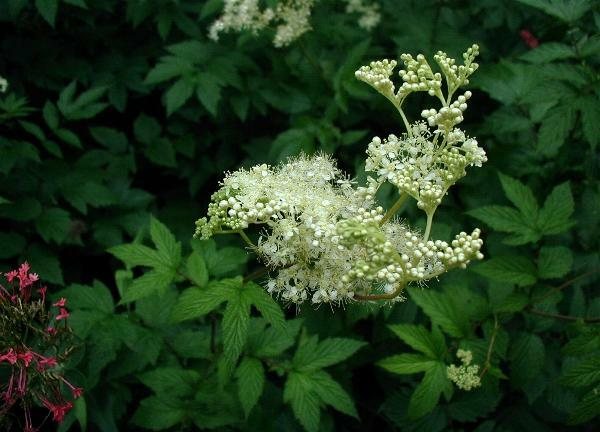
Meadowsweet is a tall, clump-forming perennial with fragrant, creamy-white flower plumes above deeply divided leaves. It suits damp borders, pond margins and informal planting, where its spreading roots have room to grow.
At a glance
- Sun
- Full sun to partial shade; afternoon shade helps in hot climates.
- Water
- Keep consistently moist to wet. It tolerates boggy ground but struggles in dry soil.
- Soil
- Humus-rich, moisture-retentive soil, including clay; tolerates a broad range of soil pH.
- Height
- 3-6 ft (0.9-1.8 m)
- Spread
- 2-3 ft (0.6-0.9 m), spreading farther over time by rhizomes
- Flowers
- Early to late summer; branching plumes of small, fragrant, creamy-white flowers
- Foliage
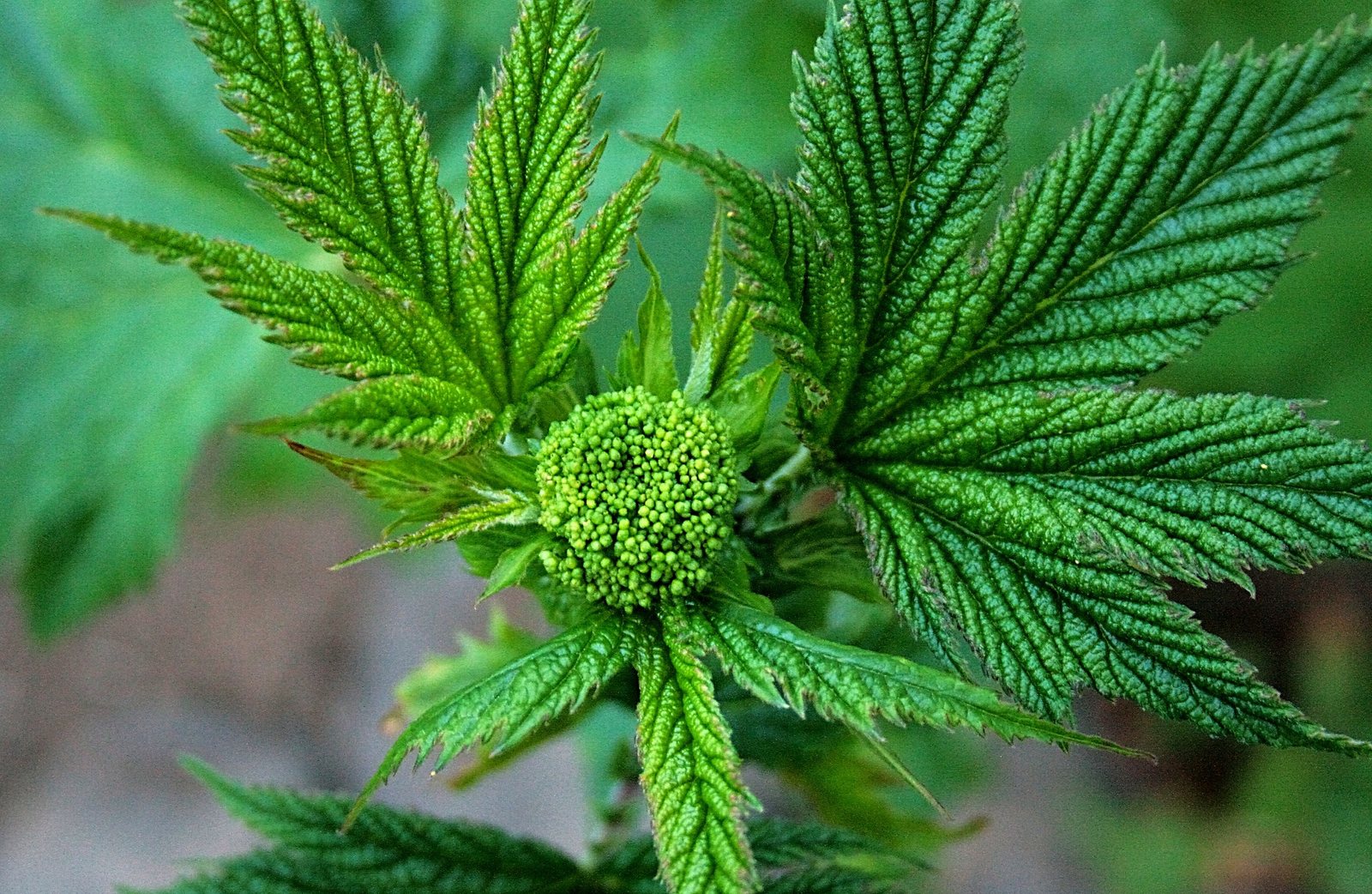
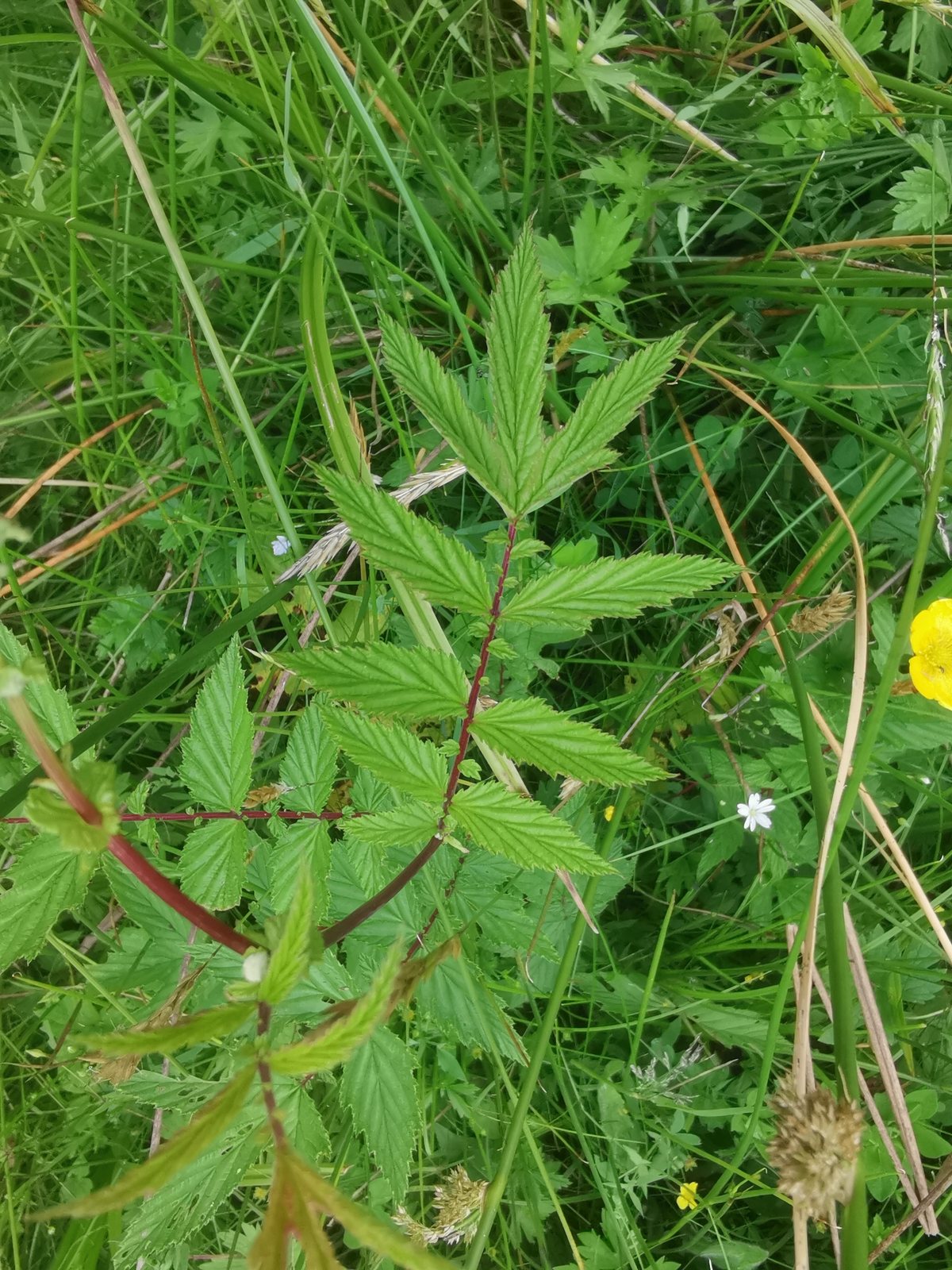
- Green, pinnate leaves with toothed leaflets, a large lobed terminal leaflet and pale, often downy undersides; foliage is aromatic when crushed.
- Growth
- Moderate to fast in moist, fertile soil
- Care needed
- Low
The year at a glance
- Pollinators
- Cold hardy
- Wildlife
- Low allergen
- Fragrant
| J | F | M | A | M | J | J | A | S | O | N | D | |
|---|---|---|---|---|---|---|---|---|---|---|---|---|
| Flowers | ||||||||||||
| Fruit | ||||||||||||
| Plant |
Northern hemisphere months. In Australia, shift them by six.
- Difficulty
- Easy
- Toughness
- Fairly tough
Will it suit your garden?
Pick your zone, country, light and whether you have pets.
Full sun is 6 or more hours of direct sun a day, part shade 3 to 6 hours, shade under 3.
How it grows
Planting day
1 ft (0.3 m)
After 1 year
2.4 ft (0.74 m)
After 2 years
4 ft (1.2 m)
After 3 years
4 ft (1.4 m)
full size
About 2 years to full size.
From a typical nursery size, at an average rate for this kind of plant. A rule of thumb, not a forecast.
Good to know
- Cats and dogs
- Mildly toxic: may upset a stomach
- Native to
- the UK
- Invasive in
- the US
- In the garden
- Spreads vigorously: plan to contain it.
- Growth rate
- Fast
Care
Jobs through the year
- WaterApr–May, Sep–Oct, every 7 days
- Water established clumps when rain is insufficient to keep soil moist; check new plants more often.
- WaterJun–Aug, every 3 days
- During dry weather, soak established clumps before roots dry out; omit if soil stays wet.
- MulchMar–Apr
- Apply compost and moisture-retaining organic mulch, leaving emerging shoots clear.
- PruneFeb–Mar
- Cut dead stems to ground level before new growth starts.
- DivideMar–Apr, Sep–Oct
- Divide congested clumps in either spring or autumn and remove encroaching rhizomes.
- DeadheadJul–Aug, every 14 days
- Remove fading flower heads before seed ripens if seedlings are unwanted.
- Water deeply during dry spells; do not let the root zone dry out.
- Apply compost and a moisture-retaining organic mulch in spring, keeping mulch away from emerging shoots.
- Avoid heavy fertiliser applications, which encourage floppy growth.
- Support tall stems early with twiggy stakes if the site is exposed.
- Divide congested clumps in spring or autumn, and remove unwanted rhizomes to limit spread.
Pruning. Cut dead stems to ground level in late winter or early spring before new growth begins. Remove faded flower heads earlier if you want to reduce self-seeding.
Through the year
- Early spring
- Cut back old stems before new shoots emerge.
- Spring
- Plant or divide clumps, then water thoroughly and mulch with compost.
- Late spring
- Install discreet supports in windy positions and remove shoots spreading beyond their allotted space.
- Summer
- Water during dry weather and check foliage for mildew or rust.
- Late summer
- Remove spent flower heads before seeds ripen if seedlings are unwanted.
- Autumn
- Divide established clumps while the soil is moist, or leave stems standing for winter cover.
In the garden
- Plant in groups beside ponds or streams, with the crowns above permanent standing water.
- Use toward the back of a damp cottage border for height and soft white flowers.
- Combine with moisture-loving grasses and perennials in naturalistic planting.
- Grow beside a path in a damp garden where the flower fragrance can be enjoyed.
Garden styles it suits: Cottage garden, Wildflower, Wildlife garden, Bog garden, Sensory garden and White garden.
Plant it with: Astilbe, Siberian iris, Globeflower, Marsh marigold, Tufted hair grass and Royal fern.
Wildlife: The pollen-rich flowers attract bees, hoverflies and other insects. Dense clumps and retained stems provide shelter for small invertebrates.
Problems to watch for
- Powdery mildew: prevent drought stress, improve air circulation and remove badly affected foliage.
- Rust: remove affected leaves and clear infected debris; avoid crowding plants.
- Scorched or wilting foliage: water deeply and mulch; move plants out of intense afternoon sun in hot climates.
- Unwanted spreading: lift out encroaching rhizomes and remove flower heads before seed ripens.
Safety
Not generally known to be poisonous to cats, dogs or horses, although species-specific veterinary safety information is limited. Leaves and flowers contain salicylate compounds; people with aspirin or salicylate sensitivity should not consume them. Concentrated preparations or large amounts may be harmful, so do not treat it as freely edible or allow pets to graze it.
Where it spreads. Spreads by rhizomes and sometimes seed, forming large colonies in wet ground. It is naturalised and considered invasive in parts of the northeastern United States, including New England; check local guidance before planting near wetlands. It is native in the United Kingdom.
Easily confused with
Dropwort (Filipendula vulgaris)
Usually shorter, with finely divided, fern-like foliage and more open flower clusters; it prefers drier, well-drained ground.
Queen of the prairie (Filipendula rubra)
Has pink rather than creamy-white flower plumes and larger, more strongly palmately lobed leaves.
Goat's beard (Aruncus dioicus)
Forms a larger, bushier clump with pointed leaflets and long, tapering flower plumes rather than meadowsweet's irregular, frothy clusters.
The name
The epithet ulmaria means elm-like, referring to the resemblance of its leaflets to elm leaves.
Propagation. Divide established clumps in spring or autumn, retaining roots and several buds on each section. Species plants can also be raised from seed sown outdoors in autumn; germination may be slow and benefits from winter chilling.
Checked against open data
- Accepted botanical name
- Filipendula ulmaria
- In the US and Canada
- Introduced in Canada, the lower 48 states and St. Pierre and Miquelon.
- Native range
- Albania, Altay, Austria, Baltic States, Belarus, Belgium, Bulgaria, Buryatiya, Central European Rus, Czechoslovakia, Denmark and East European Russia.
- Measured
- Soil pH 5.5 to 6.5. Average height 91 cm.
Sources: GBIF (CC BY 4.0), USDA PLANTS and Trefle (CC BY 4.0). The care and design notes are LandscapeGPT's own.
See it in your own yard.
Upload a photo of your yard and see it redesigned with plants that suit your climate, each checked against your zone.