Globeflower
Trollius europaeus. Family Ranunculaceae. Perennial.
Also called European globeflower, Globe flower.
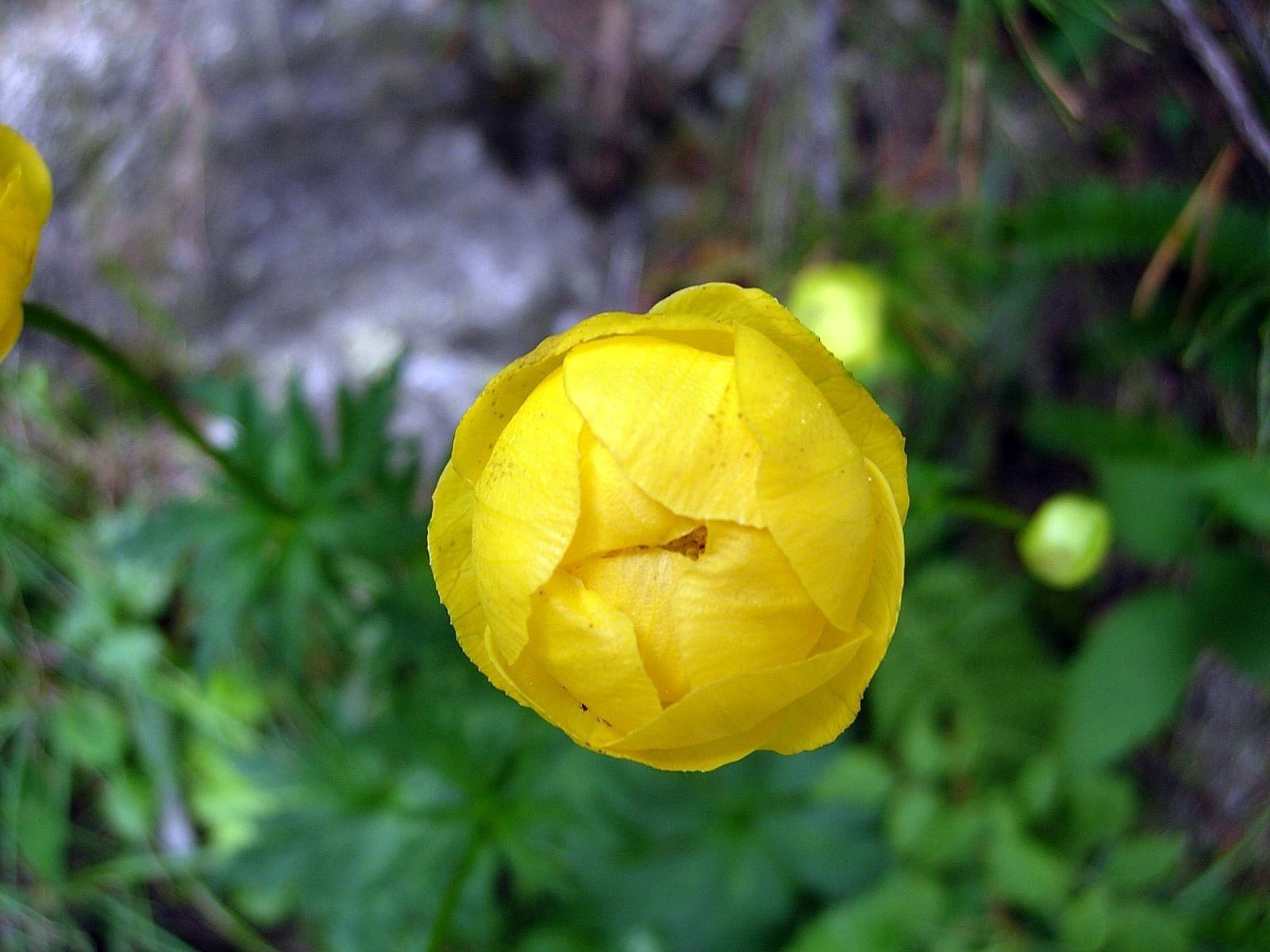
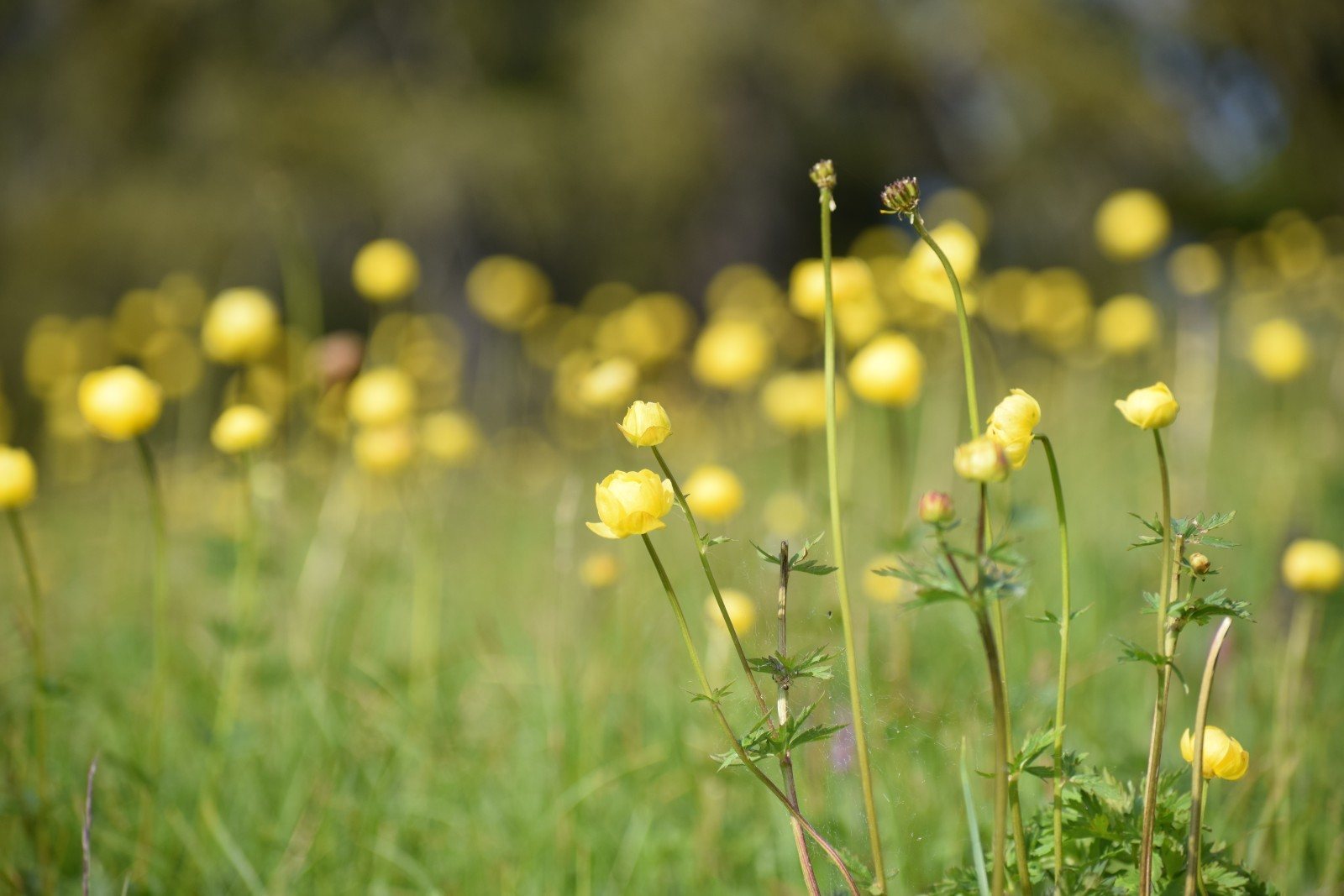
Globeflower is a clump-forming perennial grown for rounded, lemon-yellow flowers held above deeply divided leaves in late spring and early summer. It suits cool gardens with consistently moist soil, especially pond margins and damp borders, but struggles with drought and prolonged summer heat.
At a glance
- Sun
- Full sun in cool climates with reliably moist soil; partial shade where summers are warmer.
- Water
- Keep the root zone consistently moist throughout growth. Water deeply during dry spells; do not let newly planted clumps dry out.
- Soil
- Humus-rich, moisture-retentive loam or clay that stays moist without becoming stagnant. Tolerates acidic, neutral or alkaline soil.
- Height
- 2-3 ft (0.6-0.9 m)
- Spread
- 1-2 ft (0.3-0.6 m)
- Flowers
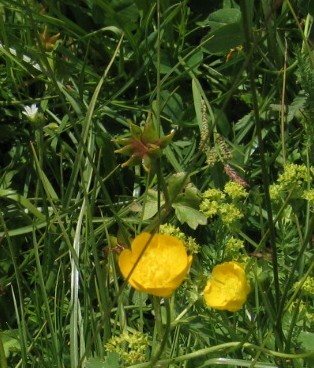
- Late spring to early summer; rounded lemon-yellow flowers with overlapping, petal-like sepals.
- Foliage
- Green, deeply lobed leaves form a basal clump, with smaller leaves along the flowering stems. Foliage dies back in winter and may decline early in hot, dry summers.
- Growth
- Moderate; forms a substantial clump over several years.
- Care needed
- Medium
The year at a glance
- Pollinators
- Deer resistant
- Cold hardy
- Low allergen
| J | F | M | A | M | J | J | A | S | O | N | D | |
|---|---|---|---|---|---|---|---|---|---|---|---|---|
| Flowers | ||||||||||||
| Plant |
Northern hemisphere months. In Australia, shift them by six.
- Difficulty
- Moderate
- Toughness
- Needs looking after
Will it suit your garden?
Pick your zone, country, light and whether you have pets.
Full sun is 6 or more hours of direct sun a day, part shade 3 to 6 hours, shade under 3.
How it grows
Planting day
1 ft (0.3 m)
After 1 year
1.5 ft (0.45 m)
After 2 years
2 ft (0.6 m)
After 3 years
2.5 ft (0.75 m)
full size
About 3 years to full size.
From a typical nursery size, at an average rate for this kind of plant. A rule of thumb, not a forecast.
Good to know
- Cats and dogs
- Toxic
- Native to
- the UK
- Growth rate
- Moderate
Care
Jobs through the year
- WaterMar–May, Sep–Oct, every 7 days
- Water established clumps during dry weather to keep roots consistently moist; new plants need closer attention.
- WaterJun–Aug, every 3 days
- During dry spells, water deeply before the root zone dries; skip watering when soil is already moist.
- MulchMar–Apr
- Spread compost or well-rotted organic matter over moist soil, keeping the crown clear.
- PruneFeb
- Cut remaining dead stems and leaves to ground level before new growth.
- DeadheadJun–Jul
- Remove faded flower stems at the base unless saving seed.
- DivideMar, Sep
- Divide crowded clumps every three to five years and replant promptly into moist soil.
- ProtectMar–Apr
- Protect emerging shoots from slugs using hand removal or approved iron-phosphate bait.
- Water during dry weather so the root zone never dries out completely.
- Apply compost or well-rotted organic matter in spring.
- Mulch after watering to conserve moisture, keeping mulch clear of the crown.
- Divide crowded clumps in early spring or early autumn, usually every three to five years.
- In warm regions, provide afternoon shade and avoid sites beside heat-reflecting paving.
Pruning. Remove faded flower stems at their base unless you want seed. Cut dead foliage back to ground level in autumn or late winter; leave healthy green leaves intact.
Through the year
- Late winter
- Clear away dead stems and foliage before new shoots emerge.
- Early spring
- Plant or divide clumps, water thoroughly, and protect emerging shoots from slugs.
- Spring
- Top-dress with compost and mulch the moist soil.
- Late spring
- Check soil moisture as flower stems develop, especially during dry weather.
- Early summer
- Remove spent flower stems, or leave a few to ripen if collecting seed.
- Early autumn
- Divide established clumps if needed, allowing time for roots to establish before winter.
In the garden
- Plant in groups along a pond margin, above the permanently submerged zone.
- Combine with ferns and hostas in a damp, lightly shaded border for contrasting leaf shapes.
- Use among moisture-loving irises and astilbes to extend flowering from spring into summer.
- Repeat small groups through a cool cottage border for rounded yellow flowers above soft green foliage.
Garden styles it suits: Cottage garden, English country, Bog garden, Woodland, Romantic rose garden and New perennial (prairie).
Plant it with: Siberian iris, Astilbe, Hosta, Lady fern, Candelabra primrose and Meadowsweet.
Wildlife: Flowers support small pollinating insects, including flies; specialist globeflower flies are important pollinators in parts of its native European range. Its tightly enclosed flowers are less accessible than open, daisy-like blooms.
Problems to watch for
- Slugs and snails can eat emerging shoots; inspect at dusk, remove hiding places nearby, and use approved iron-phosphate bait if needed.
- Dry soil causes wilting, scorched leaves and early dormancy; water deeply and replenish mulch.
- Prolonged summer heat can cause poor flowering and early dieback; provide afternoon shade, though the plant may remain unsuitable for hot climates.
- Powdery mildew may affect crowded or stressed plants; improve spacing, keep roots moist and remove badly affected foliage.
Safety
All parts, particularly fresh leaves and stems, contain irritant compounds and should be treated as toxic to people, cats, dogs and horses if eaten. Chewing can cause mouth irritation, drooling, vomiting or diarrhoea; larger amounts may cause serious illness. Sap can irritate skin, so wear gloves when cutting or dividing.
Easily confused with
Chinese globeflower (Trollius chinensis)
Usually has more open, orange to golden-orange flowers with conspicuous upright, narrow petals projecting from the centre; European globeflower has a more tightly closed yellow globe.
Marsh marigold (Caltha palustris)
Has open, shiny yellow flowers and broad, rounded or kidney-shaped leaves rather than deeply divided foliage.
Meadow buttercup (Ranunculus acris)
Has much smaller, open, five-petalled yellow flowers rather than enclosed globes.
The name
Globeflower refers to the rounded flowers, while the species name europaeus means European.
Propagation. Divide clumps in early spring or early autumn and replant promptly into moist soil. Seed is slow and uneven to germinate and usually benefits from a period of cold; sow fresh seed in pots outdoors and allow at least a year before discarding an apparently empty pot.
Checked against open data
- Accepted botanical name
- Trollius europaeus
- Native range
- Albania, Austria, Baltic States, Belarus, Bulgaria, Central European Rus, Czechoslovakia, Denmark, East European Russia, Finland, France and Germany.
- Measured
- Soil pH 7 to 7.5. Average height 30 cm.
Sources: GBIF (CC BY 4.0) and Trefle (CC BY 4.0). The care and design notes are LandscapeGPT's own.
See it in your own yard.
Upload a photo of your yard and see it redesigned with plants that suit your climate, each checked against your zone.