Common blanketflower
Gaillardia aristata. Family Asteraceae. Perennial.
Also called Perennial blanketflower, Great blanketflower.
Common blanketflower (Gaillardia aristata) is a usually short-lived perennial native to western and central North America. Gardeners grow it for its yellow or red-and-yellow daisy-like flowers, long summer display and ability to cope with dry, sunny ground once established.
At a glance
- Sun
- Full sun; flowering and stem strength decline in shade.
- Water
- Water regularly during establishment, then mainly during prolonged dry spells. Avoid persistently damp soil, especially in winter.
- Soil
- Well-drained sandy, gravelly or loamy soil, preferably of low to moderate fertility. Poor drainage is a greater problem than poor soil.
- Height
- 1-3 ft (0.3-0.9 m)
- Spread
- 1-2 ft (0.3-0.6 m)
- Flowers
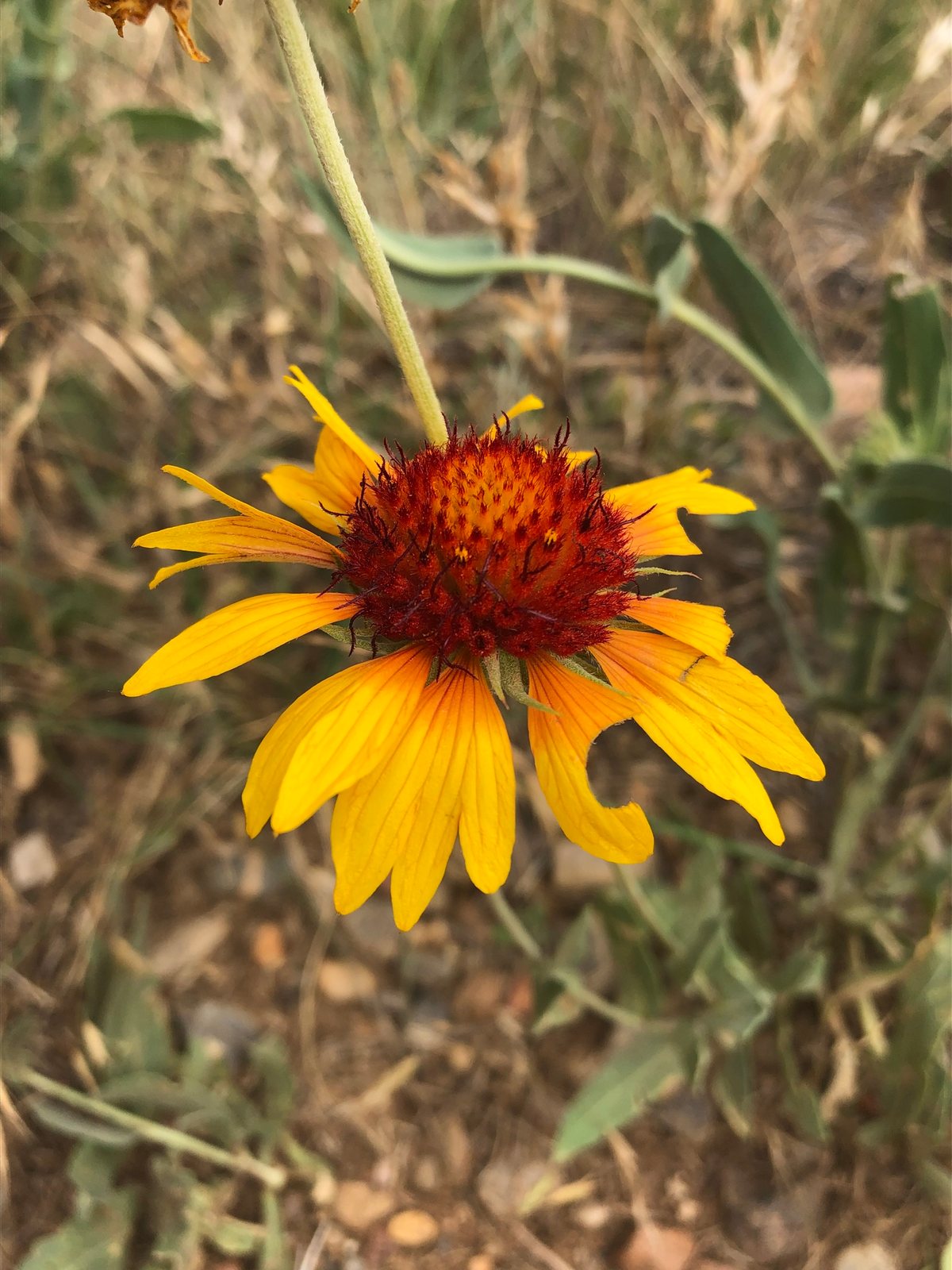
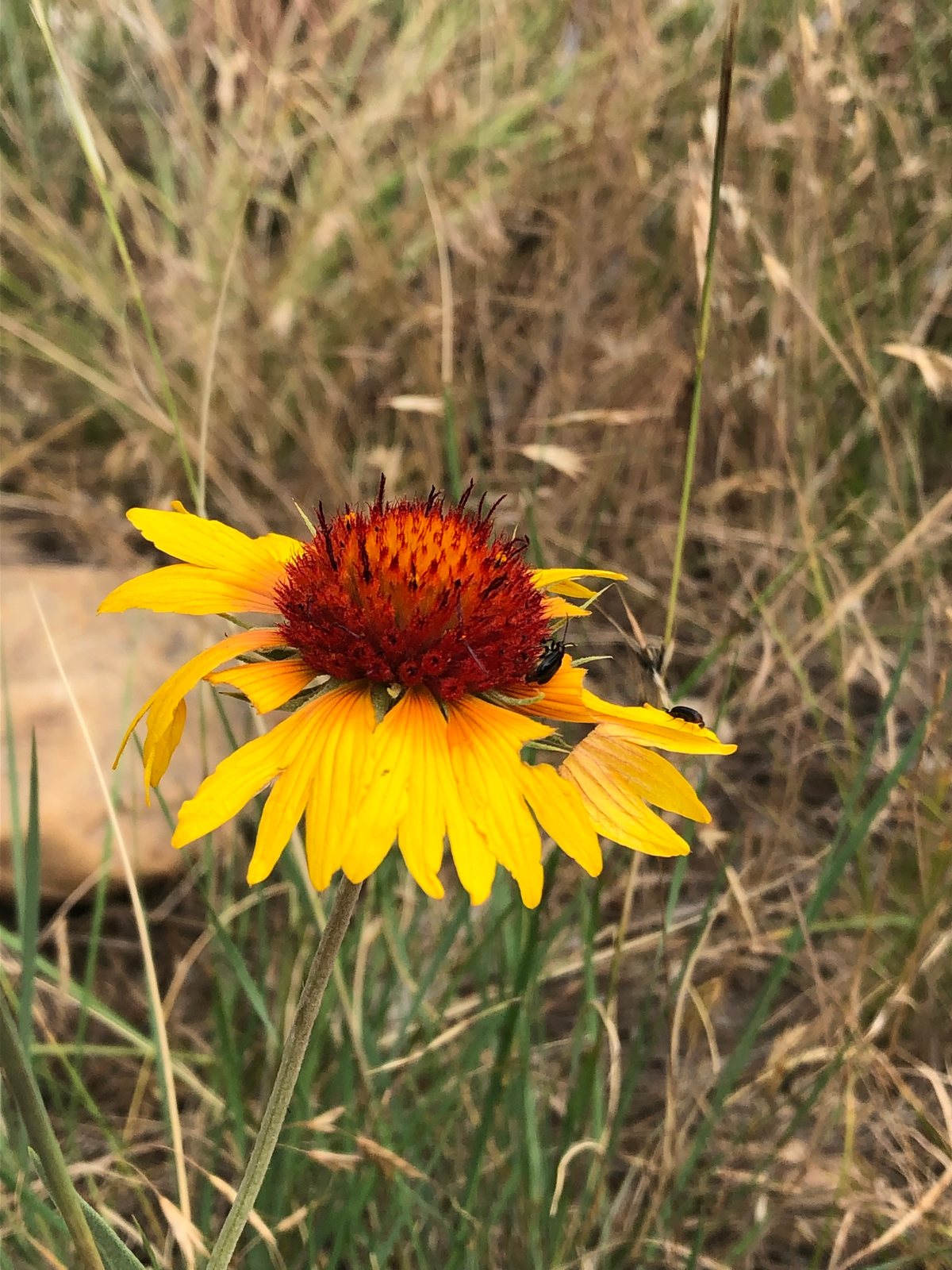
- Late spring or early summer into early autumn, especially with deadheading. Flowers are yellow, often with red or reddish-orange bases around a reddish-brown central disc.
- Foliage
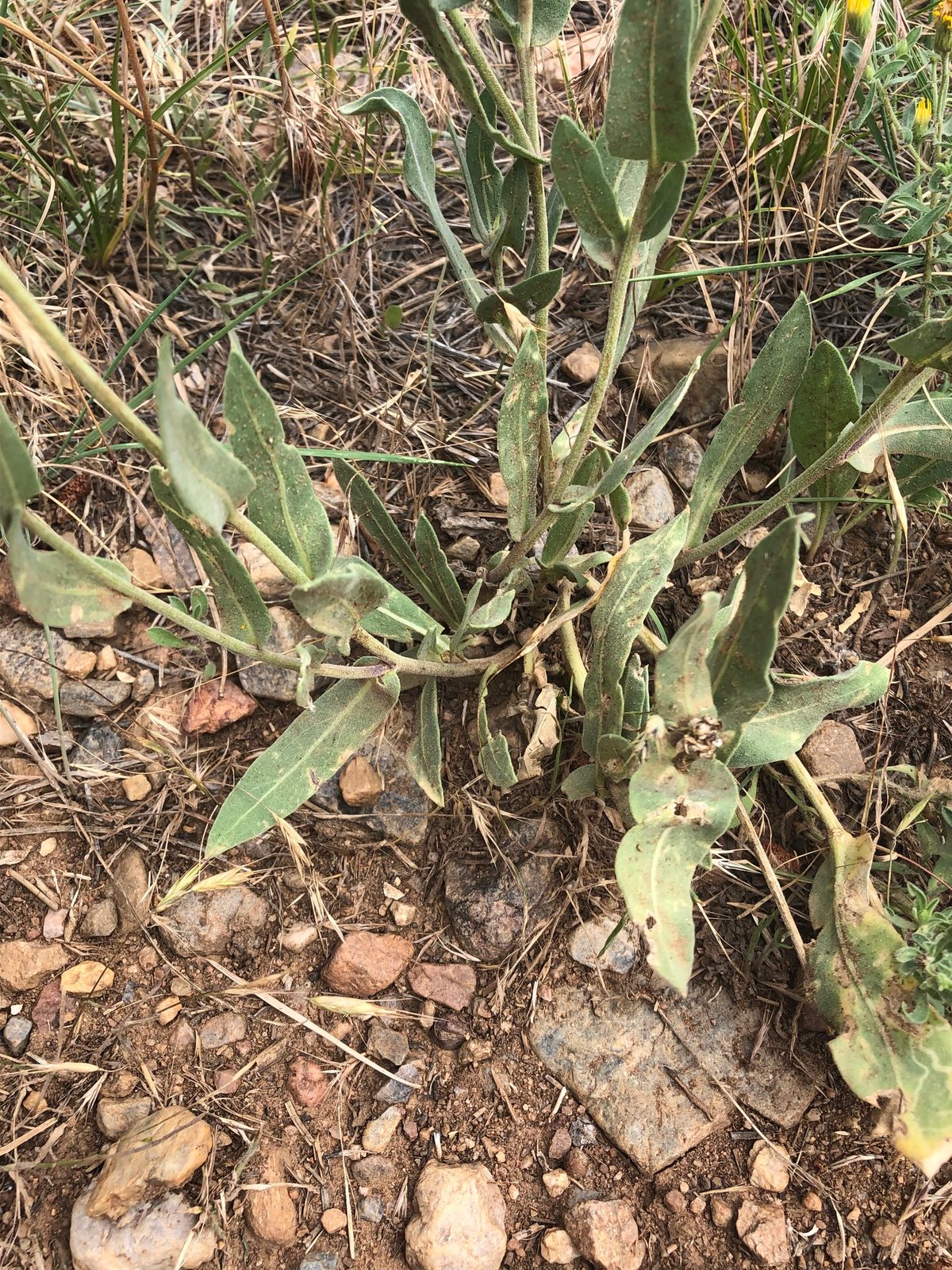
- Hairy grey-green to green leaves, mostly lance-shaped, with smooth, toothed or shallowly lobed edges.
- Growth
- Moderate to fast; seed-grown plants may flower in their first year if started early.
- Care needed
- Low
The year at a glance
- Pollinators
- Drought tolerant
- Cold hardy
- Heat tolerant
- Wildlife
- Low allergen
| J | F | M | A | M | J | J | A | S | O | N | D | |
|---|---|---|---|---|---|---|---|---|---|---|---|---|
| Flowers | ||||||||||||
| Fruit | ||||||||||||
| Plant |
Northern hemisphere months. In Australia, shift them by six.
- Difficulty
- Easy
- Toughness
- Fairly tough
Will it suit your garden?
Pick your zone, country, light and whether you have pets.
Full sun is 6 or more hours of direct sun a day, part shade 3 to 6 hours, shade under 3.
How it grows
Planting day
1 ft (0.3 m)
After 1 year
1.4 ft (0.42 m)
After 2 years
1.8 ft (0.55 m)
After 3 years
2 ft (0.6 m)
full size
About 2 years to full size.
From a typical nursery size, at an average rate for this kind of plant. A rule of thumb, not a forecast.
Good to know
- Cats and dogs
- Safe
- Native to
- the US and Canada
- Growth rate
- Fast
Care
Jobs through the year
- WaterApr–May, Sep, every 21 days
- Water established plants only if prolonged dry weather dries the root zone; new plants need more frequent watering.
- WaterJun–Aug, every 14 days
- Water established plants deeply only during extended dry spells; avoid persistently damp soil.
- PruneFeb–Mar
- Cut dead stems just above basal leaves, preserving healthy green growth.
- DivideMar–Apr
- Divide healthy clumps every two or three years if flowering declines; water divisions until rooted.
- MulchApr
- Use a light gravel mulch if needed, keeping the crown exposed.
- DeadheadJun–Sep, every 7 days
- Remove spent flower stems for repeat bloom, leaving selected seedheads for birds.
- ProtectOct–Nov
- Clear wet fallen leaves from crowns and prevent winter waterlogging.
- Plant in full sun with the crown at soil level, not buried.
- Water new plants when the root zone begins to dry; reduce watering once established.
- Avoid rich manure and routine high-nitrogen feeding, which encourage floppy growth.
- Keep thick organic mulch away from the crown; gravel mulch suits damp-winter gardens.
- Divide healthy clumps in spring every two or three years if flowering declines.
Pruning. Remove spent flower stems regularly to encourage repeat flowering, or leave a few seedheads for birds and self-seeding. Cut dead stems back to just above the basal leaves in late winter or early spring, leaving any healthy green growth intact.
Through the year
- Early spring
- Remove dead stems and check that winter moisture has not rotted the crown.
- Spring
- Plant or divide clumps once the soil is workable; water divisions until rooted.
- Spring
- Sow seed in pots or directly into prepared, well-drained ground as conditions warm.
- Early summer
- Check new plants for drying out and support any stems leaning into paths.
- Summer
- Deadhead regularly and water established plants only during extended dry weather.
- Autumn
- Leave selected seedheads for birds, and clear wet fallen leaves away from the crown.
In the garden
- Plant in sunny gravel borders with yarrow and catmint for a long-flowering, drought-tolerant display.
- Mix through prairie-style planting with little bluestem and purple coneflower.
- Use near the front or middle of informal borders for warm yellow and red colour.
- Plant in sunny pollinator beds where the open flower heads are easy for insects to reach.
Garden styles it suits: Native meadow, Pollinator garden, Dry gravel garden, Desert / xeriscape, Hot border and Midwest prairie.
Plant it with: Yarrow, Little bluestem, Purple coneflower, Catmint, Butterfly weed and Lanceleaf coreopsis.
Wildlife: Flowers attract bees and butterflies, and seedheads can feed seed-eating birds. It is a useful native flower for wildlife planting within its North American range.
Problems to watch for
- Crown or root rot in wet soil: improve drainage, keep mulch off the crown and replace badly affected plants in a drier position.
- Powdery mildew: provide full sun, space plants for airflow and remove badly affected foliage.
- Aster yellows, causing distorted growth and green, malformed flowers: remove and discard affected plants; there is no cure.
- Floppy stems and weak flowering: reduce feeding and watering, and move plants out of shade.
Safety
Not known to be toxic to cats, dogs, horses or people. The hairs and plant material can cause contact dermatitis in sensitive people, so wear gloves if handling it irritates your skin; it is not an edible plant.
Easily confused with
Garden blanketflower (Gaillardia × grandiflora)
This hybrid between G. aristata and G. pulchella includes many familiar garden selections. Its features overlap with both parents, so appearance alone is not always enough; check the botanical name on the label.
Black-eyed Susan (Rudbeckia hirta)
Usually has yellow rays surrounding a prominent dark brown, cone-shaped centre. Blanketflower has a more rounded reddish-brown disc and ray tips that are distinctly toothed.
The name
Gaillardia honours the French botanical patron Gaillard de Charentonneau, while aristata means bristly or awned, referring to its bristle-like structures.
Propagation. Sow seed in spring, lightly covering it and keeping it moist until germination. Divide vigorous clumps in spring; seedlings can vary in flower colour, and named selections may not come true from seed.
Checked against open data
- Accepted botanical name
- Gaillardia aristata
- In the US and Canada
- Native in Canada and the lower 48 states.
- Native range
- Alberta, British Columbia, Colorado, Connecticut, Idaho, Manitoba, Masachusettes, Minnesota, Montana, New Hampshire, North Dakota and Northwest Territorie.
- Measured
- Soil pH 5.5 to 7.9. Average height 37 cm.
Sources: GBIF (CC BY 4.0), USDA PLANTS and Trefle (CC BY 4.0). The care and design notes are LandscapeGPT's own.
See it in your own yard.
Upload a photo of your yard and see it redesigned with plants that suit your climate, each checked against your zone.