Common blue violet
Viola sororia. Family Violaceae. Perennial.
Also called Common violet, Woolly blue violet, Wood violet.
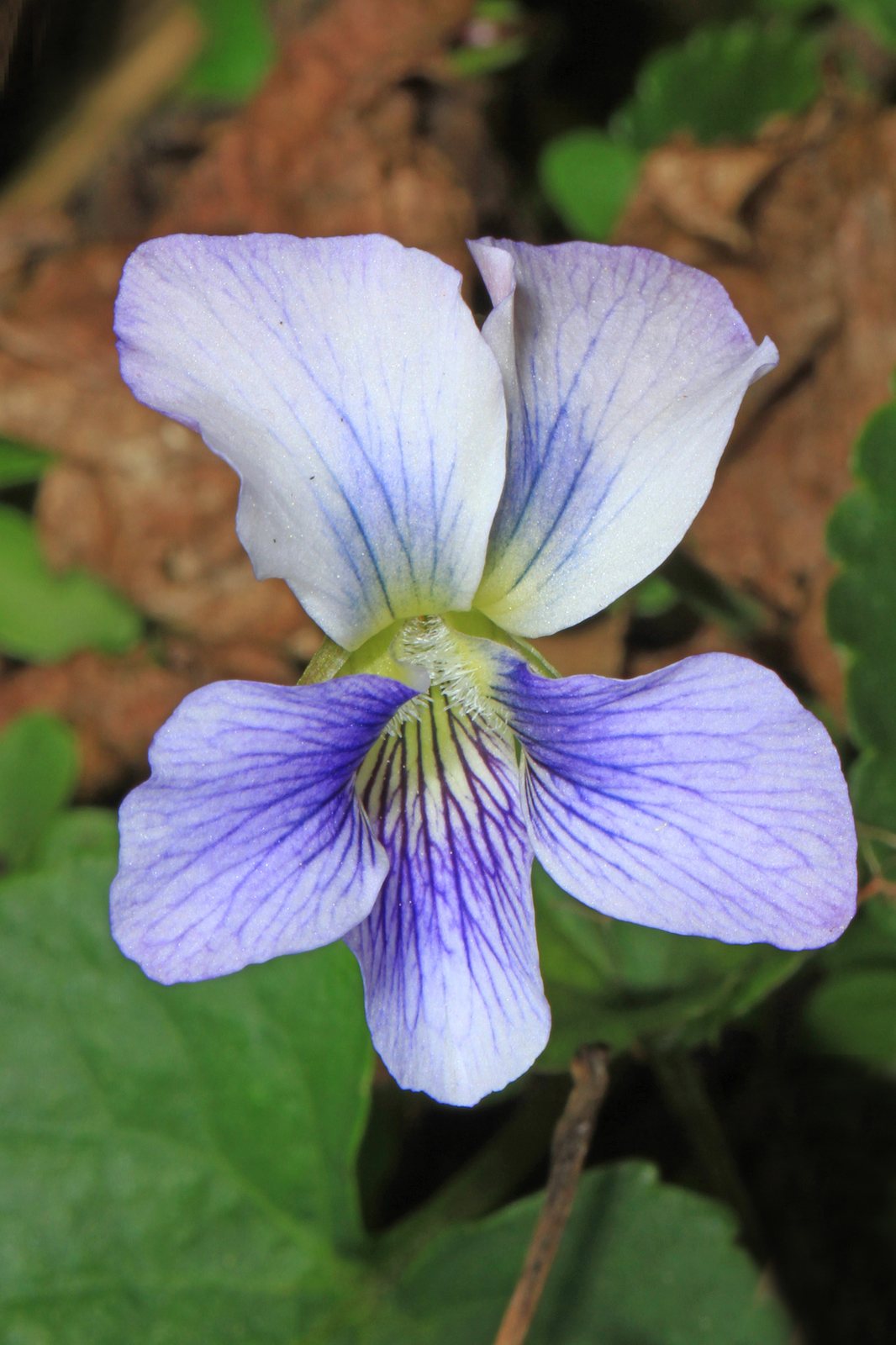
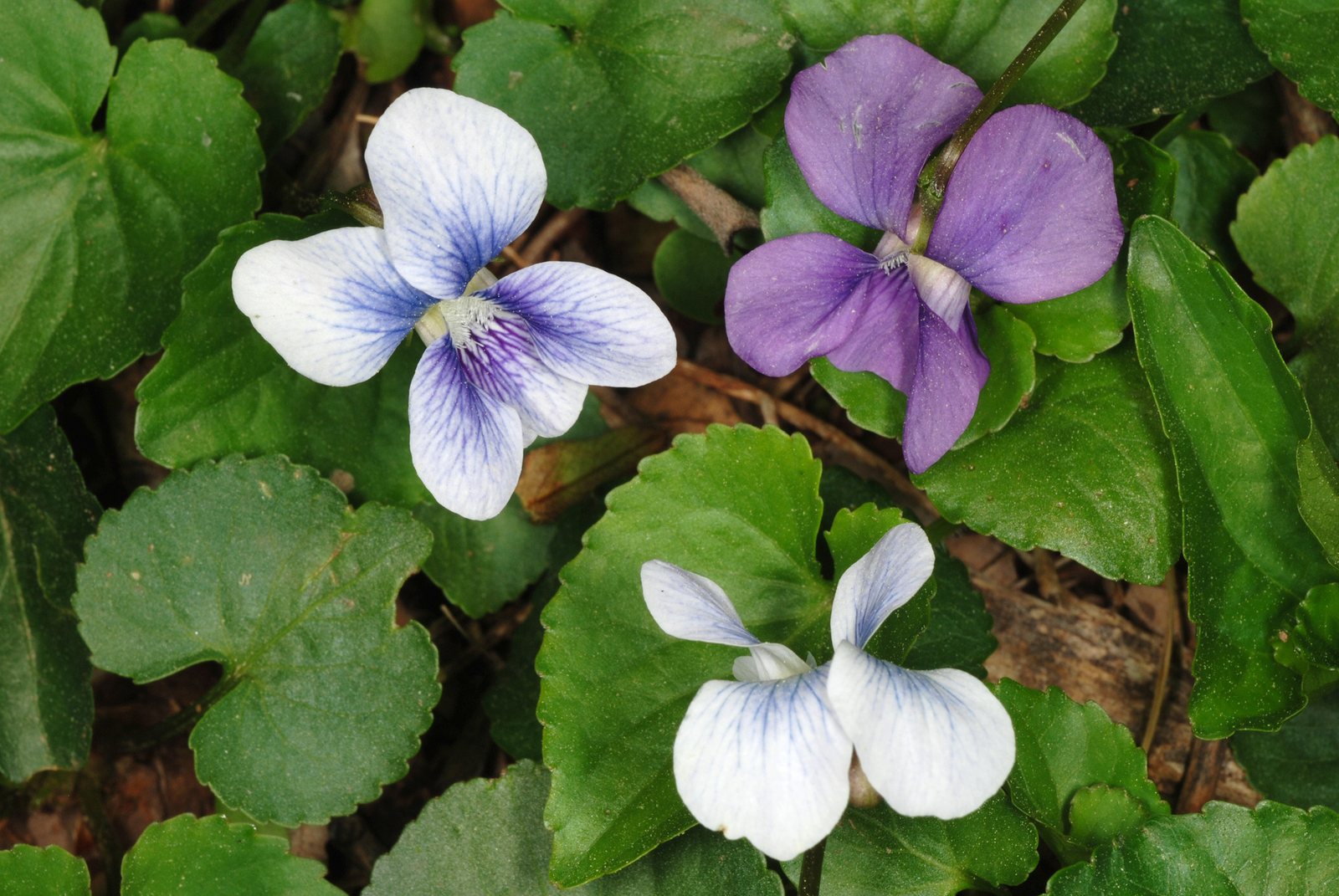
Common blue violet is a low-growing perennial native to eastern and central North America, with heart-shaped leaves and blue-violet spring flowers. It makes an informal groundcover beneath deciduous trees and along woodland edges, but spreads readily into lawns and neighbouring beds.
At a glance
- Sun
- Partial shade is ideal; tolerates full sun where the soil stays moist and deeper shade with fewer flowers.
- Water
- Moderate; keep newly planted violets moist and water established plants during prolonged dry spells.
- Soil
- Moist, humus-rich, well-drained soil; tolerates clay and a fairly wide pH range, but not prolonged waterlogging.
- Height
- 0.3-0.7 ft (0.1-0.2 m)
- Spread
- 0.5-1 ft (0.15-0.3 m) per clump, eventually forming wider colonies
- Flowers
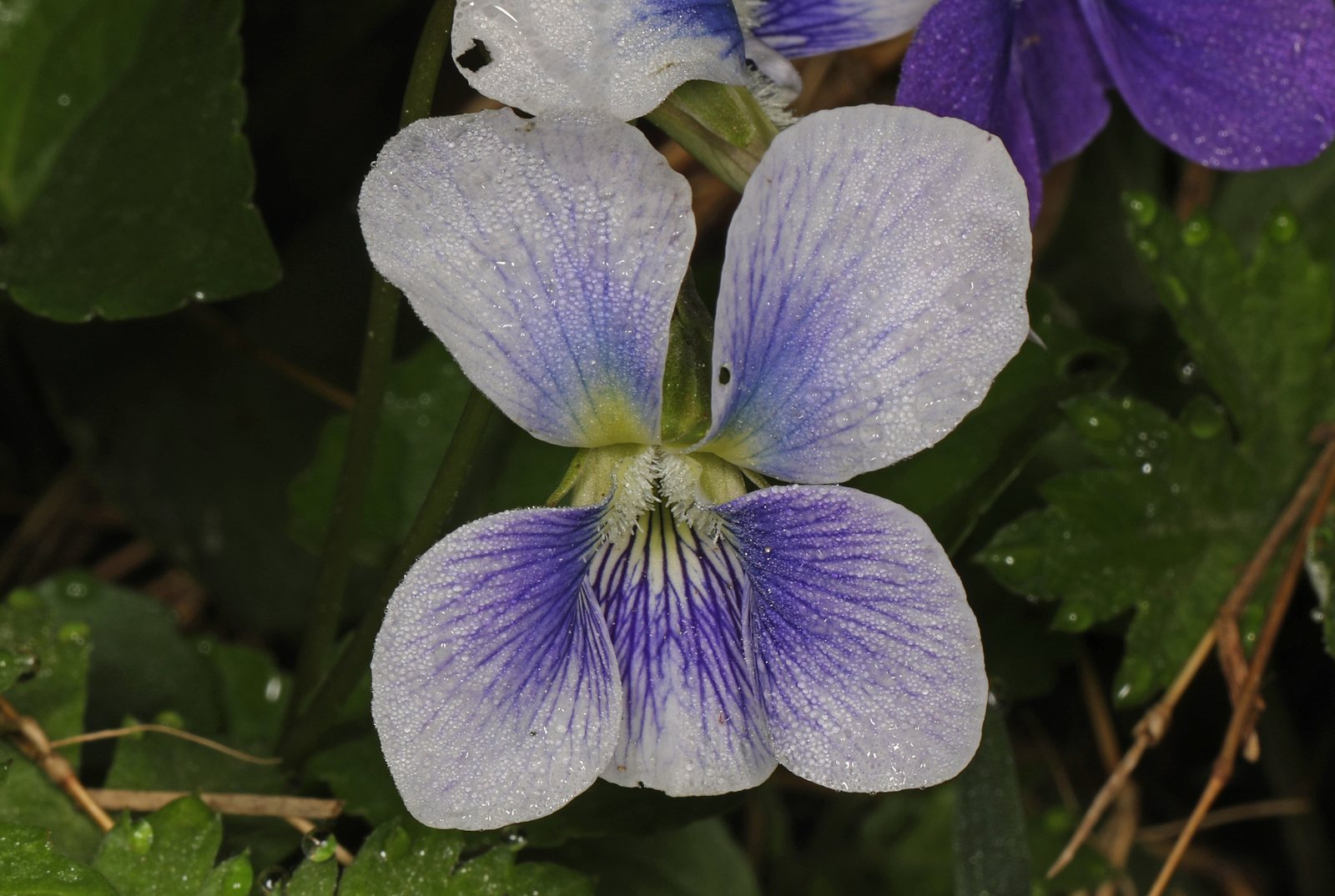
- Spring to early summer; usually blue-violet with a pale throat, occasionally white or white with violet markings.
- Foliage
- Basal clumps of green, heart-shaped leaves with scalloped edges; usually deciduous, sometimes retaining leaves through mild winters.
- Growth
- Moderate per clump; colonies can expand quickly through self-seeding.
- Care needed
- Low
The year at a glance
- Pollinators
- Cold hardy
- Wildlife
- Low allergen
| J | F | M | A | M | J | J | A | S | O | N | D | |
|---|---|---|---|---|---|---|---|---|---|---|---|---|
| Flowers | ||||||||||||
| Plant |
Northern hemisphere months. In Australia, shift them by six.
- Difficulty
- Easy
- Toughness
- Very tough
Will it suit your garden?
Pick your zone, country, light and whether you have pets.
Full sun is 6 or more hours of direct sun a day, part shade 3 to 6 hours, shade under 3.
How it grows
Planting day
0.5 ft (0.15 m)
full size
About 3 years to full size.
From a typical nursery size, at an average rate for this kind of plant. A rule of thumb, not a forecast.
Good to know
- Cats and dogs
- Safe
- Native to
- the US and Canada
- In the garden
- Spreads vigorously: plan to contain it.
- Growth rate
- Moderate
Care
Jobs through the year
- WaterApr–May, Sep–Oct, every 14 days
- Water established colonies only during extended dry spells; keep new plants moist.
- WaterJun–Aug, every 7 days
- Water established plants during prolonged drought; check young plants more frequently.
- MulchMar–Apr
- Add a thin layer of compost or leaf mould, leaving crowns uncovered.
- DivideMar–Apr, Sep–Oct
- Divide crowded clumps or lift unwanted crowns and seedlings to control spread.
- PruneMar
- Remove dead foliage without disturbing emerging leaves.
- ProtectNov
- Retain a light leaf covering but remove thick, matted leaves from crowns.
- Water during the first growing season whenever the soil begins to dry.
- Apply a thin layer of leaf mould or compost in spring; routine fertiliser is rarely needed.
- Mulch lightly with shredded leaves, keeping the crowns uncovered.
- Lift unwanted seedlings early, before their roots become established.
- Divide crowded clumps in spring or autumn and replant at their original depth.
Pruning. No regular pruning is needed. Remove damaged leaves as required; cutting off the showy flowers alone will not prevent seeding because small, closed, self-fertile flowers also form near ground level.
Through the year
- Early spring
- Remove dead foliage and add a thin dressing of leaf mould or compost.
- Spring
- Plant or divide clumps and water them thoroughly.
- Late spring
- After flowering, lift plants that are spreading beyond their allotted space.
- Summer
- Water during extended drought and check for inconspicuous seed capsules if you want to limit spread.
- Autumn
- Divide established clumps or transplant seedlings while the soil is moist.
- Late autumn
- Leave a light covering of fallen leaves, but remove thick, matted layers that smother the crowns.
In the garden
- Plant beneath deciduous trees for spring flowers before the canopy closes.
- Use along informal shaded paths, where its low foliage softens the edges.
- Combine with woodland phlox, foamflower and ferns for a layered woodland planting.
- Allow it to naturalise in an informal lawn where spring flowers matter more than a uniform grass surface.
Garden styles it suits: Woodland, Wildlife garden, Cottage garden, Wildflower, Rewilded and Low-maintenance.
Plant it with: Woodland phlox, Foamflower, Wild geranium, Christmas fern, Eastern red columbine and Snowdrops.
Wildlife: A host plant for several North American fritillary butterflies, whose caterpillars eat violet leaves. Open flowers provide pollen and nectar for visiting insects, including specialist violet bees in its native range; ants help disperse the seeds.
Problems to watch for
- Unwanted spread: dig out whole crowns and short rhizomes, then remove seedlings regularly; deadheading alone is not enough.
- Slugs and snails: protect young foliage by removing nearby hiding places and using iron-based slug bait according to its label if necessary.
- Leaf spots or mildew: remove badly affected leaves, improve airflow and water the soil rather than the foliage.
- Scorched or collapsing foliage in hot, dry weather: water deeply and provide afternoon shade; plants may become dormant during drought.
Safety
Not known to be toxic to people, cats, dogs or horses. The flowers and young leaves are edible when correctly identified and free of pesticide residues, although eating large quantities of plant material may cause digestive upset.
Where it spreads. Can spread aggressively by seed and short rhizomes in moist lawns and garden beds in the United States and southern Canada, including within its native range. It may also become a persistent self-seeder in suitable UK and Australian gardens; garden spread does not by itself indicate an official invasive listing.
Easily confused with
Sweet violet (Viola odorata)
Usually has strongly scented flowers and creeping surface runners; common blue violet has little or no fragrance and spreads from short rhizomes rather than long runners.
Common dog violet (Viola riviniana)
Has leafy flowering stems and a conspicuous pale flower spur; common blue violet carries its flowers on leafless stalks arising from the basal clump.
Bird's-foot violet (Viola pedata)
Has deeply divided leaves resembling a bird's foot, rather than the broad, heart-shaped leaves of common blue violet.
The name
The botanical epithet sororia comes from Latin meaning 'sisterly'.
Propagation. Divide clumps in spring or autumn, or move young self-sown seedlings. Sow fresh seed outdoors when ripe; stored seed often needs a period of moist cold before it germinates.
Checked against open data
- Accepted botanical name
- Viola sororia
- In the US and Canada
- Native in Canada and the lower 48 states.
- Native range
- Alabama, Arkansas, British Columbia, Colorado, Connecticut, Delaware, District of Columbia, Florida, Georgia, Illinois, Indiana and Iowa.
- Measured
- Average height 14 cm.
Sources: GBIF (CC BY 4.0), USDA PLANTS and Trefle (CC BY 4.0). The care and design notes are LandscapeGPT's own.
See it in your own yard.
Upload a photo of your yard and see it redesigned with plants that suit your climate, each checked against your zone.