Common everlasting
Chrysocephalum apiculatum. Family Asteraceae. Perennial.
Also called Yellow buttons, Common yellow buttons, Helichrysum apiculatum.
This Australian perennial forms spreading clumps of silvery foliage topped with clusters of small yellow button flowers. Gardeners grow it for long-lasting colour in sunny borders, gravel gardens and containers. It tolerates light frost, but in colder parts of the United States, Canada and the United Kingdom it is usually grown as an annual or overwintered under cover.
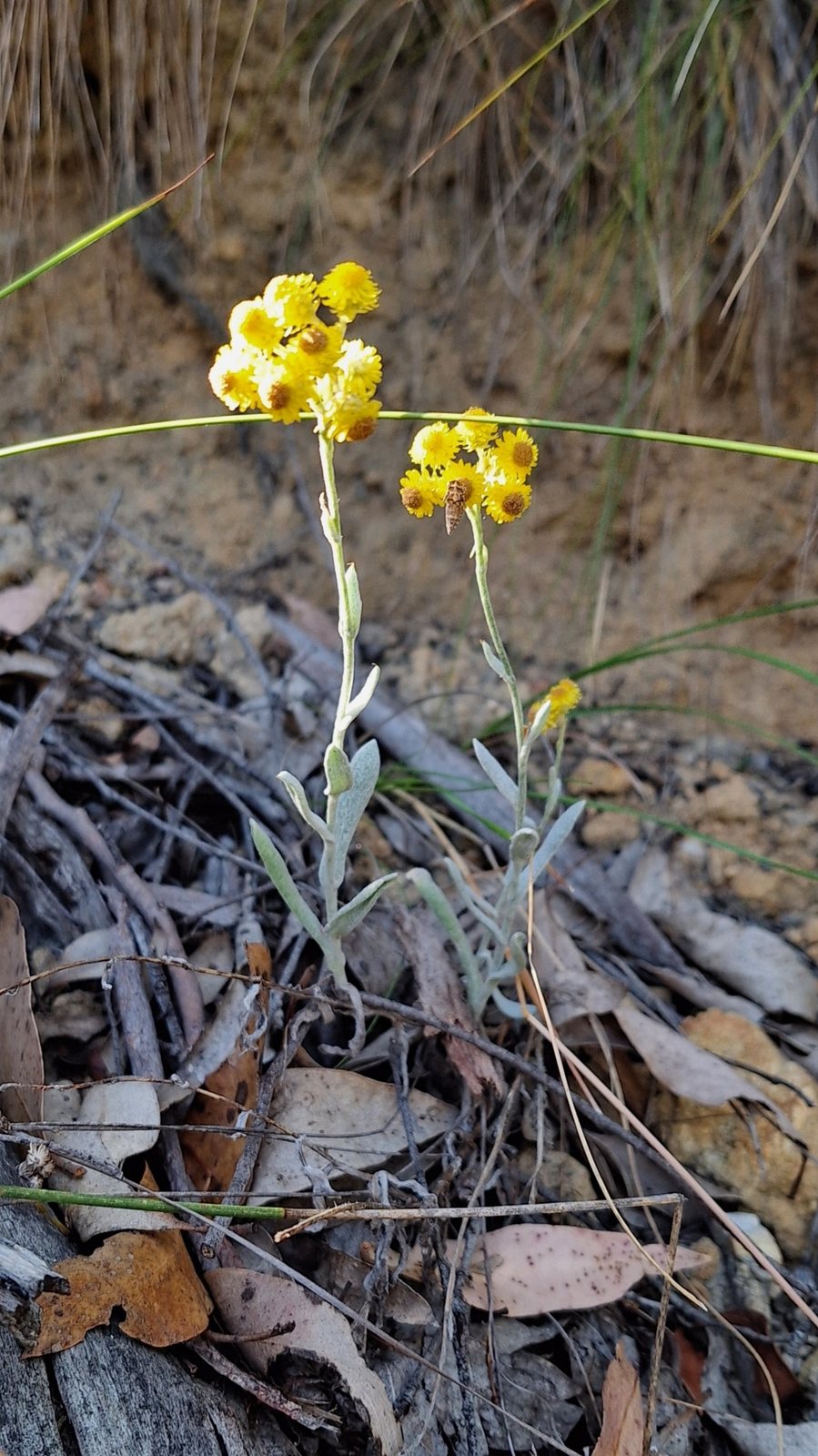
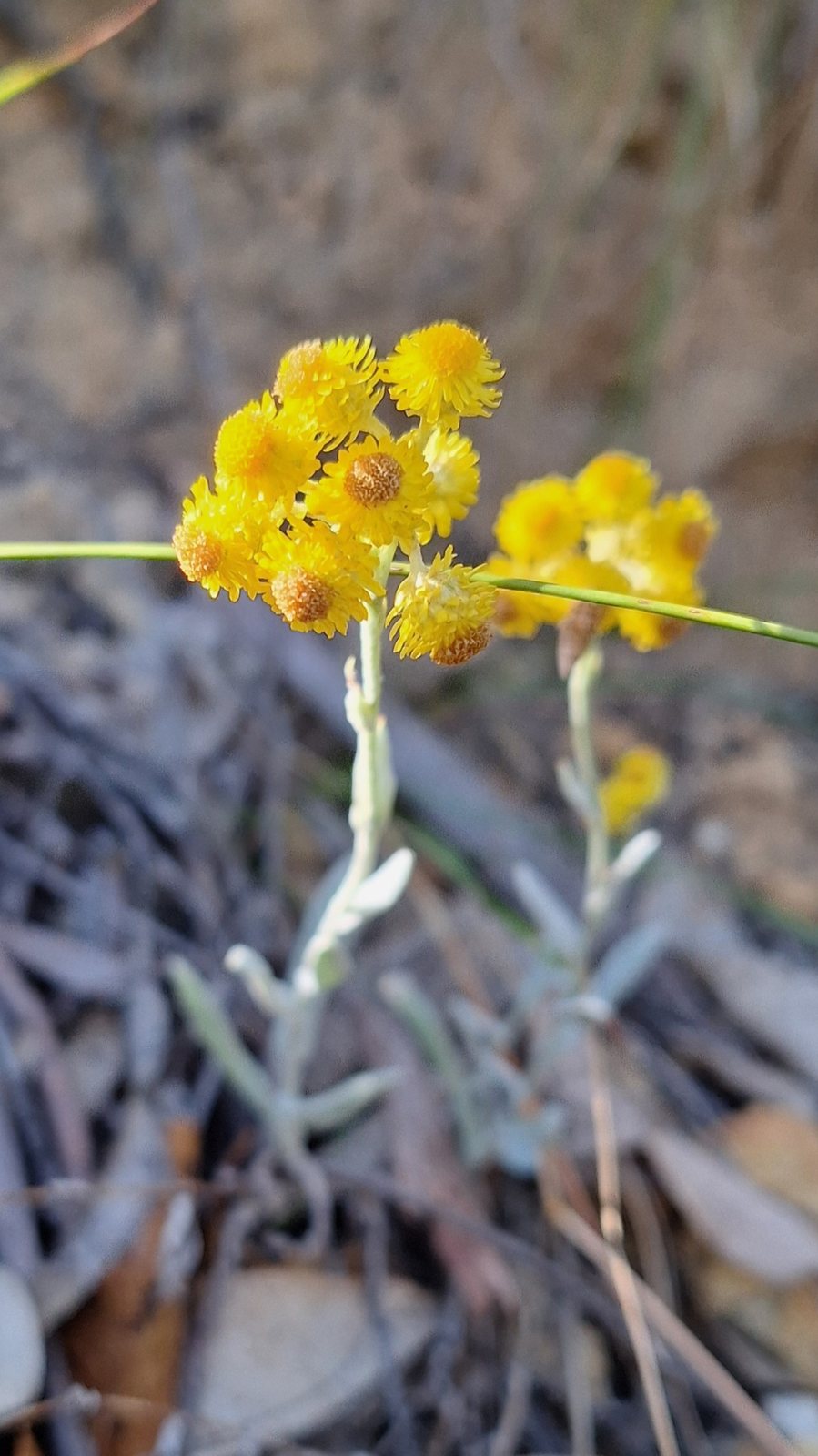
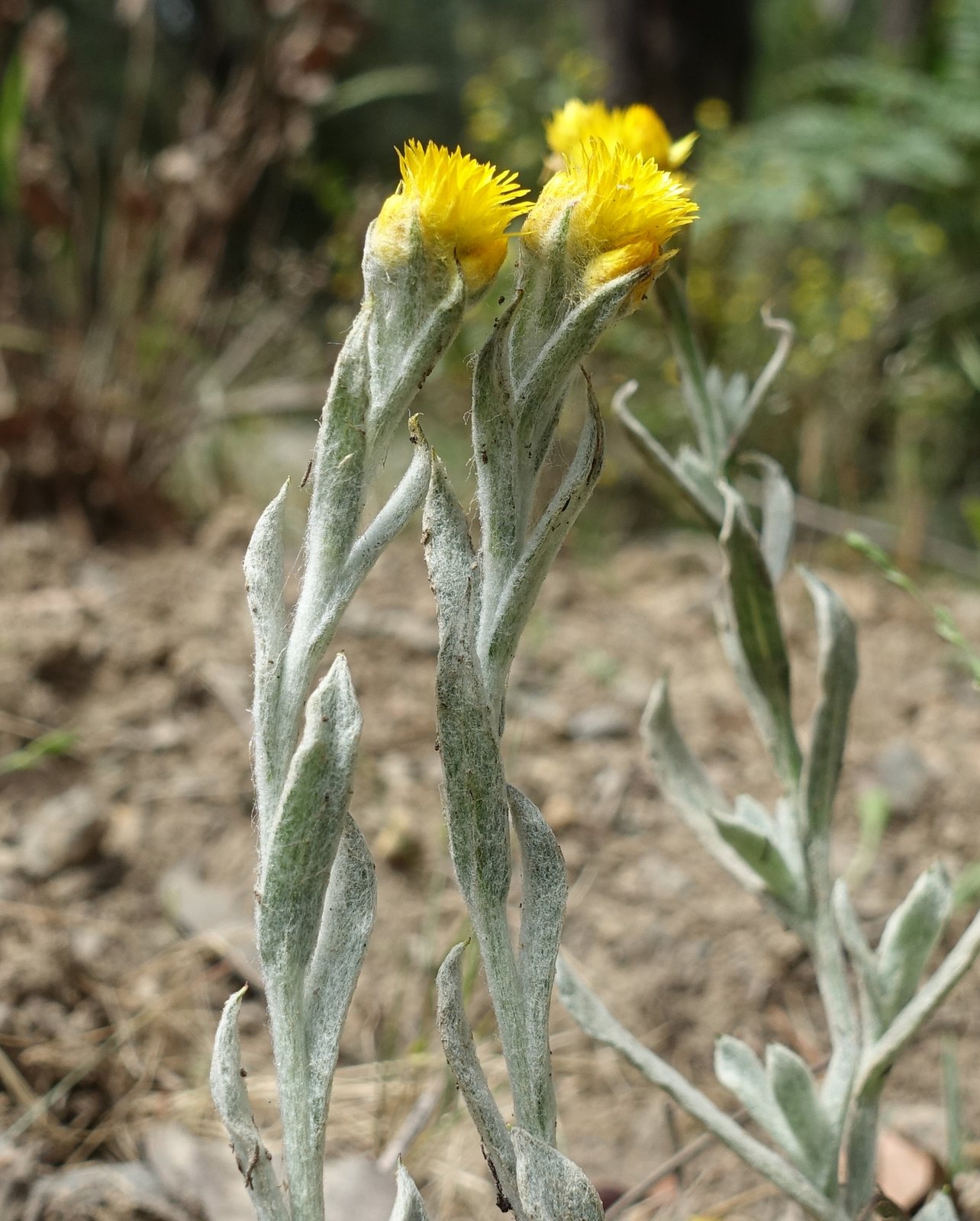
At a glance
- Sun
- Full sun; tolerates light shade, but flowers less and may grow loosely.
- Water
- Water regularly while establishing, then during prolonged dry spells. Let the soil dry partly between waterings; avoid persistently wet roots.
- Soil
- Well-drained sandy, gravelly or loamy soil. Tolerates poor soil, but struggles in wet clay, especially in winter.
- Height
- 0.5-2 ft (0.15-0.6 m)
- Spread
- 1-3 ft (0.3-0.9 m), depending on the form
- Flowers
- Clusters of golden-yellow button flowers from spring into autumn; flowering can continue through much of the year in mild climates.
- Foliage
- Evergreen. Narrow to spoon-shaped, grey-green or silvery leaves covered with fine hairs; foliage and growth habit vary considerably between forms.
- Growth
- Moderate to fast
- Care needed
- Low
The year at a glance
- Pollinators
- Drought tolerant
- Heat tolerant
- Low allergen
| J | F | M | A | M | J | J | A | S | O | N | D | |
|---|---|---|---|---|---|---|---|---|---|---|---|---|
| Flowers | ||||||||||||
| Plant |
Northern hemisphere months. In Australia, shift them by six.
- Difficulty
- Moderate
- Toughness
- Fairly tough
Will it suit your garden?
Pick your zone, country, light and whether you have pets.
Full sun is 6 or more hours of direct sun a day, part shade 3 to 6 hours, shade under 3.
How it grows
Planting day
1 ft (0.3 m)
After 1 year
1.1 ft (0.33 m)
After 2 years
1.2 ft (0.36 m)
After 3 years
1.2 ft (0.38 m)
full size
About 2 years to full size.
From a typical nursery size, at an average rate for this kind of plant. A rule of thumb, not a forecast.
Good to know
- Cats and dogs
- Safe
- Native to
- Australia
- In the garden
- Spreads vigorously: plan to contain it.
- Growth rate
- Fast
Care
Jobs through the year
- WaterMay, Sep–Oct, every 21 days
- Water established ground plants only when dry; new plants and pots need closer checks.
- WaterJun–Aug, every 14 days
- Water during prolonged dry spells, letting the soil partly dry between soakings.
- FeedApr–May
- Feed lightly only if growth is weak; avoid rich feeding.
- MulchMay
- Apply a thin gravel mulch, keeping the crown clear.
- PruneMay
- After hard frosts, shorten leggy shoots and remove dead or damaged growth.
- DeadheadJun–Oct, every 14 days
- Trim off faded flower stems to encourage further flowering.
- ProtectJan–Apr, Oct–Dec
- Overwinter pots or rooted cuttings in bright, frost-free shelter; keep barely moist.
- Water new plants deeply when the surrounding soil begins to dry; reduce watering once established.
- Use a container with drainage holes and a free-draining potting mix.
- Feed sparingly in spring only if growth is weak; rich feeding encourages soft, sprawling growth.
- Use a thin gravel mulch and keep it clear of the crown.
- In cold climates, take cuttings or move pots into a bright, frost-free place before winter.
Pruning. Trim off spent flower stems during the flowering season to keep plants tidy and encourage more bloom. In spring, shorten leggy shoots and remove dead or frost-damaged growth once the risk of hard frost has passed.
Through the year
- Spring
- Trim winter-damaged growth and lightly reshape established plants.
- Late spring
- Plant outdoors after the risk of frost has passed in colder regions; water well while roots establish.
- Early summer
- Take non-flowering tip cuttings to replace ageing plants or preserve a particular form.
- Summer
- Remove faded flower stems and water during prolonged drought, especially in containers.
- Autumn
- Move containers under cover before frost where winters are cold.
- Winter
- Keep sheltered plants in bright light and water sparingly, without allowing the root ball to become completely dry.
In the garden
- Edge sunny paths with compact forms, using the silver foliage to soften paving.
- Plant in gravel gardens with lavender and small ornamental grasses for contrasting foliage and flower shapes.
- Use spreading forms at the front of Australian native borders with kangaroo paws and lomandra.
- Let low-growing forms spill over container edges or low retaining walls.
Garden styles it suits: Australian native, Dry gravel garden, Mediterranean, Coastal, Pollinator garden and Low-maintenance.
Plant it with: Kangaroo paw, Lomandra, Lavender, Rosemary, Blue fescue and Fan flower.
Wildlife: The flowers provide nectar and pollen for small bees, hoverflies and other visiting insects.
Problems to watch for
- Root or crown rot in wet soil: improve drainage, keep mulch away from the crown and reduce watering.
- Frost damage: protect plants from hard frost or overwinter containers in a bright, frost-free place.
- Leggy, sparse growth: provide more sun, avoid heavy feeding and trim lightly after flowering.
- Aphids on soft shoots: wash off small colonies with water; use insecticidal soap if needed, avoiding open flowers.
Safety
Not known to be toxic to people, cats, dogs or horses, but species-specific safety information is limited. No particular toxic part is established; it is an ornamental plant, not a food plant.
Easily confused with
Strawflower (Xerochrysum bracteatum)
Strawflower has much larger, usually solitary flower heads surrounded by conspicuous papery bracts; common everlasting carries clusters of small yellow buttons.
Billy buttons (Craspedia globosa)
Billy buttons has round, ball-shaped flower heads held singly on long, mostly leafless stems above a basal clump of leaves.
The name
Chrysocephalum comes from Greek words meaning 'golden head', while apiculatum refers to a small pointed tip.
Propagation. Take softwood or semi-ripe tip cuttings from spring to late summer to retain the parent plant's habit. Seed can be sown in spring, but seedlings may vary; established rooted clumps can also be divided in spring.
Checked against open data
- Accepted botanical name
- Chrysocephalum apiculatum
- Native range
- New South Wales, Northern Territory, Queensland, South Australia, Tasmania, Victoria and Western Australia.
- Measured
- Average height 20 cm.
Sources: GBIF (CC BY 4.0) and Trefle (CC BY 4.0). The care and design notes are LandscapeGPT's own.
See it in your own yard.
Upload a photo of your yard and see it redesigned with plants that suit your climate, each checked against your zone.