Common myrtle
Myrtus communis. Family Myrtaceae. Shrub.
Also called True myrtle, Sweet myrtle.
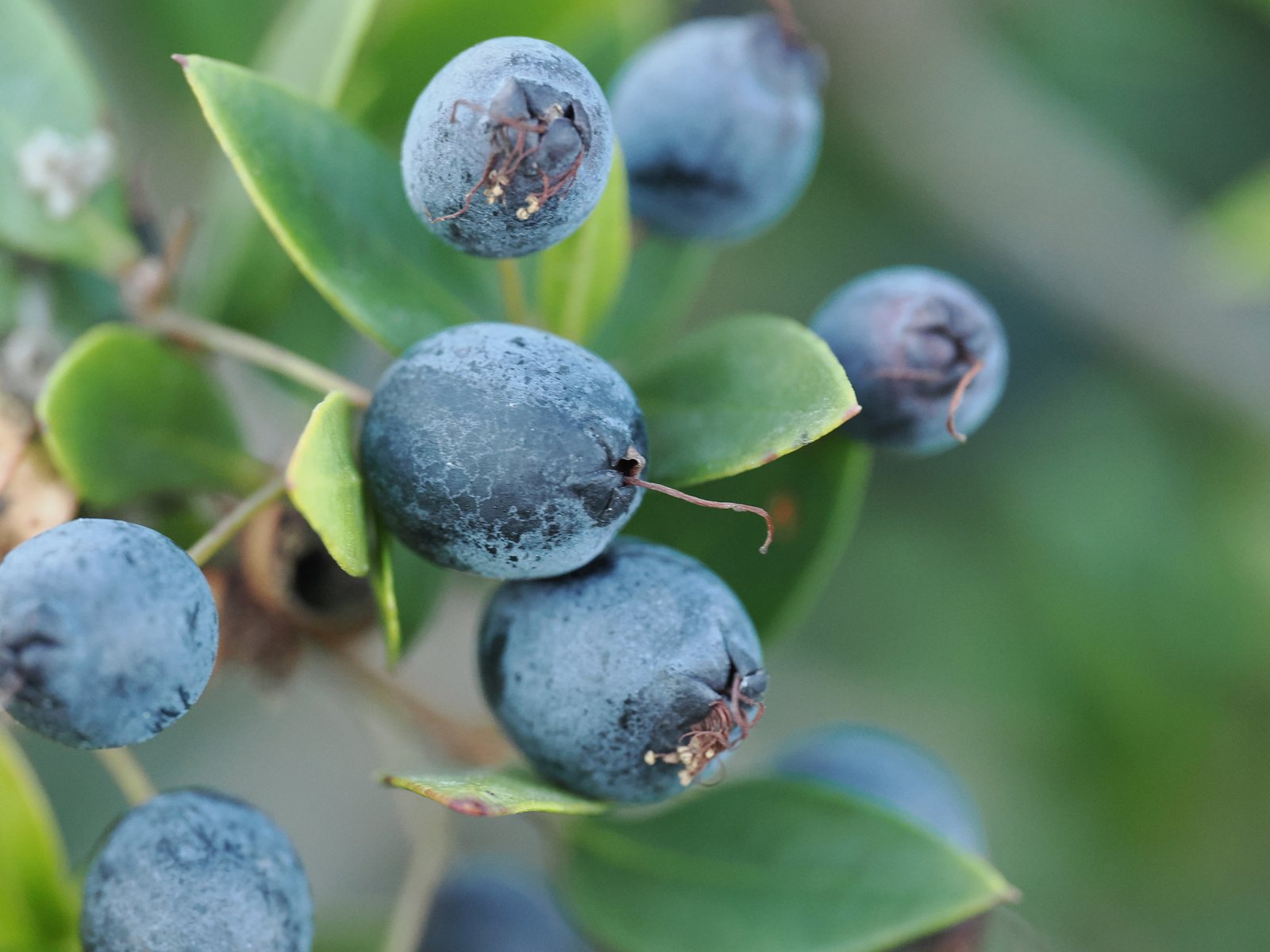
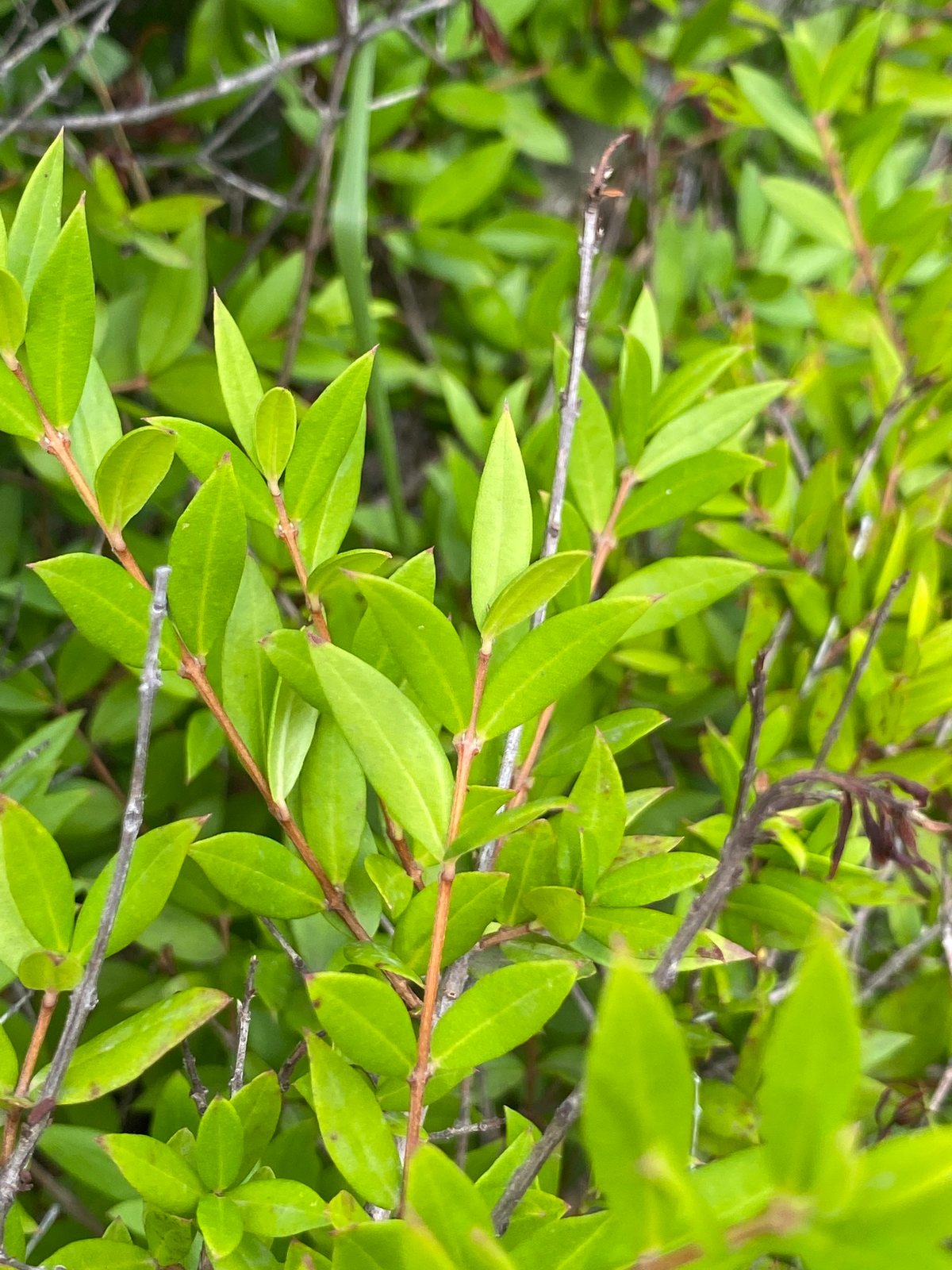
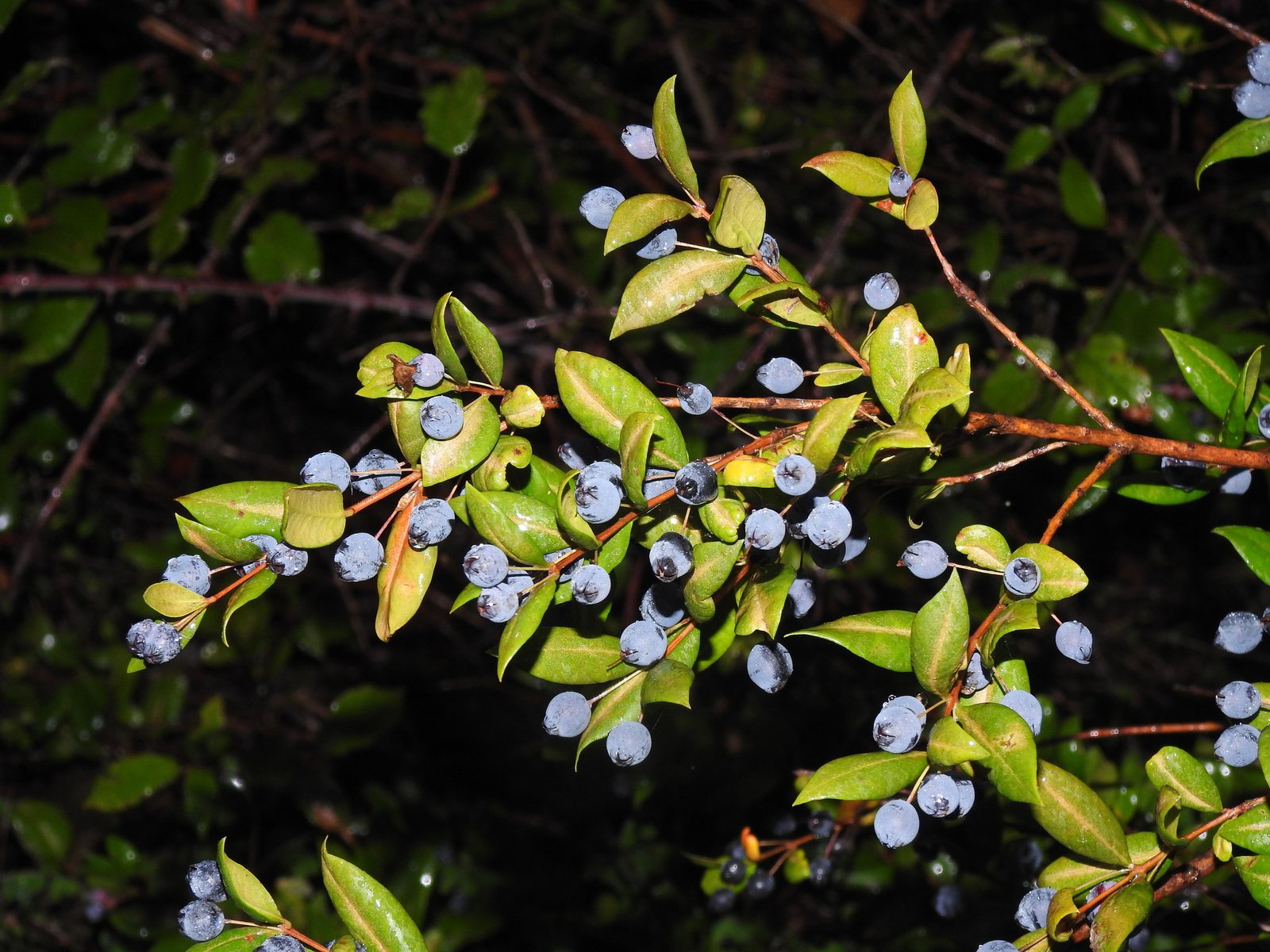
Common myrtle is an evergreen Mediterranean shrub grown for its aromatic leaves, white summer flowers and blue-black berries. It makes a dense hedge, clipped specimen or container plant, but needs shelter from cold winds and protection from prolonged freezing.
At a glance
- Sun
- Full sun for the best flowering; tolerates light partial shade.
- Water
- Water regularly while establishing. Established plants tolerate dry spells, but container plants need watering whenever the upper soil dries.
- Soil
- Well-drained soil, from slightly acidic to alkaline. Avoid waterlogged ground, especially in winter.
- Height
- 6-12 ft (1.8-3.7 m)
- Spread
- 6-10 ft (1.8-3 m)
- Flowers
- White, lightly fragrant flowers with prominent stamens in summer, sometimes continuing into early autumn.
- Foliage
- Evergreen. Small, opposite, glossy dark-green leaves release a strong aromatic scent when crushed.
- Growth
- Slow to moderate
- Care needed
- Medium
The year at a glance
- Pollinators
- Drought tolerant
- Heat tolerant
- Wildlife
- Low allergen
- Fragrant
| J | F | M | A | M | J | J | A | S | O | N | D | |
|---|---|---|---|---|---|---|---|---|---|---|---|---|
| Flowers | ||||||||||||
| Fruit | ||||||||||||
| Plant |
Northern hemisphere months. In Australia, shift them by six.
- Difficulty
- Hard
- Toughness
- Needs looking after
Will it suit your garden?
Pick your zone, country, light and whether you have pets.
Full sun is 6 or more hours of direct sun a day, part shade 3 to 6 hours, shade under 3.
How it grows
Planting day
1.6 ft (0.5 m)
After 1 year
2.8 ft (0.85 m)
After 2 years
4 ft (1.2 m)
After 3 years
5 ft (1.5 m)
After 5 years
7 ft (2.2 m)
About 7 years to full size.
From a typical nursery size, at an average rate for this kind of plant. A rule of thumb, not a forecast.
Good to know
- Cats and dogs
- Safe
- Invasive in
- Australia
- Growth rate
- Slow
Care
Jobs through the year
- WaterApr–May, Sep–Oct, every 14 days
- Water established ground plants deeply if soil is dry; water young plants more often.
- WaterJun–Aug, every 10 days
- Water established ground plants during dry weather; check pots much more frequently.
- WaterJan–Mar, Nov–Dec, every 14 days
- Check overwintering pots and water sparingly before the root ball dries out.
- FeedApr
- Top-dress with a thin layer of compost; feed container plants modestly.
- MulchMay
- Mulch the root zone, keeping stems clear.
- PruneApr–May
- Remove frost-damaged growth once living buds are apparent.
- PruneSep
- Lightly shape after flowering only if needed; retain shoots for berries.
- ProtectJan–Apr, Oct–Dec
- Not reliably hardy in zones 6–7; overwinter in a bright, cool, frost-free place.
- Water deeply during the first growing season, allowing the surface soil to dry between waterings.
- Apply a thin layer of compost in spring; feed container plants modestly during active growth.
- Mulch around the root zone, keeping mulch clear of the stems.
- Use a pot with drainage holes and free-draining compost; never leave it standing in water.
- In colder regions, move container plants into a bright, cool, frost-free place for winter.
Pruning. Remove dead or frost-damaged growth in spring once new growth shows what has survived. Lightly trim after flowering to maintain shape, or clip hedges in late spring if flowers and berries are less important.
Through the year
- Spring
- Plant once severe frost has passed; water well and mulch.
- Spring
- Remove winter damage and refresh the compost or feed container plants.
- Summer
- Check containers frequently for dryness and water young shrubs during dry weather.
- Late summer
- Lightly shape plants after flowering and take semi-ripe cuttings.
- Autumn
- Leave berries for birds, or collect ripe seed for propagation.
- Late autumn
- Move pots under cover where winters are cold; reduce watering but do not let the root ball dry completely.
In the garden
- Clip into a dense evergreen hedge to enclose a sunny courtyard or divide a sheltered garden.
- Train as a standard or rounded topiary in large pots beside an entrance.
- Combine with lavender, rosemary and rock roses in a well-drained Mediterranean border.
- Use as a dark-green backdrop for white flowers and silver foliage.
Garden styles it suits: Mediterranean, Modern Mediterranean, Formal, Topiary garden, Modern courtyard and Sensory garden.
Plant it with: Lavender, Rosemary, Rock rose, Santolina, Bearded iris and Olive.
Wildlife: Flowers provide pollen for bees and other visiting insects. Birds eat the ripe berries, and dense shrubs offer shelter.
Problems to watch for
- Scale insects can cause sticky honeydew and sooty mould: wipe off small infestations and use a labelled horticultural oil if needed.
- Spider mites may cause pale, speckled leaves on plants overwintered indoors: inspect leaf undersides, rinse foliage and avoid hot, dry rooms.
- Root rot develops in saturated soil: improve drainage, reduce watering and never leave pots in standing water.
- Cold winds and hard frost can scorch leaves or kill shoots: choose a sheltered site, protect pots and prune dead growth in spring.
Safety
Not known to be toxic to people, cats, dogs or horses. Leaves and ripe berries have traditional culinary uses, although eating large quantities may cause stomach upset. Concentrated myrtle essential oil is not equivalent to the plant and should not be swallowed or given to pets.
Where it spreads. Can escape cultivation in southern Australia and is regarded as an environmental weed in parts of Western Australia and South Australia. Check local guidance before planting near bushland.
Easily confused with
Chilean myrtle (Luma apiculata)
Usually develops conspicuous peeling, cinnamon-orange bark and often becomes a small tree; common myrtle has less showy grey-brown bark.
Southern wax myrtle (Morella cerifera)
Has alternate, longer leaves, inconspicuous catkin-like flowers and small waxy grey fruits; common myrtle has opposite leaves, showy white flowers and usually blue-black berries.
The name
Myrtus comes from the ancient Greek name for myrtle, while communis is Latin for common.
Propagation. Take semi-ripe cuttings in late summer and root them in a free-draining medium with gentle humidity. Fresh seed can also be sown after removing the berry pulp; seedlings vary and develop slowly.
Checked against open data
- Accepted botanical name
- Myrtus communis
- Native range
- Afghanistan, Albania, Algeria, Azores, Baleares, Canary Is., Corse, Cyprus, East Aegean Is., Eritrea, Ethiopia and France.
- Measured
- Average height 115 cm.
Sources: GBIF (CC BY 4.0) and Trefle (CC BY 4.0). The care and design notes are LandscapeGPT's own.
See it in your own yard.
Upload a photo of your yard and see it redesigned with plants that suit your climate, each checked against your zone.