Common witch hazel
Hamamelis virginiana. Family Hamamelidaceae. Shrub.
Also called American witch hazel, Virginia witch hazel.
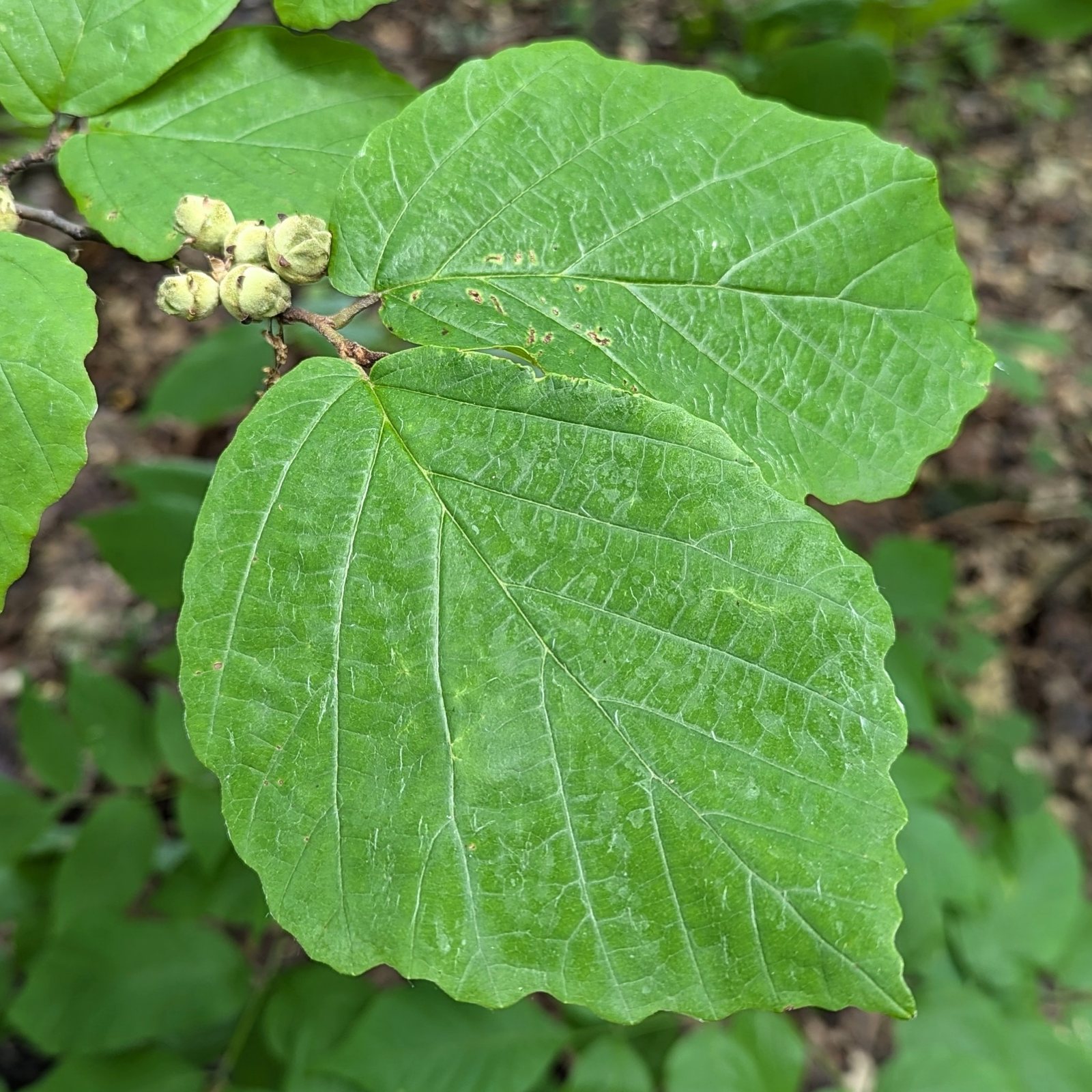
Common witch hazel is a large, deciduous shrub or small tree native to eastern North America. Gardeners grow it for its golden autumn leaves and lightly fragrant, ribbon-like yellow flowers, which open in autumn, often before the leaves have fallen. Its spreading branches suit woodland edges and gardens with room for it to mature.
At a glance
- Sun
- Full sun to partial shade; tolerates deeper shade but flowers less freely.
- Water
- Moderate; keep the root zone evenly moist while establishing. Established plants tolerate brief dry spells but suffer in prolonged drought.
- Soil
- Moist, well-drained soil rich in organic matter; prefers acidic to neutral conditions. Avoid waterlogged ground and very chalky soil.
- Height
- 15-20 ft (4.6-6.1 m), occasionally taller
- Spread
- 15-20 ft (4.6-6.1 m)
- Flowers
- Autumn into early winter; yellow flowers with four narrow, crinkled petals, sometimes partly hidden by the remaining leaves.
- Foliage
- Broad, green leaves with wavy or shallowly toothed edges and uneven bases; turn yellow in autumn.
- Growth
- Slow to moderate
- Care needed
- Low
The year at a glance
- Pollinators
- Cold hardy
- Wildlife
- Low allergen
- Fragrant
| J | F | M | A | M | J | J | A | S | O | N | D | |
|---|---|---|---|---|---|---|---|---|---|---|---|---|
| Flowers | ||||||||||||
| Fruit | ||||||||||||
| Plant |
Northern hemisphere months. In Australia, shift them by six.
- Difficulty
- Easy
- Toughness
- Very tough
Will it suit your garden?
Pick your zone, country, light and whether you have pets.
Full sun is 6 or more hours of direct sun a day, part shade 3 to 6 hours, shade under 3.
How it grows
Planting day
2.1 ft (0.64 m)
After 1 year
4 ft (1.4 m)
After 2 years
7 ft (2.1 m)
After 3 years
9 ft (2.8 m)
After 5 years
14 ft (4.3 m)
About 7 years to full size.
From a typical nursery size, at an average rate for this kind of plant. A rule of thumb, not a forecast.
Good to know
- Cats and dogs
- Safe
- Native to
- the US and Canada
- Growth rate
- Slow
Care
Jobs through the year
- WaterApr–May, Sep–Oct, every 14 days
- Water established shrubs only during dry spells; keep new plants evenly moist for their first two seasons.
- WaterJun–Aug, every 7 days
- During prolonged drought, soak the root zone deeply; skip watering when rainfall keeps soil moist.
- MulchApr
- Renew a 5–8 cm layer of leaf mould or composted bark, leaving stems clear.
- FeedApr
- Apply a light balanced shrub fertilizer only if growth is weak.
- PruneFeb–Mar
- After flowering, remove damaged or crossing branches and unwanted suckers; preserve the natural shape.
- Water deeply during dry spells for the first two growing seasons.
- Apply 2-3 in (5-8 cm) of leaf mould or composted bark over the root zone, keeping it clear of the stems.
- Water established plants during prolonged drought, especially in hot, exposed sites.
- Feed only if growth is weak; use a light application of a balanced shrub fertiliser in spring.
- Avoid digging around the roots, and allow enough space for the naturally spreading branches.
Pruning. Prune sparingly in late winter or early spring, after flowering and before new growth. Remove dead, damaged or crossing branches and unwanted basal suckers; avoid shearing or routinely shortening all the shoots.
Through the year
- Late winter
- Remove damaged or crossing branches after flowering, keeping the natural branching shape.
- Spring
- Plant container-grown shrubs while the soil is moist, then water thoroughly.
- Mid-spring
- Renew the organic mulch without piling it against the stems.
- Summer
- Check soil moisture during hot weather and water deeply if the root zone is drying out.
- Autumn
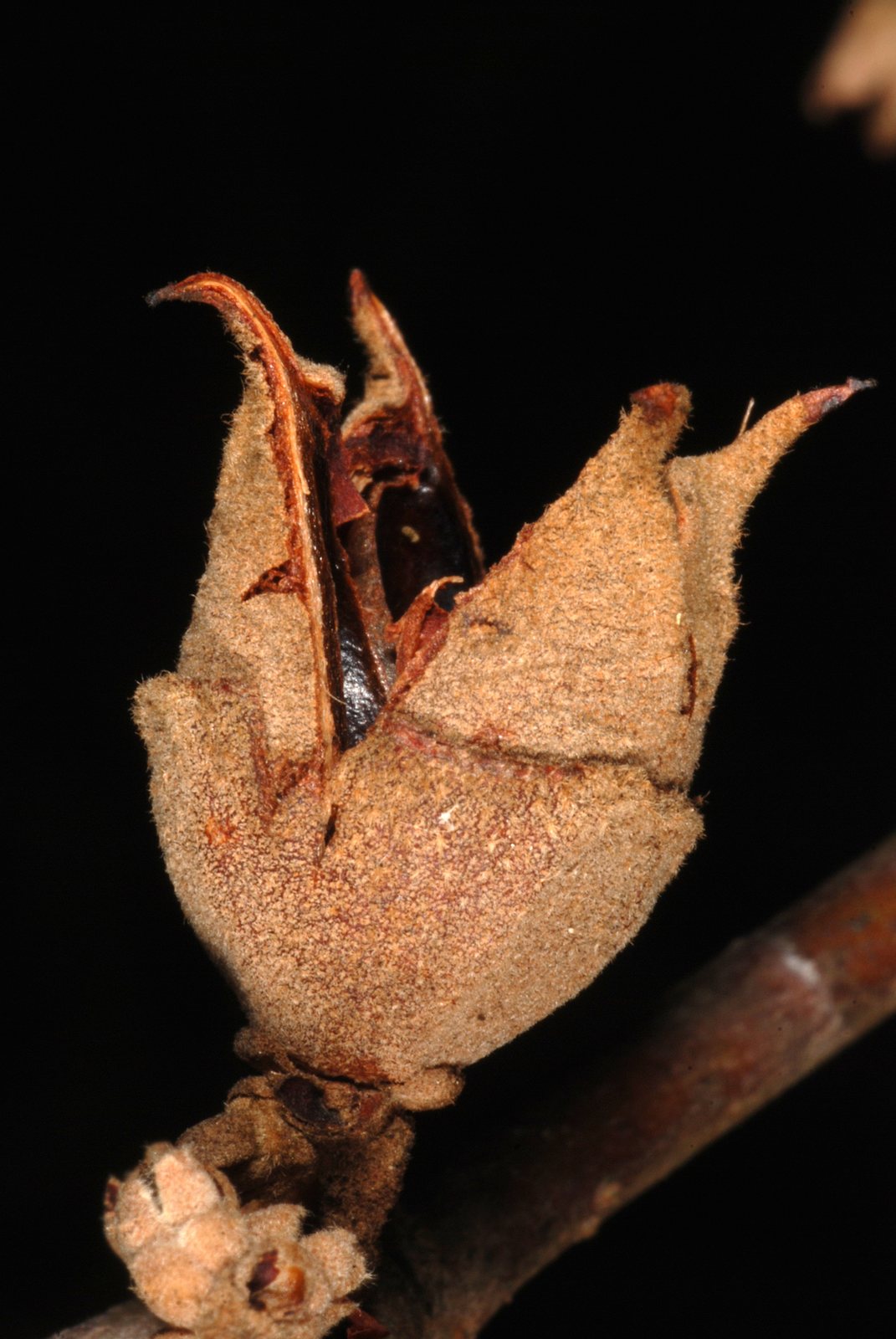
- Enjoy the yellow foliage and flowers; collect ripe seed capsules before they split if you want to propagate it.
- Late autumn
- Plant while the soil remains workable and unfrozen; water new plants if rainfall is insufficient.
In the garden
- Plant at a woodland edge with ferns and shade-tolerant perennials beneath its open branches.
- Use as a large specimen where its spreading outline and autumn colour can be seen from the house.
- Include in an informal mixed shrub border to extend flowering into autumn.
- Use in an eastern North American native planting as an understory shrub beneath widely spaced deciduous trees.
Garden styles it suits: Woodland, Wildlife garden, Autumn colour, Sensory garden, New England and Low-maintenance.
Plant it with: Christmas fern, Foamflower, Wild ginger, Solomon's seal, Oakleaf hydrangea and Virginia sweetspire.
Wildlife: Late flowers provide pollen and nectar for autumn-active insects, including flies and moths. Birds and small mammals eat some seeds, and the branches provide cover.
Problems to watch for
- Drought scorch: brown leaf edges and premature leaf fall can follow dry weather; water deeply and maintain an organic mulch.
- Powdery mildew: a white coating may develop on leaves; improve airflow and avoid crowding. Established shrubs rarely need treatment.
- Leaf spots: usually cosmetic; collect heavily affected fallen leaves and avoid routinely wetting the foliage.
- Witch-hazel cone gall aphids: small cone-shaped growths appear on leaves; tolerate light infestations, which seldom harm the shrub.
Safety
Not known to be toxic to cats, dogs or horses. Ordinary garden contact is not considered hazardous to people, but leaves and bark contain tannins and can cause stomach upset if eaten in quantity. Do not treat the shrub or commercial witch-hazel preparations as food; products may contain alcohol or other ingredients unsafe to swallow.
Easily confused with
Ozark witch hazel (Hamamelis vernalis)
Usually smaller and more strongly suckering, with flowers opening in late winter or early spring rather than autumn; flowers are often orange to reddish near the centre.
Hybrid witch hazel (Hamamelis × intermedia)
Usually flowers on bare branches in late winter or early spring, with yellow, orange or red flowers depending on the cultivar, rather than the autumn flowers of common witch hazel.
American hazelnut (Corylus americana)
Has more sharply toothed leaves, long hanging catkins in late winter or spring, and edible nuts in leafy husks; it lacks ribbon-like autumn flowers.
The name
The word 'witch' is generally traced to an old word meaning pliant or bendable, while 'hazel' refers to the leaves' resemblance to those of hazelnut.
Propagation. Grow from seed collected from ripe capsules before they eject it. Seed needs a warm period followed by cold stratification and may take 18 months or longer to germinate; keep seed pots protected from rodents. Rooting cuttings is difficult and unreliable for most home gardeners.
Checked against open data
- Accepted botanical name
- Hamamelis virginiana
- In the US and Canada
- Native in Canada and the lower 48 states.
- Native range
- Alabama, Arkansas, Connecticut, Delaware, District of Columbia, Florida, Georgia, Illinois, Indiana, Iowa, Kentucky and Louisiana.
- Measured
- Soil pH 4.5 to 6.2. Average height 450 cm.
Sources: GBIF (CC BY 4.0), USDA PLANTS and Trefle (CC BY 4.0). The care and design notes are LandscapeGPT's own.
See it in your own yard.
Upload a photo of your yard and see it redesigned with plants that suit your climate, each checked against your zone.