Coral aloe
Aloe striata. Family Asphodelaceae. Succulent.
Also called Coral-flowered aloe.
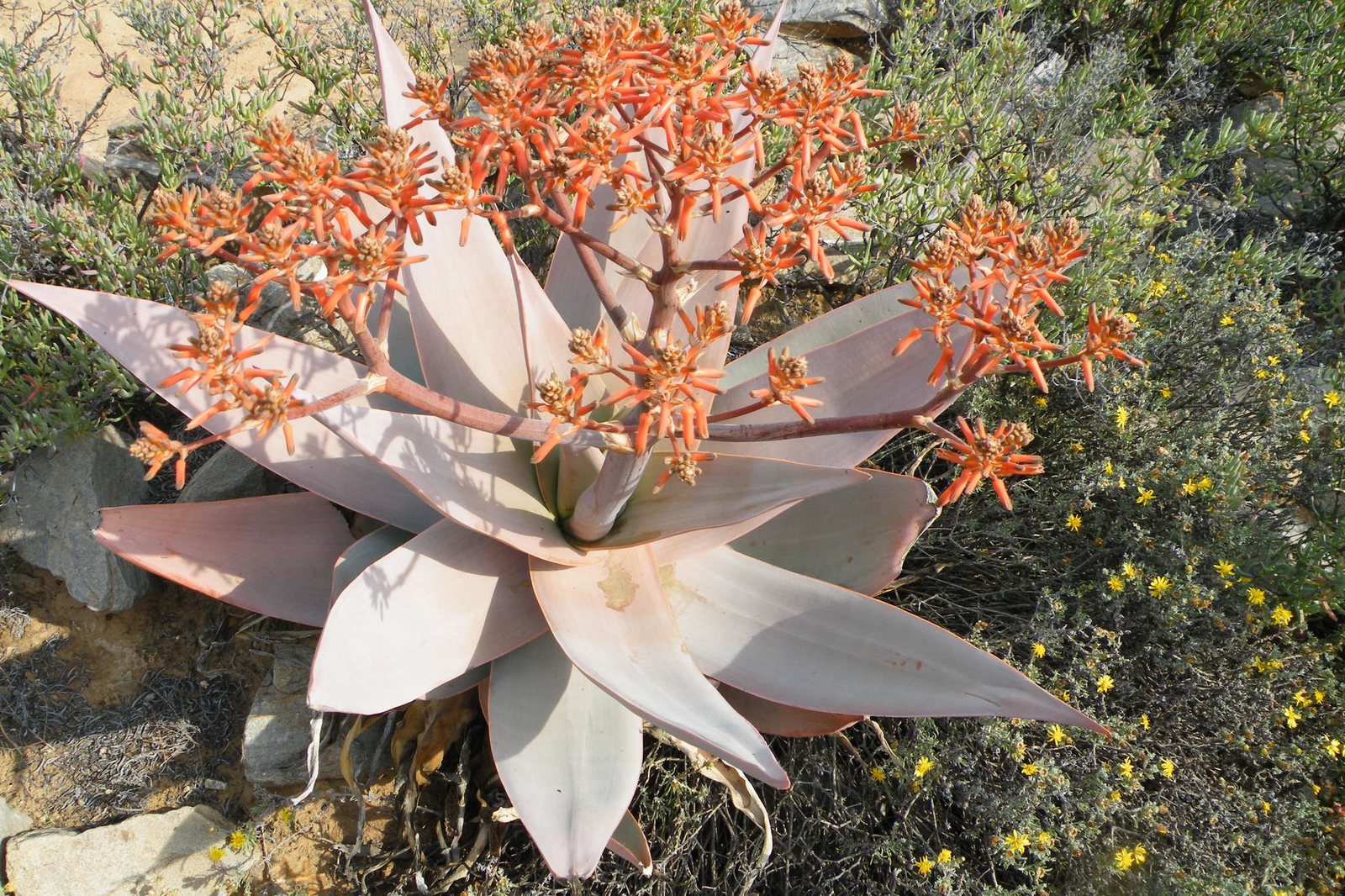
Coral aloe is an evergreen South African succulent with broad, smooth-edged leaves and branched heads of coral-red flowers. Gardeners grow it for its sculptural rosette, pink leaf margins and winter-to-spring colour. It suits dry, frost-light gardens; in most of the UK and Canada, grow it in a container and overwinter it under cover.
At a glance
- Sun
- Full sun to light shade; afternoon shade is useful in very hot inland gardens.
- Water
- Low water needs once established. Water thoroughly, then let the soil dry out; keep much drier in cool weather.
- Soil
- Sharply drained sandy or gravelly soil. For containers, use a gritty cactus compost and a pot with drainage holes.
- Height
- 1-2 ft (0.3-0.6 m), with flower stems reaching about 3 ft (0.9 m)
- Spread
- 2-3 ft (0.6-0.9 m)
- Flowers
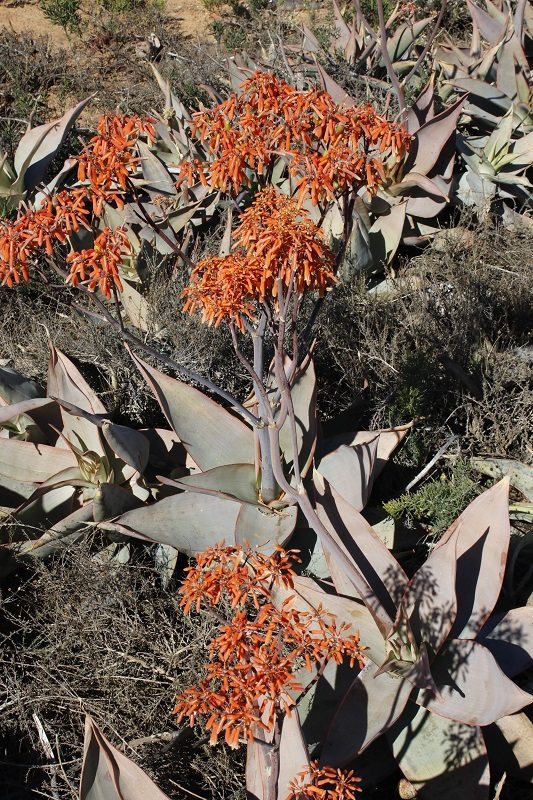
- Late winter to spring; coral-red to orange-red tubular flowers in broad, branched clusters.
- Foliage
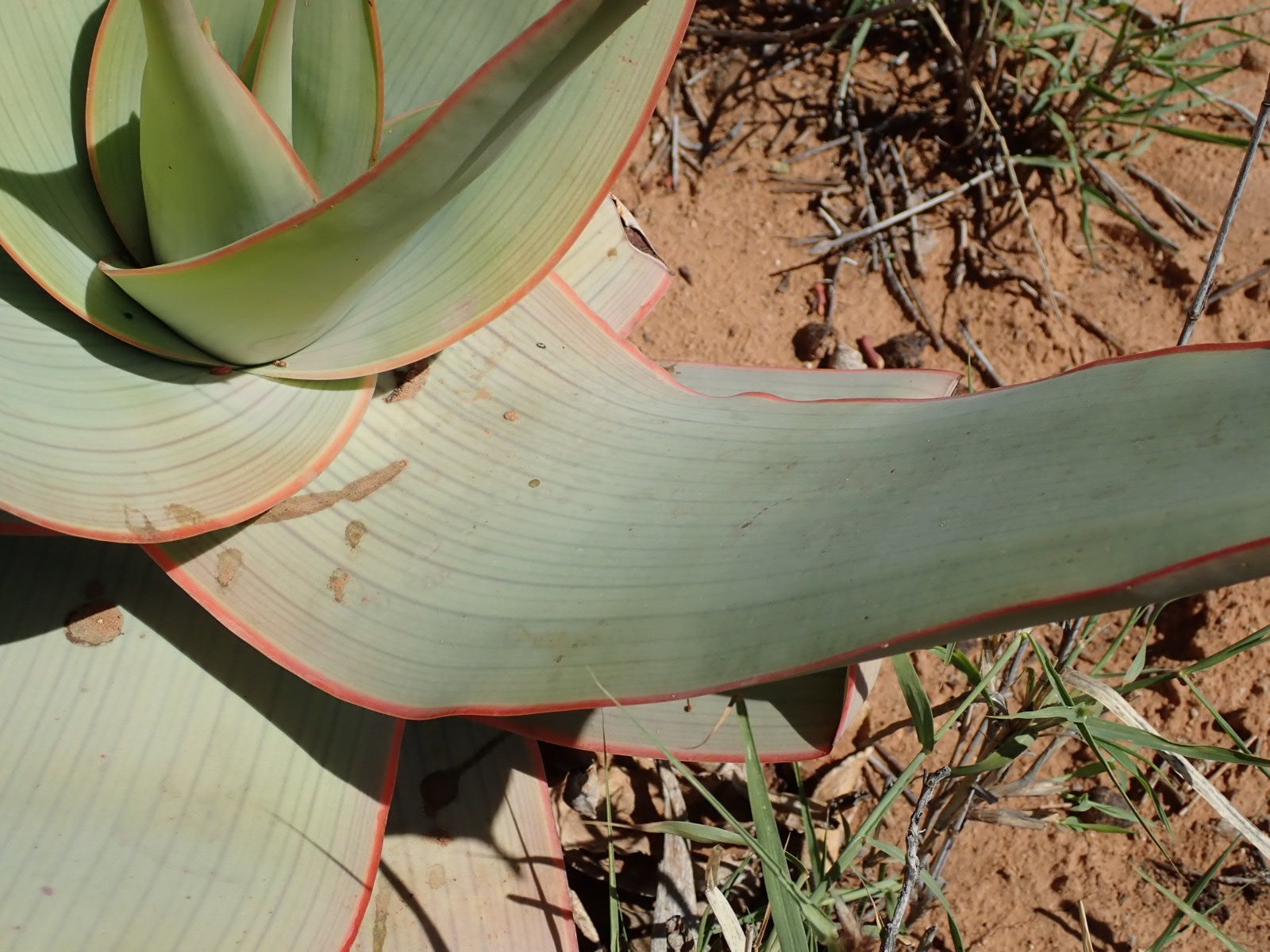
- Evergreen. Broad, fleshy, blue-green to grey-green leaves with fine lengthwise lines and smooth, pinkish-red margins. Usually forms a single stemless rosette.
- Growth
- Slow to moderate
- Care needed
- Low
The year at a glance
- Pollinators
- Drought tolerant
- Heat tolerant
- Wildlife
- Low allergen
| J | F | M | A | M | J | J | A | S | O | N | D | |
|---|---|---|---|---|---|---|---|---|---|---|---|---|
| Flowers | ||||||||||||
| Plant |
Northern hemisphere months. In Australia, shift them by six.
- Difficulty
- Easy
- Toughness
- Very tough
Will it suit your garden?
Pick your zone, country, light and whether you have pets.
Full sun is 6 or more hours of direct sun a day, part shade 3 to 6 hours, shade under 3.
How it grows
Planting day
0.8 ft (0.25 m)
After 1 year
0.9 ft (0.28 m)
After 2 years
1 ft (0.3 m)
After 3 years
1.1 ft (0.33 m)
After 5 years
1.2 ft (0.38 m)
About 8 years to full size.
From a typical nursery size, at an average rate for this kind of plant. A rule of thumb, not a forecast.
Good to know
- Cats and dogs
- Toxic
- Growth rate
- Slow
Care
Jobs through the year
- WaterApr–May, Sep–Oct, every 21 days
- Water established plants only after the root zone dries; check young plants and pots more often.
- WaterJun–Aug, every 14 days
- Water deeply only when dry; established ground plants need water mainly in prolonged drought.
- WaterJan–Mar, Nov–Dec, every 42 days
- Check sheltered pots and water very sparingly only if dry and starting to shrivel.
- FeedApr
- Give container plants one dilute cactus feed; omit for established garden plants.
- DeadheadApr–Jun
- Cut spent flower stems near their bases without damaging the rosette.
- MulchMay
- Use a thin gravel mulch and keep the crown above soil and mulch.
- ProtectSep–Oct
- Not hardy outdoors here; move pots into bright, frost-free shelter before cold weather.
- ProtectMay–Jun
- Return outdoors after frost risk passes, gradually increasing sun exposure.
- Plant with the crown above the surrounding soil level, away from runoff and standing water.
- Water young plants when the soil has dried; established plants need only occasional watering during prolonged dry spells.
- Use a thin gravel mulch, keeping it clear of the crown; avoid moisture-holding mulch against the leaves.
- Feed container plants lightly once in spring with a dilute cactus fertiliser; garden plants rarely need feeding.
- Move containers into bright, frost-free shelter before cold weather and protect outdoor plants from prolonged winter rain.
Pruning. Cut spent flower stems near their base after flowering. Remove fully dead lower leaves with clean tools, but do not cut back the living rosette.
Through the year
- Spring
- Plant or repot once frost risk has passed, using a sharply drained growing medium.
- Spring
- Give container plants one light feed and gradually acclimatise overwintered plants to outdoor sun.
- After flowering
- Remove spent flower stems, or leave a few to mature if you want seed.
- Summer
- Water only after the soil dries; watch newly moved plants for sun scorch.
- Autumn
- Reduce watering as temperatures fall and move pots under frost-free cover where needed.
- Winter
- Keep sheltered plants bright and relatively dry; check leaf bases for mealybugs.
In the garden
- Use a single rosette as a focal point in a broad, well-drained container.
- Repeat plants through a sunny gravel bed with smaller succulents for a clear, architectural rhythm.
- Plant on a raised bank among rocks, where the drainage suits its roots and the flowers stand above the foliage.
- Pair with fine-textured grasses and silver-leaved shrubs in a dry border, leaving room for the broad leaves.
Garden styles it suits: Architectural minimal, Desert modern, Modern Mediterranean, Dry gravel garden, Desert / xeriscape and Modern courtyard.
Plant it with: Blue chalksticks, Rock purslane, Lavender, Santolina, Red yucca and Blue fescue.
Wildlife: Flowers provide nectar for birds and insects. Hummingbirds may visit in the Americas, while honeyeaters may visit in Australia.
Problems to watch for
- Root or crown rot in wet soil: improve drainage, keep the crown above soil level and stop watering until the growing medium dries.
- Mealybugs in leaf bases: isolate affected pots, remove visible insects and use a labelled insecticidal soap where appropriate.
- Frost damage: move pots to frost-free shelter; leave damaged leaves until cold weather has passed, then remove dead tissue.
- Sun scorch after moving outdoors: introduce stronger sunlight gradually over one to two weeks.
Safety
Treat the leaves, especially the yellow latex beneath the skin, as potentially toxic if eaten by cats, dogs, horses or people. Aloe ingestion can cause vomiting, diarrhoea and abdominal discomfort; species-specific toxicity information for Aloe striata is limited. Do not use it as an edible or medicinal substitute for aloe vera.
Easily confused with
Soap aloe (Aloe maculata)
Soap aloe has conspicuous pale leaf spots, sharp marginal teeth and often forms clumps. Coral aloe has unspotted mature leaves with smooth margins.
Aloe vera (Aloe vera)
Aloe vera usually has narrower, more upright leaves with toothed margins, produces offsets and commonly bears yellow flowers. Coral aloe has broad, spreading, smooth-edged leaves and coral-red flowers.
The name
The species name striata means striped, referring to the fine lengthwise lines on the leaves, while coral aloe refers to the flower colour.
Propagation. Usually grown from seed, sown in a warm place in a freely draining medium. It generally remains a single rosette, so division is not a dependable method; seed from plants grown near other aloes may produce hybrids.
Checked against open data
- Accepted botanical name
- Aloe striata
- Native range
- Cape Provinces.
Sources: GBIF (CC BY 4.0) and Trefle (CC BY 4.0). The care and design notes are LandscapeGPT's own.
See it in your own yard.
Upload a photo of your yard and see it redesigned with plants that suit your climate, each checked against your zone.