Coralberry
Symphoricarpos orbiculatus. Family Caprifoliaceae. Shrub.
Also called Indian currant, Buckbrush.
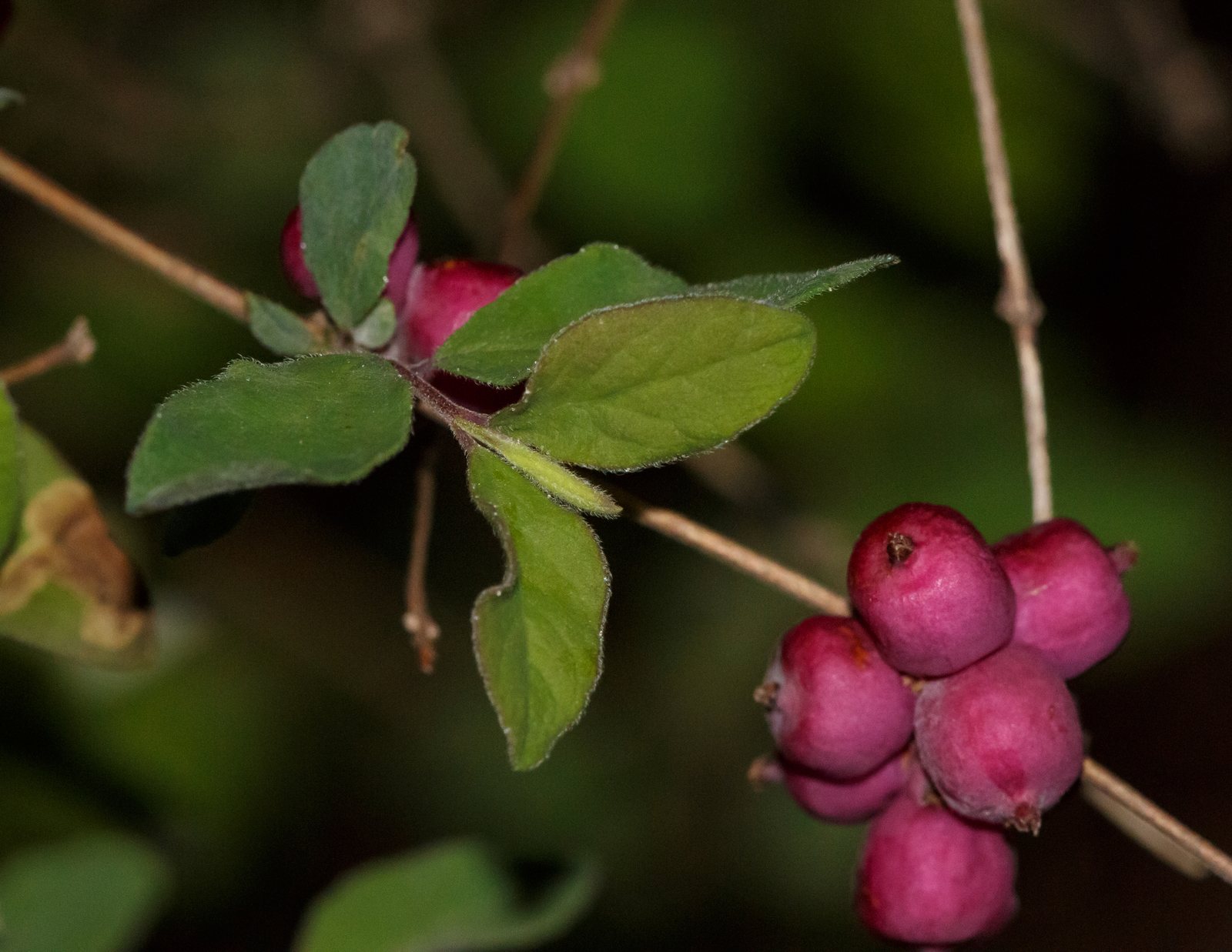
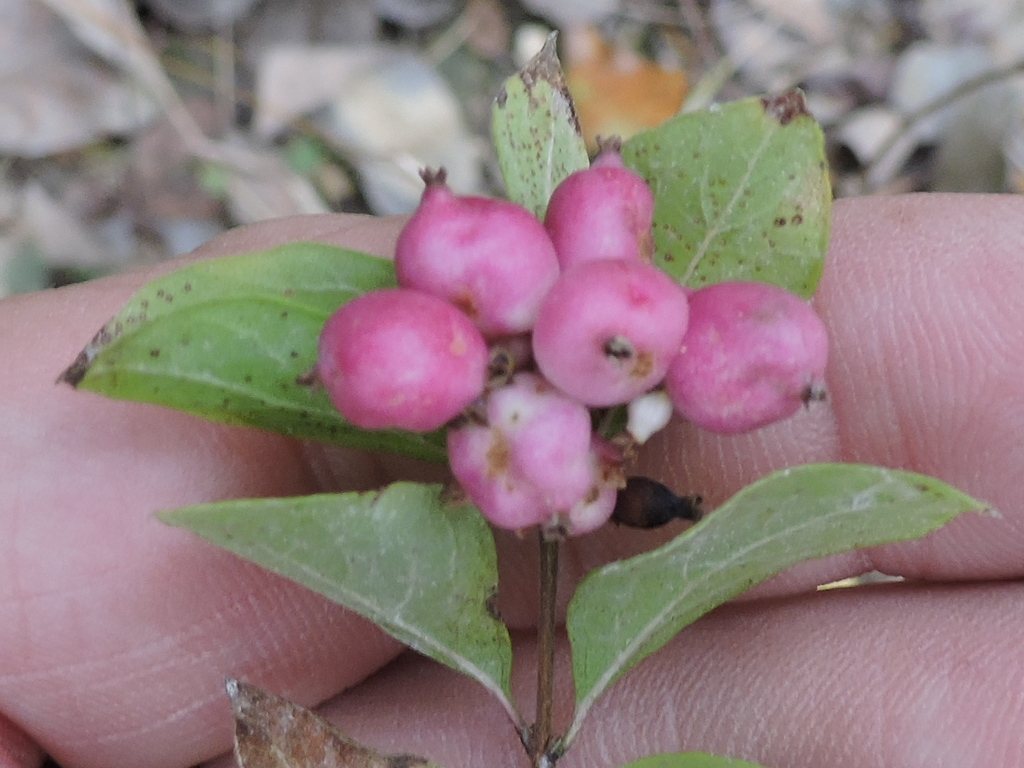
Coralberry is a deciduous shrub native to central and eastern North America, grown for clusters of coral-pink berries that persist after the leaves fall. Its arching stems and suckering habit suit informal hedges, woodland edges and banks, but it needs room to form a thicket.
At a glance
- Sun
- Full sun to partial shade; tolerates deeper shade but usually produces fewer berries.
- Water
- Moderate water while establishing; tolerates dry spells once rooted.
- Soil
- Adaptable to clay, loam and sandy soils, including alkaline ground, provided drainage is adequate. Avoid persistently waterlogged soil.
- Height
- 2-5 ft (0.6-1.5 m)
- Spread
- 4-8 ft (1.2-2.4 m), eventually wider through suckering
- Flowers
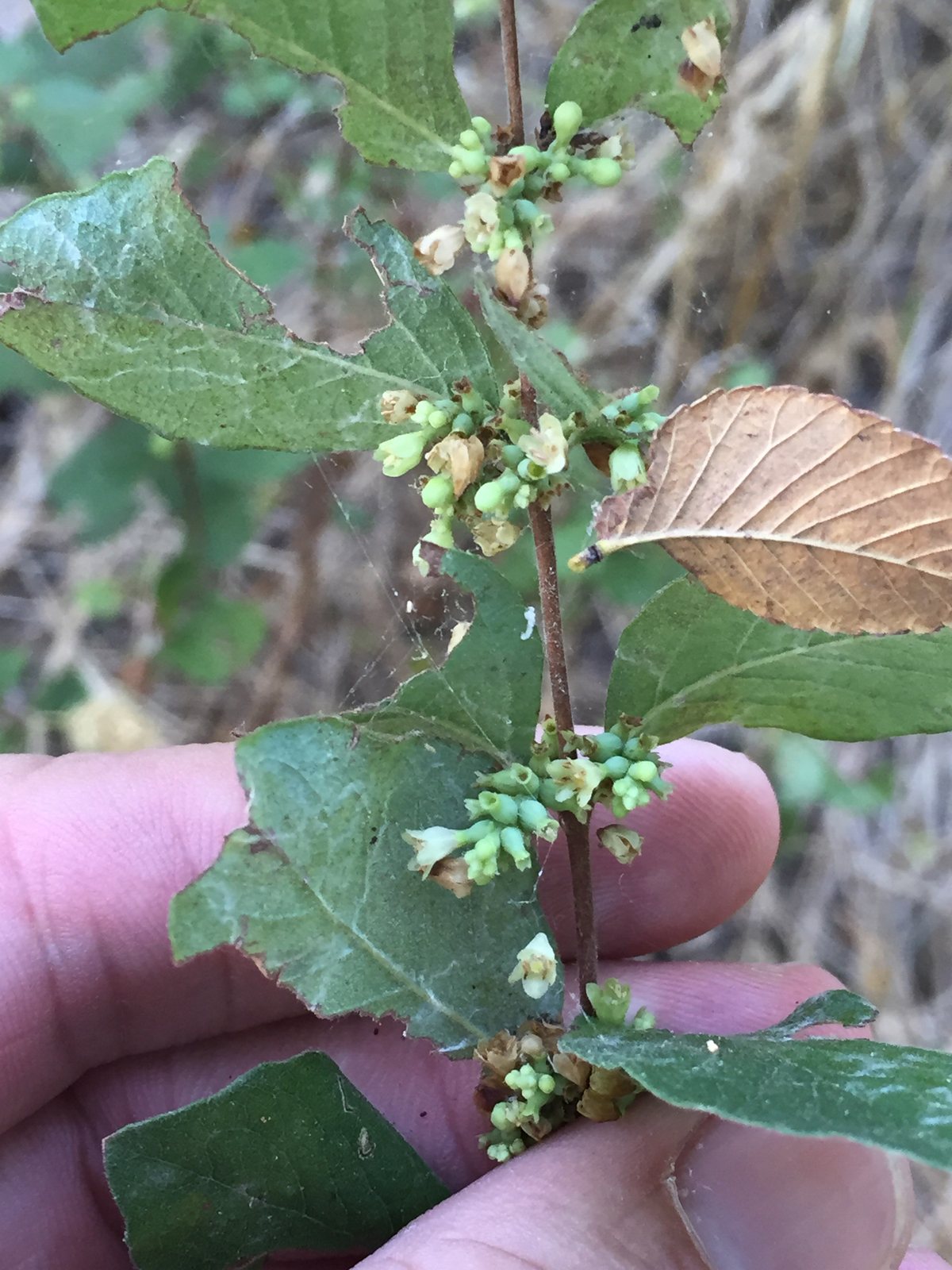
- Small, inconspicuous greenish-white to pink flowers in summer, followed by coral-pink to purplish-red berries.
- Foliage
- Small, opposite, oval green leaves; autumn colour is usually modest, sometimes with reddish or purplish tones.
- Growth
- Moderate to fast, especially in moist soil.
- Care needed
- Low
The year at a glance
- Pollinators
- Deer resistant
- Drought tolerant
- Cold hardy
- Wildlife
- Low allergen
| J | F | M | A | M | J | J | A | S | O | N | D | |
|---|---|---|---|---|---|---|---|---|---|---|---|---|
| Flowers | ||||||||||||
| Fruit | ||||||||||||
| Plant |
Northern hemisphere months. In Australia, shift them by six.
- Difficulty
- Easy
- Toughness
- Very tough
Will it suit your garden?
Pick your zone, country, light and whether you have pets.
Full sun is 6 or more hours of direct sun a day, part shade 3 to 6 hours, shade under 3.
How it grows
Planting day
1.6 ft (0.5 m)
After 1 year
2.1 ft (0.64 m)
After 2 years
2.5 ft (0.78 m)
After 3 years
3 ft (0.91 m)
After 5 years
3 ft (1.1 m)
full size
About 4 years to full size.
From a typical nursery size, at an average rate for this kind of plant. A rule of thumb, not a forecast.
Good to know
- Cats and dogs
- Mildly toxic: may upset a stomach
- Native to
- the US
- In the garden
- Spreads vigorously: plan to contain it.
- Growth rate
- Fast
Care
Jobs through the year
- WaterApr–May, Sep–Oct, every 21 days
- Water established shrubs only during prolonged drought; water new plants more regularly through their first season.
- WaterJun–Aug, every 14 days
- During prolonged dry weather, soak the established root zone; otherwise rely on rainfall.
- MulchMar–Apr
- Apply 5–8 cm of organic mulch, leaving stem bases clear.
- PruneFeb–Mar
- Remove dead stems and up to one-third of old stems; hard renovation sacrifices remaining berries.
- PruneMay–Jun, Sep–Oct
- Dig out unwanted suckers with attached roots; avoid shearing flowering growth.
- Water deeply during dry spells in the first growing season; thereafter water mainly during prolonged drought.
- Apply a 2-3 in (5-8 cm) organic mulch, keeping it clear of the stem bases.
- Skip routine feeding on ordinary garden soil; use a light compost dressing if growth is weak.
- Remove unwanted suckers with their attached roots before they establish a wider colony.
- Leave berries and stems standing through winter where their appearance and wildlife value are useful.
Pruning. In late winter or early spring, remove dead stems and cut up to one-third of the oldest stems to ground level. An overgrown patch can be cut back hard at the same time, although this sacrifices the remaining berries.
Through the year
- Late winter
- Thin old stems or renovate an overgrown patch before new growth begins.
- Spring
- Plant into workable soil, water thoroughly and mulch around the root area.
- Late spring
- Remove suckers extending beyond the space you want the shrub to occupy.
- Summer
- Water young plants during dry spells and avoid shearing off flowering growth.
- Autumn
- Check the extent of the colony and lift rooted suckers for propagation if wanted.
- Winter
- Leave berry-bearing branches for seasonal colour and wildlife shelter.
In the garden
- Plant as a loose, informal hedge where its arching growth can spread naturally.
- Use beneath open-canopied deciduous trees with woodland groundcovers and ferns.
- Mass on banks to provide low cover and help hold surface soil.
- Combine with native grasses and asters at a woodland or meadow edge.
- Place against a dark evergreen background to make the winter berries easier to see.
Garden styles it suits: Woodland, Wildlife garden, Native hedgerow, Rewilded, Low-maintenance and Winter interest.
Plant it with: Little bluestem, Wild columbine, Wild geranium, Christmas fern, New England aster and Oakleaf hydrangea.
Wildlife: Small flowers attract bees and other insects. Dense stems provide cover for birds and small mammals, and some birds eat the berries, often later in winter.
Problems to watch for
- Unwanted thickets: dig out spreading suckers with their roots and keep a mown or regularly maintained boundary.
- Powdery mildew: improve airflow, avoid crowding and water the soil rather than wetting the foliage.
- Leaf spots: collect badly affected fallen leaves and avoid overhead watering; established plants usually tolerate minor spotting.
- Few berries: move plants out of dense shade where practical and avoid repeated summer shearing, which removes flowers and developing fruit.
Safety
The berries are not edible and are considered mildly poisonous to people, dogs and cats; ingestion can cause vomiting, abdominal discomfort or diarrhoea. Horse-specific toxicity is poorly documented, so do not offer the plant as fodder. Keep children and pets from eating the berries.
Where it spreads. Spreads vigorously by root suckers and can form dense colonies within its native central and eastern North American range. In the United Kingdom it is introduced and can naturalise in hedges and woodland; keep plantings away from semi-natural areas where spreading would be difficult to control.
Easily confused with
Common snowberry (Symphoricarpos albus)
Produces conspicuous white berries rather than coral-pink or purplish-red ones; its leaves may be irregularly lobed on vigorous shoots.
Marlberry or coralberry (Ardisia crenata)
An unrelated evergreen with glossy, leathery leaves, scalloped leaf margins and bright red berries held in hanging clusters.
The name
Coralberry refers to the fruit colour, while Symphoricarpos comes from Greek words describing fruit borne together in clusters.
Propagation. Lift and transplant rooted suckers while dormant, retaining a good portion of root. Softwood cuttings taken in early summer are another option.
Checked against open data
- Accepted botanical name
- Symphoricarpos orbiculatus
- In the US and Canada
- Native in the lower 48 states. Introduced in Canada.
- Native range
- Alabama, Arkansas, Delaware, District of Columbia, Florida, Georgia, Illinois, Indiana, Iowa, Kansas, Kentucky and Louisiana.
- Measured
- Soil pH 5.5 to 7.5. Average height 61 cm.
Sources: GBIF (CC BY 4.0), USDA PLANTS and Trefle (CC BY 4.0). The care and design notes are LandscapeGPT's own.
See it in your own yard.
Upload a photo of your yard and see it redesigned with plants that suit your climate, each checked against your zone.