Creeping woodland phlox
Phlox stolonifera. Family Polemoniaceae. Groundcover.
Also called Creeping phlox, Stolon-bearing phlox.
Phlox stolonifera is a low, spreading perennial native to woodlands in the eastern United States. Gardeners grow it for its spring flowers and leafy mats beneath deciduous trees and shrubs, where the soil stays moist but drains freely.
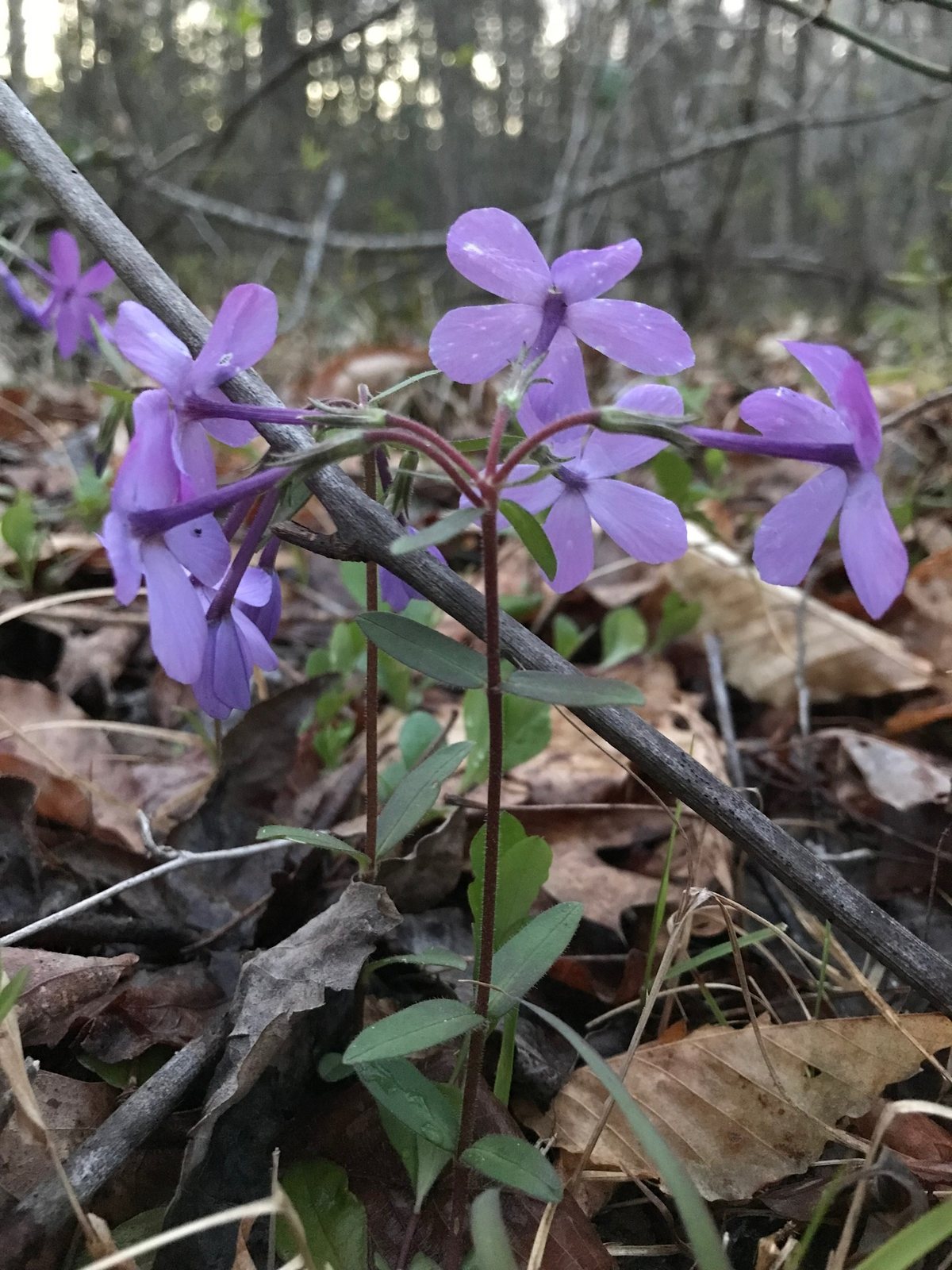
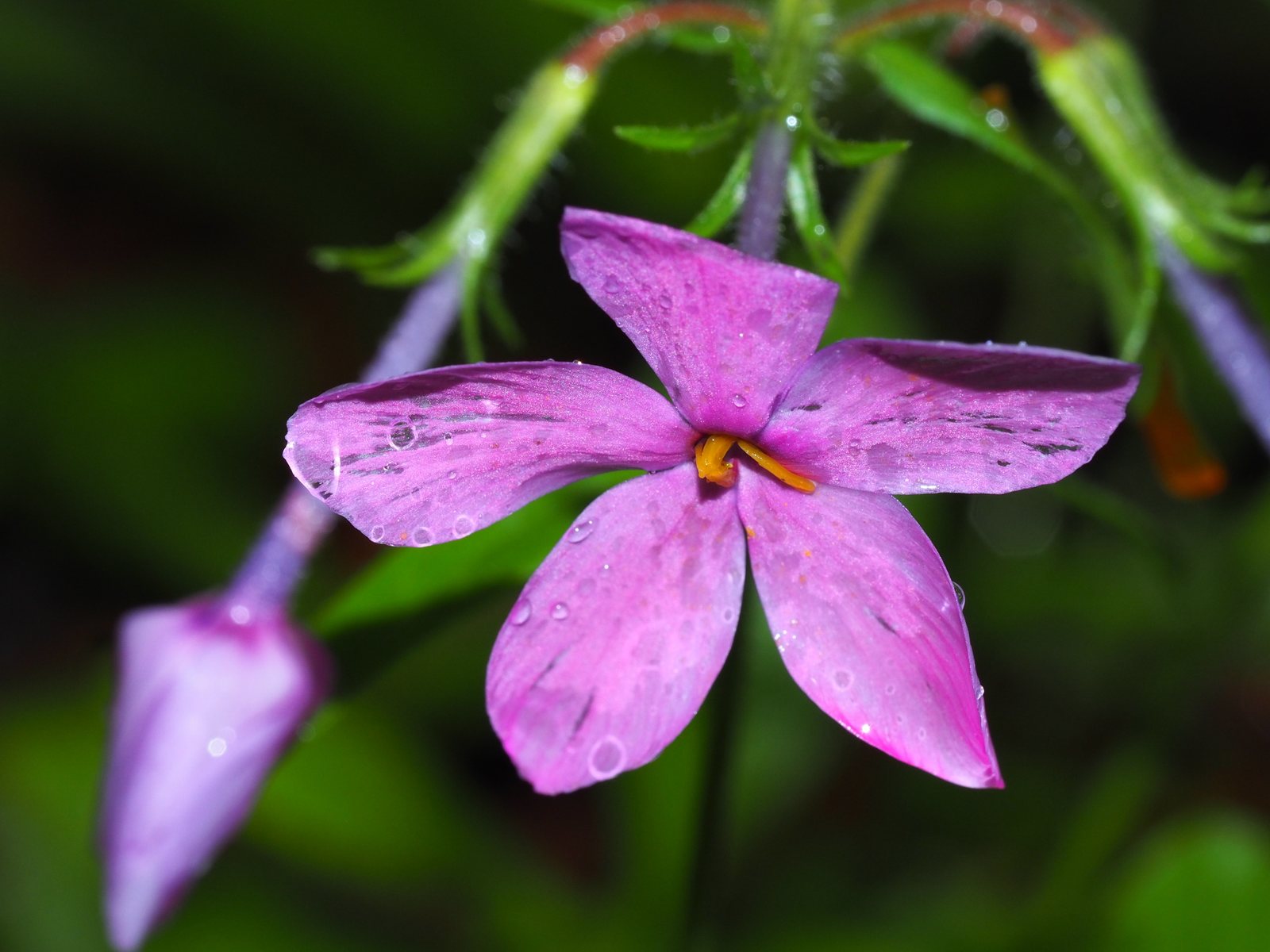
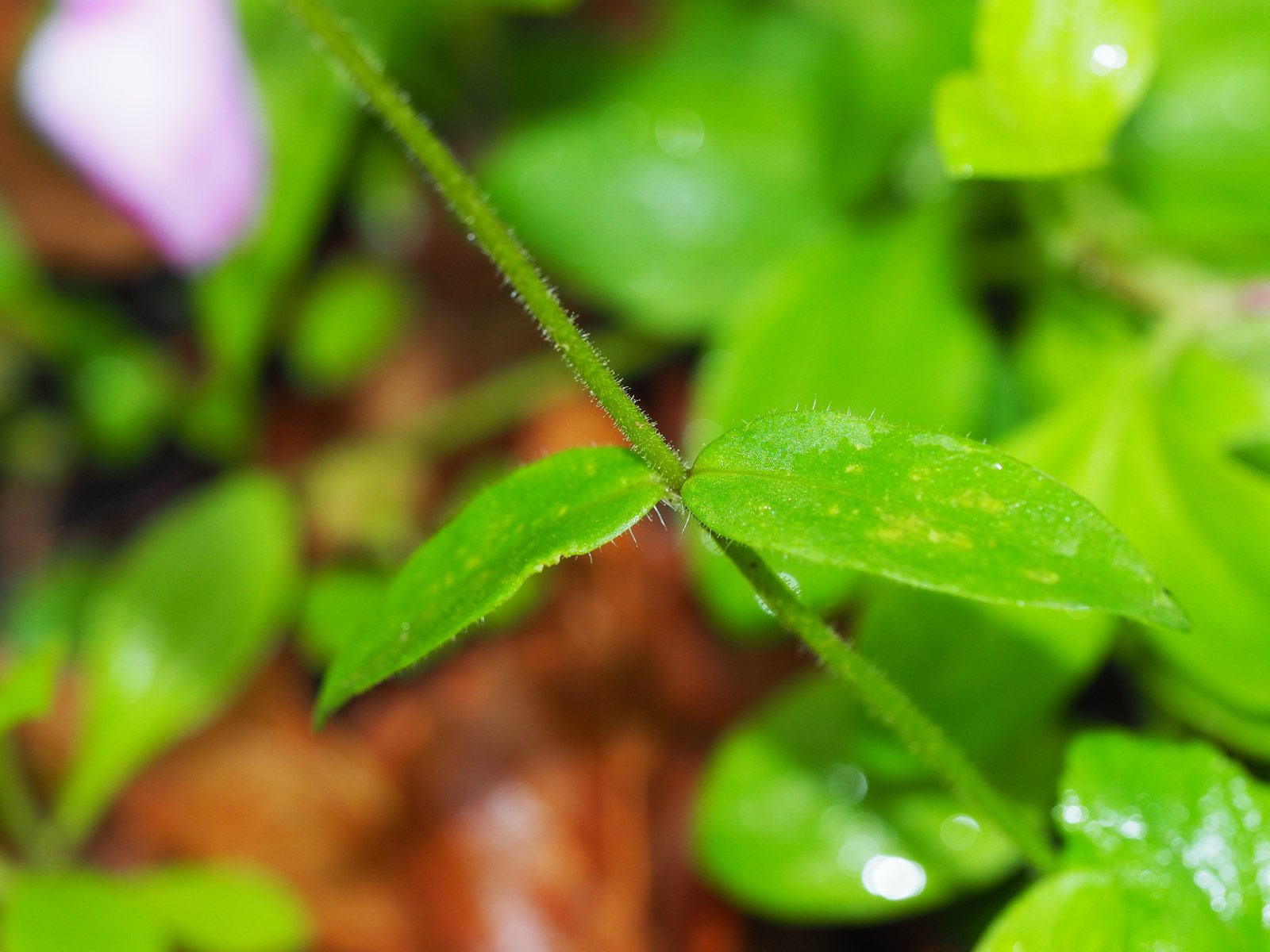
At a glance
- Sun
- Partial shade or dappled shade; morning sun is suitable where the soil stays moist. Avoid hot afternoon sun in warmer regions.
- Water
- Keep evenly moist while establishing. Once established, water during prolonged dry spells, especially beneath trees; avoid waterlogged soil.
- Soil
- Humus-rich, well-drained soil, preferably slightly acidic; tolerates neutral soil.
- Height
- 0.5-1 ft (0.15-0.3 m), including flower stems
- Spread
- 1-2 ft (0.3-0.6 m), extending farther over time through rooting stems
- Flowers
- Mid- to late spring; fragrant pink, violet or purple flowers, with blue-violet and white selections available.
- Foliage
- Low mats of small, oval green leaves, with narrower leaves on the upright flowering stems. Usually evergreen in mild climates, but may become semi-evergreen or lose foliage in cold winters.
- Growth
- Moderate; creeping stems root as they spread to form a loose mat.
- Care needed
- Low
The year at a glance
- Pollinators
- Wildlife
- Low allergen
- Fragrant
| J | F | M | A | M | J | J | A | S | O | N | D | |
|---|---|---|---|---|---|---|---|---|---|---|---|---|
| Flowers | ||||||||||||
| Plant |
Northern hemisphere months. In Australia, shift them by six.
- Difficulty
- Easy
- Toughness
- Fairly tough
Will it suit your garden?
Pick your zone, country, light and whether you have pets.
Full sun is 6 or more hours of direct sun a day, part shade 3 to 6 hours, shade under 3.
How it grows
Planting day
0.2 ft (0.06 m)
After 1 year
0.4 ft (0.12 m)
After 2 years
0.6 ft (0.19 m)
After 3 years
0.7 ft (0.22 m)
full size
About 3 years to full size.
From a typical nursery size, at an average rate for this kind of plant. A rule of thumb, not a forecast.
Good to know
- Cats and dogs
- Safe
- Native to
- the US
- Growth rate
- Moderate
Care
Jobs through the year
- WaterApr–May, Sep–Oct, every 14 days
- Water established mats when soil is dry; keep new plants evenly moist.
- WaterJun–Aug, every 7 days
- Water at soil level during dry spells, especially beneath trees.
- MulchMar–Apr
- Add a thin leaf-mould or compost dressing without covering crowns or rooted stems.
- PruneMar
- Remove winter-damaged foliage without disturbing shallow-rooted runners.
- DeadheadMay–Jun
- Snip spent flower stems just above the leafy mat.
- PruneJun, Sep
- Trim wandering runners where they exceed the intended area.
- DivideJun, Sep
- Divide crowded or thinning patches after flowering or in early autumn as needed.
- ProtectOct–Nov
- Remove thick, wet leaf accumulations that could smother the mat.
- Water at soil level during dry spells; do not let newly planted mats dry out.
- Spread a thin layer of leaf mould or compost around plants in spring, keeping rooted stems and crowns uncovered.
- Avoid heavy feeding; rich soil and excess nitrogen encourage leafy growth rather than flowers.
- Pull weeds from between young plants until the mat fills in.
- Divide crowded or thinning patches after flowering or in early autumn.
Pruning. After flowering, snip off spent flower stems just above the leafy mat. Trim wandering runners as needed, and remove winter-damaged foliage in early spring.
Through the year
- Early spring
- Remove dead foliage and winter debris without disturbing the shallow-rooted runners.
- Spring
- Plant into moist, well-drained soil and add a thin dressing of leaf mould.
- Late spring
- Remove spent flower stems after blooming; divide established patches if needed.
- Summer
- Check moisture beneath trees and water during prolonged dry weather.
- Early autumn
- Plant divisions or rooted runners and keep them moist until established.
- Late autumn
- Remove thick, wet leaf accumulations that could smother the mat, while leaving a light mulch around it.
In the garden
- Plant beneath deciduous trees for a flowering carpet before the canopy casts its deepest shade.
- Edge shaded paths with low mats that soften the boundary without hiding the path.
- Weave among ferns, hostas and woodland perennials to cover bare soil between larger plants.
- Combine with spring bulbs so the phlox foliage helps disguise their fading leaves.
Garden styles it suits: Woodland, Cottage garden, Secret garden, Pollinator garden and English country.
Plant it with: Ferns, Hostas, Foamflower, Solomon's seal, Virginia bluebells and Snowdrops.
Wildlife: Flowers provide nectar for butterflies and other pollinating insects. The low foliage offers shelter for small garden invertebrates.
Problems to watch for
- Powdery mildew can coat leaves in crowded, dry conditions; improve airflow, water the soil during drought and remove badly affected foliage.
- Slugs and snails may chew young growth; remove damp hiding places and use wildlife-conscious slug controls if damage persists.
- Root and crown rot can develop in waterlogged soil; improve drainage or move plants to a better-drained site.
- Scorched leaves and thinning mats usually indicate too much sun or dry soil; provide afternoon shade and water during dry spells.
Safety
Not known to be toxic to people, cats, dogs or horses; no poisonous parts are recognized. It is an ornamental plant, not a food crop.
Easily confused with
Moss phlox (Phlox subulata)
Has narrow, needle-like leaves and forms dense cushions suited to sunny, well-drained sites; creeping woodland phlox has broader, oval leaves and prefers partial shade.
Woodland phlox (Phlox divaricata)
Makes taller, looser flowering clumps with leafy upright stems rather than the conspicuous low, rooting runners of creeping woodland phlox.
The name
Phlox comes from the Greek word for flame, referring to flower colour, while stolonifera means bearing stolons, the creeping stems that root and spread.
Propagation. Separate rooted runners or divide clumps after flowering or in early autumn, then replant promptly and water well. Seed-grown plants may differ from named cultivars.
Checked against open data
- Accepted botanical name
- Phlox stolonifera
- In the US and Canada
- Native in the lower 48 states. Introduced in Canada.
- Native range
- Georgia, Kentucky, Maine, Maryland, North Carolina, Ohio, Pennsylvania, South Carolina, Tennessee, Vermont, Virginia and West Virginia.
Sources: GBIF (CC BY 4.0), USDA PLANTS and Trefle (CC BY 4.0). The care and design notes are LandscapeGPT's own.
See it in your own yard.
Upload a photo of your yard and see it redesigned with plants that suit your climate, each checked against your zone.