Creeping zinnia
Sanvitalia procumbens. Family Asteraceae. Annual.
Also called Trailing zinnia.
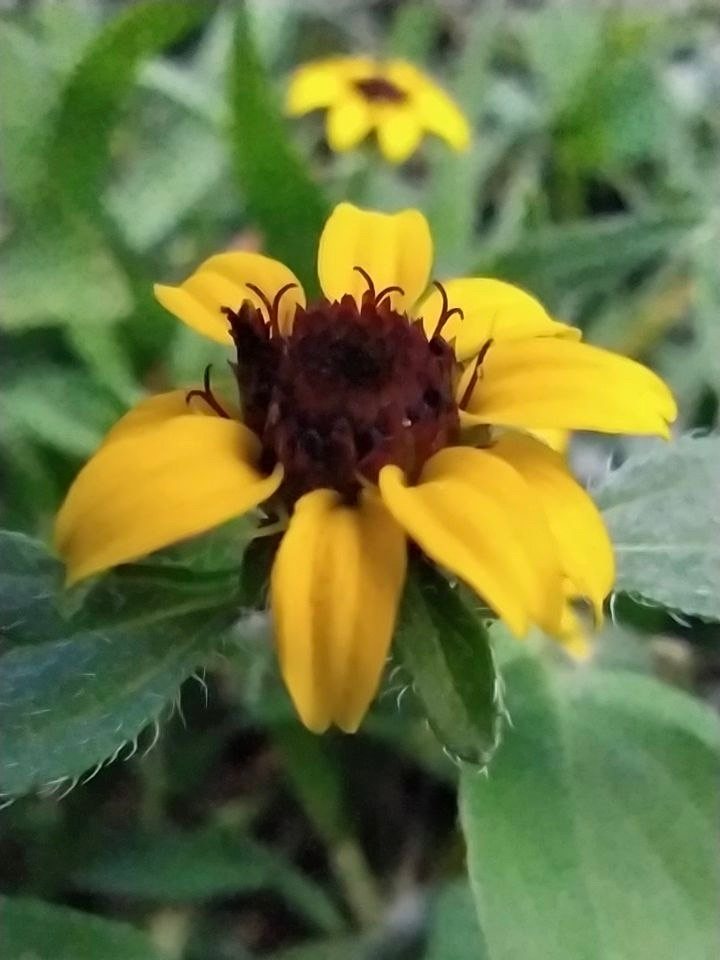
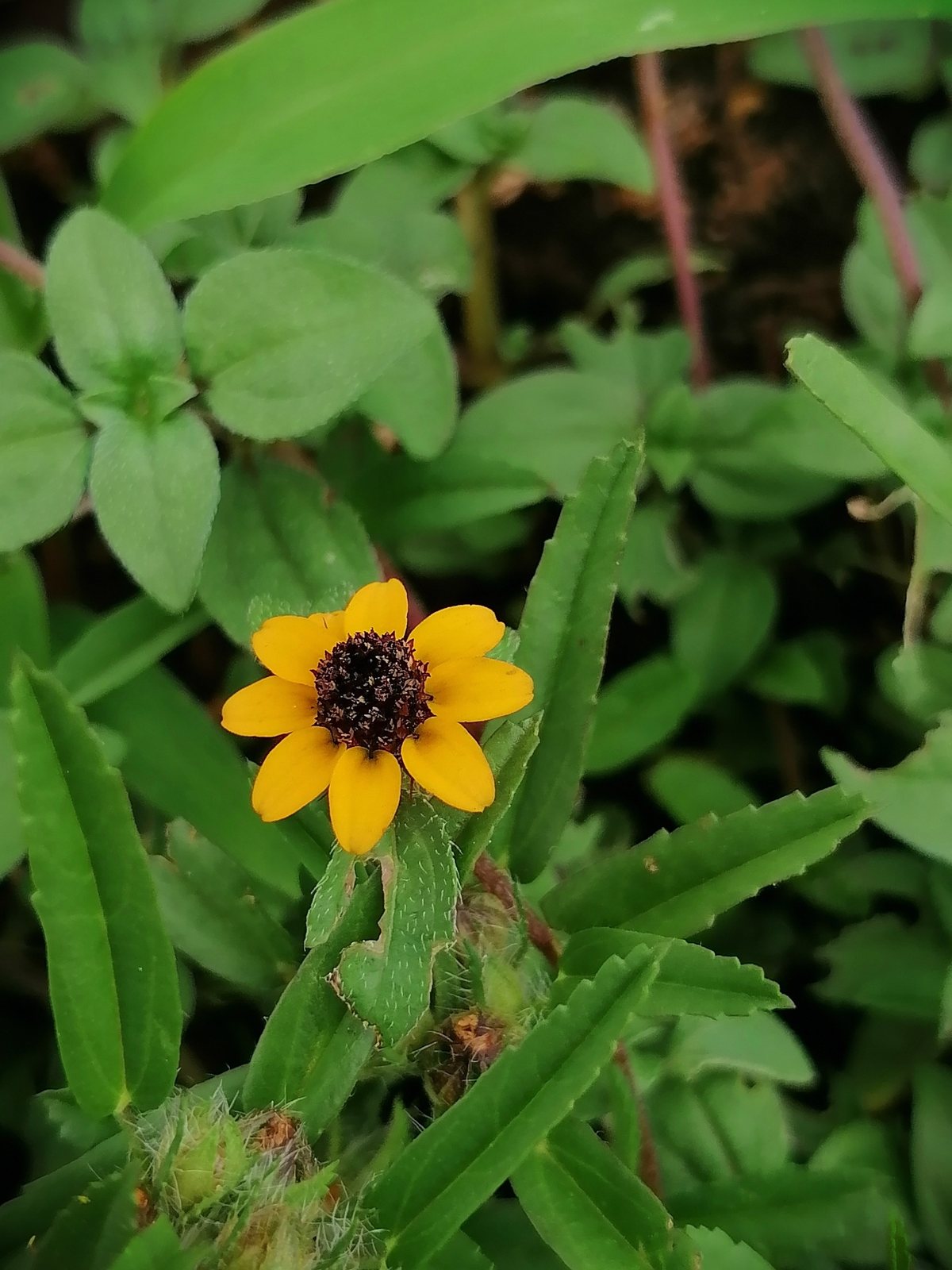
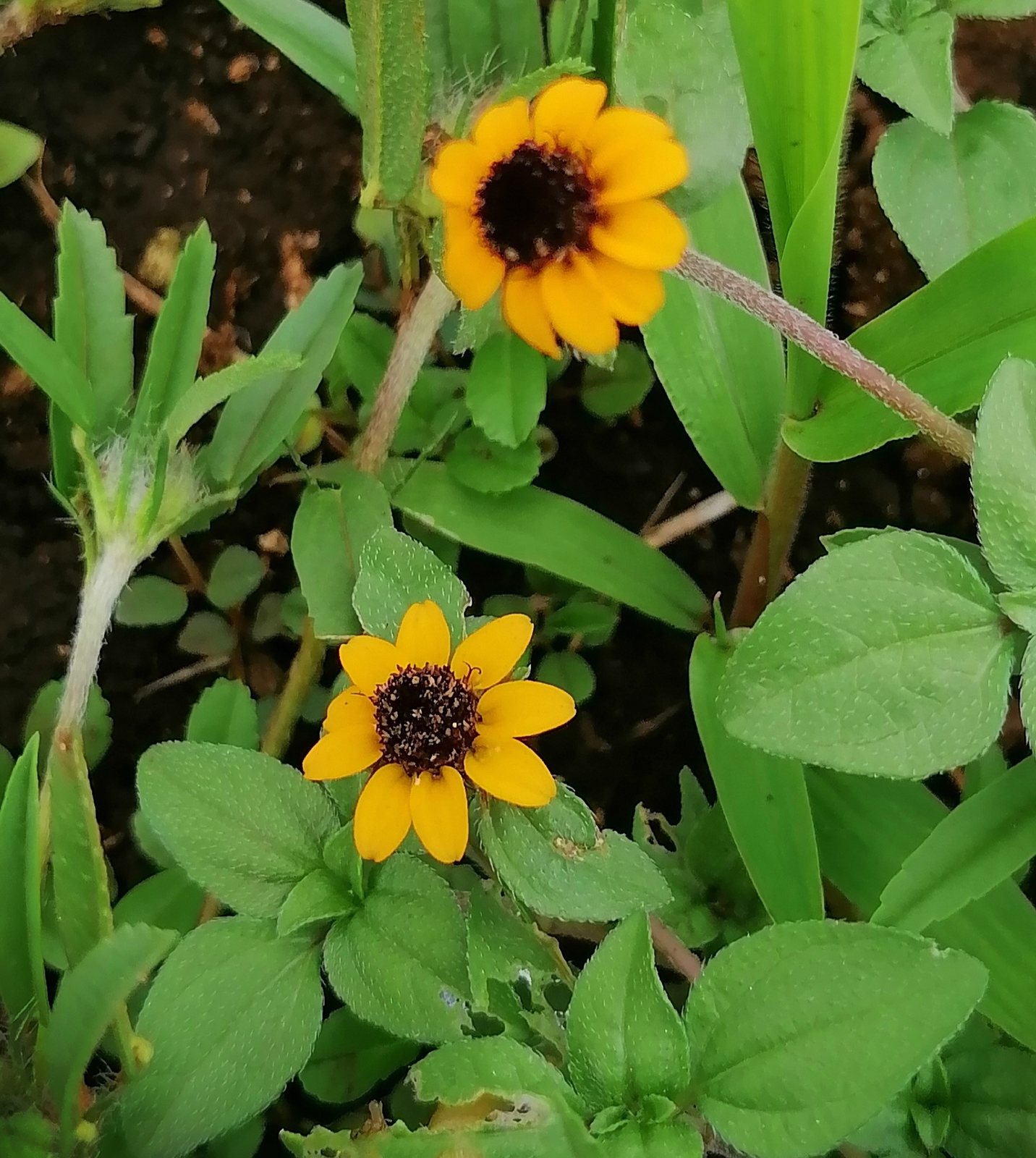
Creeping zinnia is a low, spreading Mexican plant grown as an annual for its small yellow daisies with dark centres. It flowers through summer into autumn, making a useful edging plant or trailer for sunny containers, despite not being a true zinnia.
At a glance
- Sun
- Full sun; tolerates light shade but flowers less freely.
- Water
- Water moderately, allowing the surface soil to dry between waterings. Established plants tolerate brief dry spells, but containers need regular checks.
- Soil
- Well-drained sandy or loamy soil of moderate fertility. Avoid heavy, persistently wet ground.
- Height
- 0.3-0.7 ft (0.1-0.2 m)
- Spread
- 1-1.5 ft (0.3-0.45 m)
- Flowers
- Summer to the first autumn frosts; small yellow daisies with dark brown centres, with orange-flowered forms also available.
- Foliage
- Small, oval to lance-shaped green leaves held in opposite pairs on branching, spreading stems.
- Growth
- Fast; forms a spreading mound within one growing season.
- Care needed
- Low
The year at a glance
- Pollinators
- Drought tolerant
- Heat tolerant
- Low allergen
| J | F | M | A | M | J | J | A | S | O | N | D | |
|---|---|---|---|---|---|---|---|---|---|---|---|---|
| Flowers | ||||||||||||
| Fruit | ||||||||||||
| Plant |
Northern hemisphere months. In Australia, shift them by six.
- Difficulty
- Easy
- Toughness
- Very tough
Will it suit your garden?
Pick your zone, country, light and whether you have pets.
Full sun is 6 or more hours of direct sun a day, part shade 3 to 6 hours, shade under 3.
How it grows
Planting day
0.5 ft (0.15 m)
After 1 year
0.5 ft (0.15 m)
full size
Full size in one season.
From a typical nursery size, at an average rate for this kind of plant. A rule of thumb, not a forecast.
Good to know
- Cats and dogs
- Safe
- Growth rate
- Fast
Care
Jobs through the year
- WaterMay, Sep–Oct, every 14 days
- Water established ground plants when surface soil dries and rain is lacking; seedlings need more.
- WaterJun–Aug, every 7 days
- Water established ground plants during dry spells; check containers more often.
- FeedJun–Sep, every 35 days
- Give container plants a light balanced liquid feed; avoid routine feeding in garden beds.
- PruneJul–Aug
- Lightly trim straggly stems if needed; routine deadheading is unnecessary.
- ProtectMay–Jun
- Plant after frost in warm soil and protect seedlings from slugs and snails.
- Plant out after the last frost, once the soil has warmed, spacing plants about 1 ft (0.3 m) apart.
- Water young plants regularly until established, then water when the surface soil dries.
- Use containers with drainage holes and avoid leaving pots standing in water.
- Feed container plants lightly with a balanced liquid fertiliser every four to six weeks; avoid heavy feeding in garden beds.
- Keep mulch thin and clear of the stems to prevent damp conditions around the crown.
Pruning. Deadheading is usually unnecessary. During summer, trim straggly stems lightly to keep plants compact and remove any dead or damaged growth.
Through the year
- Early spring
- Sow seed indoors about six to eight weeks before your last expected frost, covering it lightly and keeping it warm.
- Late spring
- Harden off seedlings gradually and plant outside after frost risk has passed.
- Early summer
- Check moisture while plants establish and give container plants a light feed.
- Midsummer
- Trim trailing stems if they become untidy and check pots frequently during hot weather.
- Autumn
- Collect seed from dry flower heads if wanted; seedlings from named cultivars may differ from their parents.
- Late autumn
- Remove plants after frost kills them and compost healthy material.
In the garden
- Edge sunny paths or borders with a low ribbon of yellow flowers.
- Let stems spill over the edges of pots, window boxes and hanging baskets.
- Plant in groups between taller summer annuals to cover exposed soil.
- Combine with purple verbena or blue salvia for a contrasting summer display.
Garden styles it suits: Cottage garden, Modern courtyard, Pollinator garden, Low-maintenance, Small-space and Hot border.
Plant it with: Verbena, Blue salvia, French marigold, Petunia, Sweet alyssum and Dwarf ornamental grasses.
Wildlife: The open flowers provide food for visiting bees, hoverflies and other small pollinating insects.
Problems to watch for
- Root or crown rot in wet soil: improve drainage, reduce watering and remove badly affected plants.
- Slugs and snails damaging seedlings: inspect after dark, remove pests and protect young plants where necessary.
- Sparse flowering in shade: move containers to full sun or choose a sunnier planting position next season.
- Leggy growth after heavy feeding: reduce fertiliser and lightly trim long stems.
Safety
Not known to be toxic to people, cats, dogs or horses. Species-specific safety information is limited, particularly for horses, so do not treat any part as edible or allow pets or livestock to eat large amounts.
Easily confused with
Narrowleaf zinnia (Zinnia angustifolia)
Usually forms a more upright mound, with narrower leaves and larger flowers rather than tiny daisies along creeping stems.
Butter daisy (Melampodium divaricatum)
Grows more upright and bushy, and its yellow daisies have yellow rather than dark brown centres.
Fern-leaved beggarticks (Bidens ferulifolia)
Has finely divided, fern-like leaves and generally larger yellow flowers with yellow centres.
The name
The species name procumbens means lying down or trailing, describing its spreading stems.
Propagation. Usually grown from seed sown indoors before the last frost or directly outdoors once the soil is warm and frost risk has passed. Cover seed lightly and keep evenly moist until germination; avoid keeping seedlings waterlogged.
Checked against open data
- Accepted botanical name
- Sanvitalia procumbens
- In the US and Canada
- Introduced in the lower 48 states.
- Native range
- Guatemala, Mexico Central, Mexico Gulf, Mexico Northeast, Mexico Southeast and Mexico Southwest.
- Measured
- Average height 16 cm.
Sources: GBIF (CC BY 4.0), USDA PLANTS and Trefle (CC BY 4.0). The care and design notes are LandscapeGPT's own.
See it in your own yard.
Upload a photo of your yard and see it redesigned with plants that suit your climate, each checked against your zone.