Cucamelon
Melothria scabra. Family Cucurbitaceae. Climber.
Also called Mexican sour gherkin, Mouse melon, Mexican miniature watermelon.
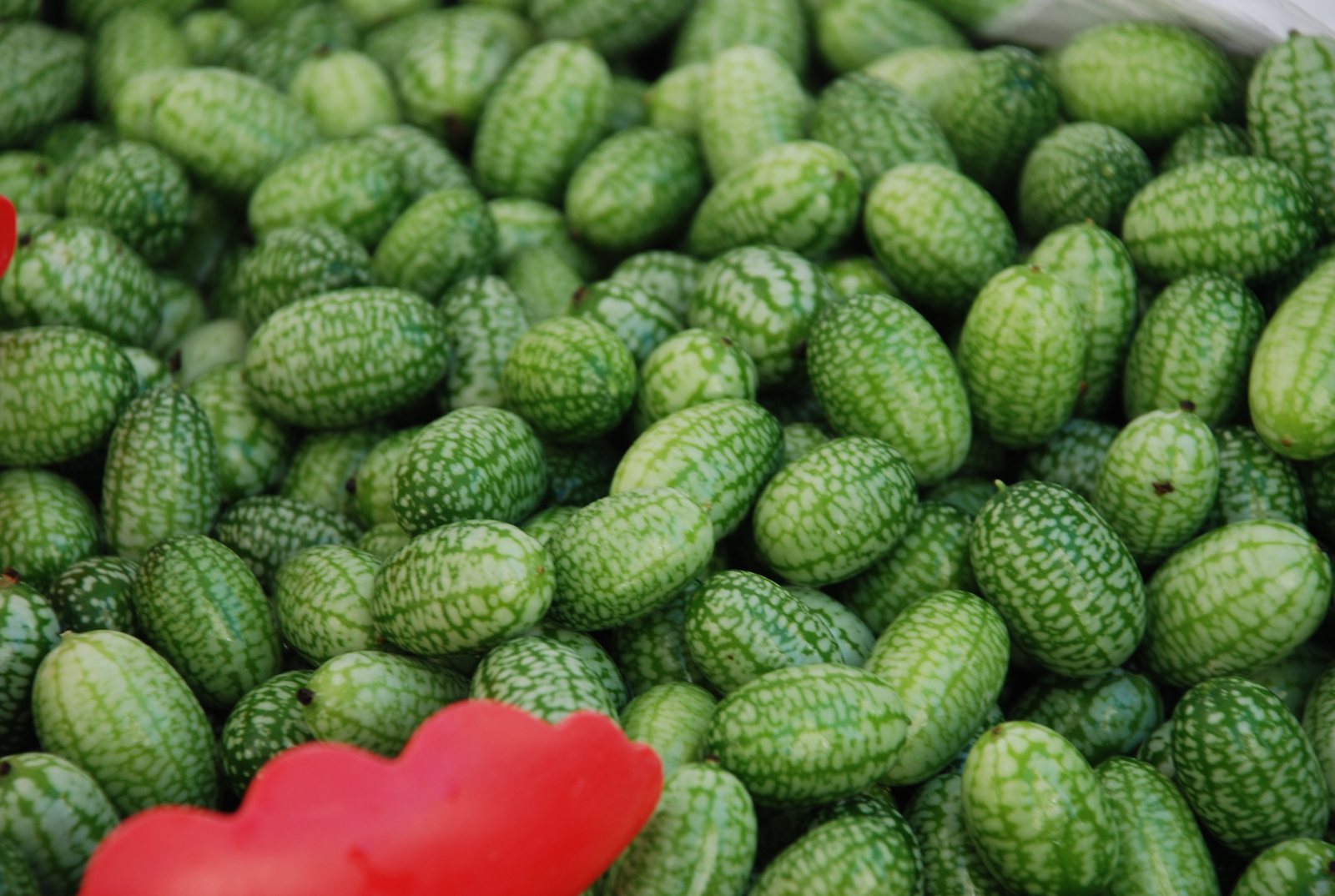
Cucamelon is a tender perennial vine usually grown as an annual for its grape-sized, watermelon-patterned fruits, which taste like cucumber with a tart finish. Its fine stems and small leaves cover a light trellis without the weight of full-sized cucumbers, but it needs a warm growing season to crop well.
At a glance
- Sun
- Full sun; a sheltered, warm position gives the best crops. In cool summers, grow under glass or in a polytunnel.
- Water
- Water regularly to keep the root zone evenly moist but not waterlogged, especially during flowering and fruiting. Containers may need daily watering in hot weather.
- Soil
- Fertile, well-drained soil enriched with compost; use a good-quality potting mix in containers.
- Height
- 6-10 ft (1.8-3 m) with support
- Spread
- 2-3 ft (0.6-0.9 m) when trained; unsupported stems can trail much farther
- Flowers
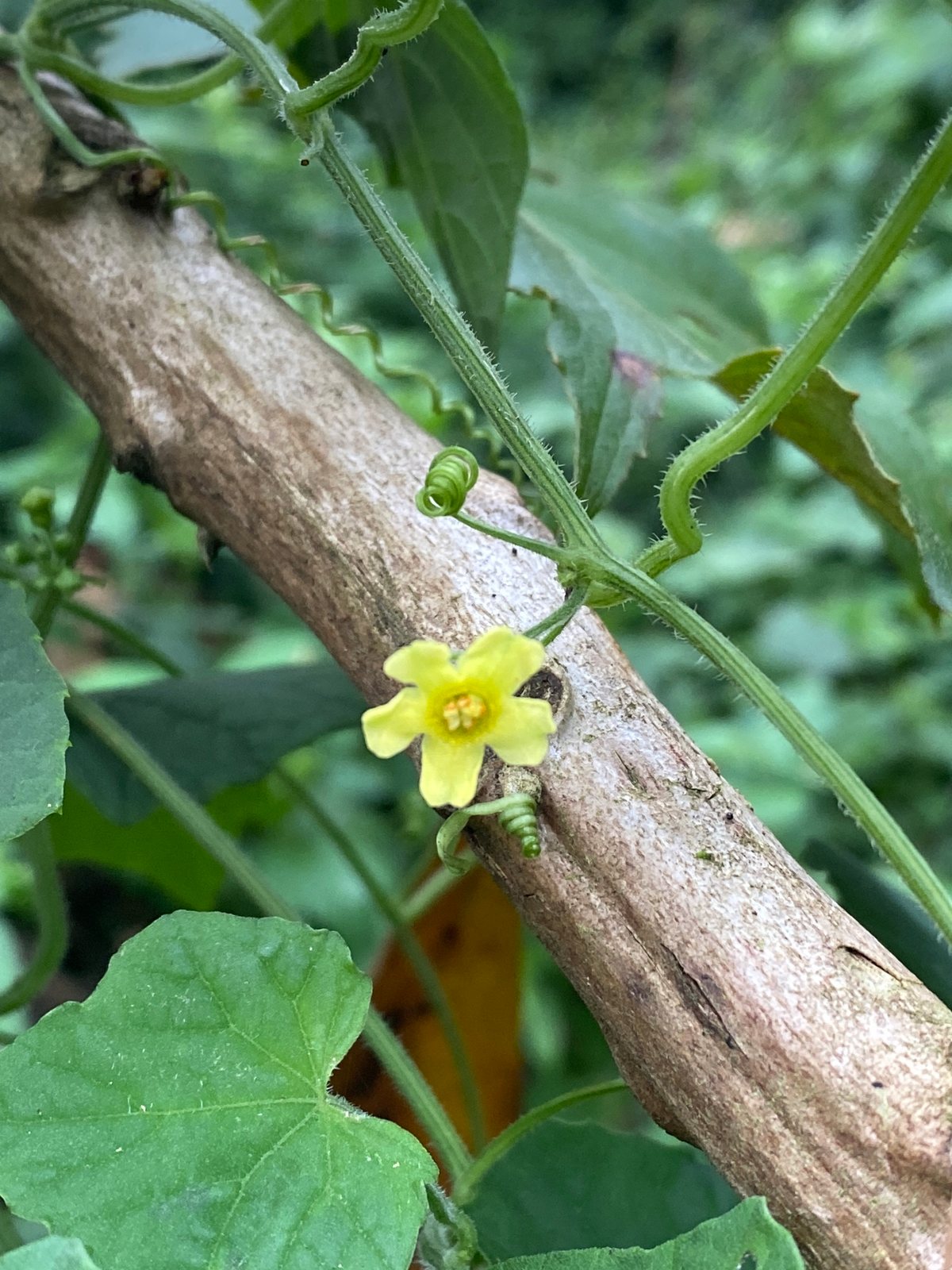
- Small yellow male and female flowers from summer into autumn
- Foliage
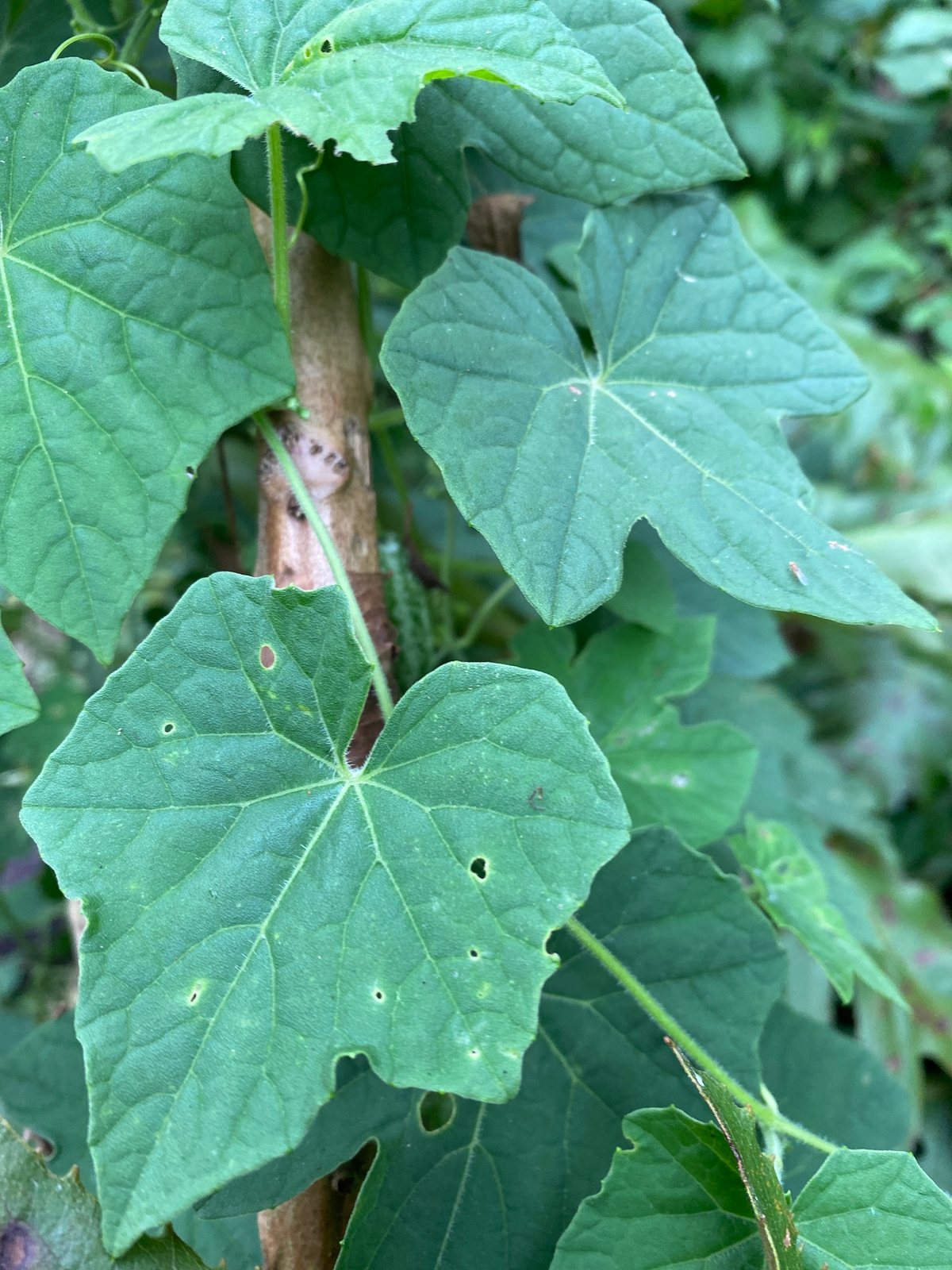
- Small, green, roughly textured leaves with three to five shallow lobes; slender stems climb by tendrils.
- Growth
- Slow to establish, then fast in warm weather
- Care needed
- Medium
The year at a glance
- Pollinators
- Low allergen
- Edible
| J | F | M | A | M | J | J | A | S | O | N | D | |
|---|---|---|---|---|---|---|---|---|---|---|---|---|
| Flowers | ||||||||||||
| Fruit | ||||||||||||
| Plant |
Northern hemisphere months. In Australia, shift them by six.
- Difficulty
- Moderate
- Toughness
- Fairly tough
Will it suit your garden?
Pick your zone, country, light and whether you have pets.
Full sun is 6 or more hours of direct sun a day, part shade 3 to 6 hours, shade under 3.
How it grows
Planting day
2 ft (0.6 m)
After 1 year
3 ft (0.9 m)
After 2 years
4 ft (1.2 m)
After 3 years
5 ft (1.5 m)
After 5 years
6 ft (1.8 m)
full size
About 4 years to full size.
From a typical nursery size, at an average rate for this kind of plant. A rule of thumb, not a forecast.
Good to know
- Cats and dogs
- Safe
- Growth rate
- Moderate
Care
Jobs through the year
- WaterMay–Jun, Sep–Oct, every 4 days
- Check established vines and water if needed to keep roots evenly moist; check new transplants more often.
- WaterJul–Aug, every 2 days
- Check established vines and soak the root zone when needed; avoid waterlogging and adjust for rain.
- FeedMay–Jun
- Work mature compost into the planting area before planting; avoid excessive nitrogen.
- MulchJun
- Mulch warm, moist soil to reduce drying and soil splash.
- PruneJun–Sep
- Guide shoots onto a trellis; shorten only overlong stems and remove badly diseased foliage.
- HarvestJul–Oct
- Pick firm, marked green fruits at 2–2.5 cm long before they soften or become seedy.
- ProtectSep–Oct
- Cover against early cold nights to extend cropping; lift tubers before frost only if overwintering.
- Plant out only after frost danger has passed and the soil has warmed; harden off indoor-raised plants first.
- Provide netting, wires or a light trellis at planting and guide young shoots onto it.
- Water at soil level and mulch once the soil is warm to reduce drying and soil splash.
- Work compost into the soil before planting; once fruiting starts, feed container plants with a tomato fertiliser according to its label.
- Use a container holding at least 5 US gal (19 L) for one plant, with free-draining holes.
Pruning. Guide or tie in shoots as they grow, and shorten stems that outgrow their support. Remove dead or badly diseased foliage; routine heavy pruning is unnecessary.
Harvest
Pick fruits in summer and autumn when they are about 0.75-1 in (2-2.5 cm) long, firm and green with darker markings, before they soften or become seedy. Snip or gently detach them every few days; regular picking helps maintain production.
Through the year
- Early spring
- Sow seeds indoors in warmth, about 4-6 weeks before your expected last frost.
- Late spring
- Harden off plants, then plant into warm soil after frost danger has passed; install supports.
- Early summer
- Guide shoots onto the trellis, mulch warm soil and establish regular watering.
- Summer
- Pick firm, young fruits frequently and feed container plants once cropping begins.
- Early autumn
- Continue harvesting while conditions remain warm; cover plants against early cold nights if practical.
- Late autumn
- Clear frost-killed vines. To try keeping a plant, lift its tuberous roots before freezing weather and store them barely moist in a cool, frost-free place.
In the garden
- Train over a narrow trellis in a vegetable bed to grow fruit without using much ground space.
- Grow in a large patio container with an obelisk for a light-textured edible screen.
- Run along a sunny potager fence beside basil and marigolds.
- Use on a low arch in a family vegetable garden, keeping the small fruits within easy picking reach.
Garden styles it suits: Potager (kitchen garden), Edible landscape, Cottage garden, Homestead, Small-space and Family-friendly.
Plant it with: Basil, French marigold, Calendula, Sweet alyssum and Lettuce.
Wildlife: The small flowers attract bees and other pollinating insects. Outdoor plants generally need insect visits to transfer pollen between male and female flowers; under cover, poor pollination may require hand-pollination.
Problems to watch for
- Poor growth or little fruit in cool weather: use a warmer, sheltered site or grow under cover; avoid planting into cold soil.
- Aphids on soft shoots: wash off small colonies with water and encourage natural predators; use an approved insecticidal soap if needed.
- Red spider mites under cover: check leaf undersides for fine webbing and stippling; avoid drought stress and use biological controls where available.
- Powdery mildew: keep roots evenly watered, improve airflow and remove badly affected leaves without stripping the vine.
Safety
The young fruits are edible for people. Cucamelon is not known to be toxic to cats, dogs or horses, but species-specific safety information is limited, especially for leaves, stems and tuberous roots; do not offer these as feed.
Easily confused with
Creeping cucumber (Melothria pendula)
This close relative has similarly small fruits, but they ripen black; cucamelon fruits remain green-patterned before becoming pale or yellowish with age. Do not eat unidentified wild fruits.
Watermelon (Citrullus lanatus)
Watermelon's patterned young fruits can look similar, but its leaves are much larger and usually deeply divided, and its fruits develop far beyond grape size.
The name
The species name scabra means rough, referring to the plant's rough-textured foliage, while cucamelon combines cucumber and melon.
Propagation. Grow from seed sown about 0.5 in (1 cm) deep at roughly 70-80°F (21-27°C); germination can be slow and uneven. Established plants may form tuberous roots that can be overwintered frost-free and restarted in spring, although survival is not guaranteed.
Checked against open data
- Accepted botanical name
- Melothria scabra
- Native range
- Colombia, El Salvador, Guatemala, Honduras, Mexico Central, Mexico Northeast, Mexico Northwest, Mexico Southeast, Mexico Southwest, Nicaragua, Panamá and Venezuela.
Sources: GBIF (CC BY 4.0) and Trefle (CC BY 4.0). The care and design notes are LandscapeGPT's own.
See it in your own yard.
Upload a photo of your yard and see it redesigned with plants that suit your climate, each checked against your zone.