Cut-leaf daisy
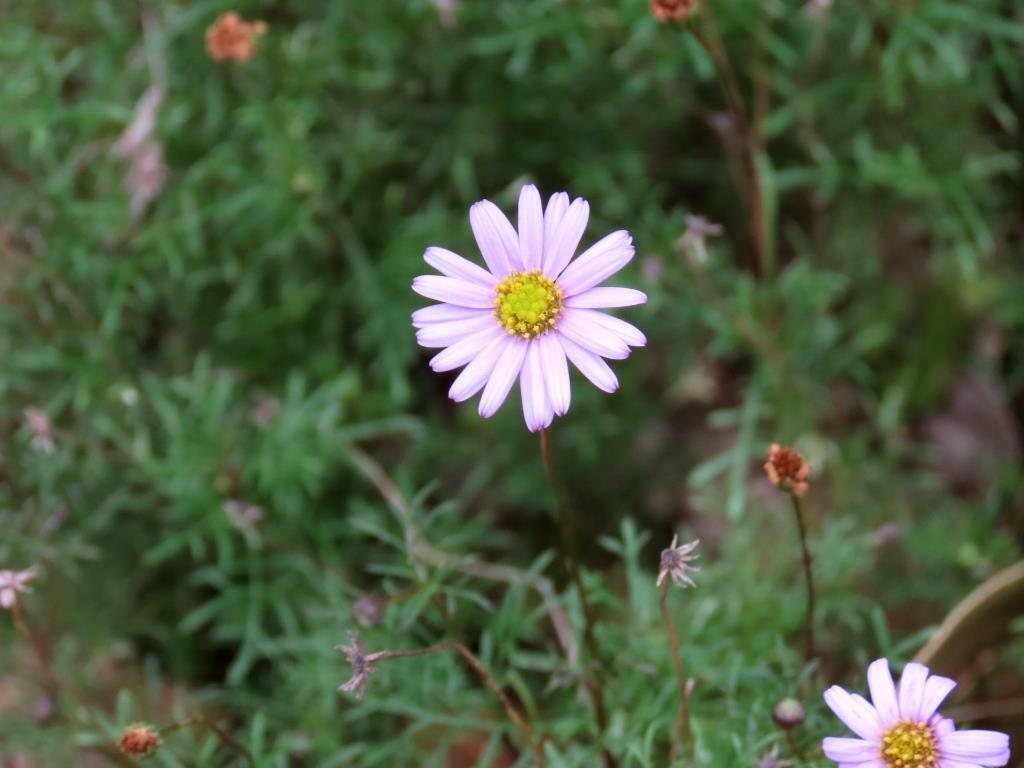
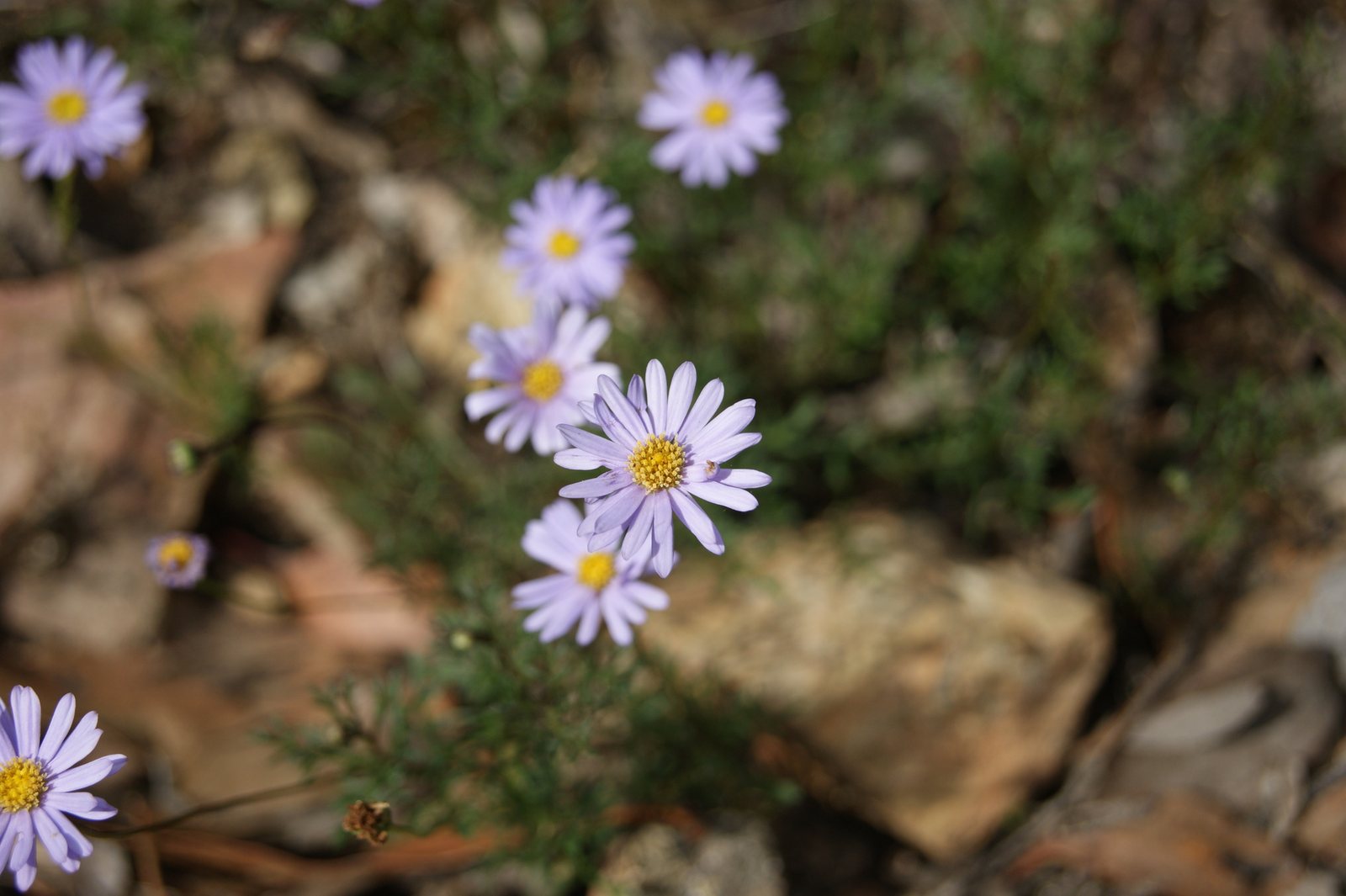
Brachyscome multifida. Family Asteraceae. Perennial.
Also called Rock daisy, Hawkesbury daisy.
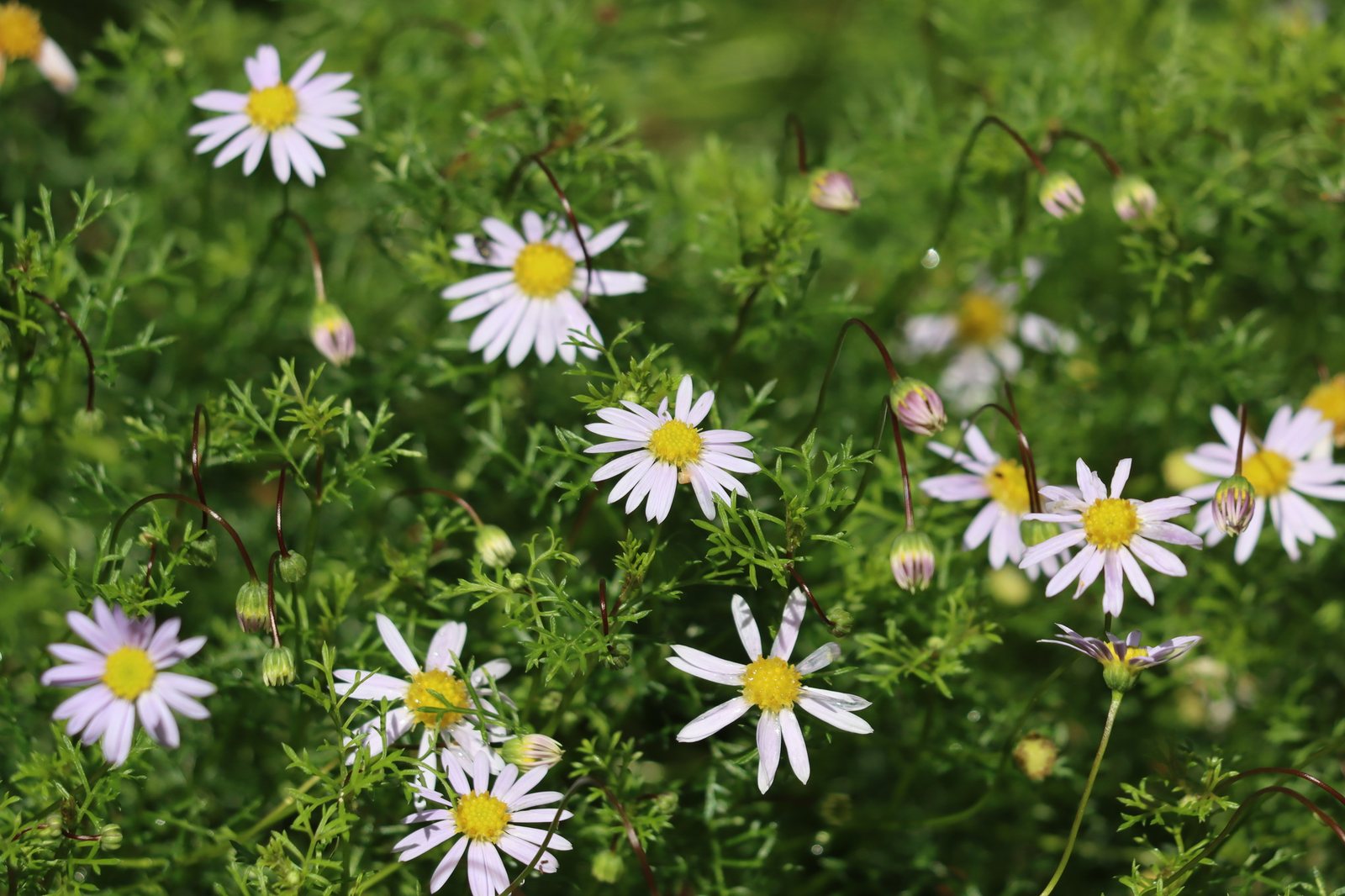
Brachyscome multifida is a low, spreading Australian perennial with finely divided leaves and small, yellow-centred daisies. Gardeners grow it for its long flowering season in borders, rock gardens and containers. It remains evergreen in mild climates but is usually grown as an annual or overwintered under cover in colder areas.
At a glance
- Sun
- Full sun to light partial shade; provide some afternoon shade in very hot inland gardens.
- Water
- Water regularly while establishing, then when the upper soil has dried. Established plants tolerate short dry spells, but containers need more frequent watering.
- Soil
- Well-drained sandy, loamy or gravelly soil; avoid heavy soil that stays wet, especially in winter.
- Height
- 0.5-1 ft (0.15-0.3 m)
- Spread
- 1-2 ft (0.3-0.6 m)
- Flowers
- Small mauve, lilac or purple daisies with yellow centres from spring into autumn; some cultivars have pink or white flowers. Flowering may continue through mild winters.
- Foliage
- Evergreen. Small green leaves deeply divided into narrow lobes, forming a soft, spreading mound.
- Growth
- Moderate to fast in warm weather.
- Care needed
- Low
The year at a glance
- Pollinators
- Heat tolerant
- Low allergen
| J | F | M | A | M | J | J | A | S | O | N | D | |
|---|---|---|---|---|---|---|---|---|---|---|---|---|
| Flowers | ||||||||||||
| Plant |
Northern hemisphere months. In Australia, shift them by six.
- Difficulty
- Moderate
- Toughness
- Fairly tough
Will it suit your garden?
Pick your zone, country, light and whether you have pets.
Full sun is 6 or more hours of direct sun a day, part shade 3 to 6 hours, shade under 3.
How it grows
Planting day
0.7 ft (0.22 m)
full size
About 2 years to full size.
From a typical nursery size, at an average rate for this kind of plant. A rule of thumb, not a forecast.
Good to know
- Cats and dogs
- Safe
- Native to
- Australia
- Growth rate
- Fast
Care
Jobs through the year
- WaterMay, Sep–Oct, every 14 days
- Water established ground plants when the upper soil dries; young plants and pots need more.
- WaterJun–Aug, every 7 days
- Check soil and water at ground level when dry, allowing drainage between waterings.
- FeedApr–May
- Apply a light dose of balanced fertiliser as growth resumes.
- MulchMay
- Apply a thin mulch without covering the crown.
- PruneMay
- Trim winter-damaged or straggly shoots back to healthy leafy growth.
- DeadheadJun–Sep, every 21 days
- Lightly shear faded flowering shoots after each main flush.
- ProtectJan–Apr, Oct–Dec
- Keep pots or rooted cuttings bright, cool and frost-free; do not let roots dry completely.
- Plant after the risk of hard frost has passed, allowing room for the stems to spread.
- Water at soil level and let the surface dry between waterings; do not leave pots standing in water.
- Apply a light dose of balanced fertiliser in spring; feed container plants sparingly during flowering.
- Keep mulch away from the crown and use a gritty potting mix in containers.
- In cold regions, keep a potted plant or rooted cuttings in a bright, frost-free place over winter.
Pruning. Lightly shear after a main flush of flowers to remove faded blooms and encourage compact new growth. In spring, trim winter-damaged or straggly stems back to healthy leafy growth rather than cutting hard into bare woody bases.
Through the year
- Spring
- Trim overwintered plants and apply a light feed as active growth resumes.
- Late spring
- Plant out after hard frosts, watering thoroughly to settle the roots.
- Summer
- Check containers frequently for dryness and lightly shear plants after heavy flowering.
- Late summer
- Take non-flowering shoot cuttings to replace ageing plants or keep under cover.
- Autumn
- Move plants under cover before frost where winters are too cold for outdoor survival.
- Winter
- Keep sheltered plants bright and cool, watering sparingly without letting the root ball dry completely.
In the garden
- Edge sunny paths and borders with low mounds of finely cut foliage and small daisies.
- Let stems spill over container rims or low retaining walls.
- Plant among rocks in free-draining pockets, where the flowers soften hard surfaces.
- Combine with compact grasses, lavender and other small sun-loving plants for contrasting leaf shapes.
Garden styles it suits: Australian native, Cottage garden, Dry gravel garden, Coastal, Pollinator garden and Small-space.
Plant it with: Lavender, Blue fescue, Creeping thyme, Fan flower, Kangaroo paw and Strawflower.
Wildlife: The open flower heads provide nectar and pollen for bees and other small flower-visiting insects.
Problems to watch for
- Root and crown rot in wet soil: improve drainage, reduce watering and discard badly rotted plants.
- Aphids on soft shoots: wash off small colonies with water; use insecticidal soap if needed, avoiding open flowers.
- Slugs and snails eating tender growth: inspect after dark, remove them and clear damp hiding places around young plants.
- Sparse flowering and floppy growth in shade or rich soil: move to a sunnier position and reduce feeding.
Safety
Not known to be toxic to people, cats, dogs or horses. Species-specific toxicity information is limited, so do not treat the leaves or flowers as edible.
Easily confused with
Swan River daisy (Brachyscome iberidifolia)
Usually an upright annual with a wider range of flower colours and often dark flower centres; cut-leaf daisy is a spreading perennial with typically yellow centres. Leaf shape overlaps, so check the plant label.
Seaside daisy (Erigeron glaucus)
Has broader, spoon-shaped leaves rather than finely divided foliage, and generally larger flowers with many narrow rays.
Mexican fleabane (Erigeron karvinskianus)
Its small flowers open white and age pink, often showing both colours together; its leaves are simple or shallowly lobed rather than deeply cut into narrow segments.
The name
The species name multifida means 'many-divided', referring to the finely cut leaves that also give cut-leaf daisy its common name.
Propagation. Root softwood or semi-ripe cuttings from non-flowering shoots in spring or summer. Seed can also be sown in spring, but seedlings from named cultivars may differ from the parent.
Checked against open data
- Accepted botanical name
- Brachyscome multifida
- Native range
- New South Wales, Queensland and Victoria.
Sources: GBIF (CC BY 4.0) and Trefle (CC BY 4.0). The care and design notes are LandscapeGPT's own.
See it in your own yard.
Upload a photo of your yard and see it redesigned with plants that suit your climate, each checked against your zone.