Dahlberg daisy
Thymophylla tenuiloba. Family Asteraceae. Annual.
Also called Golden fleece, Golden dog-fennel.
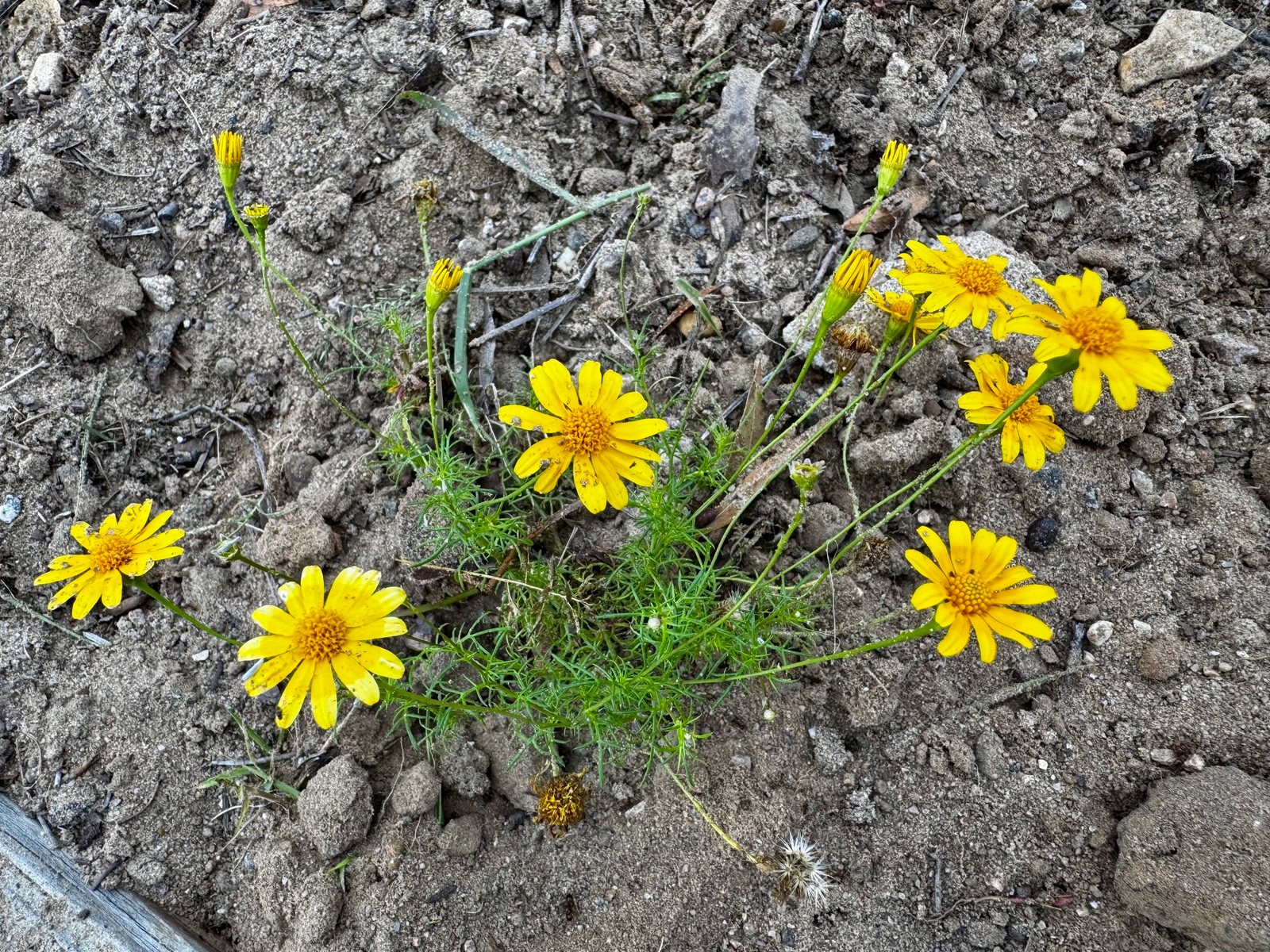
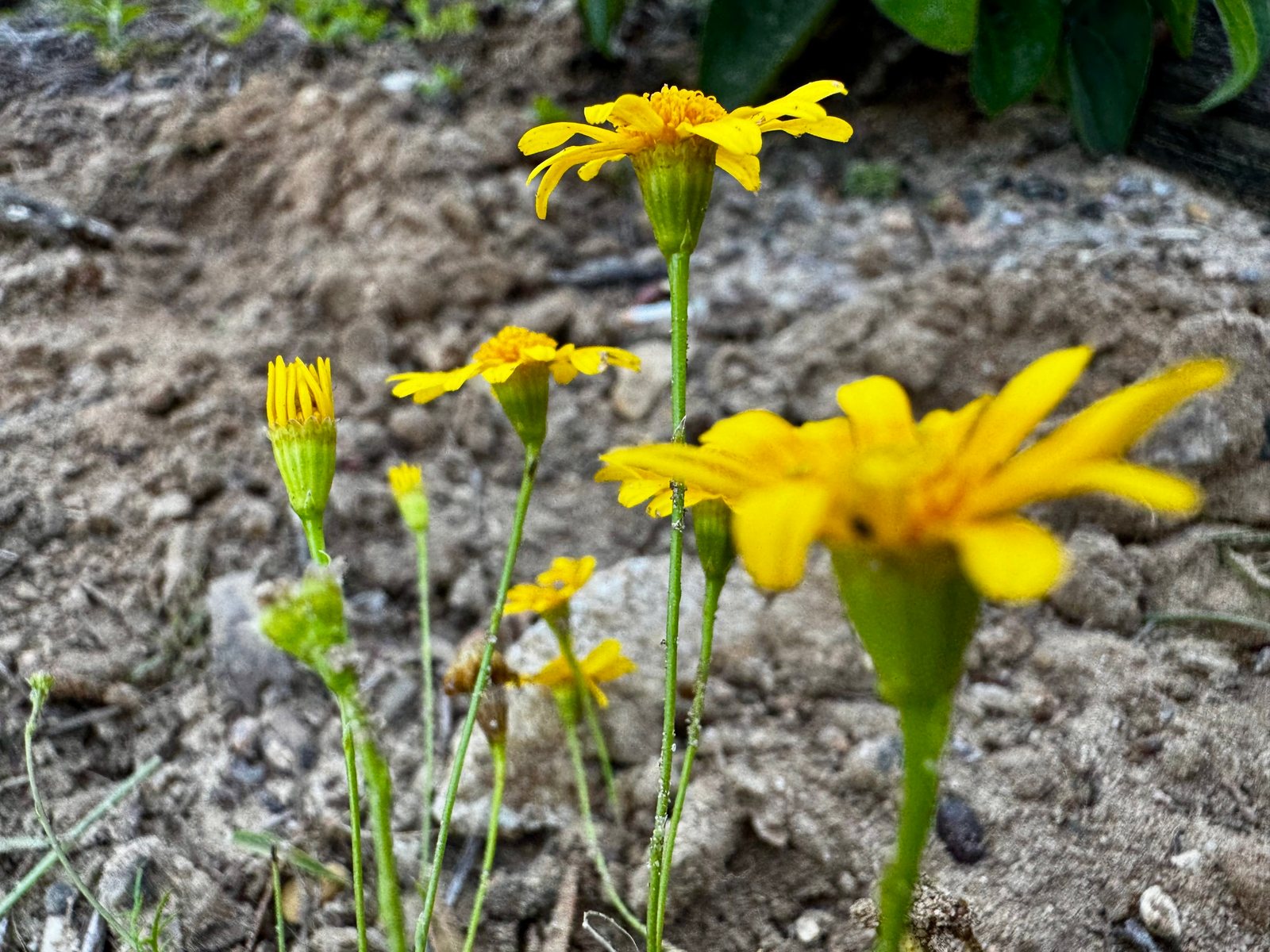
Dahlberg daisy is a small, bushy plant with finely divided, aromatic leaves and masses of tiny yellow daisies. It is grown as an annual for sunny edging, containers and gaps in gravel gardens, although it can persist as a short-lived perennial in frost-free climates.
At a glance
- Sun
- Full sun; flowering is reduced in shade.
- Water
- Water regularly while establishing, then let the soil surface dry between waterings. Established plants tolerate short dry spells, but containers need more frequent attention.
- Soil
- Well-drained sandy or gritty soil; tolerates relatively poor soil but struggles in wet, heavy clay.
- Height
- 0.5-1 ft (0.15-0.3 m)
- Spread
- 0.5-1 ft (0.15-0.3 m)
- Flowers
- Small, bright yellow daisies from late spring or early summer into autumn, until frost.
- Foliage
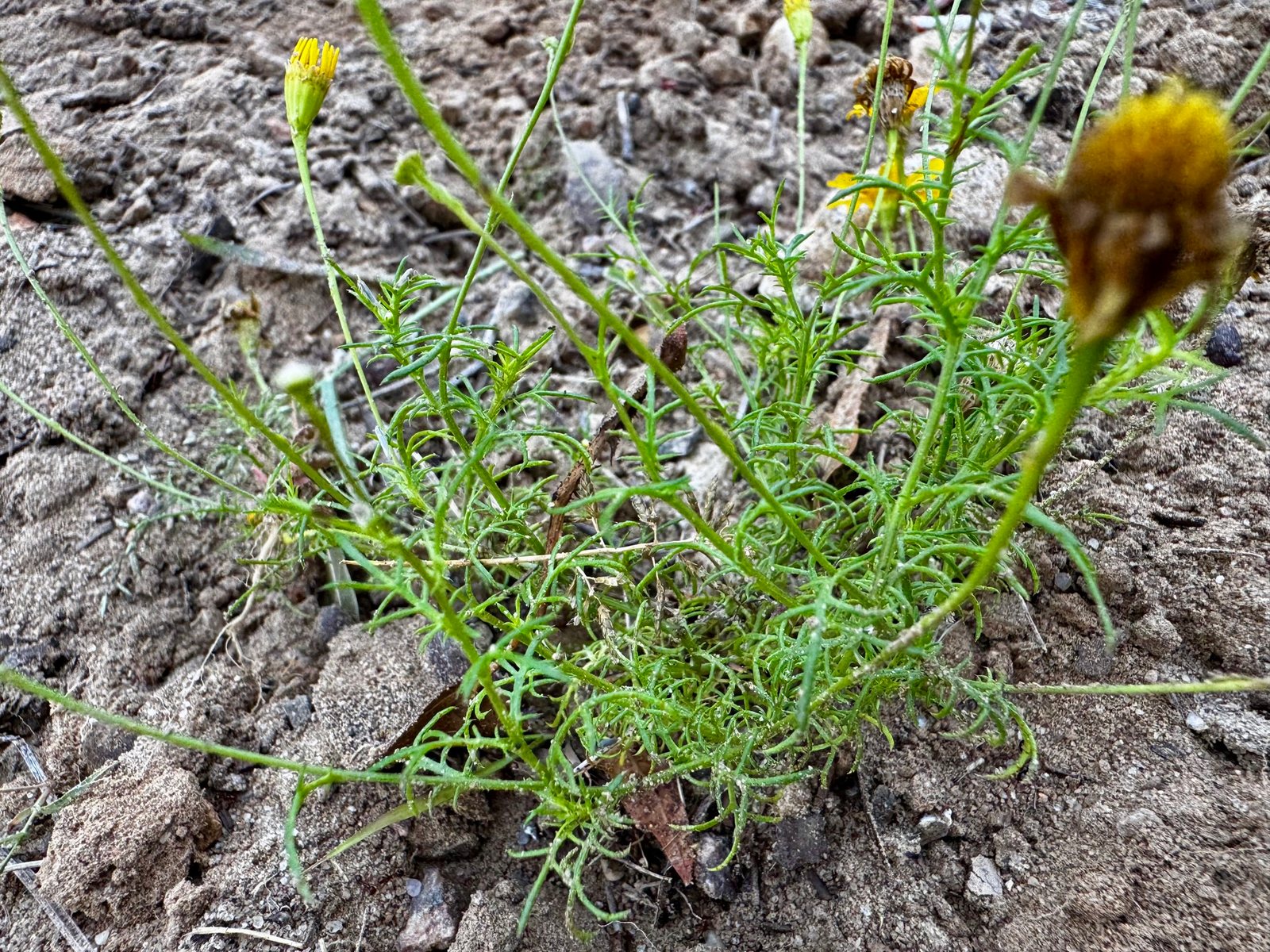
- Fine, deeply divided green leaves with a noticeable scent when crushed.
- Growth
- Fast; flowers in its first growing season.
- Care needed
- Low
The year at a glance
- Pollinators
- Drought tolerant
- Heat tolerant
- Low allergen
| J | F | M | A | M | J | J | A | S | O | N | D | |
|---|---|---|---|---|---|---|---|---|---|---|---|---|
| Flowers | ||||||||||||
| Plant |
Northern hemisphere months. In Australia, shift them by six.
- Difficulty
- Easy
- Toughness
- Very tough
Will it suit your garden?
Pick your zone, country, light and whether you have pets.
Full sun is 6 or more hours of direct sun a day, part shade 3 to 6 hours, shade under 3.
How it grows
Planting day
0.5 ft (0.15 m)
After 1 year
0.7 ft (0.22 m)
full size
Full size in one season.
From a typical nursery size, at an average rate for this kind of plant. A rule of thumb, not a forecast.
Good to know
- Cats and dogs
- Safe
- Native to
- the US
- In the garden
- Spreads vigorously: plan to contain it.
- Growth rate
- Fast
Care
Jobs through the year
- WaterMay, Sep–Oct, every 14 days
- For established plants in the ground, water if dry; let the surface dry between soakings and water seedlings more often.
- WaterJun–Aug, every 7 days
- Water established ground plants when the surface dries, skipping after rain; containers need more frequent checks.
- PruneMay–Jun
- Pinch young shoot tips to encourage branching.
- PruneJul–Aug
- Lightly trim straggly plants without cutting into bare, leafless stems.
- MulchMay–Jun
- If needed, apply a thin gravel mulch, keeping stems clear.
- Plant outdoors after frost risk has passed and the soil has warmed.
- Space plants about 0.5-1 ft (0.15-0.3 m) apart in freely draining soil.
- Water at soil level, allowing the surface to dry before watering again.
- Avoid rich feeding; give container plants an occasional dilute balanced feed if growth becomes weak.
- Use a light gravel mulch if needed, keeping it clear of the stems.
Pruning. Pinch young shoots to encourage branching. If plants become straggly or flowering slows in midsummer, trim them lightly without cutting into bare, leafless stems.
Through the year
- Early spring
- Sow seed indoors in bright light about 6-8 weeks before the last expected frost; press seed onto the surface and barely cover.
- Late spring
- Harden off seedlings and plant outside after frost risk has passed.
- Early summer
- Water new plants regularly until rooted, then allow the soil surface to dry between waterings.
- Midsummer
- Lightly trim straggly growth and check containers frequently for drying out.
- Autumn
- Remove unwanted seedlings and spent plants before seed spreads where it is not wanted.
- Winter
- Clear frost-killed plants and improve drainage before the next planting season.
In the garden
- Edge sunny paths with low cushions of yellow flowers and fine-textured foliage.
- Plant at the front of a warm-coloured border with dwarf salvias and annual verbenas.
- Use around the edges of pots and hanging baskets for a loose, lightly trailing effect.
- Fill seasonal gaps between stones in a sunny gravel garden, where drainage is sharp.
Garden styles it suits: Cottage garden, Dry gravel garden, Mediterranean, Pollinator garden, Low-maintenance and Small-space.
Plant it with: Sweet alyssum, Annual verbena, Blue salvia, Portulaca, French marigold and California poppy.
Wildlife: The open flowers provide nectar and pollen for small bees, hoverflies and other flower-visiting insects.
Problems to watch for
- Root rot in wet soil: improve drainage, avoid standing water in saucers and let the surface dry between waterings.
- Sparse flowers and floppy growth: move to full sun and reduce nitrogen-rich feeding.
- Aphids on soft shoots: rinse off with water; use insecticidal soap if an infestation persists, following the label.
- Dry, collapsing container plants: check moisture frequently in hot weather and water the root ball thoroughly when dry.
Safety
Not known to be toxic to people, cats, dogs or horses, but species-specific safety information is limited. No particular part is established as poisonous; it is not a food plant, so discourage eating it.
Where it spreads. Can self-seed freely in warm climates and is naturalised in parts of Australia, including Queensland and New South Wales. Remove unwanted seedlings and check local weed guidance before planting near bushland.
Easily confused with
Damianita (Chrysactinia mexicana)
Also has aromatic foliage and small yellow daisies, but forms a woody evergreen shrub with narrow, mostly undivided leaves rather than soft, finely divided foliage.
Signet marigold (Tagetes tenuifolia)
Has divided aromatic leaves, but its leaflets are broader and toothed, and its yellow or orange flower heads usually show five broad, notched outer petals.
Sanvitalia (Sanvitalia procumbens)
Forms a spreading mat with broad, undivided leaves and yellow daisies that usually have conspicuous dark centres.
The name
The botanical epithet tenuiloba means slender-lobed, referring to the finely divided leaves.
Propagation. Grow from seed, either indoors before the last frost or directly outdoors once the soil is warm. Press seed onto moist seed compost and barely cover, as light helps germination; keep moist but not waterlogged.
Checked against open data
- Accepted botanical name
- Thymophylla tenuiloba
- In the US and Canada
- Native in the lower 48 states.
- Native range
- Alabama, Florida, Louisiana, Mexico Northeast, Mississippi, South Carolina and Texas.
Sources: GBIF (CC BY 4.0), USDA PLANTS and Trefle (CC BY 4.0). The care and design notes are LandscapeGPT's own.
See it in your own yard.
Upload a photo of your yard and see it redesigned with plants that suit your climate, each checked against your zone.