David viburnum
Viburnum davidii. Family Viburnaceae. Shrub.
Also called David's viburnum.
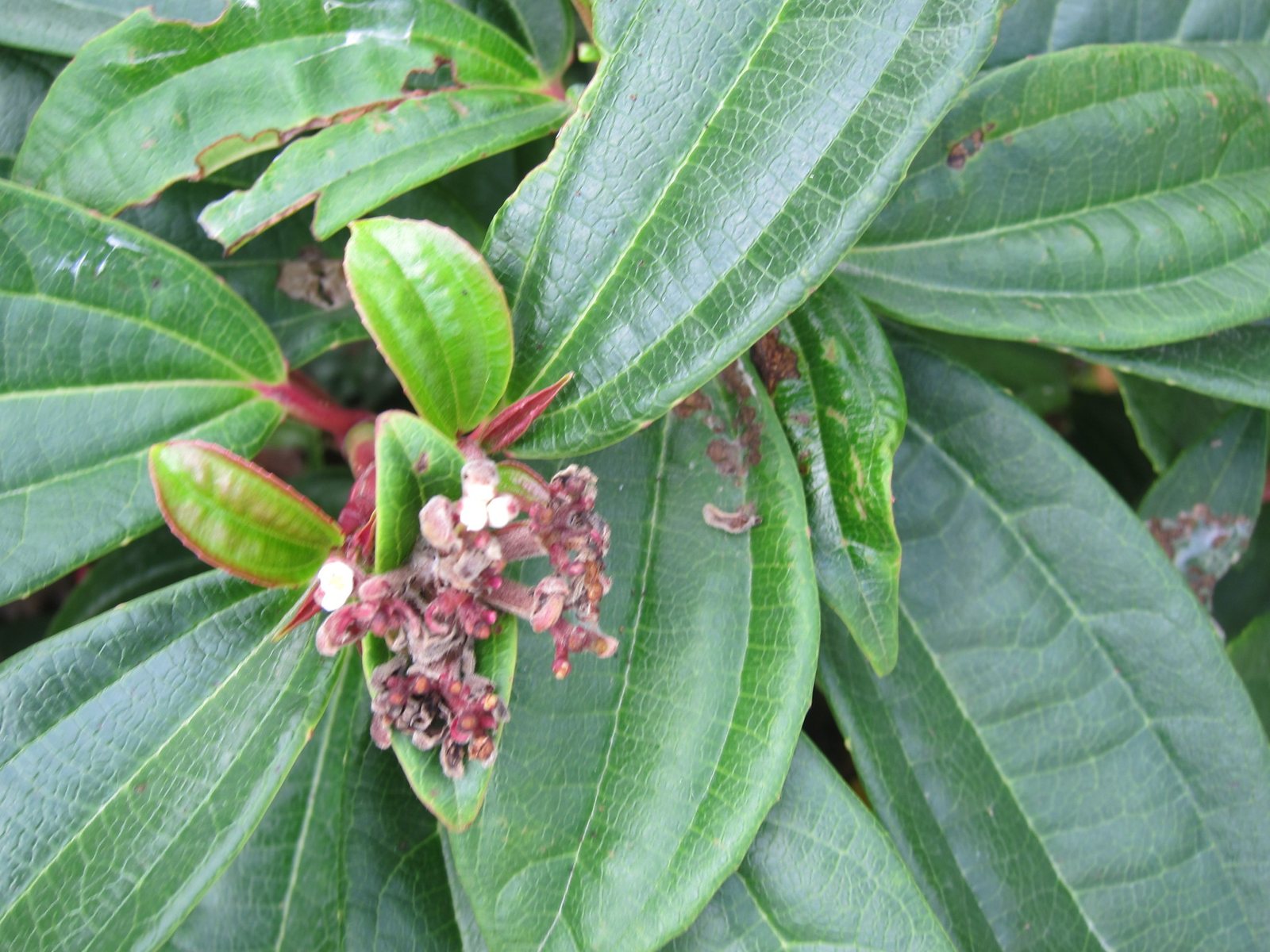
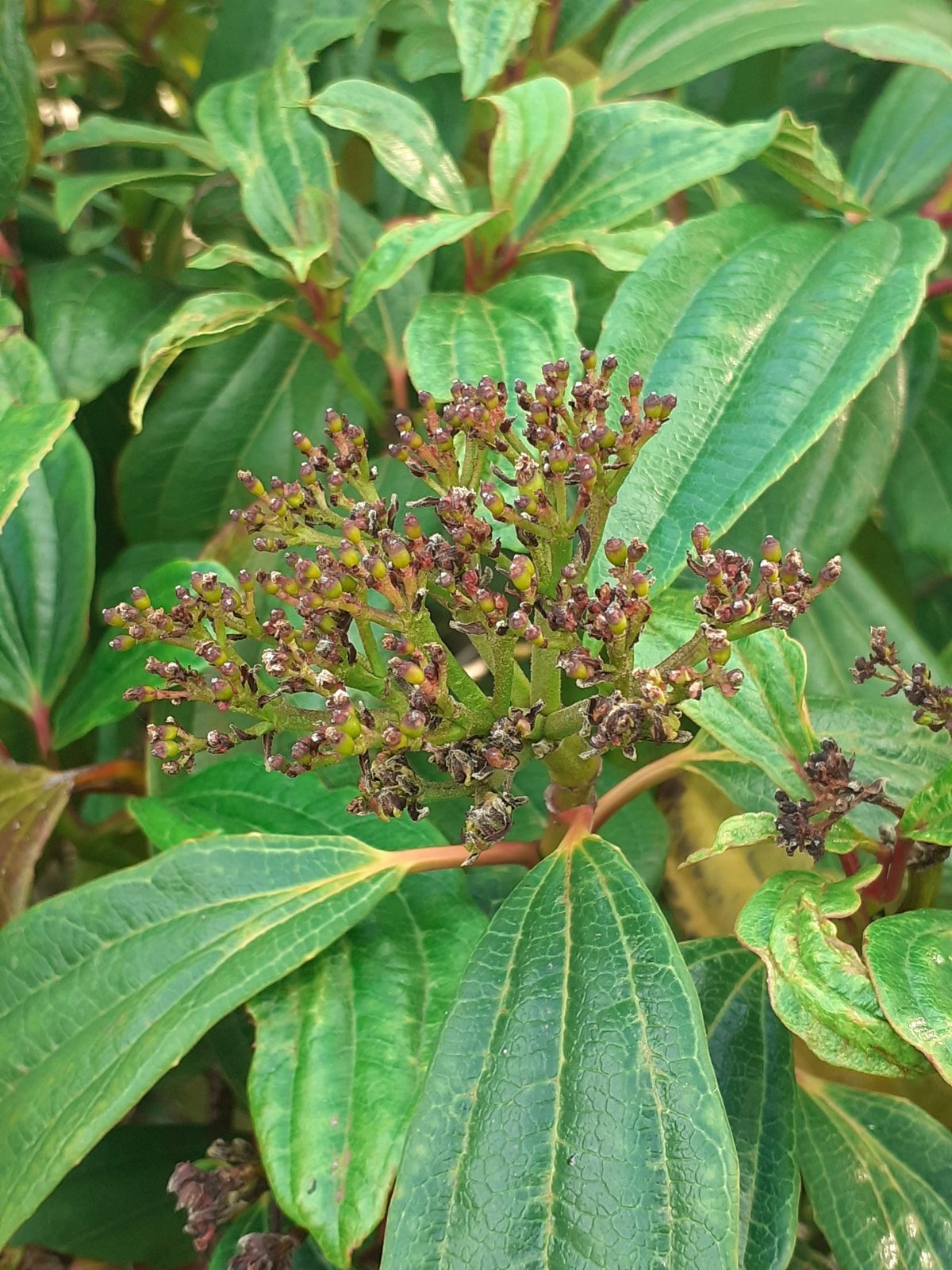
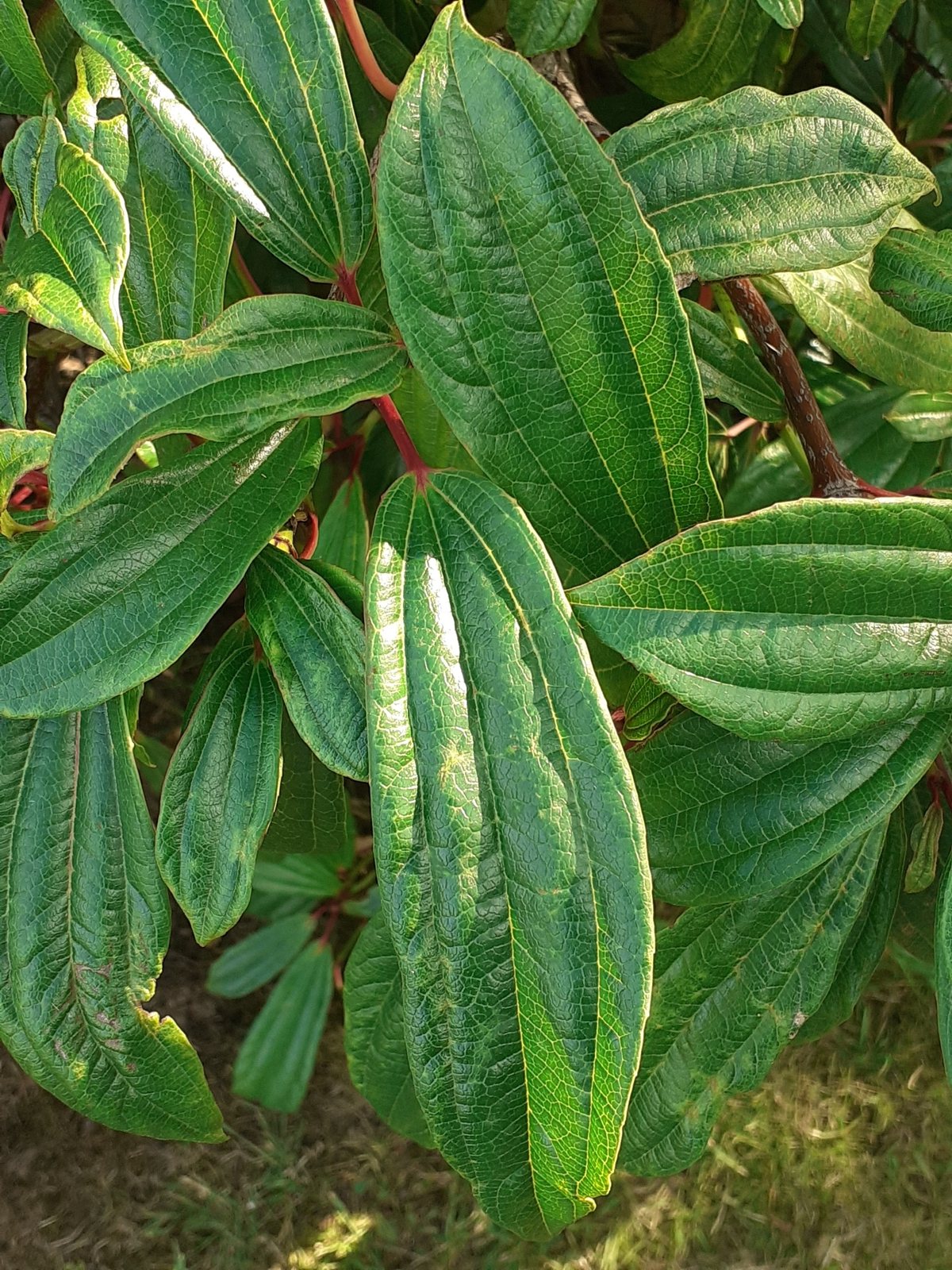
David viburnum is a low, spreading evergreen shrub grown for its leathery, strongly veined leaves and neat, rounded shape. Small white flowers can be followed by metallic blue fruit, but reliable fruiting usually requires male and female plants growing together. It suits sheltered gardens with cool to mild summers.
At a glance
- Sun
- Partial shade is ideal. Tolerates full sun where summers are cool and the soil stays moist; provide afternoon shade in hot districts.
- Water
- Moderate; keep evenly moist while establishing, then water during prolonged dry spells. Avoid waterlogged soil.
- Soil
- Moist, well-drained soil enriched with organic matter; tolerates acidic, neutral and mildly alkaline conditions.
- Height
- 2-3 ft (0.6-0.9 m)
- Spread
- 3-5 ft (0.9-1.5 m)
- Flowers
- Small creamy-white flowers in flattened clusters in late spring.
- Foliage
- Evergreen. Dark green, leathery, oval leaves with three conspicuous lengthwise veins; held in opposite pairs.
- Growth
- Slow
- Care needed
- Low
The year at a glance
- Pollinators
- Heat tolerant
- Wildlife
- Low allergen
| J | F | M | A | M | J | J | A | S | O | N | D | |
|---|---|---|---|---|---|---|---|---|---|---|---|---|
| Flowers | ||||||||||||
| Fruit | ||||||||||||
| Plant |
Northern hemisphere months. In Australia, shift them by six.
- Difficulty
- Easy
- Toughness
- Fairly tough
Will it suit your garden?
Pick your zone, country, light and whether you have pets.
Full sun is 6 or more hours of direct sun a day, part shade 3 to 6 hours, shade under 3.
How it grows
Planting day
1.6 ft (0.5 m)
After 1 year
1.7 ft (0.53 m)
After 2 years
1.8 ft (0.56 m)
After 3 years
1.9 ft (0.59 m)
After 5 years
2.2 ft (0.66 m)
About 8 years to full size.
From a typical nursery size, at an average rate for this kind of plant. A rule of thumb, not a forecast.
Good to know
- Cats and dogs
- Safe
- Growth rate
- Slow
Care
Jobs through the year
- WaterApr–May, Sep–Oct, every 21 days
- Water established shrubs deeply only if soil is drying; keep young plants evenly moist for two years.
- WaterJun–Aug, every 14 days
- Water established shrubs deeply during prolonged dry spells; skip if soil remains moist.
- MulchApr
- Apply 5–8 cm of organic mulch, keeping it clear of stems.
- FeedApr
- Add compost; use a light balanced feed only if growth is weak.
- PruneJun
- After flowering, remove damaged wood and shorten stray shoots only; avoid shearing.
- ProtectJan–Mar, Nov–Dec
- Shelter exposed plants from drying winds and severe frost, especially in zone 6.
- Water deeply during dry weather for the first two growing seasons.
- Apply 2-3 in (5-7.5 cm) of organic mulch, keeping it clear of the stems.
- Add compost in spring; use a light application of balanced fertilizer only if growth is weak.
- Choose a position sheltered from cold, drying winds and strong afternoon sun.
- For fruit, obtain male and female plants where available; several plants raised from seed improve the chance of having both sexes, unlike identical cuttings.
Pruning. Prune only when needed, immediately after flowering, removing dead or damaged stems and shortening stray shoots to a leafy side branch. Avoid routine shearing, which spoils the foliage and can remove developing fruit.
Through the year
- Spring
- Plant in workable, well-drained soil and water thoroughly.
- Mid-spring
- Refresh organic mulch and check that it does not touch the stems.
- Late spring
- After flowering, remove damaged growth and lightly tidy only where necessary.
- Summer
- Water during prolonged dry spells, especially beneath trees or beside walls.
- Autumn
- Check for blue fruit; if fruiting is consistently absent, review whether compatible male and female plants are present.
- Winter
- Check exposed plants for wind scorch and ensure heavy rain is draining away from the roots.
In the garden
- Plant in small groups beneath open-canopied trees for a low evergreen layer.
- Use along shaded paths, allowing room for the branches to spread without frequent clipping.
- Combine with ferns, hellebores and Japanese forest grass for contrasting leaf shapes.
- Repeat beside a sheltered entrance or courtyard wall to provide year-round structure.
Garden styles it suits: Woodland, Low-maintenance, Pacific Northwest woodland, Green on green, Modern courtyard and Japanese.
Plant it with: Hellebores, Japanese forest grass, Soft shield fern, Epimedium, Japanese skimmia and Sarcococca.
Wildlife: Flowers offer food for visiting insects, and birds may eat the fruit. The dense evergreen branches provide low shelter for small garden animals.
Problems to watch for
- Little or no fruit: male and female flowers usually occur on separate plants. Add compatible plants of the missing sex; planting several copies of one clone may not help.
- Brown leaf edges or winter scorch: shelter from drying winds, provide afternoon shade in hot areas and water during dry spells.
- Root rot in wet ground: improve drainage or move to a raised planting position; do not keep the root zone saturated.
- Fungal leaf spots: remove fallen affected leaves, water at soil level and improve air circulation without exposing the shrub to harsh winds.
Safety
Not known to be toxic to people, cats, dogs or horses. The leaves and ornamental fruit are not intended for eating; discourage children and pets from consuming them.
Easily confused with
Cinnamon-leaved viburnum (Viburnum cinnamomifolium)
Also has strongly three-veined evergreen leaves, but develops into a much taller, more upright shrub with generally larger, longer leaves.
Laurustinus (Viburnum tinus)
Usually taller and more upright, with leaves lacking David viburnum's three bold lengthwise veins; its pink buds open into white flowers mainly from winter into spring.
The name
The name davidii honours Armand David, the French missionary and naturalist who collected plants and animals in China.
Propagation. Take semi-ripe cuttings in summer; these preserve the parent plant's sex. Seed is possible but germination can be slow and irregular, and seedlings may take several years to flower.
Checked against open data
- Accepted botanical name
- Viburnum davidi
Sources: GBIF (CC BY 4.0) and Trefle (CC BY 4.0). The care and design notes are LandscapeGPT's own.
See it in your own yard.
Upload a photo of your yard and see it redesigned with plants that suit your climate, each checked against your zone.