Downy serviceberry
Amelanchier arborea. Family Rosaceae. Tree.
Also called Common serviceberry, Juneberry, Shadbush, Shadblow.
Downy serviceberry is a small deciduous tree or large, multi-stemmed shrub native to eastern North America. Gardeners grow it for its early white flowers, edible summer berries, grey bark and orange-red autumn foliage. It suits woodland edges and mixed borders, though leaf diseases can spoil its appearance in humid conditions.
At a glance
- Sun
- Full sun to partial shade; flowering, fruiting and autumn colour are usually best with at least six hours of sun.
- Water
- Moderate; keep the root zone evenly moist while establishing. Established trees tolerate short dry spells, but prolonged drought can cause early leaf drop.
- Soil
- Moist, well-drained, acidic to neutral soil enriched with organic matter. Avoid waterlogged ground and strongly alkaline soil.
- Height
- 15-25 ft (4.6-7.6 m), occasionally taller
- Spread
- 15-25 ft (4.6-7.6 m)
- Flowers
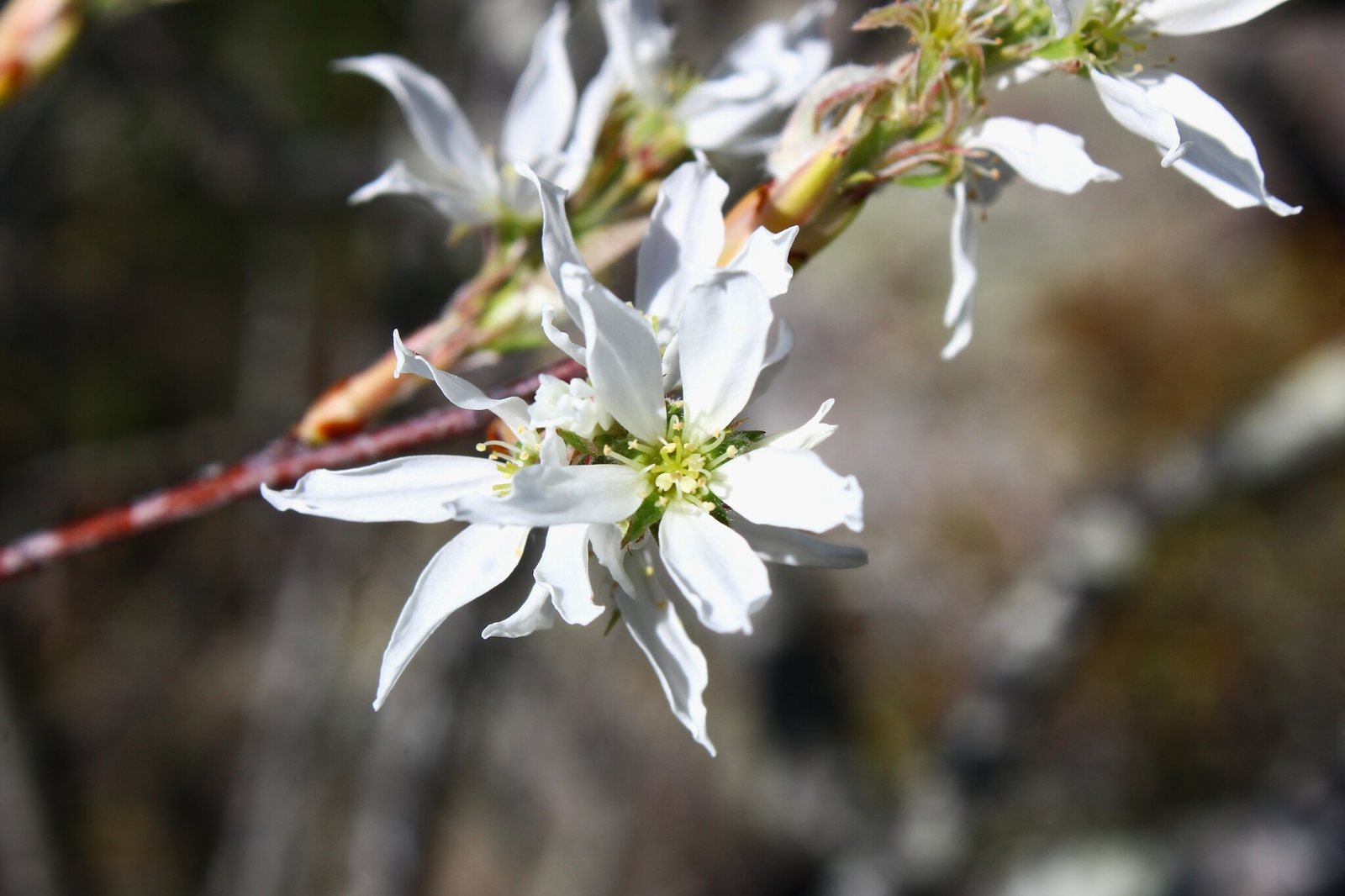
- Early to mid-spring; loose clusters of white flowers open before or with the emerging leaves.
- Foliage
- Oval, finely toothed leaves emerge with soft down, become green through summer, then turn yellow, orange or red in autumn.
- Growth
- Moderate
- Care needed
- Medium
The year at a glance
- Pollinators
- Cold hardy
- Heat tolerant
- Wildlife
- Low allergen
- Edible
| J | F | M | A | M | J | J | A | S | O | N | D | |
|---|---|---|---|---|---|---|---|---|---|---|---|---|
| Flowers | ||||||||||||
| Fruit | ||||||||||||
| Plant |
Northern hemisphere months. In Australia, shift them by six.
- Difficulty
- Moderate
- Toughness
- Fairly tough
Will it suit your garden?
Pick your zone, country, light and whether you have pets.
Full sun is 6 or more hours of direct sun a day, part shade 3 to 6 hours, shade under 3.
How it grows
Planting day
7 ft (2 m)
After 1 year
7 ft (2.2 m)
After 2 years
8 ft (2.4 m)
After 3 years
9 ft (2.6 m)
After 5 years
10 ft (3 m)
About 20 years to full size.
From a typical nursery size, at an average rate for this kind of plant. A rule of thumb, not a forecast.
Good to know
- Cats and dogs
- Toxic
- Native to
- the US and Canada
- Growth rate
- Moderate
Care
Jobs through the year
- WaterApr–May, Sep–Oct, every 14 days
- Deep-water established trees when the root zone dries; keep young trees evenly moist for two years.
- WaterJun–Aug, every 7 days
- Water deeply during dry spells, especially while fruit develops; skip when rainfall keeps soil moist.
- MulchMar–Apr
- Maintain 5–8 cm of organic mulch, using a light compost top-dressing and keeping the trunk clear.
- PruneFeb
- Remove damaged or crossing branches and unwanted suckers; retain a single trunk or well-spaced main stems.
- ProtectApr–Jul, every 14 days
- Check for rust, leaf damage and fire blight; cut blighted shoots well below damage in dry weather with disinfected tools.
- HarvestJun–Jul
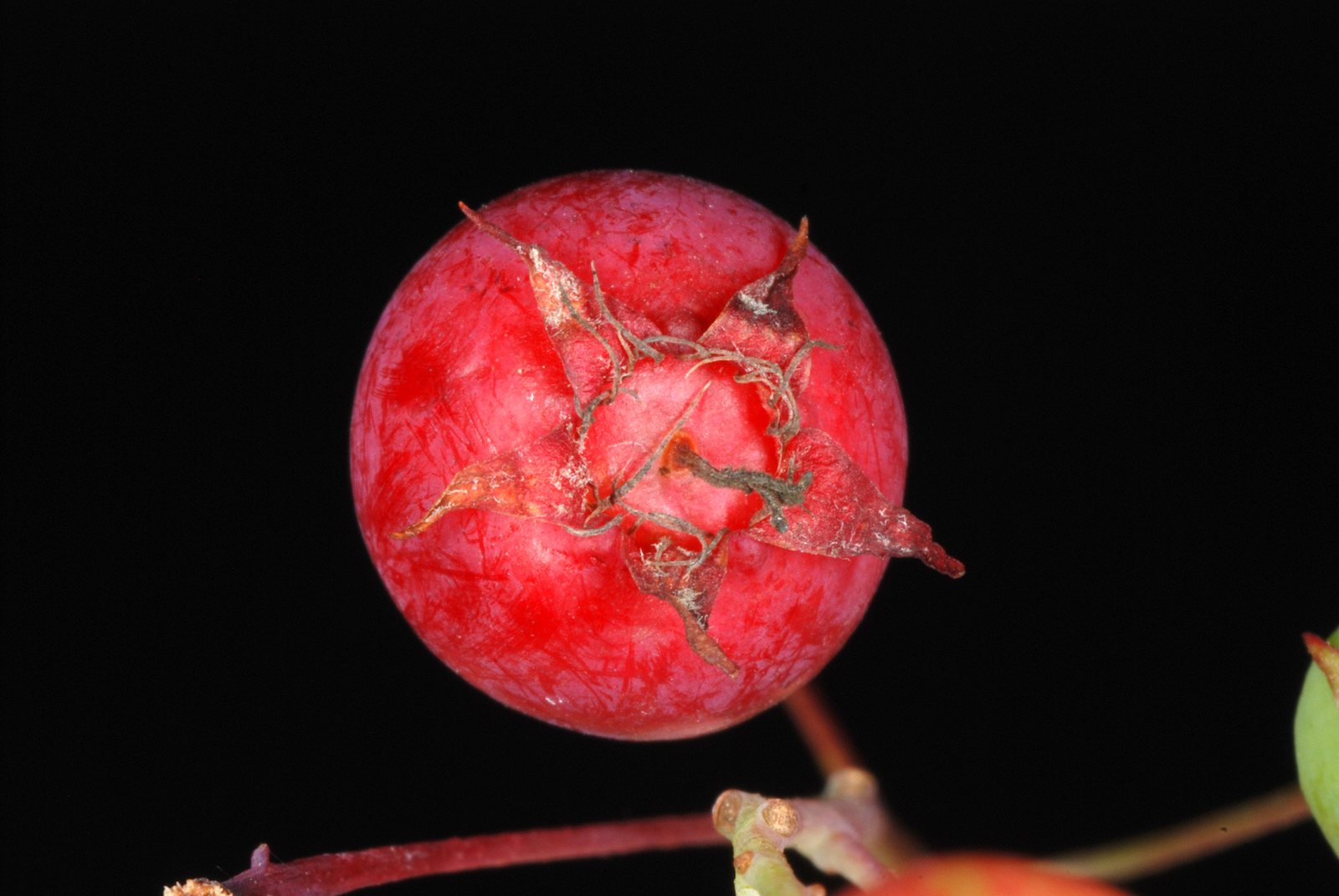
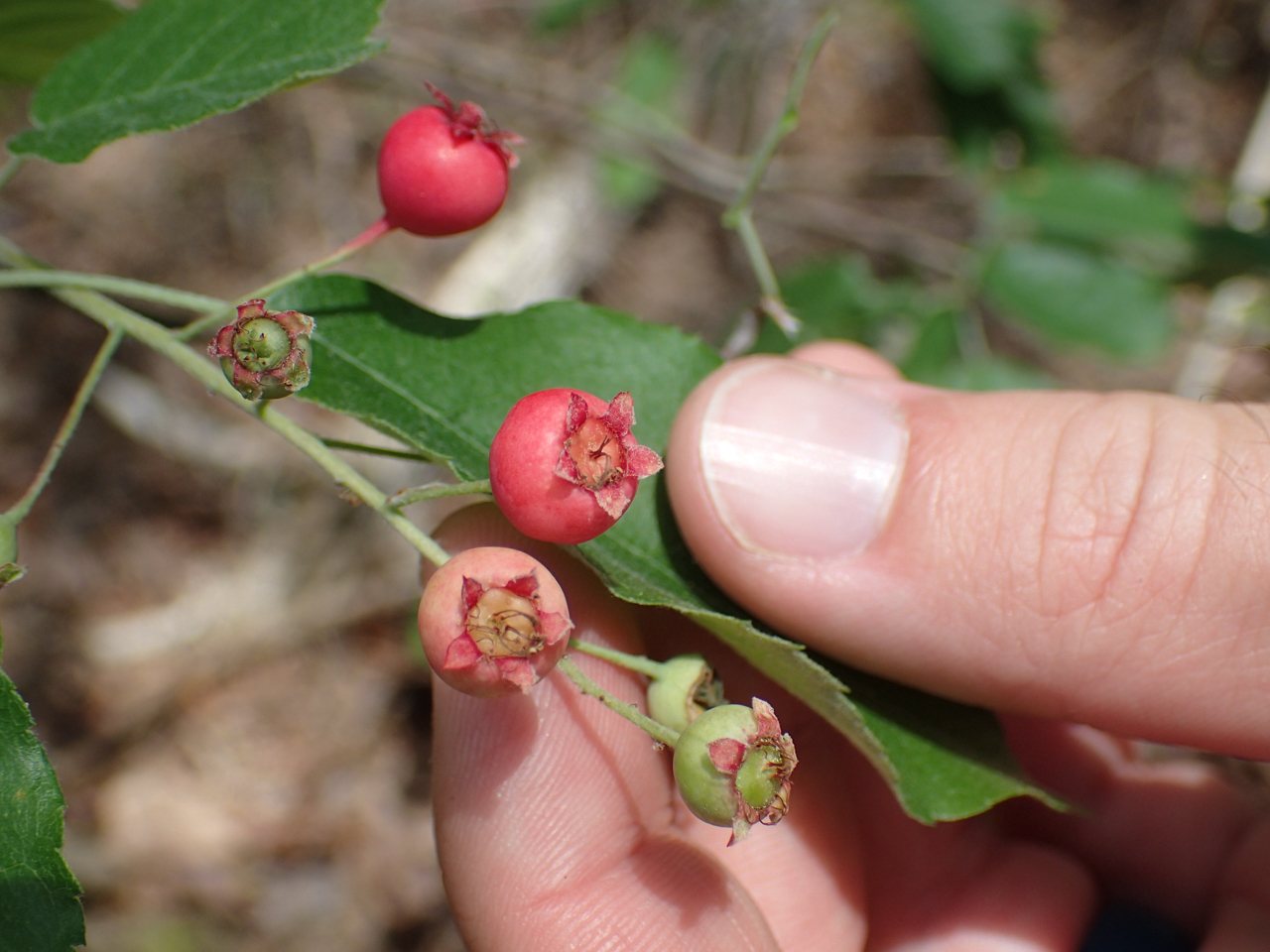
- Pick soft, deep-purple berries that detach easily before birds take them.
- ProtectOct–Nov
- Collect and dispose of badly diseased fallen leaves.
- Water deeply during dry weather for the first two growing seasons; check the soil before watering again.
- Spread 2-3 in (5-8 cm) of organic mulch over the root zone, keeping it clear of the trunk.
- Top-dress with compost in spring; use fertiliser only if growth is weak and a soil test indicates a deficiency.
- Leave room for air to circulate around the crown, and water the soil rather than the foliage.
- Remove unwanted basal suckers if you want a single-trunk tree.
Pruning. Prune in late winter while dormant, removing dead, damaged and crossing branches and retaining either a single trunk or a few well-spaced main stems. Avoid heavy crown thinning; remove suspected fire blight promptly in dry weather, cutting well below affected tissue and disinfecting tools between cuts.
Harvest
Pick the small fruits in early summer when they are deep purple, soft and detach easily; red fruit is usually not fully ripe. A nursery-grown tree may give a useful crop about 3-5 years after planting, although plant size and conditions affect timing. Birds often take the crop quickly, so harvest frequently as berries ripen.
Through the year
- Autumn
- Plant while the soil is workable, water thoroughly and mulch; in very cold regions, plant in early spring instead.
- Late winter
- Remove damaged or crossing branches and unwanted suckers before growth starts.
- Early spring
- Refresh mulch and add a light compost top-dressing if needed.
- Spring
- Check new shoots for fire blight and leaves for rust or spotting.
- Early summer
- Pick fully purple berries frequently if you want a crop before the birds take it.
- Summer
- Water deeply during extended dry spells, especially on recently planted trees.
- Late autumn
- Collect and dispose of badly diseased fallen leaves to reduce carry-over of leaf infections.
In the garden
- Use as a small specimen tree near a terrace where spring flowers and autumn colour can be seen closely.
- Plant at a woodland edge with shade-tolerant shrubs and spring-flowering groundcover.
- Keep several trunks to create a light, open canopy above a mixed border.
- Include in a wildlife hedge or edible landscape, allowing space for its mature crown and some suckering.
Garden styles it suits: Woodland, Wildlife garden, Edible landscape, Cottage garden, Autumn colour and New England.
Plant it with: Witch hazel, Oakleaf hydrangea, Virginia sweetspire, Foamflower, Wild geranium and Christmas fern.
Wildlife: Spring flowers provide pollen and nectar for early insects. The foliage supports caterpillars, and the berries feed many birds and small mammals; dense multi-stemmed plants also offer nesting cover.
Problems to watch for
- Cedar-serviceberry rust causes orange spots and distorted fruit: choose an airy site, remove affected material and avoid planting close to junipers where practical; spores can still travel from farther away.
- Leaf spot can cause blotching and early leaf fall: collect diseased fallen leaves, avoid overhead watering and reduce drought stress.
- Fire blight blackens flowers and shoot tips: prune affected shoots well below visible damage in dry weather, disinfect tools between cuts and avoid excessive nitrogen feeding.
- Lace bugs and pear slugs can stipple or skeletonise leaves: inspect leaf undersides, remove small infestations by hand or with water, and use a labelled insecticidal soap only if damage warrants treatment.
Safety
Ripe fruit flesh is edible for people. Leaves, stems and seeds contain cyanogenic compounds; substantial amounts of chewed material can cause serious poisoning in people, cats, dogs and horses. Keep livestock away from foliage and prunings, especially wilted leaves, and do not grind the seeds for food.
Easily confused with
Allegheny serviceberry (Amelanchier laevis)
Its emerging leaves are usually bronze-purple and nearly hairless, whereas downy serviceberry has conspicuously woolly young leaves and shoots.
Canadian serviceberry (Amelanchier canadensis)
Often a more strongly suckering shrub of wet ground, with shorter, more upright flower clusters. Downy serviceberry usually has longer, looser, nodding clusters;
Apple serviceberry (Amelanchier × grandiflora)
This hybrid of downy and Allegheny serviceberries often has larger flowers and less woolly emerging foliage, but features overlap and a reliable nursery label may be needed.
The name
The species name arborea means tree-like, while 'downy' refers to the soft hairs on its emerging leaves and young growth.
Propagation. Grow from cleaned seed sown outdoors in autumn; germination can be slow and may take more than one seasonal cycle. Root softwood cuttings in early summer under humid conditions, or lift well-rooted suckers while dormant.
Checked against open data
- Accepted botanical name
- Amelanchier arborea
- In the US and Canada
- Native in Canada and the lower 48 states.
- Native range
- Alabama, Arkansas, Connecticut, Delaware, District of Columbia, Florida, Georgia, Illinois, Indiana, Iowa, Kansas and Kentucky.
- Measured
- Soil pH 4.8 to 7.5. Average height 831 cm.
Sources: GBIF (CC BY 4.0), USDA PLANTS and Trefle (CC BY 4.0). The care and design notes are LandscapeGPT's own.
See it in your own yard.
Upload a photo of your yard and see it redesigned with plants that suit your climate, each checked against your zone.