Dutchman's pipe
Aristolochia macrophylla. Climber.
Also called Pipevine, Broad-leaved birthwort, Aristolochia durior.
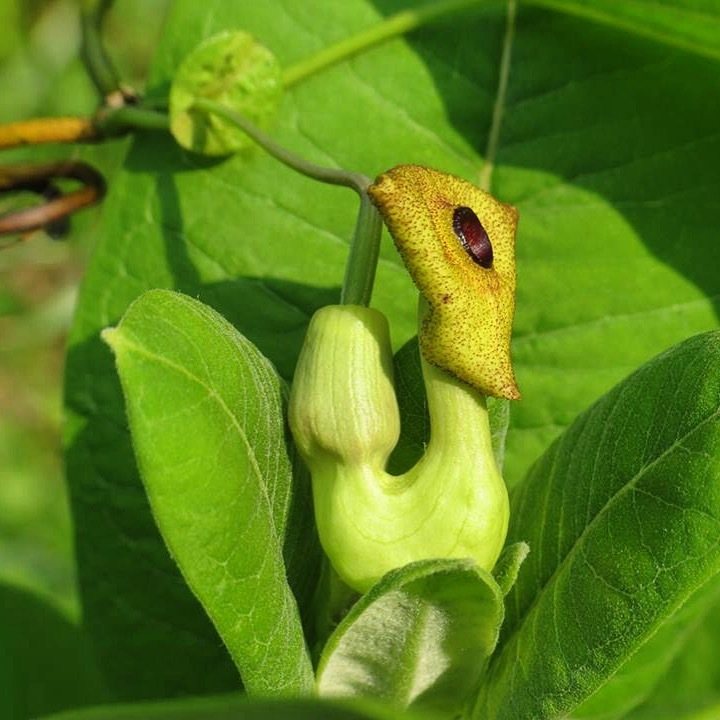
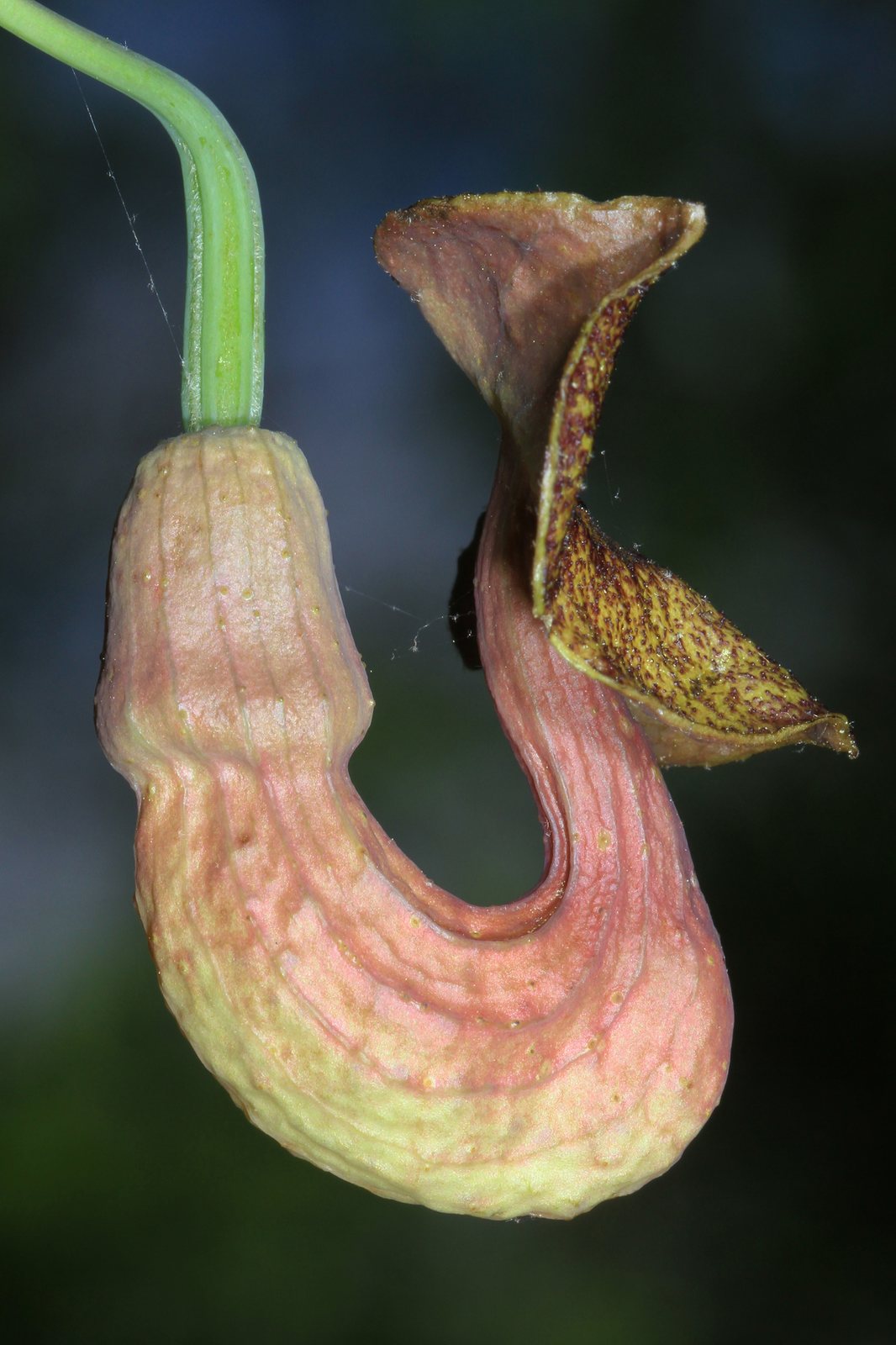
A vigorous, deciduous woody climber native to eastern North America, grown mainly for its large, heart-shaped leaves and dense summer shade. Its small, curved flowers are usually hidden beneath the foliage. Give it a substantial support and enough room to spread.
At a glance
- Sun
- Full sun to partial shade; afternoon shade is helpful in hot summers.
- Water
- Keep the soil consistently moist but not waterlogged, especially while establishing and during hot, dry weather.
- Soil
- Fertile, humus-rich, well-drained soil; tolerates clay if drainage is adequate.
- Height
- 20-30 ft (6-9 m)
- Spread
- 10-20 ft (3-6 m)
- Flowers
- Late spring to early summer; small, curved, yellow-green flowers with a purple-brown opening, largely concealed by leaves.
- Foliage
- Large, overlapping, heart-shaped green leaves form a dense screen; autumn colour is usually modest yellow.
- Growth
- Fast once established.
- Care needed
- Medium
The year at a glance
- Pollinators
- Cold hardy
- Wildlife
- Low allergen
| J | F | M | A | M | J | J | A | S | O | N | D | |
|---|---|---|---|---|---|---|---|---|---|---|---|---|
| Flowers | ||||||||||||
| Fruit | ||||||||||||
| Plant |
Northern hemisphere months. In Australia, shift them by six.
- Difficulty
- Moderate
- Toughness
- Fairly tough
Will it suit your garden?
Pick your zone, country, light and whether you have pets.
Full sun is 6 or more hours of direct sun a day, part shade 3 to 6 hours, shade under 3.
How it grows
Planting day
2 ft (0.6 m)
After 1 year
3 ft (1.1 m)
After 2 years
5 ft (1.5 m)
After 3 years
6 ft (1.8 m)
full size
About 3 years to full size.
From a typical nursery size, at an average rate for this kind of plant. A rule of thumb, not a forecast.
Good to know
- Cats and dogs
- Toxic
- Native to
- the US and Canada
- In the garden
- Spreads vigorously: plan to contain it.
- Growth rate
- Fast
Care
Jobs through the year
- WaterApr–May, Sep–Oct, every 10 days
- Water established vines deeply if rain is insufficient; young plants need more frequent watering.
- WaterJun–Aug, every 7 days
- Keep the established root zone consistently moist during dry weather; avoid waterlogging.
- MulchMar–Apr
- Apply 5–8 cm of organic mulch, keeping it clear of stems.
- FeedMar–Apr
- Top-dress with compost; avoid heavy feeding that promotes excessive growth.
- PruneFeb–Mar
- Remove dead or tangled stems and shorten growth that has outgrown its support.
- PruneJul–Sep
- Trim obstructing shoots and remove unwanted suckers or rooted trailing stems.
- ProtectMar, May–Jun
- Check the strong support framework and guide young shoots onto it.
- ProtectJun–Aug
- Check for mites in dry weather; tolerate native pipevine swallowtail caterpillars where possible.
- Install a strong pergola, trellis or wire framework before planting; mature stems become heavy.
- Water deeply during dry spells, particularly in the first two growing seasons.
- Apply a 2-3 in (5-8 cm) organic mulch each spring, keeping it clear of the stems.
- Top-dress with compost in spring; avoid heavy feeding that encourages excessive growth.
- Guide young stems onto supports and remove unwanted suckers or stems that root where they touch the ground.
Pruning. Prune in late winter or early spring, removing dead or tangled stems and shortening growth that has outgrown its support. Renovate an overgrown plant by cutting back some of the oldest stems near the base; hard pruning may reduce flowering that year.
Through the year
- Late winter
- Prune while leafless and inspect the support and wall fixings.
- Spring
- Plant when the soil is workable, water thoroughly and mulch the root area.
- Late spring
- Guide new shoots onto their support before they tangle with nearby plants.
- Summer
- Water during dry spells and trim shoots that obstruct paths, windows or gutters.
- Early autumn
- Remove unwanted suckers and rooted trailing stems before they establish.
- Late autumn
- Clear fallen leaves from paths and check exposed roots have mulch before winter.
In the garden
- Train over a substantial pergola to provide dense summer shade and admit winter light.
- Cover a sturdy fence or freestanding screen to create seasonal privacy.
- Grow on wires set away from a wall, leaving space for airflow and maintenance.
- Use as a bold leafy backdrop to ferns, hostas and other shade-tolerant planting.
Garden styles it suits: Woodland, Traditional, Victorian, Secret garden, Green on green and Wildlife garden.
Plant it with: Hosta, Lady fern, Astilbe, Solomon's seal, Siberian bugloss and Wild geranium.
Wildlife: A larval food plant for the pipevine swallowtail in North America. Small flies pollinate the unusual flowers. Do not assume it is a suitable host for butterflies outside its native region; seek local advice before planting for Australian birdwing butterflies.
Problems to watch for
- Leaf scorch or wilting in dry soil: water deeply and mulch; provide afternoon shade in hot locations.
- Spider mites in hot, dry conditions: rinse leaf undersides regularly and avoid letting the roots dry out.
- Excessive growth and tangled stems: prune annually and remove unwanted suckers before they spread.
- Pipevine swallowtail caterpillars can strip leaves in North America: tolerate feeding where possible and avoid spraying this host plant.
Safety
All parts should be treated as poisonous to people, cats, dogs and horses if eaten. Aristolochia contains aristolochic acids, which can cause severe, potentially irreversible kidney damage and are carcinogenic. Never use it as food or herbal medicine; seek urgent medical or veterinary advice after ingestion.
Easily confused with
Woolly Dutchman's pipe (Aristolochia tomentosa)
Has conspicuously hairy young shoots and woolly leaf undersides; Dutchman's pipe has largely hairless mature leaves.
Elegant Dutchman's pipe (Aristolochia elegans)
A frost-tender climber with much larger, conspicuous, purple-and-white patterned flowers, rather than small flowers hidden beneath the leaves.
Southern catalpa (Catalpa bignonioides)
Has similarly large, heart-shaped leaves but grows as a self-supporting tree, with showy white flower clusters and long, bean-like seed capsules.
The name
Dutchman's pipe refers to the curved flowers resembling old-fashioned smoking pipes, while macrophylla means large-leaved.
Propagation. Layer a low-growing stem in spring and separate it after it has rooted well. Softwood cuttings taken in early summer can also root; seed usually needs a period of cold, moist stratification.
Checked against open data
- Accepted botanical name
- Aristolochia macrophylla
- In the US and Canada
- Native in the lower 48 states. Introduced in Canada.
- Native range
- Georgia, Kentucky, Maryland, New York, North Carolina, Ontario, Pennsylvania, Romania, South Carolina, Tennessee, Vermont and Virginia.
- Measured
- Soil pH 7 to 7.5. Average height 1000 cm.
Sources: GBIF (CC BY 4.0), USDA PLANTS and Trefle (CC BY 4.0). The care and design notes are LandscapeGPT's own.
See it in your own yard.
Upload a photo of your yard and see it redesigned with plants that suit your climate, each checked against your zone.