Dwarf Cavendish banana
Musa acuminata 'Dwarf Cavendish'. Family Musaceae. Perennial.
Also called Dwarf Chinese banana, Cavendish banana.
A tropical, clump-forming perennial grown for its broad leaves and sweet, seedless bananas. It stays shorter than many edible bananas but still needs considerable space, warmth and shelter. In cooler climates, grow it in a large container and overwinter it indoors; fruiting is unlikely without year-round warmth and strong light.
At a glance
- Sun
- Full sun outdoors, with shelter from strong winds; light afternoon shade can help in very hot, dry climates. Indoors, provide the brightest light available.
- Water
- Keep evenly moist during active growth, watering thoroughly when the surface begins to dry. Reduce watering in cool weather, but do not let the root ball dry out completely.
- Soil
- Fertile, moisture-retentive soil with good drainage. For containers, use a rich potting mix with added drainage material and a pot with unobstructed drainage holes.
- Height
- 6-10 ft (1.8-3 m)
- Spread
- 6-8 ft (1.8-2.4 m), wider if suckers are retained
- Flowers
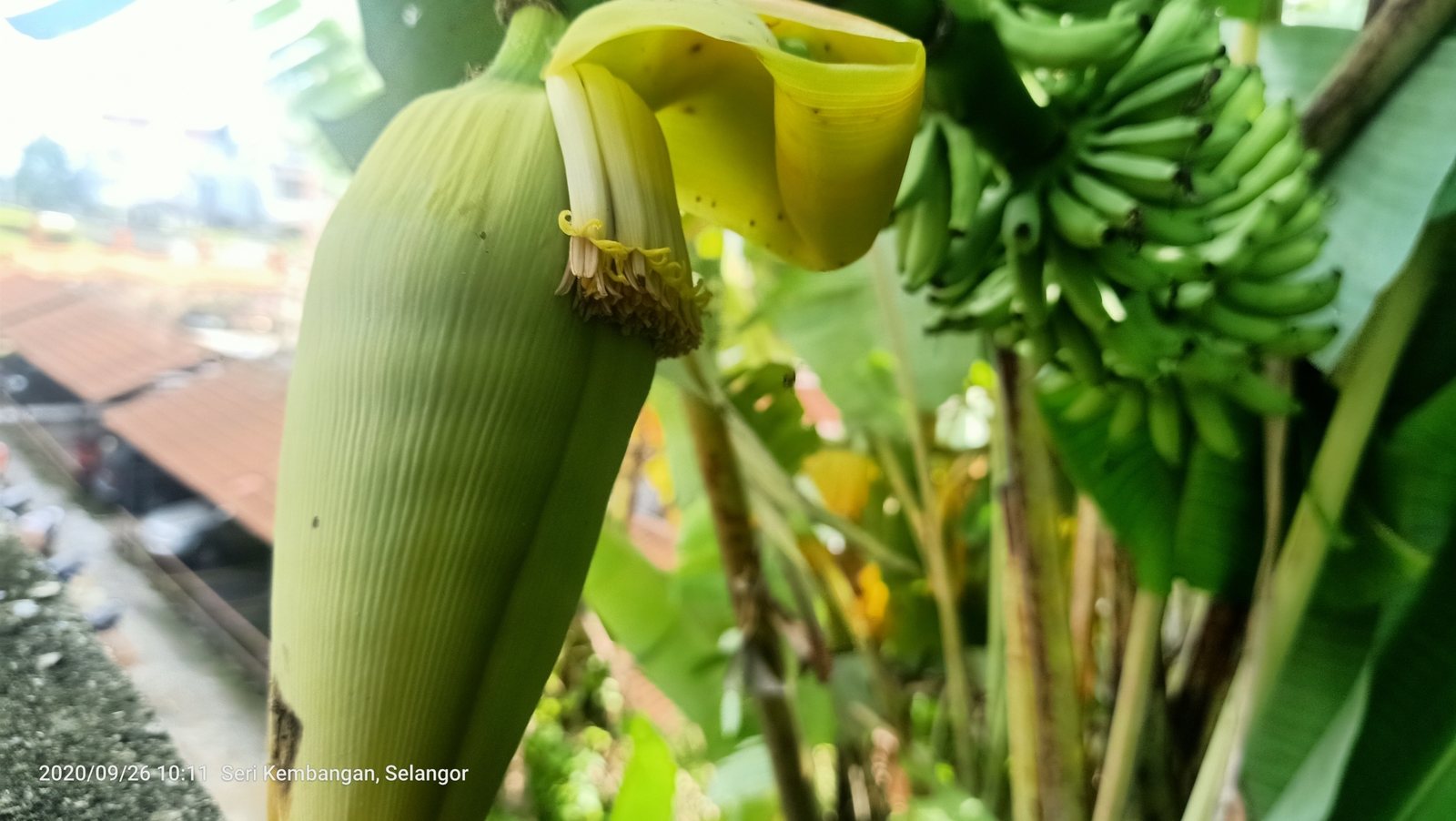
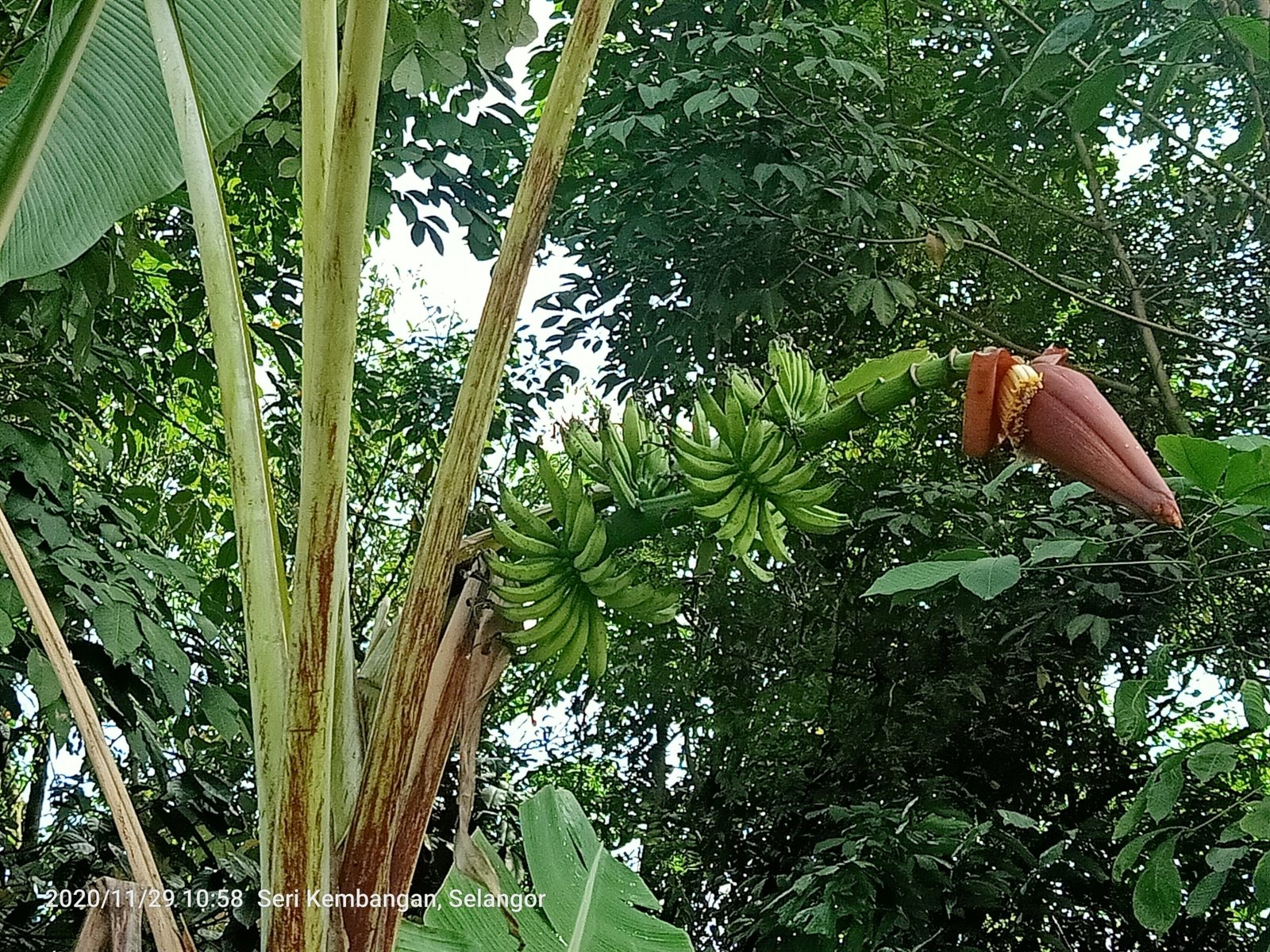
- Mature shoots can flower in any season under continuously warm conditions, producing cream flowers beneath large purple-red bracts. Flowering is uncommon in cool climates or ordinary indoor conditions.
- Foliage
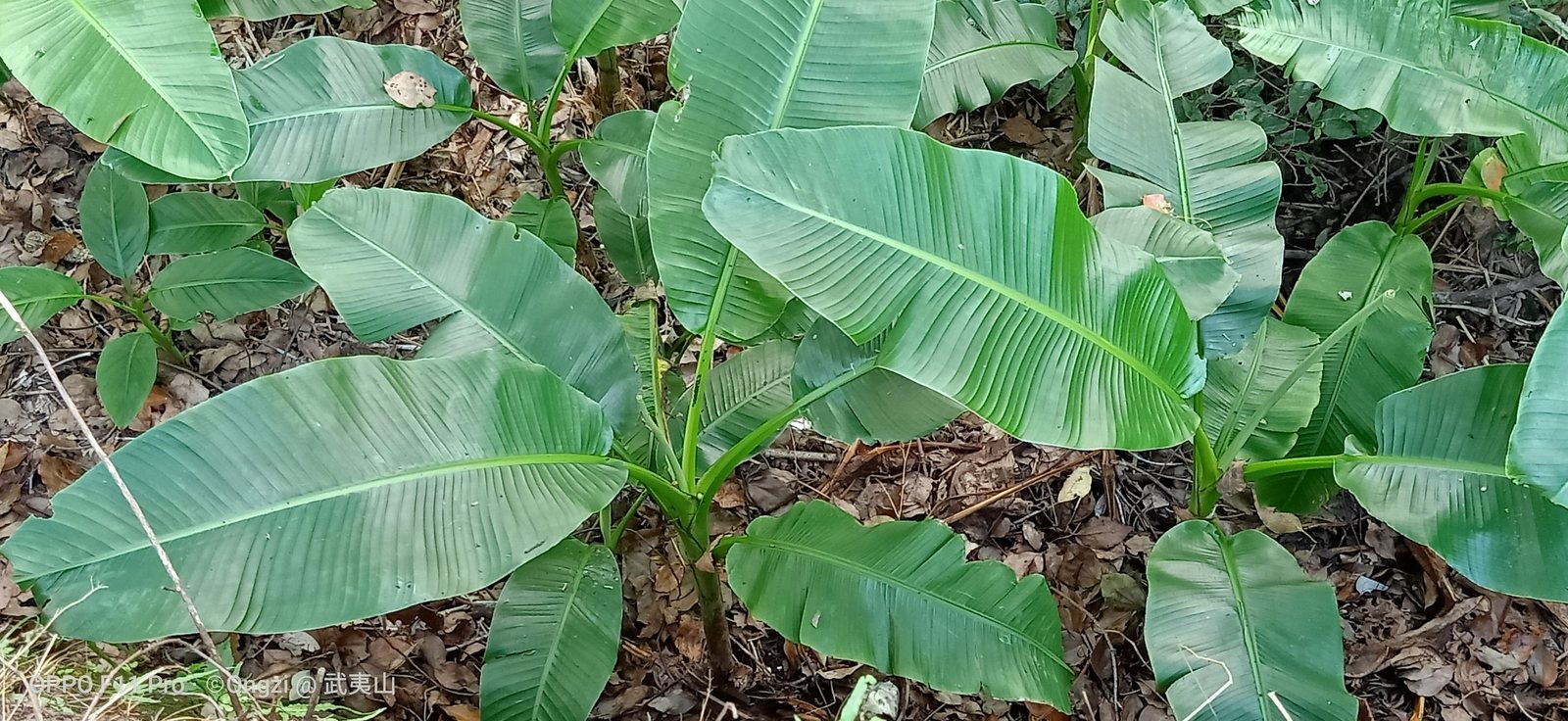
- Evergreen. Large, paddle-shaped green leaves; young leaves often have maroon blotches that fade as they mature. Wind readily splits the leaf blades.
- Growth
- Fast in warm weather with adequate water and nutrients
- Care needed
- High
The year at a glance
- Heat tolerant
- Wildlife
- Low allergen
- Edible
| J | F | M | A | M | J | J | A | S | O | N | D | |
|---|---|---|---|---|---|---|---|---|---|---|---|---|
| Plant |
Northern hemisphere months. In Australia, shift them by six.
- Difficulty
- Hard
- Toughness
- Needs looking after
Will it suit your garden?
Pick your zone, country, light and whether you have pets.
Full sun is 6 or more hours of direct sun a day, part shade 3 to 6 hours, shade under 3.
How it grows
Planting day
1 ft (0.3 m)
After 1 year
5 ft (1.4 m)
After 2 years
8 ft (2.4 m)
full size
About 2 years to full size.
From a typical nursery size, at an average rate for this kind of plant. A rule of thumb, not a forecast.
Good to know
- Cats and dogs
- Safe
- Growth rate
- Fast
Care
Jobs through the year
- WaterApr–May, Sep, every 7 days
- For established plants in warm ground, water as the surface dries; check pots more often.
- WaterJun–Aug, every 3 days
- Keep soil evenly moist without waterlogging; young plants and hot-weather pots may need daily watering.
- WaterJan–Mar, Oct–Dec, every 14 days
- Check sheltered pots; water when the surface dries, adjusting to warmth and growth.
- FeedMay–Sep, every 14 days
- Feed during active growth with balanced fertilizer at its label rate; stop as growth slows.
- MulchJun
- Apply compost or organic mulch around roots, keeping stem bases clear.
- PruneMay–Sep
- Remove dead leaves and surplus suckers, retaining a main shoot and one strong replacement.
- ProtectJun
- Acclimatize gradually to outdoor sun only when nights stay above 10°C; shelter from wind.
- ProtectJan–May, Sep–Dec
- Keep in a movable pot with bright, warm, frost-free winter shelter; ordinary cool-climate gardens rarely produce fruit.
- ProtectJan–Dec, every 7 days
- Inspect leaf undersides and joints for mites and mealybugs, especially indoors.
- HarvestJan–Dec
- Only if a heated growing space yields fruit, cut full, rounded bunches green to just yellow; timing is not seasonal.
- PruneJan–Dec
- If a stem fruits, cut it near ground level after harvest and retain its replacement sucker.
- Water deeply and regularly during warm weather; never leave container roots standing in water.
- Feed regularly during active growth with a balanced fertilizer, following its label rate; stop feeding when growth slows in winter.
- Mulch the root area with compost or other organic material, keeping it clear of the stem bases.
- For fruit production, retain one main fruiting shoot and one strong replacement sucker; remove surplus suckers.
- Move containers under cover before nights regularly fall below 50°F (10°C), and keep them bright and frost-free.
- Support a heavily laden fruiting stem with a sturdy prop if it begins to lean.
Pruning. Remove dead or badly damaged leaves as needed, cutting the leaf stalk without injuring the main stem. After harvesting, cut the spent stem close to ground level; it will not fruit again, and a replacement sucker takes over.
Harvest
In continuously warm conditions, a vigorous planted sucker may produce its first useful bunch in about 18-36 months; cool conditions delay or prevent cropping. Harvest when the bananas are full-sized and rounded rather than sharply angular, usually several months after flowering, cutting the bunch while it is still green or just beginning to yellow. Support its weight while cutting and let the fruit ripen indoors.
Through the year
- Early spring
- Increase watering as new growth starts; repot crowded container plants into a slightly larger pot.
- Late spring
- Acclimatize overwintered plants to outdoor sun gradually once nights remain above 50°F (10°C).
- Summer
- Water frequently, feed regularly and maintain mulch while growth is rapid.
- Summer
- Remove surplus suckers and check leaf undersides for mites and mealybugs.
- Autumn
- Move container plants into bright, warm shelter before cold nights; reduce feeding as growth slows.
- Winter
- Keep sheltered plants frost-free, water sparingly according to growth and check regularly for indoor pests.
In the garden
- Use as a broad-leaved focal point in a sheltered tropical border with cannas and gingers.
- Grow in a large container beside a sunny patio, allowing room for the leaves to spread.
- Plant behind lower foliage plants to create contrasting leaf sizes and a layered green backdrop.
- Include in a warm-climate edible garden where its foliage provides structure as well as a potential fruit crop.
Garden styles it suits: Modern tropical, Tropical, Luxury resort, Modern courtyard, Edible landscape and Balinese.
Plant it with: Canna, Ginger lily, Elephant's ear, Coleus, Sweet potato vine and Turmeric.
Wildlife: Large leaves and clumps offer shelter for small animals. Exposed ripe fruit may attract birds, bats and other fruit-eating wildlife in warm regions; cultivated Cavendish bananas set fruit without pollination.
Problems to watch for
- Spider mites cause fine stippling and webbing, especially indoors: rinse leaf undersides regularly and treat persistent infestations with a suitable insecticidal soap according to its label.
- Mealybugs gather in leaf joints and sheltered folds: isolate affected pots, remove visible insects and repeat treatment with an appropriate labelled product.
- Cold, wet soil causes root and stem rot: improve drainage, reduce winter watering and move container plants into warmer shelter.
- Poor growth or failure to fruit usually reflects insufficient warmth, light, feeding or uninterrupted growing time: improve conditions and retain a healthy replacement sucker rather than expecting a crop from a short summer.
Safety
Not known to be toxic to people, cats, dogs or horses. The ripe fruit is edible; leaves and stems are not known to be poisonous, though coarse plant material and banana peel can cause digestive upset or choking if swallowed.
Easily confused with
Japanese fibre banana (Musa basjoo)
Usually taller and much more cold-tolerant, with plain green leaves and small, seedy fruit that is not useful for eating.
Red Abyssinian banana (Ensete ventricosum 'Maurelii')
Has a stout, usually solitary stem and conspicuous red to burgundy leaf colouring; it does not normally form a clump of suckers.
Super Dwarf Cavendish banana (Musa acuminata 'Super Dwarf Cavendish')
Has a much shorter, more compact stem with closely packed leaves; young plants can be difficult to distinguish without a reliable nursery label.
The name
Cavendish honours William Cavendish, the sixth Duke of Devonshire, whose glasshouses helped establish this banana group in cultivation, while 'Dwarf' refers to its shorter stature.
Propagation. Separate a vigorous sword sucker, identified by its narrow upright leaves, with a portion of attached corm and healthy roots during warm weather. This seedless cultivar is propagated by suckers or tissue culture, not seed.
Checked against open data
- Accepted botanical name
- Musa acuminata
- In the US and Canada
- Introduced in the lower 48 states.
- Native range
- Bangladesh, Borneo, China South-Central, China Southeast, India, Jawa, Laos, Lesser Sunda Is., Malaya, Myanmar, Philippines and Sri Lanka.
Sources: GBIF (CC BY 4.0), USDA PLANTS and Trefle (CC BY 4.0). The care and design notes are LandscapeGPT's own.
See it in your own yard.
Upload a photo of your yard and see it redesigned with plants that suit your climate, each checked against your zone.