Turmeric
Curcuma longa. Family Zingiberaceae. Perennial.
Also called Indian saffron, Common turmeric.
Turmeric is a frost-tender, rhizomatous perennial grown for its orange-yellow culinary rhizomes and broad, tropical-looking leaves. It needs a long, warm growing season; in cooler climates, grow it in a container that can be moved indoors for winter.
At a glance
- Sun
- Full sun to partial shade; provide afternoon shade in very hot climates.
- Water
- Keep evenly moist during active growth without waterlogging; keep almost dry while dormant.
- Soil
- Fertile, humus-rich, well-drained soil; use a loose, free-draining potting mix in containers.
- Height
- 3-4 ft (0.9-1.2 m)
- Spread
- 2-3 ft (0.6-0.9 m)
- Flowers
- Summer: pale yellow flowers among pale green to whitish bracts; flowering is uncommon in short, cool growing seasons.
- Foliage
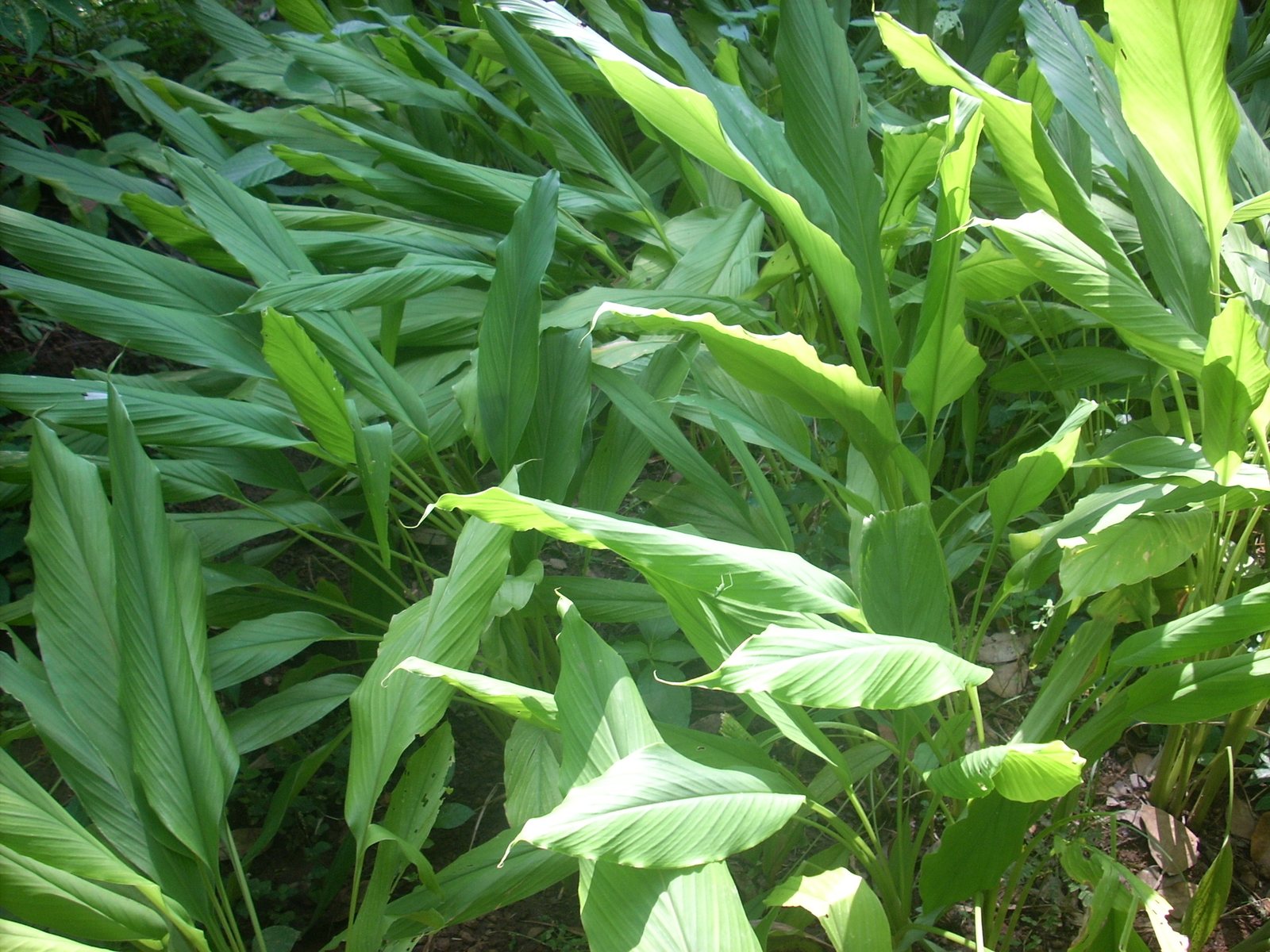
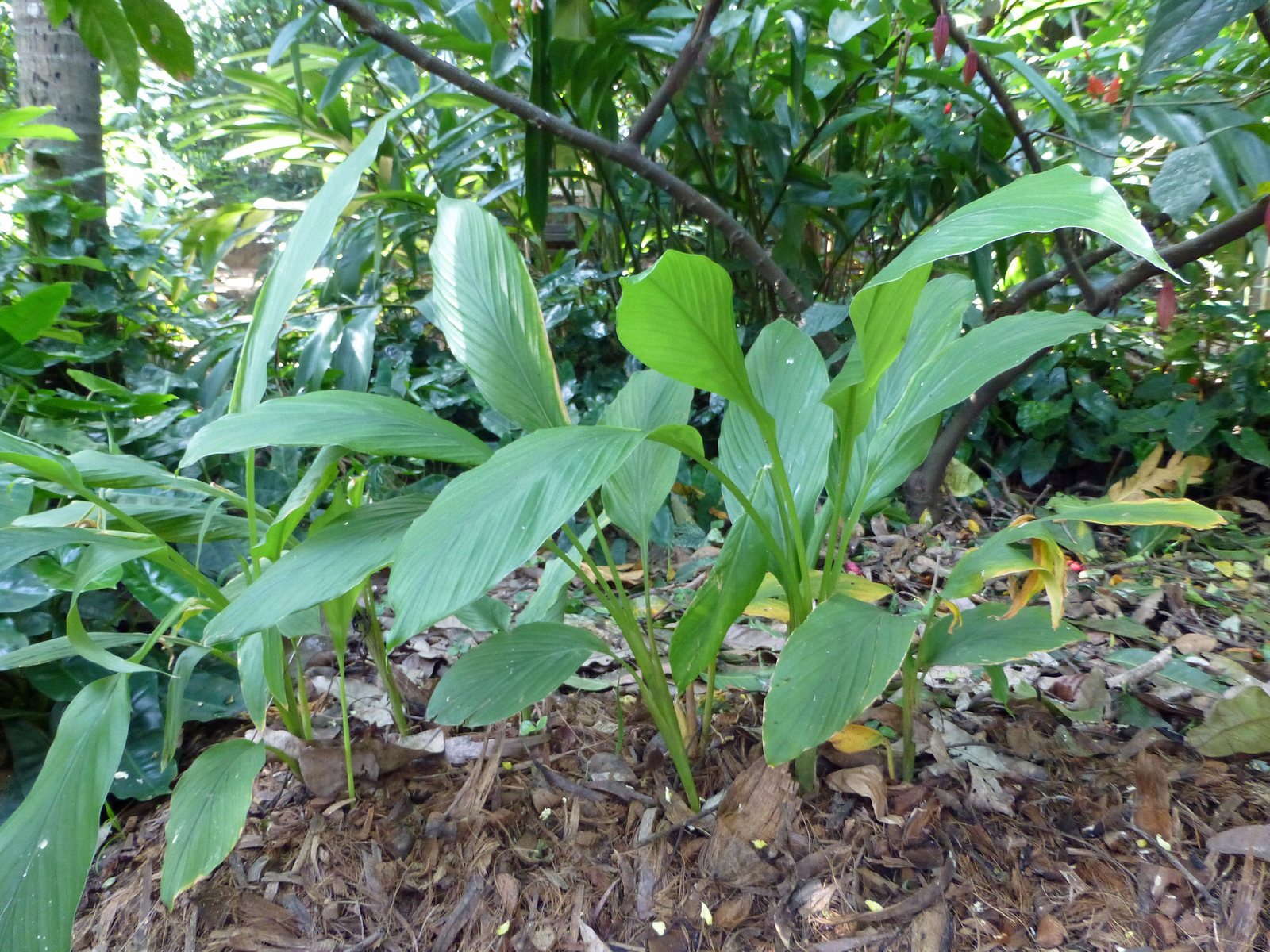
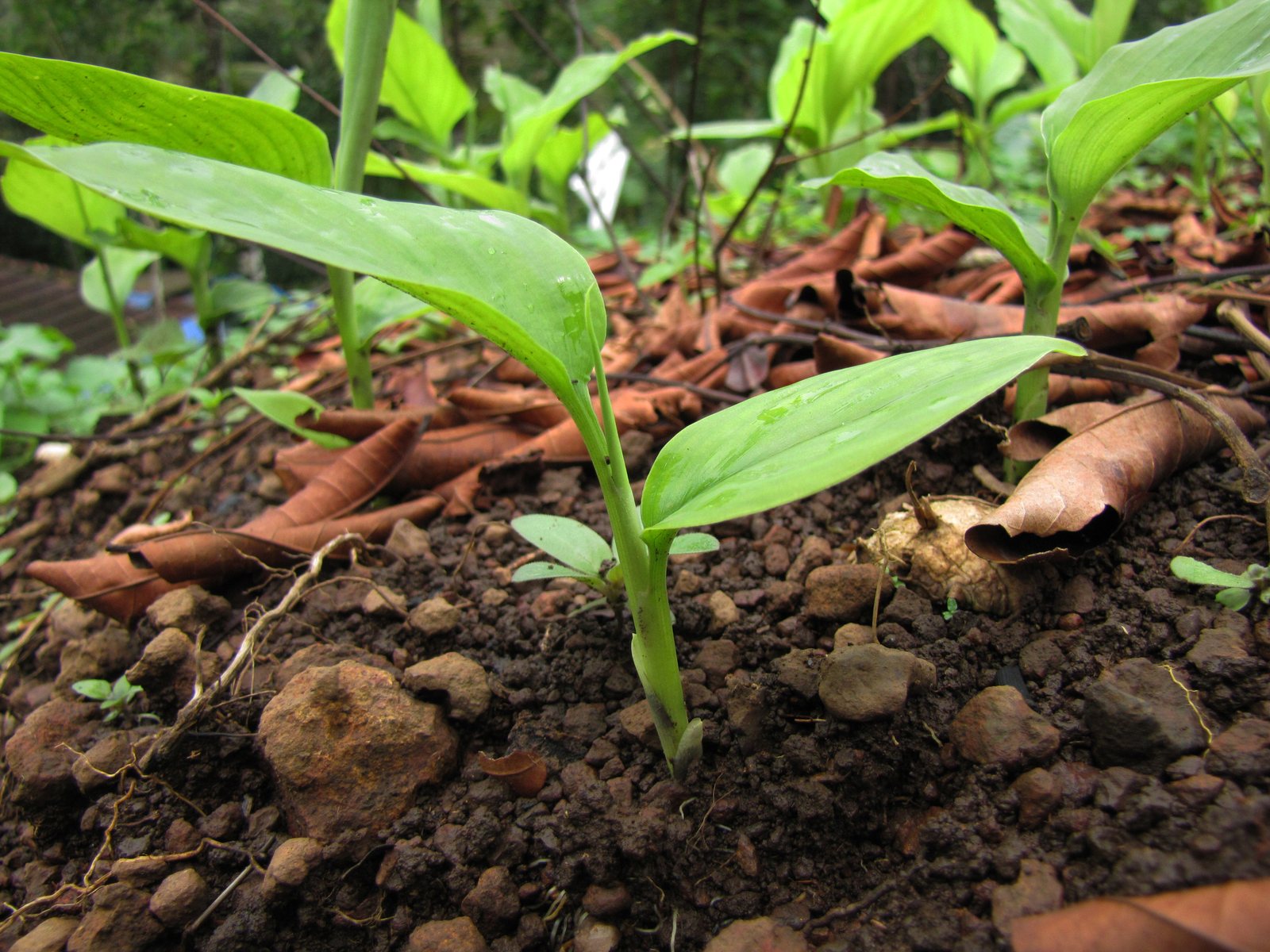
- Large, upright, lance-shaped green leaves on sheathing stalks; foliage dies back during dormancy.
- Growth
- Fast in warm conditions once shoots emerge; slow to start in cool soil.
- Care needed
- Medium
The year at a glance
- Heat tolerant
- Low allergen
- Edible
| J | F | M | A | M | J | J | A | S | O | N | D | |
|---|---|---|---|---|---|---|---|---|---|---|---|---|
| Flowers | ||||||||||||
| Fruit | ||||||||||||
| Plant |
Northern hemisphere months. In Australia, shift them by six.
- Difficulty
- Moderate
- Toughness
- Fairly tough
Will it suit your garden?
Pick your zone, country, light and whether you have pets.
Full sun is 6 or more hours of direct sun a day, part shade 3 to 6 hours, shade under 3.
How it grows
Planting day
1 ft (0.3 m)
After 1 year
1.8 ft (0.55 m)
After 2 years
2.6 ft (0.8 m)
After 3 years
3 ft (1.1 m)
full size
About 3 years to full size.
From a typical nursery size, at an average rate for this kind of plant. A rule of thumb, not a forecast.
Good to know
- Cats and dogs
- Safe
- Growth rate
- Moderate
Care
Jobs through the year
- WaterMay–Jun, Sep, every 7 days
- Keep established leafy plants evenly moist; pots and young plants may need water sooner.
- WaterJul–Aug, every 3 days
- Water when the surface begins drying, allowing excess to drain freely.
- WaterOct, every 14 days
- Reduce watering as foliage yellows; stop routine watering once dormant.
- FeedMay–Sep, every 28 days
- Feed actively growing container plants with balanced liquid fertiliser.
- MulchJun
- Mulch outdoor plants to conserve moisture without covering emerging shoots.
- DivideFeb–Apr
- Divide crowded rhizomes when starting indoors, leaving a healthy bud on each piece.
- ProtectFeb–Apr
- Start rhizomes indoors with warmth for a long season; move outside only after frost and cold nights.
- ProtectJan–Apr, Oct–Dec
- Bring pots indoors or lift before frost; store dormant rhizomes frost-free and almost dry.
- HarvestOct–Dec
- Lift when leaves die back, ideally after 8–10 months; extend growth indoors if the crop is immature.
- PruneOct–Dec
- Cut leaves and stalks to soil level only after they have naturally yellowed and died.
- Plant rhizomes about 2 in (5 cm) deep with buds facing upward once the soil is consistently warm.
- Water regularly while leafy, allowing excess water to drain freely.
- Feed container plants with a balanced liquid fertiliser every 3-4 weeks during active growth.
- Mulch outdoor plants to conserve moisture, keeping mulch clear of emerging shoots.
- Before frost, move pots indoors or lift rhizomes; store them frost-free and almost dry.
- Divide crowded clumps at the start of growth, keeping at least one healthy bud on each piece.
Pruning. No shaping is needed. Cut leaves and stalks down to soil level after they have yellowed and died naturally.
Harvest
Lift rhizomes when the leaves yellow and die back, usually 8-10 months after planting; a short outdoor summer may not produce a mature crop. Loosen the soil carefully, lift the clump and separate the firm orange-yellow rhizomes, saving healthy budded pieces for replanting.
Through the year
- Late winter
- Check stored rhizomes and discard any that are soft or rotten; start healthy pieces indoors with warmth.
- Spring
- Pot up sprouting rhizomes and increase watering as leaves develop.
- Late spring
- Move plants outdoors gradually after frost risk has passed and nights are consistently warm.
- Summer
- Water regularly, feed container plants and check leaf undersides for pests.
- Autumn
- Reduce watering as foliage yellows; harvest mature rhizomes or bring plants under cover before frost.
- Winter
- Keep dormant rhizomes frost-free and almost dry, checking occasionally for rot or severe shrivelling.
In the garden
- Grow in a large patio container for upright, broad-leaved summer foliage.
- Place among gingers and elephant ears in a warm, sheltered tropical-style border.
- Use behind lower culinary herbs in a sunny or lightly shaded edible garden.
- Plant in repeated clumps against a wall or fence, with lower foliage plants concealing the ground during dormancy.
Garden styles it suits: Tropical, Modern tropical, Potager (kitchen garden), Edible landscape, Modern courtyard and Sensory garden.
Plant it with: Ginger, Taro, Coleus, Lemongrass and Sweet potato.
Wildlife: Offers limited wildlife value in most home gardens, especially where it rarely flowers. Slugs and snails may feed on young shoots.
Problems to watch for
- Rhizome rot: avoid waterlogged soil, use containers with drainage holes and sharply reduce watering during dormancy.
- Spider mites indoors or under glass: check for fine webbing and stippled leaves; rinse foliage thoroughly and use insecticidal soap if needed.
- Slugs and snails: protect emerging shoots with hand-picking, barriers or locally approved iron phosphate bait.
- Poor growth or little harvest: provide more warmth and a longer season by starting rhizomes indoors; do not expect much growth in cool soil.
Safety
Not known to be toxic to people, cats, dogs or horses. The rhizomes are edible in normal culinary amounts; large quantities may cause digestive upset, and concentrated turmeric supplements are not equivalent to eating the plant.
Easily confused with
Ginger (Zingiber officinale)
Ginger has much narrower leaves arranged along upright leafy stems, and its rhizomes are usually pale yellow inside rather than turmeric's strong orange-yellow.
Zedoary (Curcuma zedoaria)
Zedoary often has a dark purplish stripe along the leaf midrib and paler rhizome flesh with a camphor-like scent; turmeric usually has plain green leaves and orange-yellow flesh.
Siam tulip (Curcuma alismatifolia)
Siam tulip has narrower leaves and conspicuous pink or white upper flower bracts. It is grown as an ornamental, not as a substitute for culinary turmeric.
The name
Curcuma comes from an Arabic word associated with saffron or yellow colouring, and longa is Latin for 'long'.
Propagation. Divide dormant rhizomes in late winter or spring, leaving at least one healthy bud on each section. Let cut surfaces dry briefly before planting in warm, lightly moist potting mix; seed is rarely available.
Checked against open data
- Accepted botanical name
- Curcuma longa
- In the US and Canada
- Introduced in Hawaii and Puerto Rico.
- Native range
- India.
Sources: GBIF (CC BY 4.0), USDA PLANTS and Trefle (CC BY 4.0). The care and design notes are LandscapeGPT's own.
See it in your own yard.
Upload a photo of your yard and see it redesigned with plants that suit your climate, each checked against your zone.