Sweet potato
Ipomoea batatas. Family Convolvulaceae. Annual.
Also called Kumara, Kūmara, Camote.
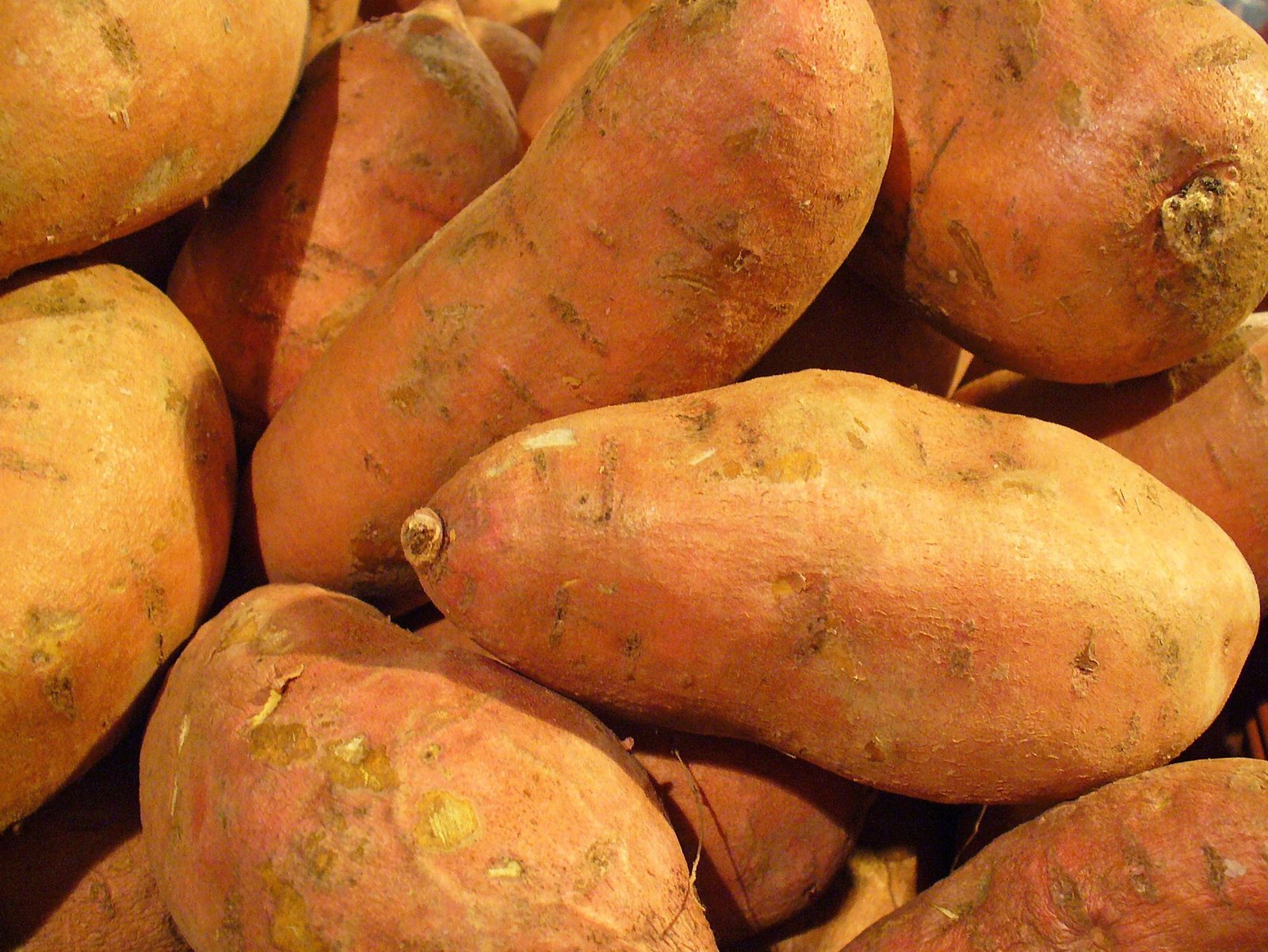
Sweet potato is a frost-tender perennial vine usually grown as an annual for its edible storage roots and leaves. It needs a long, warm growing season; in cooler parts of the United Kingdom and Canada, a greenhouse or polytunnel gives a more dependable crop.
At a glance
- Sun
- Full sun; light shade is tolerated but usually reduces the root crop.
- Water
- Water regularly while plants establish and roots develop, allowing the surface to dry slightly between waterings. Avoid waterlogged soil.
- Soil
- Loose, well-drained sandy loam, ideally pH 5.5-6.5. Heavy, compacted or freshly manured soil can produce misshapen roots.
- Height
- 6-12 in (0.15-0.3 m)
- Spread
- 3-10 ft (0.9-3 m)
- Flowers
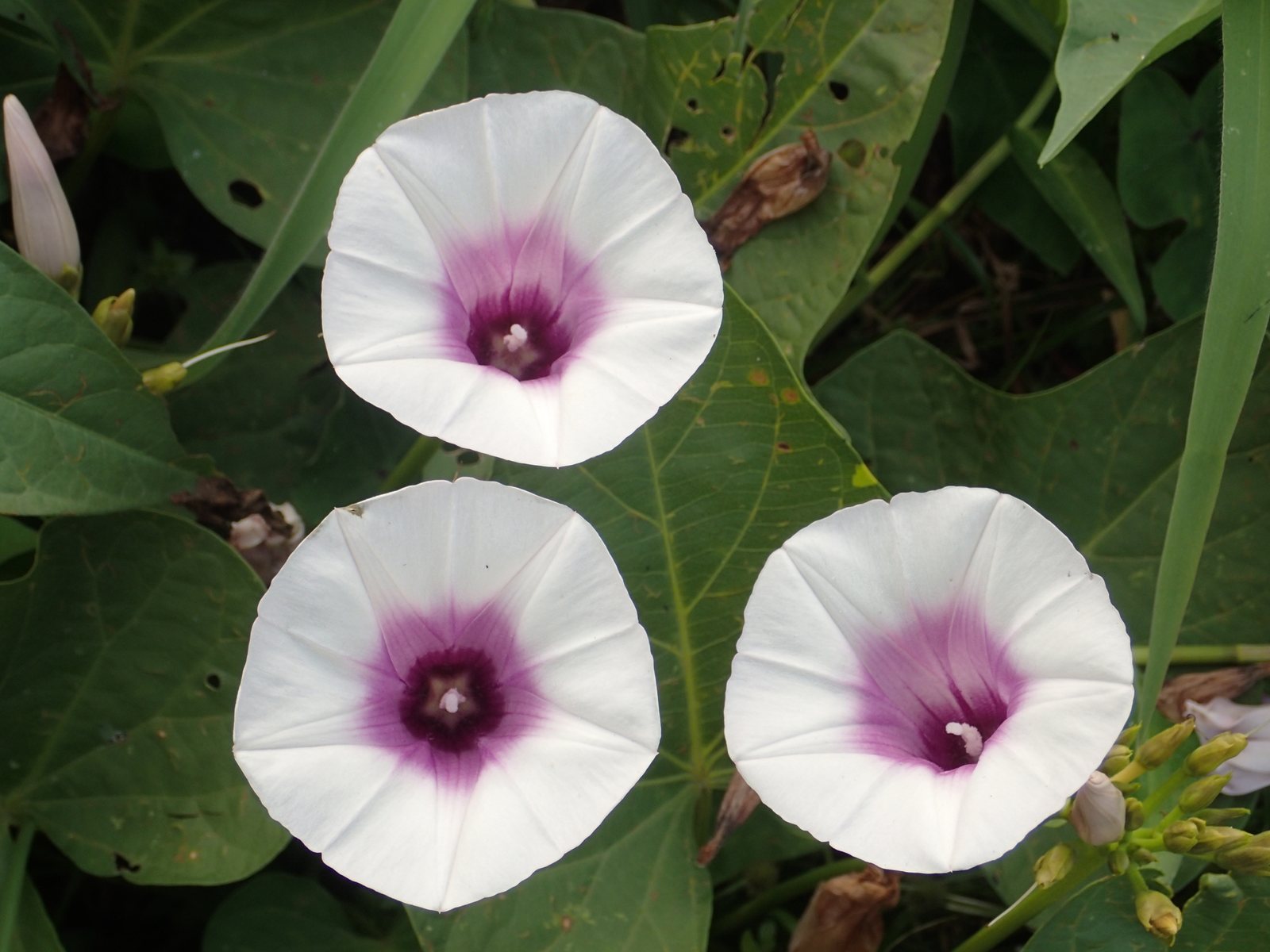
- Occasional pale pink to lavender funnel-shaped flowers with darker throats in summer; many food varieties rarely flower.
- Foliage
- Trailing stems carry green, heart-shaped to deeply lobed leaves. Ornamental selections may have purple, bronze or lime-green foliage.
- Growth
- Fast in warm weather; slow in cool soil.
- Care needed
- Medium
The year at a glance
- Heat tolerant
- Low allergen
- Edible
| J | F | M | A | M | J | J | A | S | O | N | D | |
|---|---|---|---|---|---|---|---|---|---|---|---|---|
| Flowers | ||||||||||||
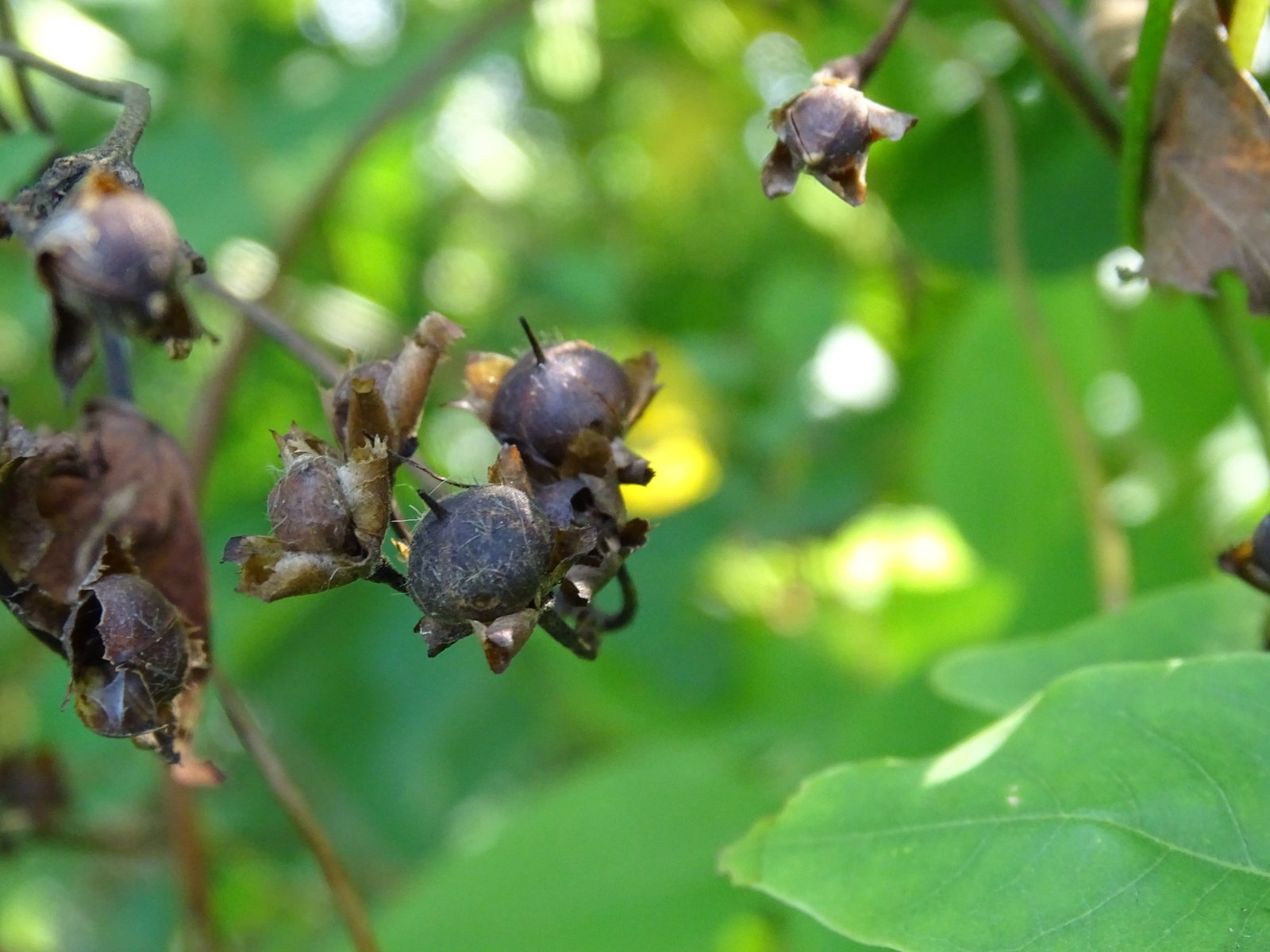
| Fruit | ||||||||||||
| Plant |
Northern hemisphere months. In Australia, shift them by six.
- Difficulty
- Moderate
- Toughness
- Fairly tough
Will it suit your garden?
Pick your zone, country, light and whether you have pets.
Full sun is 6 or more hours of direct sun a day, part shade 3 to 6 hours, shade under 3.
How it grows
Planting day
0.5 ft (0.15 m)
After 1 year
0.7 ft (0.22 m)
full size
Full size in one season.
From a typical nursery size, at an average rate for this kind of plant. A rule of thumb, not a forecast.
Good to know
- Cats and dogs
- Safe
- In the garden
- Spreads vigorously: plan to contain it.
- Growth rate
- Moderate
Care
Jobs through the year
- WaterMay–Jun, every 7 days
- Water deeply if rain is insufficient; newly planted slips need more frequent watering.
- WaterJul–Sep, every 7 days
- Keep the root zone evenly moist during root swelling, allowing the surface to dry slightly.
- FeedMay–Jun
- Apply a modest balanced fertilizer at planting; avoid excess nitrogen.
- MulchJun
- Mulch after the soil warms, first removing competing weeds.
- ProtectMay
- Plant slips only after frost danger passes and soil reaches at least 18°C.
- HarvestSep–Oct
- Test root size after 90–150 frost-free days; lift before frost and cure sound roots for 7–14 days.
- Plant rooted shoots, called slips, after frost danger has passed and soil has warmed to at least 18°C (65°F).
- Space slips 12-18 in (0.3-0.45 m) apart, leaving room for trailing growth.
- Keep soil evenly moist during establishment and root swelling, but never saturated.
- Use modest amounts of balanced fertilizer; excess nitrogen encourages leaves rather than storage roots.
- Weed before the vines cover the soil, and mulch once the ground is warm.
- Use a large container with drainage holes if your garden soil stays wet or compacted.
Pruning. During summer, redirect wandering vines rather than repeatedly cutting them back. Trim only damaged growth or stems blocking paths, since heavy pruning can reduce the crop.
Harvest
Lift storage roots when the variety's expected growing period has elapsed, usually 90-150 frost-free days, and a test plant has roots of useful size; harvest before frost damages the vines. Dig carefully to avoid breaking the skin, then cure sound roots for about 7-14 days in warm, humid, ventilated conditions around 27-30°C (81-86°F) before storing somewhere cool but frost-free.
Through the year
- Late winter
- Order slips or start healthy, untreated storage roots indoors in warmth to produce shoots.
- Spring
- Prepare a sunny, well-drained bed and warm the soil under a cover in cool climates.
- Late spring
- Harden off slips gradually and plant only once nights and soil are reliably warm.
- Summer
- Water during dry spells, weed early and guide vines away from paths and smaller crops.
- Early autumn
- Check a test plant for root size and lift the crop before frost or prolonged cold, wet weather.
- Autumn
- Cure undamaged roots, then store them dry and ventilated at about 13-16°C (55-61°F).
In the garden
- Let vines cover sunny vegetable beds as a productive seasonal groundcover.
- Trail foliage over the edges of large containers or raised beds.
- Use beside upright peppers or okra, allowing enough room to avoid smothering them.
- Combine bold leaves with upright grasses in warm-climate edible borders.
Garden styles it suits: Potager (kitchen garden), Edible landscape, Homestead, Tropical, Modern courtyard and Family-friendly.
Plant it with: Okra, Peppers, Basil and French marigolds.
Wildlife: Flowers, when present, attract bees. Dense foliage shelters small invertebrates, while deer and rabbits may browse the leaves.
Problems to watch for
- Poor root development: provide a longer warm season, full sun and modest nitrogen; choose an early-maturing food variety.
- Sweet potato weevils in warm regions: use clean planting material, rotate crops, remove infested roots and earth up exposed roots to reduce access.
- Wireworms and other soil grubs: inspect the site before planting, avoid recently converted grassland and rotate to a different bed.
- Root rot and storage decay: improve drainage, avoid harvest wounds, cure sound roots and discard soft or mouldy ones.
Safety
Healthy sweet potato roots and foliage are not known to be toxic to people, cats, dogs or horses. People commonly eat the roots and cooked leaves; unlike ordinary potato foliage, sweet potato leaves are edible. Mould-damaged roots can contain dangerous toxins, particularly for livestock, and should not be fed to animals. Do not eat ornamental plants treated with pesticides unsuitable for food crops.
Where it spreads. Vines can spread aggressively and root at stem nodes in frost-free tropical gardens, including northern Australia and Hawaii. Keep growth out of neighbouring vegetation and do not dump living stems in natural areas.
Easily confused with
Potato (Solanum tuberosum)
Potato grows upright and has compound leaves made of separate leaflets; sweet potato trails and has single, sometimes lobed leaves. Potato foliage is poisonous.
Chinese yam (Dioscorea polystachya)
Chinese yam twines upward and often produces small aerial bulbils where leaves meet stems; sweet potato usually trails and roots along its stems.
Beach morning glory (Ipomoea pes-caprae)
Beach morning glory has thick, rounded leaves with a deep notch at the tip, resembling a goat's hoof, and commonly grows on coastal sand.
The name
The species name batatas comes from batata, a Taíno name for sweet potato.
Propagation. Grow from rooted shoots called slips, taken from healthy storage roots, or root stem cuttings in warmth. Use certified disease-free planting material where available; supermarket roots may carry disease or have been treated to delay sprouting.
Checked against open data
- Accepted botanical name
- Ipomoea batatas
- In the US and Canada
- Introduced in Hawaii, the lower 48 states, Navassa Island, Pacific Basin, Puerto Rico, Puerto Rico, US Virgin Islands and US Virgin Islands.
- Native range
- Belize, Colombia, Costa Rica, Ecuador, El Salvador, Guatemala, Honduras, Mexico Gulf, Mexico Northeast, Mexico Southeast, Mexico Southwest and Nicaragua.
Sources: GBIF (CC BY 4.0), USDA PLANTS and Trefle (CC BY 4.0). The care and design notes are LandscapeGPT's own.
See it in your own yard.
Upload a photo of your yard and see it redesigned with plants that suit your climate, each checked against your zone.