Ginger
Zingiber officinale. Family Zingiberaceae. Perennial.
Also called Culinary ginger, Common ginger, True ginger.
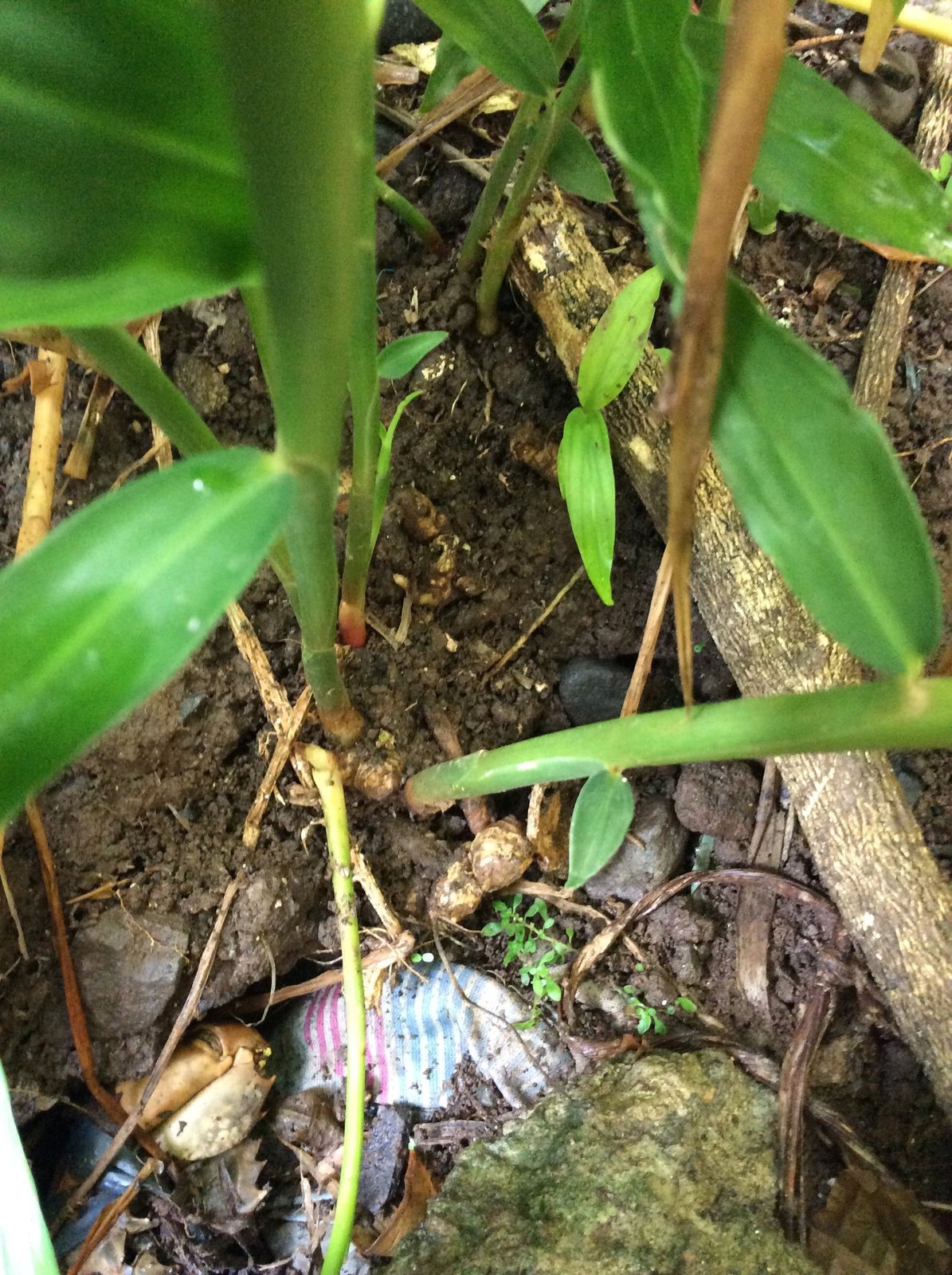
Ginger is a frost-tender perennial grown for its aromatic, edible underground stems, called rhizomes. Its upright shoots and narrow leaves also bring a tropical appearance to sheltered beds and containers. In cooler climates, grow it as an annual crop or keep it in a pot that can overwinter indoors.
At a glance
- Sun
- Partial shade or filtered sun; morning sun is useful, but protect leaves from strong afternoon sun.
- Water
- Keep evenly moist during active growth without leaving the soil waterlogged. Reduce watering substantially when shoots die back.
- Soil
- Fertile, loose, moisture-retentive soil with good drainage; slightly acidic to neutral soil is suitable.
- Height
- 2-4 ft (0.6-1.2 m)
- Spread
- 1-3 ft (0.3-0.9 m)
- Flowers
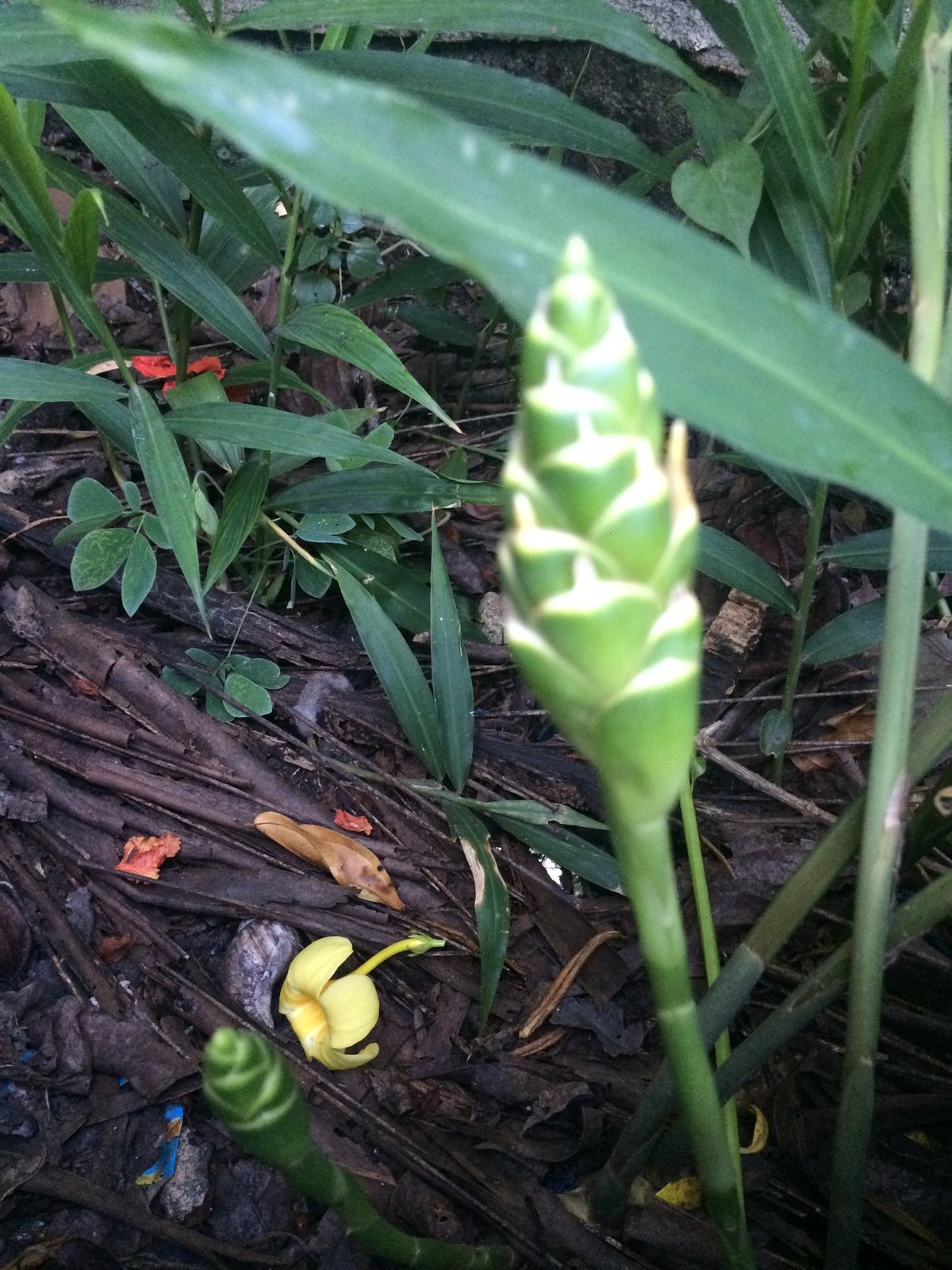
- Occasional summer flowers in warm climates: small yellow-green flowers with purple markings, held among overlapping bracts on short, separate spikes. Container-grown plants rarely flower.
- Foliage
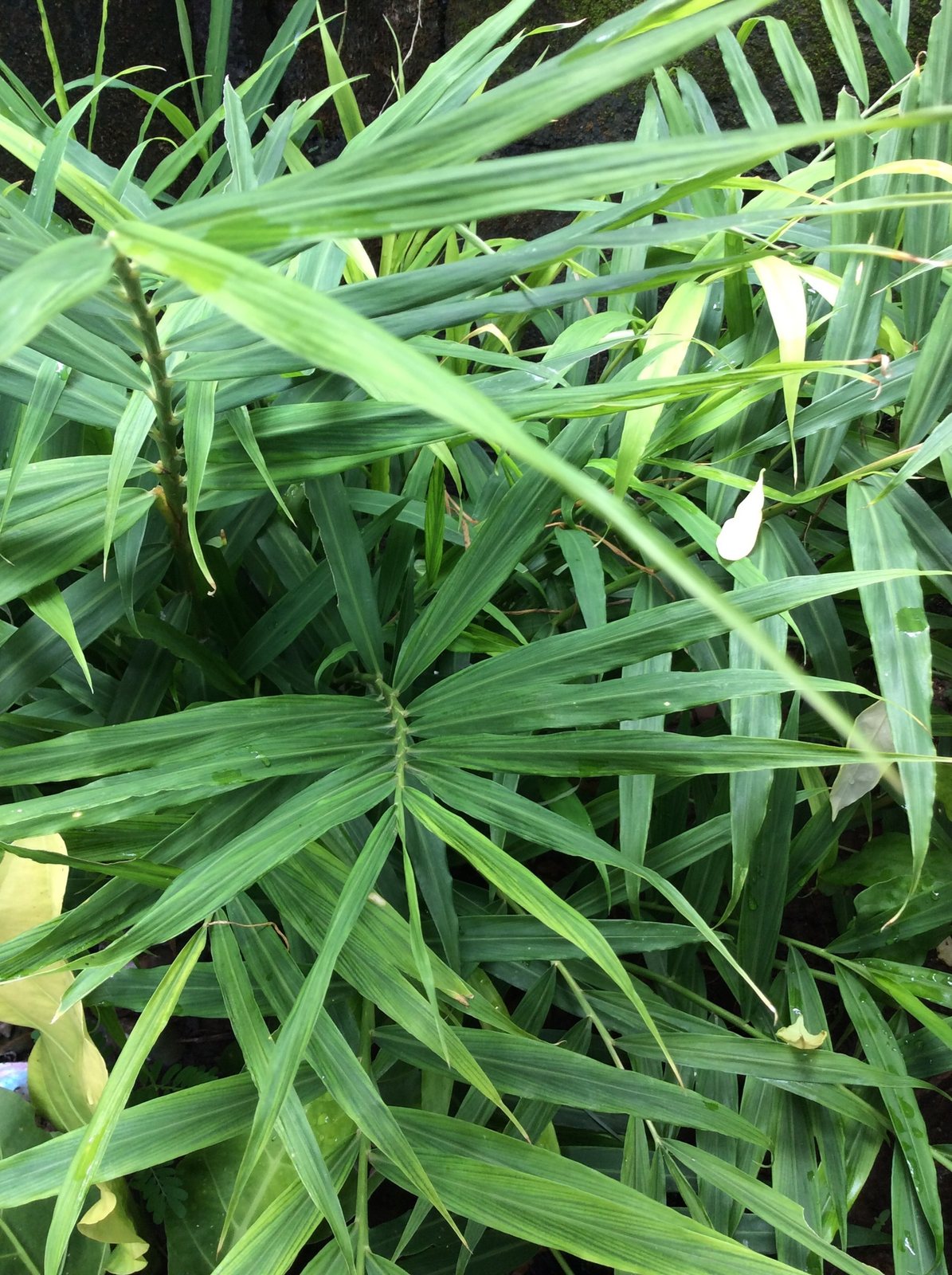
- Narrow, pointed green leaves arranged along upright, cane-like shoots; foliage usually yellows and dies back during cool or dry-season dormancy.
- Growth
- Moderate in sustained warmth; slow to sprout in cool conditions.
- Care needed
- Medium
The year at a glance
- Heat tolerant
- Low allergen
- Edible
| J | F | M | A | M | J | J | A | S | O | N | D | |
|---|---|---|---|---|---|---|---|---|---|---|---|---|
| Flowers | ||||||||||||
| Fruit | ||||||||||||
| Plant |
Northern hemisphere months. In Australia, shift them by six.
- Difficulty
- Moderate
- Toughness
- Needs looking after
Will it suit your garden?
Pick your zone, country, light and whether you have pets.
Full sun is 6 or more hours of direct sun a day, part shade 3 to 6 hours, shade under 3.
How it grows
Planting day
1 ft (0.3 m)
After 1 year
1.5 ft (0.45 m)
After 2 years
2 ft (0.61 m)
After 3 years
2.5 ft (0.76 m)
After 5 years
3 ft (0.9 m)
full size
About 4 years to full size.
From a typical nursery size, at an average rate for this kind of plant. A rule of thumb, not a forecast.
Good to know
- Cats and dogs
- Safe
- Growth rate
- Slow
Care
Jobs through the year
- WaterMar–May, every 7 days
- For indoor-started pots, water lightly until shoots emerge, then keep evenly moist.
- WaterJun–Sep, every 3 days
- Keep actively growing roots evenly moist; pots and young plants may need more frequent checks.
- WaterOct–Nov, every 14 days
- Reduce water as foliage yellows; keep unharvested dormant rhizomes barely moist.
- WaterJan–Feb, Dec, every 30 days
- Check frost-free stored rhizomes and moisten only enough to prevent severe shrivelling.
- FeedMay–Sep, every 21 days
- Feed actively growing container plants with a balanced liquid fertiliser.
- MulchJun
- Mulch outdoor plants to retain moisture, keeping shoot bases clear.
- HarvestAug–Sep
- Take small sections of young rhizome four to six months after starting, leaving the main clump.
- HarvestOct–Dec
- Lift mature rhizomes after eight to ten months as foliage yellows; save healthy budded pieces.
- PruneOct–Dec
- Cut shoots to soil level only after they have completely yellowed and dried.
- ProtectSep–Oct
- Bring pots indoors before cold nights and keep dormant rhizomes frost-free.
- ProtectJun
- Move indoor-started plants outdoors gradually only when nights remain warm.
- Plant firm, healthy rhizomes with visible buds just below the soil surface in a wide pot or warm, sheltered bed.
- Start indoors in cool climates; move outside only after frost risk has passed and nights are consistently warm.
- Water when the surface begins to dry, and empty saucers so the roots do not stand in water.
- Feed container plants with a balanced liquid fertiliser every two to four weeks during active growth.
- Mulch outdoor plants to conserve moisture, keeping mulch clear of the shoot bases.
- Bring pots under cover before cold weather; keep dormant rhizomes frost-free and barely moist.
Pruning. Remove damaged leaves as needed. Once shoots have completely yellowed and dried, cut them off at soil level; do not shorten healthy green shoots.
Harvest
Lift small sections of tender young rhizome about four to six months after planting, once the clump has expanded; young ginger has thin skin and little fibre. For mature ginger, wait roughly eight to ten months, usually until the foliage yellows, then lift the clump carefully and brush off the soil. Save firm, healthy pieces with buds for replanting.
Through the year
- Late winter
- Check stored rhizomes and discard any that are soft or mouldy; start healthy pieces in pots with steady warmth.
- Spring
- Increase watering as shoots emerge, and prepare a sheltered growing position with compost and good drainage.
- Late spring
- Move plants outdoors gradually once frost risk has passed and nights remain warm.
- Summer
- Water regularly, feed actively growing plants, and check sheltered foliage for mites.
- Late summer
- Harvest a small amount of young ginger if the clump is well developed, leaving the main plant to grow.
- Autumn
- In cool climates, bring pots indoors before cold nights; harvest mature rhizomes as foliage yellows.
- Winter
- Keep dormant rhizomes frost-free and barely moist; in tropical climates, follow the plant's local wet- and dry-season cycle instead.
In the garden
- Grow in wide containers on a sheltered patio for upright foliage and a harvest close to the kitchen.
- Plant beneath a light tree canopy in frost-free edible gardens, avoiding dense shade and strong root competition.
- Combine with turmeric and taro in moist tropical beds for contrasting leaf shapes.
- Use in a greenhouse or conservatory edible collection where a long, warm growing season supports rhizome development.
Garden styles it suits: Tropical, Modern tropical, Edible landscape, Potager (kitchen garden), Sensory garden and Small-space.
Plant it with: Turmeric, Taro and Cardamom.
Wildlife: Provides some low cover in warm-climate gardens, but it is not a major wildlife plant. Flowers are uncommon in many home gardens, so its value to pollinators is limited.
Problems to watch for
- Rhizome rot: soft, discoloured rhizomes usually indicate poor drainage or contaminated planting material. Discard affected pieces, clean containers, and replant healthy stock in fresh, free-draining compost.
- Spider mites: fine webbing and pale stippling are common under warm, dry cover. Rinse leaf undersides regularly and use an appropriate biological control if needed.
- Cold damage or failure to sprout: cool, wet soil can leave rhizomes dormant or cause decay. Start with steady warmth and water sparingly until shoots appear.
- Leaf scorch: bleached or brown patches can follow strong sun or drying winds. Move pots into filtered light and maintain even soil moisture.
Safety
True ginger is not known to be toxic to cats, dogs, horses or people. Its rhizome is a familiar food, although large quantities may cause digestive upset; do not assume other plants called ginger are equally safe.
Easily confused with
Turmeric (Curcuma longa)
Turmeric has much broader leaves and rhizomes with a strongly orange interior; culinary ginger has narrower leaves and pale yellow flesh.
Shampoo ginger (Zingiber zerumbet)
This ornamental ginger produces conspicuous cone-shaped flower heads that turn red and release a slippery liquid; do not substitute its rhizomes for culinary ginger.
White ginger lily (Hedychium coronarium)
It has broader leaves and large, fragrant white flowers at the tops of leafy stems, unlike culinary ginger's small flowers on separate short spikes.
The name
The species name officinale means used in medicine or sold by apothecaries, reflecting ginger's long history as a medicinal and culinary plant.
Propagation. Divide healthy rhizomes in spring or at the start of the warm growing season, keeping at least one strong bud on each piece. Let cut surfaces dry briefly before planting shallowly in warm, lightly moist compost; seed is not a practical home propagation method.
Checked against open data
- Accepted botanical name
- Zingiber officinale
- In the US and Canada
- Introduced in Pacific Basin, Puerto Rico and US Virgin Islands.
- Native range
- Assam, China South-Central and East Himalaya.
Sources: GBIF (CC BY 4.0), USDA PLANTS and Trefle (CC BY 4.0). The care and design notes are LandscapeGPT's own.
See it in your own yard.
Upload a photo of your yard and see it redesigned with plants that suit your climate, each checked against your zone.